On the other side of the coin, implementing the one-drop rule as a way to attach non-Black people to Blackness is equally detrimental to this conversation. The one-drop rule was only a practice found within the United States and was an “unspoken” law that never existed on the books. It was merely a way to stop Blacks fathered by their masters from gaining economic or social wealth by inheritance.
It is no secret that many diasporans or Black descendants of enslaved Africans have European ancestry but that wouldn’t make them white.
Jasmine Gurneau made their wedding clothes by herself. “You have to wear it more than once,” Jasmine said to her husband. The arch behind them represents the four colors of four directions, which was made by Jasmine’s mother, Pam. (Provided by Jasmine)
It was a surprise for the 8-year-old girl when she first learned she is a Native American many years ago. Pamala Silas still remembers that day. She had transferred to a new school. Huddling in the chair, sitting beside her younger sister, Pam was introduced by the teacher as an “American Indian.” She couldn’t believe what she heard.
“What? Why did she say that?” Pam, in her 50s and proud of her heritage, said she harbored as a child stereotypes of Native Americans that, all too often, people saw on TV. “They’re all naked and crazy!”
Pam went home and asked her foster mother why they called her an Indian at school.
“Well, you are,” her foster mother said. She took out an encyclopedia, went to the American Indian section and showed Pam a picture of a man with a headdress on a horse. “You’re an Indian.”
“You are Menominee and you are Oneida,” Pam’s older sister said.
Pam had to write down the tribal names but didn’t even know how to spell them at that time…
(CNN)—Sen. Kamala Harris directly confronted critics Monday who have questioned her black heritage, her record incarcerating minorities as a prosecutor and her decision to marry a white man.
In an interview with The Breakfast Club hosts DJ Envy and Charlamagne Tha God that aired Monday, the show’s hosts asked the California Democrat to address a series of derogatory memes that have circulated on social media. One of the hosts cited a meme that said Harris is “not African-American” because her parents were immigrants born in India and Jamaica and she spent her high school years in Canada.
“So I was born in Oakland, and raised in the United States except for the years that I was in high school in Montreal, Canada,” Harris responded with a laugh. “And look, this is the same thing they did to Barack (Obama). This is not new to us and so I think that we know what they are trying to do.”
“They are trying to do what has been happening over the last two years, which is powerful voices trying to sow hate and division, and so we need to recognize when we’re being played,” Harris said.
One of the hosts followed up by asking Harris how she responds to people who question “the legitimacy of your blackness.”
“I think they don’t understand who black people are,” Harris replied. “I’m not going to spend my time trying to educate people about who black people are. Because right now, frankly, I’m focused on, for example, an initiative that I have that is called the ‘LIFT Act’ that is about lifting folks out of poverty,” she said, detailing her plan for a $6,000 tax credit for middle class Americans.
“I’m black, and I’m proud of being black,” she said at a later point in the interview. “I was born black. I will die black, and I’m not going to make excuses for anybody because they don’t understand.”…
This blog post is dedicated to my M23Malagasy ancestors who survived the Middle Passage and made it to New York and New Jersey. This is Part I of a two part series and is focused on my family’s Malagasy ancestry. My next blog post will discuss how my ancestors arrived in New York based on the actions of unscrupulous NY merchants and pirates.
Over the past decade, there have been numerous studies done that describe the origins of the Malagasy, the people of Madagascar. For example, in 2005, Hurles et al. discussed the dual origins of the Malasy people as being Southeast Asian and East African. His study was followed by one done in 2009 by Sergio Tofanelli et al. In this article, they wrote:
“Our results confirm that admixture of Malagasy was due to the encounter of people surfing the extreme edges of two of the broadest historical waves of language expansion: the Austronesian and Bantu expansions. In fact, all Madagascan living groups show amixture of uni-parental lineages typical present in African and Southeast Asian populations with only a minor contribution of Y lineages with different origins. Two observations suggest that the Y lineages with “another origin” entered the island in recent times: 1) they are particularly frequent in the Tanosy area (Fort Dauphin), and around Antananarivo, where commercial networks and the slave trade had a focus; 2) they matched with haplogroups typical of present Indo-European (Europeans) and Arabic speaking (Somali) people.”.
In addition, a 2012 study by Cox, et al. noted that most Malagasy people can trace their mtDNA back to 30 Indonesian women who made up the founding population of Madagascar. Given the fact that Southeast Asian Y-DNA was also found among the Malagasy, it is assumed that there were also some Indonesian men among this group of women. These women went on to have children with the Indonesian men present as well as men from Africa. Later migrations from Africa also included Southeast African Bantu mtDNA haplogroups from north of the Zambezi River. In 2013, Melanie Capredon et al. also discussed the Arab-Islamic contribution to the Malagasy gene pool as a result of Indian Ocean slave trade…
After studying textiles at Middlesex Polytechnic, [Andrea] Levy worked briefly as a designer, a dresser and a receptionist. But it was not until she was 26 that a racial awareness session with colleagues at an Islington sex education project gave her a “rude awakening”.
“We were asked to split into two groups, black and white.” Levy wrote. “I walked over to the white side of the room. It was, ironically, where I felt most at home – all my friends, my boyfriend, my flatmates, were white. But my fellow workers had other ideas and I found myself being beckoned over by people on the black side. With some hesitation I crossed the floor.”
As someone who was “scared” to call herself a black person, the experience was shocking enough to send her to bed for a week. But the writing course she had begun part-time came to her rescue, sending her back to explore the shame and denial that had marked her childhood and to rediscover her Jamaican roots.
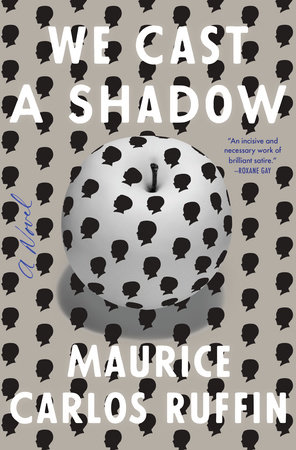
Good questions breathe life into the world. “We Cast a Shadow,” Maurice Carlos Ruffin’s debut novel, asks some of the most important questions fiction can ask, and it does so with energetic and acrobatic prose, hilarious wordplay and great heart.
“We Cast a Shadow” is the story of a black lawyer in a version of the American South. We are dropped into a future where the country is even more willing than now to follow its worst, most racist inclinations. The unnamed narrator describes how, in the next state over, black people must wear tracking devices.
The novel draws its power from this unnamed man’s love for his family, particularly for his biracial son, Nigel. The narrator loves his son so much it seems he can’t even see him. What he does see is the boy’s figure outlined and defined by all the lurking dangers to his person and his potential. Our narrator is especially worried because of the metastasizing birthmarks that cover his son’s body: differently sized tokens of color that remind the world that Nigel is black, a fate as unfortunate as any in the mind of his father…
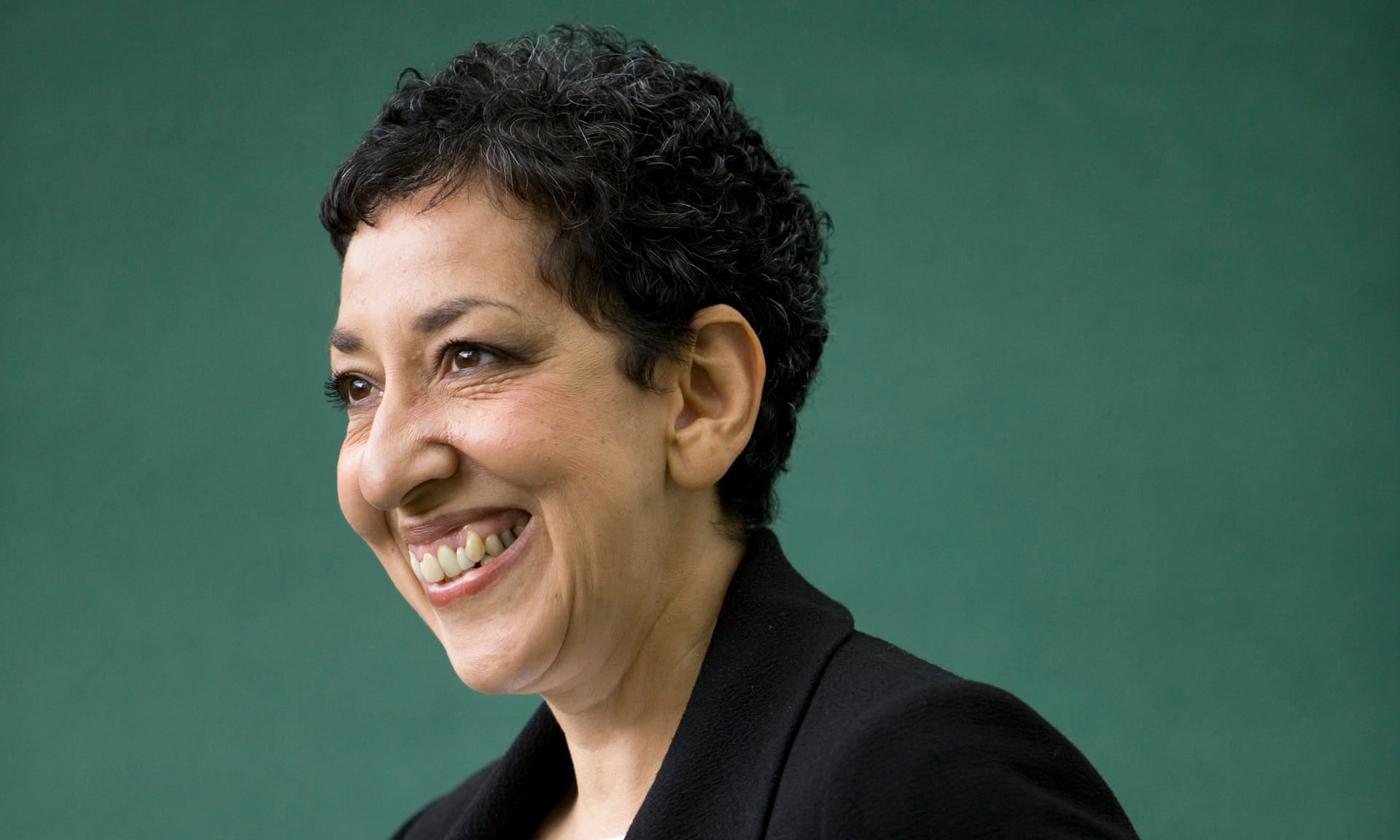
The writer Andrea Levy, who explored the experience of Jamaican British people in a series of novels over 20 years has died, aged 62, from cancer.
After starting to write as a hobby in her early 30s, Levy published three novels in the 1990s that brought her positive reviews and steady sales. But her fourth novel, Small Island, launched her into the literary big league, winning the 2004 Orange prize, the Whitbread book of the year and the Commonwealth Writers’ prize, selling more than 1m copies around the world and inspiring a 2009 BBC TV adaptation.
…After studying textiles at Middlesex Polytechnic, Levy worked briefly as a designer, a dresser and a receptionist. But it was not until she was 26 that a racial awareness session with colleagues at an Islington sex education project gave her a “rude awakening”.
“We were asked to split into two groups, black and white.” Levy wrote. “I walked over to the white side of the room. It was, ironically, where I felt most at home – all my friends, my boyfriend, my flatmates, were white. But my fellow workers had other ideas and I found myself being beckoned over by people on the black side. With some hesitation I crossed the floor.”
As someone who was “scared” to call herself a black person, the experience was shocking enough to send her to bed for a week. But the writing course she had begun part-time came to her rescue, sending her back to explore the shame and denial that had marked her childhood and to rediscover her Jamaican roots…
Eli S. Parker, a Seneca Indian who worked for Gen. Ulysses S. Grant, was engaged to Minnie Sackett, a young white woman, in 1867. (The History Collection/Alamy) (The History Collection/Alamy Stock Photo/The History Collection/Alamy Stock Photo)
The wedding was a shock before it even began. In 1867, the nation’s capital learned that Minnie Sackett, the daughter of a prominent Civil War colonel, was engaged. Sackett was considered to be “one of the most beautiful women in the District,” according to the New York Tribune, with her high-neck lace collars and brunette ringlets piled atop her head.
Her soon-to-be husband, 39-year-old Ely S. Parker, had served in the Union Army as the private secretary to then-Gen. Ulysses S. Grant. It was Parker who drafted the terms of surrender that ended the war in 1865. So close was their friendship that Grant himself planned to escort the bride, whose father had died, down the aisle at Washington’s Episcopal Church of the Epiphany.
Why was their betrothal controversial? “It may not be generally known that Col. Parker is a full-blooded Indian,” the Tribune reported. “A near relative to the famous Red Jacket and of the present Chief of the six nations Cherokees.”
One World (an imprint of Penguin Random House)
2019-01-29
336 pages
6-1/8 x 9-1/4
Hardcover ISBN: 9780525509066
Ebook ISBN: 9780525509080
Audiobook ISBN: 9780525637363
“You can be beautiful, even more beautiful than before.” This is the seductive promise of Dr. Nzinga’s clinic, where anyone can get their lips thinned, their skin bleached, and their nose narrowed. A complete demelanization will liberate you from the confines of being born in a black body—if you can afford it.
In this near-future Southern city plagued by fenced-in ghettos and police violence, more and more residents are turning to this experimental medical procedure. Like any father, our narrator just wants the best for his son, Nigel, a biracial boy whose black birthmark is getting bigger by the day. The darker Nigel becomes, the more frightened his father feels. But how far will he go to protect his son? And will he destroy his family in the process?
This electrifying, hallucinatory novel is at once a keen satire of surviving racism in America and a profoundly moving family story. At its center is a father who just wants his son to thrive in a broken world. Maurice Carlos Ruffin’s work evokes the clear vision of Ralph Ellison, the dizzying menace of Franz Kafka, and the crackling prose of Vladimir Nabokov. We Cast a Shadow fearlessly shines a light on the violence we inherit, and on the desperate things we do for the ones we love.