• Pride, no prejudice: we’re young, Jewish and black

    The Jewish Chronicle
    London, United Kingdom
    2019-01-31

    Karen Glaser

    Yasmin Bowen (left) and Vivien Sinclair
    Yasmin Bowen (left) and Vivien Sinclair (Photo: Benjamin Mole)

    Drake, Sophie Okenado and Craig David: three big name examples of Jews who are black. So why do so many people assume all Jews are white? Karen Glaser met some teens who challenge that stereotype.

    On Shabbat, frummers often stop Lia Grant on the streets of the Jewish neighbourhood where she lives and ask her to ring doorbells and switch on ovens for them. They preface their requests with a quick explanation of Shabbat and the type of work they are prohibited from doing on Judaism’s day of rest.

    However, what they do not know is that far from being a potential Shabbos goy, Lia is a fellow Jew. So by asking her to work, her frum interlocutors are inadvertently committing a serious transgression: they are entreating someone who is obligated to keep Shabbat, to violate it.

    “When I tell them I’m Jewish, very awkward shock washes over their faces,” says the JCoss sixth former whose mother is Jewish, Israeli and Nigerian, and whose father is Nigerian and Scottish.

    It was a similar story when Lia first joined the Jewish secondary. “Are you Jewish?” her classmates would ask her. And six years later, her intersectional identity often elicits a similar response from non-Jews: “Wow! There’s such a thing as a black Jew?”…

    Read the entire article here.

  • A Tale of Two Cities: Buenos Aires, Córdoba and the Disappearance of the Black Population in Argentina

    The Metropole: The Official Blog of the Urban History Association
    2018-05-31

    Erika Denise Edwards, Associate Professor of History
    University of North Carolina, Charlotte


    Façade of Iglesia de Santo Domingo, Córdoba, Argentina, no date, Archive of Hispanic Culture, Prints and Photographs Division, Library of Congress

    The recent explosion of black studies in Argentina has been a welcoming effort of various scholars and activists that have refused to accept the old and tired categorization that Argentina is a country of European descendants.1 For instance, most recently activists challenged Argentine president Mauricio Macri’s association between Mercosur and the European Union at the World Economic Forum in Davos, Switzerland in January 2018. There the president stated, “I think the association between Mercosur and the European Union is natural because in South America we are all descendants of Europeans.”2 I can’t say I wasn’t proud to see and hear the strong backlash that challenged this outdated and very tiresome notion that Argentina has always been a white nation. But is that all that is left for us? What I mean more specifically is we can and will continue to dispel that Argentina is a white country of only “European descendants,” but as the field of black studies in Argentina develops it is also time that we take a hard look at the scholarship and ask ourselves what comes next.

    My response is that it is time to expand westward. Why? Because scholars of Argentina’s black history have tended to focus on Buenos Aires.3 So much so that the black experience in Buenos Aires has become the national narrative. In other words, Argentina’s black history and more specifically the process of black disappearance references the black experience of Buenos Aires during the mid-nineteenth and early twentieth century. By the mid-nineteenth century intellectuals such as Juan Batista Alberdi and Domingo Sarmiento (president of Argentina 1868-1874) justified policies that encouraged European immigration using pseudoscientific theories that purported to prove the biological superiority of “whites” over “nonwhites.” In effect, Sarmiento, and similar intellectuals joined the larger Latin American process of blanqueamiento, or whitening. Blanqueamiento serves as an operative word to describe the late-nineteenth-century state-led modernization process. Like Argentina, many other Latin American countries looked to European immigrants as the way to bring civilization. Historians have argued that this ideological erasure is one of the main reasons for the disappearance of people who identified as black in Argentina.4

    Read the entire article here.

  • Naomi Osaka And The Expectations Put Upon Biracial Japanese

    Kotaku East
    Kotaku
    2019-01-31

    Brian Ashcraft
    Osaka, Japanese


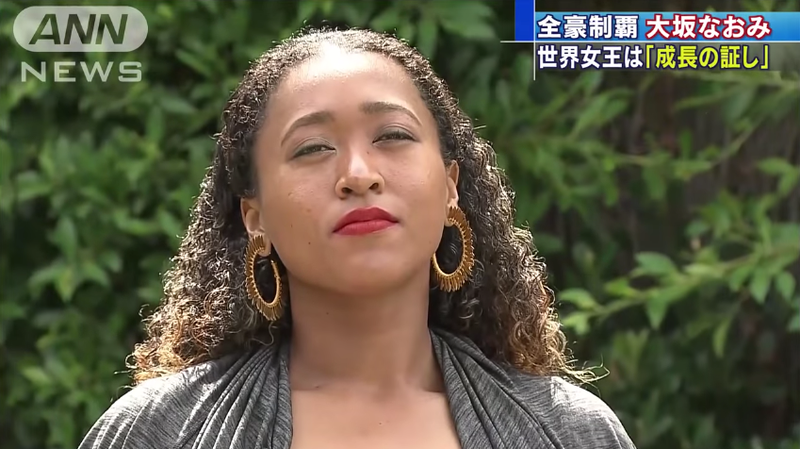
    Screenshot: ANNnewsCH

    Earlier this week, Naomi Osaka fielded a question from a Japanese reporter who wanted the tennis star to reply in Japanese. “I’m going to say it in English,” Osaka replied.

    The reporter said kongurachureeshon (congratulations) instead of omedetou gozaimasu, Japanese for “congratulations,” before going into a question about the difficulty of playing the left-handed player Petra Kvitová. “First,” the reporter continued, “in Japanese, could you say something about how hard it was?”…

    Read the entire article here.

  • Seeking biracial women for an online research study!

    Kiarra King
    Department of Psychology
    The University of Akron
    290 East Buchtel Avenue
    Akron, Ohio 44325-4301

    2019-01-29

    The University of Akron psychology school building.

    The purpose of this study is to gain insight into biracial women’s experiences with their racial identity, relationships, and other difficult experiences.

    In order to participate in this survey, you must have parents of two different racial backgrounds, identify as a woman or transwoman, currently be in an adult intimate relationship or have been in one within the last twelve months, and be age 18 years or older.

    Survey responses are confidential and you will not be asked to provide your name. The estimated completion time is 30 minutes. Participants will be compensated electronically!

    To begin the survey, click here.

  • The anxiety of sameness in early modern Spain

    Manchester University Press
    November 2015
    264 pages
    Hardcover ISBN: 978-1-7849-9120-3
    Paperback ISBN: 978-1-5261-3434-9
    eBook ISBN: 978-1-7849-9635-2

    Christina H. Lee, Associate Professor of Spanish and Portuguese
    Princeton University, Princeton, New Jersey

    The anxiety of sameness in early modern Spain

    • Provides a counter-point to studies on marginality by focusing on how dominant groups reacted and responded to the social and racial ‘passing’ of lowborns and New Christians
    • Provides a new intervention in our current understanding of how Spanish identity was constructed in the early modern period
    • Uses a vast array of literary and non-literary sources to discuss the social tensions that existed between the established elite and the socially mobile
    • Written in a clear style, accessible to both historians and literary critics

    This book explores the Spanish elite’s fixation on social and racial ‘passing’ and ‘passers’, as represented in a wide range of texts. It examines literary and non-literary works produced in the sixteenth and seventeenth centuries that express the dominant Spaniards’ anxiety that socially mobile lowborns, Conversos (converted Jews), and Moriscos (converted Muslims) could impersonate and pass for ‘pure’ Christians like themselves. Ultimately, this book argues that while conspicuous sociocultural and ethnic difference was certainly perturbing and unsettling, in some ways it was not as threatening to the dominant Spanish identity as the potential discovery of the arbitrariness that separated them from the undesirables of society – and therefore the recognition of fundamental sameness. This fascinating and accessible work will appeal to students of Hispanic studies, European history, cultural studies, Spanish literature and Spanish history.

    Contents

    • Introduction
    • Part 1: The usurpation of nobility and lowborn passers
      • 1. Theorising and practicing nobility
      • 2. The forgery of nobility in literary texts
    • Part II: Conversos and the threat of sameness
      • 3. Spotting Converso blood in official and unofficial discourses
      • 4. The unmasking of Conversos in popular and literary texts
    • Part III: Moriscos and the reassurance of difference
      • 5. Imagining the Morisco problem
      • 6. Desirable Moors and Moriscos in literary texts
    • Conclusion
    • Bibliography
    • Index
  • Duke Identity and Diversity Lab Seeking Participants for Online Study Relating to Their Experiences as a Multiracial Individual

    Duke Identity and Diversity Lab
    Duke University
    Department of Psychology & Neuroscience
    417 Chapel Drive, Box 90086
    Durham, North Carolina 27708-0086
    Telephone: (919) 660-5790

    Dr. Sarah Gaither, Principal Investigator; Assistant Professor
    Department of Psychology and Neuroscience

    2019-01-28

    As multiracials often have unique experiences related to their diverse heritages, this study aims to explore how factors such as physical appearance, gender, environment, and knowledge of heritage languages may inform multiracial identity development and experiences.

    This is an online study for participants who identify as either mixed-race, biracial, having multiple ethnicities or multiple cultural heritages. Participants will be asked to complete a variety of multiple choice and short answer response questions relating to their experiences as a multiracial individual.

    The study typically lasts between 30 to 60 minutes and participants will be entered to win a $50.00 Amazon gift card.

    To begin the study, please follow the link here.

  • The Blue Stain: A Novel of a Racial Outcast by Hugo Bettauer (review)

    Journal of Austrian Studies
    Volume 51, Number 2, Summer 2018
    pages 99-101
    DOI: 10.1353/oas.2018.0027

    Adam J. Toth, Lecturer of German
    University of North Carolina, Wilmington

    Hugo Bettauer, The Blue Stain: A Novel of a Racial Outcast. Edited by Peter Höyng. Translated by Peter Höyng and Chauncey J. Mellor. Rochester, NY: Camden House, 2017. 144 pp.

    Hugo Bettauer, an author virtually unknown to the U.S., will see new appreciation with the recent translation of his novel The Blue Stain: A Novel of a Racial Outcast. Originally titled Das blaue Mal: Der Roman eines Ausgestoßenen and published in 1922, Peter Höyng and Chauncey J. Mellor’s new and first translation of this book will make it more accessible to audiences in the English speaking-world. The translation of this novel arrives at a critical and relevant time particularly in the U.S., as the novel tells the story a half-white/half-black protagonist of Austrian and African-American descent and his life in various parts of the United States and Vienna. The novel offers crisp perspective during the U.S.’s ever-present crisis of racism and social injustice. Rather than nitpicking and fussing over the details of the translation, however, I will focus on the translators’ note, the introduction, and the afterword, as these matter a great deal to those gaining access to Austrian literature without the benefit of the German language under their belt and therefore weigh heavily on the work’s overall success.

    Höyng and Mellor’s notes on the translation process accurately explain how they rendered the novel into English but offer limited perspective behind some of their decisions. When explaining how to translate the interjection “Wehe,” Höyng and Mellor assert that “possible dictionary translations for ‘Wehe’ were ‘alack‘ and ‘woe is me,’ both of which sounded hopelessly stilted and obsolete, reminiscent of shallow melodrama, and out of character for Zeller. ‘Good grief‘ was also rejected, because it evokes Charlie Brown’s use of this stock phrase in Peanuts and the bemusement it conjures up. ‘Good Gracious‘ showed up, but seemed a bit too pretentious, British, and possibly effeminate” (Höyng and Mellor, ix). For whom “Good Gracious” may seem pretentious, how the expression may seem too British, and why it would sound too effeminate (or effeminate at all) remain unanswered. While I can appreciate any amount of constraints the translators may have had in writing their notes, their target audience seems to only be one that speaks English but not German. Dwelling on such Kleinigkeiten in their introduction diverts the reader’s attention away from the text as a whole and down a rabbit hole on semantics and approximation. That said, the careful attention Höyng and Mellor gave to the work’s title and the translation of pejorative language against African-Americans in the original and in the translation express the importance of the novel itself and could itself hardly be considered trivial.

    Höyng’s introduction gives the most thorough contextualization of the novel possible, guiding its readers through Bettauer’s known biography and the historical milieus of the book and its author. Höyng notes that “The Blue Stain represents the first novel in German to address racism in the United States in the twentieth century” (xv), stressing an important part of the novel’s position within the Austrian literary canon. He also emphasizes the important parallels made between Austria and the U.S. regarding race that converge in the novel, namely the “1867 law emancipating the Jews,” when Jews “had been granted their civil rights” (xix, xiv). By stressing this historical event, Höyng draws attention to the parallels between institutional anti-Semitism in the Habsburg Empire and institutional racism against African-Americans in the U.S. While I think the historical similarities are a good place to start bringing these historical events into dialogue with one another, additional contextualization of de jure and de facto anti-Semitism in the Habsburg Empire before and after emancipation in 1867 would help the readers see the historical differences between the experiences of Jews in the Habsburg Empire and African-Americans in the U.S.

    The more critical points made about Bettauer’s…

    Read or purchase the article here.

  • Why Can’t It Be Tenderness

    University of Wisconsin Press
    November 2018
    104 pages
    6 x 9
    Paper ISBN: 9780299319946

    Michelle Brittan Rosado

    • Winner of the Felix Pollak Poetry Prize

    Charting a journey through schoolyards and laundromats, suburban gardens and rice paddies, yoga studios and rural highways, Michelle Brittan Rosado crafts poems that blend elegy and praise. In settings from California to Malaysian Borneo, and the wide Pacific between them, she explores themes of coming-of-age, mixed-race identity, diaspora, and cultural inheritance. With empathy for the generations past, she questions how we might navigate our history to find a way through it, still holding on to the ones we love. Like an ocean wave, these poems recede and return, with gratitude for the quotidian and for beauty found even in fragments.

  • Tennis Star Naomi Osaka Doesn’t Like Attention. She’s About to Get a Ton of It.

    TIME
    2019-01-10

    Sean Gregory, Senior Writer

    On a wet December morning in a South Florida weight room, the 21-year-old who stunned Serena Williams at the U.S. Open is hard at work preparing to show that the biggest moment of her life was more than a fluke. As an arrow flashes on an iPad in front of her, Naomi Osaka darts in the direction it signals, pauses, then pivots when it sends her the other way, without missing a step. Her coach, Sascha Bajin, joins the drill but leaps the wrong way and almost lands on Osaka’s ankle. Bajin feigns horror, prompting fellow pro tour player Monica Puig to suggest Osaka give her coach a hug. “She gives hugs like no other,” Bajin says, his sarcasm thicker than midsummer heat. “I only hug people I like,” Osaka parries…

    Read the entire article here.

  • Q&A with Natasha Díaz, Author of Color Me In

    Underlined
    2018-12-21

    We love hearing from new voices in YA!

    In Color Me In, debut Author Natasha Díaz pulls from her personal experience to create a powerful, relatable, coming-of-age novel. We can’t wait for this beauty to hit shelves on 8/20/19. Get to know Natasha Díaz in the Q&A below!

    Color Me In is based on your personal experiences. What inspired you to tell this story? Can you tell us a little bit about your background?

    I’m the only person on my mom’s side of the family who looks the way that I do, and as a result, I have witnessed blatant racism since I was a child; it just was never directed at me. So often I find that narratives about biracial/multiracial, white-passing characters delve deeply into their internal struggle but rarely touch on the privileges and colorism that are inherently tied to those of us who are mixed and also pass as white. What has been directed at me is an unending amount of microaggression, which led to debilitating self-doubt that I don’t have the right to claim myself entirely. Color Me In was my chance to write the book I never had growing up: a story that acknowledges the privileges of being white-passing without in any way detracting from the right that we as mixed-race people have to own our identities…

    Read the entire interview here.