Mixed Race Studies

Scholarly perspectives on the mixed race experience.

    • About This Site
    • Bibliography
    • Contact Information
    • Date and Time Formats
    • Forthcoming… (Updated 2021-09-01)
    • Likely Asked Questions
    • List of Book Publishers
    • List of Definitions and Terms
    • My Favorite Articles and Papers
    • My Favorite Posts
    • My Recent Activities
    • Praise for Mixed Race Studies
    • Tag Listing
      • Tag Listing (Ordered by Count)
    • US Census Race Categories, 1790-2010
    • 1661: The First ‘Mixed-Race’ Milestone
    • 2010 U.S. Census – Some Thoughts

recent posts

  • The Routledge International Handbook of Interracial and Intercultural Relationships and Mental Health
  • Loving Across Racial and Cultural Boundaries: Interracial and Intercultural Relationships and Mental Health Conference
  • Call for Proposals: 2026 Critical Mixed Race Studies Conference at UCLA
  • Participants Needed for a Paid Research Study: Up to $100
  • You were either Black or white. To claim whiteness as a mixed child was to deny and hide Blackness. Our families understood that the world we were growing into would seek to denigrate this part of us and we would need a community that was made up, always and already, of all shades of Blackness.

about

  • Twitter
  • Facebook
  • Instagram
  • This edition: Moiya McTier, Mekita Rivas and Tanya Hernandez

    2019-01-19

    This edition: Moiya McTier, Mekita Rivas and Tanya Hernandez

    Shades of U.S.
    CUNY TV
    The City University of New York
    Original tape date: 2018-10-19
    First aired: 2019-01-17

    From a cabin in the woods without running water to astronomy Ph.D. candidate, Moiya McTier uses her platform to advocate for women of color in the sciences. Then, growing up Filipina and Mexican in Nebraska could be confusing, but Mekita Rivas finds her style as a fashion journalist. And last, Hell’s Kitchen-bred Tanya Hernández knows discrimination first hand, so she builds a legal career fighting it.

    Guest List

    • Tanya Hernández Professor of Law, Fordham University [and author of Multiracials and Civil Rights: Mixed-Race Stories of Discrimination]
    • Moiya McTier PhD Candidate, Columbia University
    • Mekita Rivas Freelance Writer

    Watch the entire episode (00:26:46) here.

  • More cities add Barack Obama’s name to landmarks, highways

    2019-01-19

    More cities add Barack Obama’s name to landmarks, highways

    USA TODAY
    2019-01-13

    Chris Woodyard, Los Angeles Bureau Chief

    LOS ANGELES – Barack Obama hasn’t been the president for nearly two years, but his fame is still spreading – at least when it comes to naming things after him.

    The nation’s first African-American president need not go far around the country these days to find something that carries his name. There’s Barack Obama Way in New Albany Township, Indiana, and Barack Obama Boulevard in Pahokee, Florida. There’s a long list of schools now named for him, like Barack Obama Academy for Academic & Civic Development in Plainfield, New Jersey, and Barack Obama Elementary School in Richmond, Virginia.

    Obama even has animal species named after him, like placida barackobamai, a sea slug…

    Read the entire article here.

  • Why do so many others want to claim Blackness if it means oppression?

    2019-01-19

    Why do so many others want to claim Blackness if it means oppression?

    The Black Youth Project
    2018-12-27

    Inigo Laguda


    Anthony Lennon via Facebook | Rachel Dolezal via Wikimedia Commons

    It is the most enthralling and excruciating time to be Black. Recently, it seems, some have managed access to glide through avenues that were previously concealed from us—to break down walls that were once erected to ostracize us. We are in the belly of a Black artistic renaissance and some of these shifting tides are joyous to watch. We are flooding onto magazine covers. The silver screen has a vivid range of our stories being told. The littler screen is forming and fleshing out more of our narratives than ever before. Slowly, we are being more and more seen.

    But just as the draping trees and tranquil swamp-waters of the southern Bayou once served as an eerily mesmerizing backdrop for the unrelenting violence that enslaved peoples faced as they toiled tirelessly nearby—the painful reality of being Black is one of a dual existence. Victory is juxtaposed with defeat, and joy is never further than a stones throw from pain…

    Read the entire article here.

  • Cookeville Vietnam veteran meets Vietnamese-American son after 50 years, hosts family reunion

    2019-01-19

    Cookeville Vietnam veteran meets Vietnamese-American son after 50 years, hosts family reunion

    The Nashville Tennessean
    2019-01-14

    Yihyun Jeong, Veterans and Military Affairs Reporter


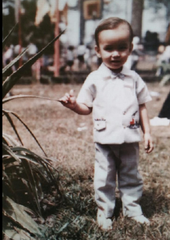
    Hugh Nguyen as a boy in Vietnam, teased for being “Amerasian,” a child born during wartime from an Asian mother and an American solider. (Photo: Family handout)

    His life was hell because he looked different than the other boys that played in the streets of Saigon.

    His light skin, light hair and light eyes.The father he never knew.

    These were all reasons that made Hugh Nguyen the target of bullies who mocked him for being an “Amerasian,” — though they used more deragatory terms — a child conceived in wartime by a Vietnamese mother and an American military father fighting abroad.

    Not fully belonging to America or Vietnam, these kids were commonly dismissed as “children of the dust,” leftovers of an unpopular war. They were left discarded by both governments and left to be taunted by schoolmates who teased them for their features that resembled the face of the enemy.

    Most never knew their fathers.


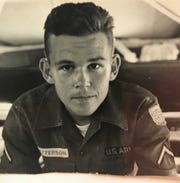
    Roy Patterson, as an 18-year-old American soldier stationed at the base in Nha Trang during the Vietnam War. (Photo: Family handout)

    “They disliked us tremendously,” Nguyen said in an interview with USA TODAY NETWORK – Tennessee. “We were treated like garbage. We were talked down to and looked down on.”…

    Read the entire article here.

  • E is for Evelyn

    2019-01-19

    E is for Evelyn

    Adulting Whilst…
    2019-01-05

    Fiona Timba

    E is for Evelyn, Evelyn Dove.

    Evelyn Dove was born in London on 11 January 1902 and was the first black woman to sing on BBC radio. Although often referred to as the British Josephine Baker, Evelyn Dove replaced Josephine Baker in 1932 as the star attraction at the Casino de Paris and in a career that spanned over five decades she was a star of jazz and cabaret, embraced by the world.

    Evelyn had West African and English heritage, her father being a barrister originally from Sierra Leone. It is reported that she had a privileged upbringing, attending private school before going on to study at the Royal Academy of Music and in 1925 she became the first black woman to sing on BBC radio in 1925 at the age of just 24! Evelyn toured Europe performing with many of the great American jazz performers of the time before replacing Josephine Baker at the Casino de Paris. Coming from a privileged middle-class family, and with a parent of African heritage, you can only imagine the reaction her parents had to Evelyn donning Josephine’s revealing costume…

    Read the entire article here.

  • What it’s like to be Black and Argentine

    2019-01-19

    What it’s like to be Black and Argentine

    BBC News
    2018-12-31

    Reporter: Celestina Olulode
    Produced by Hannah Green and Hannah Gelbart for the BBC News at Ten.

    Black people have had a huge influence on Argentina’s history, but now they make up only one percent of the population of Buenos Aires.

    Afro-Argentines, whose families descended from the slave trade, often feel like they’ve been written out of history and are mistaken for foreigners in their own country.

    Watch the story here.

  • Allure

    2019-01-19

    Allure

    Medium
    2019-01-07

    Fanny Elisabeth Garvey

    For A., C., C., J., and S., who see the beauty in me.

    II. ALLURE

    2018. Ireland.

    I wanted so badly to ask her how she does it that I sat there feeling stupidly desperate.

    This beautiful woman sitting next to me at the table.

    The kind of woman of whom people say: There’s simply something just so alluring about her.

    How, I wondered, could she be so cool, so calm, so black, so beautiful, in her halter top evening gown, with her braided hair falling elegantly down around her shoulders and her skin glowing smooth, dark brown and silky as a mink?

    She and I were the only black folk in the place.

    No one noticed this except me.

    Well.

    Maybe she did….

    Read the entire article here.

  • Mixed Race, Half Enough?

    2019-01-19

    Mixed Race, Half Enough?

    Medium
    2019-01-15

    Kristen Simmons


    Photo by Thomas Hafeneth on Unsplash

    Hi.

    I’m Kristen. I’m a mixed-race author who writes books with mixed-race characters. Yes, I know my last name is Simmons and doesn’t sound very Japanese. Yes, I know Kristen doesn’t either. Yes, I even know that while many people have called me everything from “tan” to “exotic,” I don’t look “very Japanese.”

    But guess what? I am.

    All my life, this has been something I’ve encountered. People would ask my father when I was alone with him in public if I was really his daughter because we didn’t look alike. (For the record, he’s Caucasian.) Then, when I first started telling people I was Japanese, the questions turned to, “But not completely Japanese, right?” Because to them, I wasn’t…

    Read the entire article here.

  • British woman whose Nigerian father was killed by an IRA bomb has been driven from her Northern Ireland home by racists, she says, as she finally finds ‘sanctuary’ in England

    2019-01-18

    British woman whose Nigerian father was killed by an IRA bomb has been driven from her Northern Ireland home by racists, she says, as she finally finds ‘sanctuary’ in England

    The Daily Mail
    2018-02-20

    Richard Spillett

    Jayne Olorunda, the daughter of a man killed by the IRA, has told how she was forced out of Northern Ireland by racism
    Jayne Olorunda, the daughter of a man killed by the IRA, has told how she was forced out of Northern Ireland by racism
    • Jayne Olorunda grew up in Belfast after her father was killed by an IRA bomb
    • She says her family have been forced out of Northern Ireland by racism
    • Now in her thirties, she was surrounded by racist thugs outside party in 2016
    • She says her family are much happier in Leeds, where ‘attitudes are different’

    The daughter of a man killed in an IRA bombing has told how she was later forced from Northern Ireland by racism.

    Jayne Olorunda is the daughter of Nigerian-born Max Olorunda, who was killed by an IRA incendiary bomb which detonated aboard a train in Dunmurry in 1980.

    She grew up in Belfast but recently moved to England due to racism in Northern Ireland…

    …Miss Olorunda has written Legacy, the story of her family and how they have coped with her father’s tragic death and the aftermath of it.

    The book covers Miss Olorunda’s mother’s deteriorating health and how the pair eventually met the man involved in the bombing which killed her father as well as her own struggles growing up.

    Read the entire article here.

  • Born to Protest: Legal Trailblazer Pauli Murray Takes Her Rightful Place in History

    2019-01-18

    Born to Protest: Legal Trailblazer Pauli Murray Takes Her Rightful Place in History

    Bitch Media
    2018-12-20

    Marisa Bate


    Dr. Pauli Murray is finally reentering our public consciousness. (Associated Press)

    In On the Basis of Sex, the forthcoming movie about Ruth Bader Ginsburg’s journey into law, RBG (played by Felicity Jones) holds a moot court in her apartment to prepare for Moritz v. Commissioner, her first big case and the beginning of her lifelong fight against sex discrimination. One of the moot court judges is Dr. Pauli Murray (Sharon Washington), an African American lawyer, activist, poet, and priest, who’s wearing a truly terrific pink pantsuit. “Pauli would have been upset about that pink suit,” Rosalind Rosenberg, Professor of History Emerita at Barnard College, and Murray’s biographer tells me. In fact, “Pauli never visited Ginsberg’s apartment and certainly did not serve on a moot court as a judge, but it’s a biopic, and I think it’s a visually defensible way into the picture. But [as] a historian, if this was a documentary, I would’ve protested because this never happened.”

    I was thrilled to see Murray in On the Basis of Sex, even if the film rewrote some of history’s details. (The movie’s screenwriter is RBG’s nephew, Daniel Stiepleman, and a generous defense would suggest the inclusion is a tribute to those his aunt admired most.) I have been fascinated by Murray’s life, career, and why she’s been so overlooked and underknown since I stumbled across an article about her a few years ago. Anna Pauline “Pauli” Murray was born into a mixed-race family in Baltimore in 1910, orphaned at the age of 3, adopted by her aunt, and raised in the Episcopal church in Durham, North Carolina, before becoming an influential civil-rights lawyer. Despite her accomplishments, when I visited the movie’s IMDb.com page, I found neither Sharon Washington nor Murray’s names listed. “Guy #1” and “Guy #2,” however, are…

    Read the entire article here.

Previous Page
1 … 180 181 182 183 184 … 1,428
Next Page

Designed with WordPress