• Slavery Unseen: Sex, Power, and Violence in Brazilian History

    Duke University Press
    2018-04-06
    272 pages
    9 illustrations
    Cloth ISBN: 978-0-8223-7116-8
    Paperback ISBN: 978-0-8223-7129-8

    Lamonte Aidoo, Andrew W. Mellon Assistant Professor of Romance Studies
    Duke University, Durham, North Carolina

    In Slavery Unseen, Lamonte Aidoo upends the narrative of Brazil as a racial democracy, showing how the myth of racial democracy elides the history of sexual violence, patriarchal terror, and exploitation of slaves. Drawing on sources ranging from inquisition trial documents to travel accounts and literature, Aidoo demonstrates how interracial and same-sex sexual violence operated as a key mechanism of the production and perpetuation of slavery as well as racial and gender inequality. The myth of racial democracy, Aidoo contends, does not stem from or reflect racial progress; rather, it is an antiblack apparatus that upholds and protects the heteronormative white patriarchy throughout Brazil’s past and on into the present.

    Table of Contents

    • Acknowledgments
    • Introduction. Secrets, Silences, and Sexual Erasures in Brazilian Slavery and History
    • 1. The Racial and Sexual Paradoxes of Brazilian Slavery and National Identity
    • 2. Illegible Violence: The Rape and Sexual Abuse of Male Slaves
    • 3. The White Mistress and the Slave Woman: Seduction, Violence, and Exploitation
    • 4. Social Whiteness: Black Intraracial Violence and the Boundaries of Black Freedom
    • 5. O Diabo Preto (The Negro Devil): The Myth of the Black Homosexual Predator in the Age of Social Hygiene
    • Afterword. Seeing the Unseen: The Life and Afterlives of Ch/Xica da Silva
    • Notes
    • Bibliography
    • Index
  • 26a

    Vintage
    2006-03-02
    240 Pages
    129mm x 198mm x 15mm
    170g
    Paperback ISBN: 9780099479048
    eBook ISBN: 9781409079620

    Diana Evans

    • Winner of the Orange Award for New Writers
    • Winner of the deciBel Writer of the Year Award
    • Shortlisted for the Whitbread First Novel Award
    • Shortlisted for the Guardian First Book Award
    • Shortlisted for the Commonwealth Best First Book Award
    • Shortlisted for the Times/Southbank Show Breakthrough Award
    • Recipient of a Betty Trask Award
    • Longlisted for the International IMPAC Dublin Literary Award

    Identical twins, Georgia and Bessi, live in the loft of 26 Waifer Avenue. It is a place of beanbags, nectarines and secrets, and visitors must always knock before entering. Down below there is not such harmony. Their Nigerian mother puts cayenne pepper on her Yorkshire pudding and has mysterious ways of dealing with homesickness; their father angrily roams the streets of Neasden, prey to the demons of his Derbyshire upbringing. Forced to create their own identities, the Hunter children build a separate universe. Older sister Bel discovers sex, high heels and organic hairdressing, the twins prepare for a flapjack empire, and baby sister Kemy learns to moonwalk for Michael Jackson. It is when the reality comes knocking that the fantasies of childhood start to give way. How will Georgia and Bessi cope in a world of separateness and solitude, and which of them will be stronger?

  • Carlos Arias Vivas | DNA tests don’t define your identity

    The Daily Pennsylvanian
    Philadelphia, Pennsylvania
    2018-03-14

    Carlos Arias Vivas


    CC0

    Convos with Carlos | 23andMe results can’t change your upbringing

    During one late night bonding session with my hallmates, one of them revealed to the group that they took a DNA test and discovered more about their background. Intrigued, I sought out to buy one of the kits for myself. The major players in this industry are Ancestry.com and 23andMe; both offer DNA tests that can shed light on your lineage as well as an optional health risks assessment.

    Now, I knew that these tests are very expensive. For 23andMe, the basic ancestry service costs $99 and the Health + Ancestry service costs $199. I ended up choosing to go with 23andMe based on positive online reviews. Also, this was the brand my hallmate had used. Luckily, for me, there was a special Black Friday sale, so I snatched up the kit and waited for it to arrive at Amazon@Penn.

    Before doing the spit-test that is required, I knew that I was going to be Latino. My parents are from Ecuador, and I imagined that my ancestry composition would show a high concentration of Latino ancestry. I never questioned my background because that was never a conversation I had with my family. After countless times of spitting in my tube, I entered my registration code to track my kit, sealed up the test tube in the box, and dropped off my sample at the post office.

    This “waiting game” was an agonizing process. But even though I was excited to receive my results, I knew that the outcome wouldn’t dramatically change who I was. Whatever 23andMe had in store, my upbringing is already set in stone…

    Read the enetire article here.

  • Reverse Passing

    UCLA Law Review
    Volume 64, Issue 2 (2017)
    pages 282-354

    Khaled A. Beydoun, Associate Professor of Law
    University of Detroit, Mercy School of Law

    Erika K. Wilson, C. Ivey II Term Professor of Law, Associate Professor of Law
    University of North Carolina, Chapel Hill

    Throughout American history untold numbers of people have concealed their true racial identities and assumed a white racial identity in order to reap the economic, political, and social benefits associated with whiteness. This phenomenon is known as passing. While legal scholars have thoroughly investigated passing in its conventional form, the corollary process of reverse passing—the process in which whites conceal their true racial identity and present themselves as nonwhite—has not been closely investigated within legal scholarship.

    Rachel Dolezal provides a timely study of the process of reverse passing. Dolezal—an Africana Studies Instructor and head of the Spokane, Washington NAACP—was outed as being white after years of phenotypically and culturally presenting herself as a Black woman. Dolezal’s “outing” generated much popular debate and scholarly discourse, most of which tended to frame her actions as a one-off occurrence by a deviant actor. This Article takes a contrary position.

    Though reverse passing is often framed as deviant or irrational, this Article demonstrates how the U.S. Supreme Court’s affirmative action jurisprudence creates tangible and intangible incentives for white actors to identify as nonwhite. It suggests that the Court’s entrenchment of the diversity rationale as the primary compelling state interest that can be used to justify race-conscious affirmative action programs generated situational value in nonwhiteness. That situational value in nonwhiteness now creates incentives that previously did not exist for whites to reverse-pass in order to obtain access to opportunities in education, employment and beyond.

    This Article is the first to coin, analyze, and propose a theory of reverse passing. It also deepens the rich and rising scholarship examining performance theory and the pliability of racial identity. Finally, given the reconsideration of the diversity rationale by the Supreme Court in Fisher v. University of Texas at Austin, this Article also provides an opportunity to critically examine the merits and shortcomings of the diversity rationale.

    Read the entire article here.

  • What does it mean to be of mixed race in America? A new book and exhibition aim to answer

    The Los Angeles Times
    2018-04-06

    Bonnie Tsui


    Artist Kip Fulbeck continues his Hapa Project, begun in 2001, photographing people who identify as being of mixed race. His original portraits are paired with new pictures of the same individuals. (Kip Fulbeck)

    Natalie Coughlin and Nathan Adrian are best known as world swimming champions — Coughlin as a 12-time Olympic medalist and the first woman to swim the 100-meter backstroke in under a minute, and Adrian as an eight-time Olympic medalist and a top freestyle sprinter for the U.S. national team. On a recent Saturday morning, they dropped those identities for a lesser-known one.

    “Being hapa — that’s a big part of my identity,” Coughlin said, as she and Adrian each sat for a portrait by photographer Kip Fulbeck at a makeshift studio in Oakland.

    Fulbeck started photographing people of mixed racial heritage in 2001. Hapa, a Hawaiian word for “part,” has been adopted by some as a way to describe themselves. After each sitting, Fulbeck asked participants to hand-write responses to the question: “What are you?”…

    Read the entire article here.

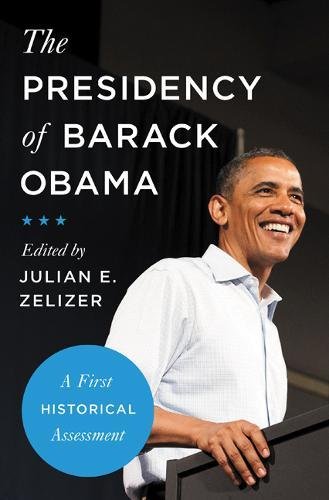
  • The Presidency of Barack Obama: A First Historical Assessment

    Princeton University Press
    2018-03-13
    360 pages
    Hardcover ISBN: 9780691160283
    Paperback ISBN: 9780691182100
    E-book ISBN: 9781400889556

    Edited by:

    Julian E. Zelizer, Malcolm Stevenson Forbes, Class of 1941 Professor of History and Public Affairs
    Princeton University

    An original and engaging account of the Obama years from a group of leading political historians

    Barack Obama’s election as the first African American president seemed to usher in a new era, and he took office in 2009 with great expectations. But by his second term, Republicans controlled Congress, and, after the 2016 presidential election, Obama’s legacy and the health of the Democratic Party itself appeared in doubt. In The Presidency of Barack Obama, Julian Zelizer gathers leading American historians to put President Obama and his administration into political and historical context.

    These writers offer strikingly original assessments of the big issues that shaped the Obama years, including the conservative backlash, race, the financial crisis, health care, crime, drugs, counterterrorism, Iraq and Afghanistan, the environment, immigration, education, gay rights, and urban policy. Together, these essays suggest that Obama’s central paradox is that, despite effective policymaking, he failed to receive credit for his many achievements and wasn’t a party builder. Provocatively, they ask why Obama didn’t unite Democrats and progressive activists to fight the conservative counter-tide as it grew stronger.

    Engaging and deeply informed, The Presidency of Barack Obama is a must-read for anyone who wants to better understand Obama and the uncertain aftermath of his presidency.

    Contributors include Sarah Coleman, Jacob Dlamini, Gary Gerstle, Risa Goluboff, Meg Jacobs, Peniel Joseph, Michael Kazin, Matthew Lassiter, Kathryn Olmsted, Eric Rauchway, Richard Schragger, Paul Starr, Timothy Stewart-Winter, Thomas Sugrue, Jeremi Suri, Julian Zelizer, and Jonathan Zimmerman.

  • When interviewer-based surveys try to gather data on ethnicity their questions may not always capture what they are aiming for; rather, it is the interviewees’ opinion on what ethnic group (or groups) they think they belong to.

    Partly in response to this sort of experience, the idea of ethnicity has now been replaced by today’s ‘gold standard’ democratic definition – self-declared ethnic affiliation. In short, you are who you say you are. This may or may not allow people to nominate a mixed or multiple group membership depending on which form you are filling in. Also, your declaration is not subject to approval from the group(s) you claim to belong to. This is the current New Zealand Standard Ethnicity definition.

    Geoff Chambers and Paul Callister, “DNA tests are all fine and dandy, but they can never tell us who we really are,” The Dominion Post, April 3, 2018. https://www.stuff.co.nz/dominion-post/comment/102707496/DNA-tests-are-all-fine-and-dandy-but-they-can-never-tell-us-who-we-really-are.

  • DNA tests are all fine and dandy, but they can never tell us who we really are

    Stuff (The Dominion Post)
    Wellington, New Zealand
    2018-04-03

    Geoff Chambers, Senior Research & Teaching Fellow (Retired)
    Victoria Unversity of Wellington, New Zealand

    Paul Callister, Retired Economist
    Wellington, Victora, New Zealand


    ‘So just who are we? Ancestry and culture became blended in the concept of ‘ethnicity’ popular from around the 1980s. 123rf.com

    OPINION: Who am I and where do I come from? Many New Zealanders ask themselves these important questions. This is the basis of our identity as individuals and as members of groups. The article Seeking the truth in DNA (March 24) tells us just how popular it has become to seek answers through genetic testing companies like Ancestry.com. For a few dollars and a small saliva sample all will be revealed.

    But will it? What these tests do show is who our deep-time ancestors were and where they came from. Their results may be surprising to some. It is possible to be born in Dublin to two rock solid Irish parents and yet be told that you are Scandinavian. This dilemma can only be resolved by learning about historical population movements and invasions.

    In New Zealand our focus is often on the Māori v European identity. The article above told the story of Oriini​ Kaipara, whose DNA test showed that she was 100 per cent Māori rather than just 80 per cent as she had expected. This sparked a ‘blood quantum‘ debate. This became entwined with a wider discussion led by Simon Bridges about what constitutes our sense of identity. It is time now to unpack the history of these ideas for all round better understanding…

    Read the entire article here.

  • Reigning from the Ground: The Gravity of Soledad O’Brien

    Bitch
    Issue #78 | Spring 2018, 2018-03-13

    Lisa Factora-Borchers

    photography by Margarita Corporan

    The rumors circulated and reached me months before I met her. People who knew her in various capacities—from her personal representatives to those who briefly met her at a speaking event—repeated the same sentiment: Even with all her successes and all the reasons not to be, Soledad O’Brien is incredibly sweet and down-to-earth.

    Like millions of other CNN viewers, I became familiar with O’Brien’s broadcast journalism in the early 2000s, when she secured her status as one of the few women journalists of color in mainstream media. In 2006, during the zenith of blogging, Heather B. Armstrong, a popular writer in the mom-blogosphere, gushed about meeting O’Brien in person and described her “glowing aura”:

    “She was exquisite in every conceivable way, perfect hair and makeup and wardrobe, and when she greeted everyone and made small talk, I got the sense that her brain was wired to a digital encyclopedia of everything that has ever happened on Earth, because she spoke with authority on every topic.”

    Some descriptions stay with you, even after 11 years, until you have to shed them as prep—because you can’t interview a master interviewer when you’re preoccupied with talk of glowing auras and infallibility.

    O’Brien’s home is a sprawling apartment in New York’s Chelsea neighborhood (where, it should be noted, she has lived since well before its ascent to ultra-gentrified chic). Its white built-in shelves are stacked with impeccably aligned books interrupted by candles, framed photos, and artisan bowls and vases. The place is immaculate, but not intimidating. This feels intentional. As far as the famed O’Brien aura itself, it is a bit different than I imagined. She carries herself with a sense of ease and casual authority; although she comes through the door with her hands and arms full, that doesn’t stop her from calling out friendly greetings to me and the photography team. O’Brien has spent the past three decades telling stories. Google her—every kind of story that a journalist dreams about covering, she’s covered: natural disasters, structural inequality, national identity, politics, sports, and narrative stories from marginalized communities. There isn’t one way to describe her successes; they’re like vines—woven and connected, multitudinous and plentiful. After she dropped out of Harvard, she began working as a reporter, in 1989, for the medical radio show Second Opinion. She spent the ’90s reporting and anchoring weekend and morning shows for NBC before eventually transitioning to CNN in 2003. While anchoring CNN’s American Morning, O’Brien was moved to the documentary division and from 2007 until 2013 hosted the series In America, which eventually led to two spin-offs, Black in America and Latino in America

    Read the entire article here.

  • Mixing up identity, race and culture

    Now
    Toronto, Ontario
    2018-03-28

    Samantha Edwards


    Zoé Doyle (left) and Vanessa Trenton star in a new production of the groundbreaking play.

    MIXIE & THE HALF BREEDS written by Julie Tamiko Manning and Adrienne Wong, directed by Jenna Rodgers. Presented by fu-GEN Theatre Company at the Pia Bouman School for Ballet (6 Noble). Previews from Tuesday (April 3), opens April 5 and runs to April 15. $15-$35.

    Growing up, Julie Tamiko Manning didn’t know many people who looked like her. Manning is half-Japanese and half-white, a hybrid identity that made her stick out in her hometown in the Eastern Townships of Quebec.

    In the early 2000s, when Manning was in her 20s, she went to Vancouver for the first time and found herself working with a cast made up entirely of mixed race people. During that trip, she became friends with Adrienne Wong, a half-Chinese, half-white playwright and actor originally from Calgary and now based in Ottawa.

    “Adrienne and I totally bonded over being mixies,” says Manning, who now lives in Montreal.

    “No matter what the mix is, there’s a very similar experience that you have lived as a mixed race person.”

    Like Manning, I’m half-Japanese and half-white, and I understand why she and Wong felt an immediate kinship. Mixed race people – or “mixies,” as some of us like to call ourselves – have a special, almost familial connection to one another. We can spot a fellow mixie from across a crowded streetcar or in the most minor roles in a movie. We can relate to strangers constantly asking us, “Where are you from? No, where are you really from?” or feeling culturally estranged from both sides of our identity.

    These ideas of identity, race and culture in Canadian society are explored in Manning and Wong’s comedic, fantastical play, Mixie & The Half Breeds, which follows the burgeoning friendship of two mixed race women who couldn’t be more different…

    Read the entire article here.