Mixed Race Studies

Scholarly perspectives on the mixed race experience.

    • About This Site
    • Bibliography
    • Contact Information
    • Date and Time Formats
    • Forthcoming… (Updated 2021-09-01)
    • Likely Asked Questions
    • List of Book Publishers
    • List of Definitions and Terms
    • My Favorite Articles and Papers
    • My Favorite Posts
    • My Recent Activities
    • Praise for Mixed Race Studies
    • Tag Listing
      • Tag Listing (Ordered by Count)
    • US Census Race Categories, 1790-2010
    • 1661: The First ‘Mixed-Race’ Milestone
    • 2010 U.S. Census – Some Thoughts

recent posts

  • The Routledge International Handbook of Interracial and Intercultural Relationships and Mental Health
  • Loving Across Racial and Cultural Boundaries: Interracial and Intercultural Relationships and Mental Health Conference
  • Call for Proposals: 2026 Critical Mixed Race Studies Conference at UCLA
  • Participants Needed for a Paid Research Study: Up to $100
  • You were either Black or white. To claim whiteness as a mixed child was to deny and hide Blackness. Our families understood that the world we were growing into would seek to denigrate this part of us and we would need a community that was made up, always and already, of all shades of Blackness.

about

  • Twitter
  • Facebook
  • Instagram
  • Indigenous Writes: A Guide to First Nations, Métis & Inuit Issues in Canada

    2017-08-27

    Indigenous Writes: A Guide to First Nations, Métis & Inuit Issues in Canada

    HighWater Press (an imprint of Portage and Main Press)
    September 2016
    240 pages
    Paperback ISBN: 978-1553796800

    Chelsea Vowel

    Delgamuukw. Sixties Scoop. Bill C-31. Blood quantum. Appropriation. Two-Spirit. Tsilhqot’in. Status. TRC. RCAP. FNPOA. Pass and permit. Numbered Treaties. Terra nullius. The Great Peace…

    Are you familiar with the terms listed above? In Indigenous Writes, Chelsea Vowel, legal scholar, teacher, and intellectual, opens an important dialogue about these (and more) concepts and the wider social beliefs associated with the relationship between Indigenous peoples and Canada. In 31 essays, Chelsea explores the Indigenous experience from the time of contact to the present, through five categories – Terminology of Relationships; Culture and Identity; Myth-Busting; State Violence; and Land, Learning, Law, and Treaties. She answers the questions that many people have on these topics to spark further conversations at home, in the classroom, and in the larger community.

  • Brazil In Black And White

    2017-08-27

    Brazil In Black And White

    Rough Translation
    National Public Radio
    2017-08-14

    Two radically different ways of seeing race come into sudden conflict in Brazil, provoking a national conversation about who is Black? And who is not Black enough?

    Listen to the podcast (00:32:23) here. Download the podcast here.

  • Barack Obama and the Nommo Tradition of Afrocentric Orality

    2017-08-26

    Barack Obama and the Nommo Tradition of Afrocentric Orality

    JSTOR Daily: Where News Meets Its Scholarly Match
    2017-08-23

    Shannon Luders-Manuel


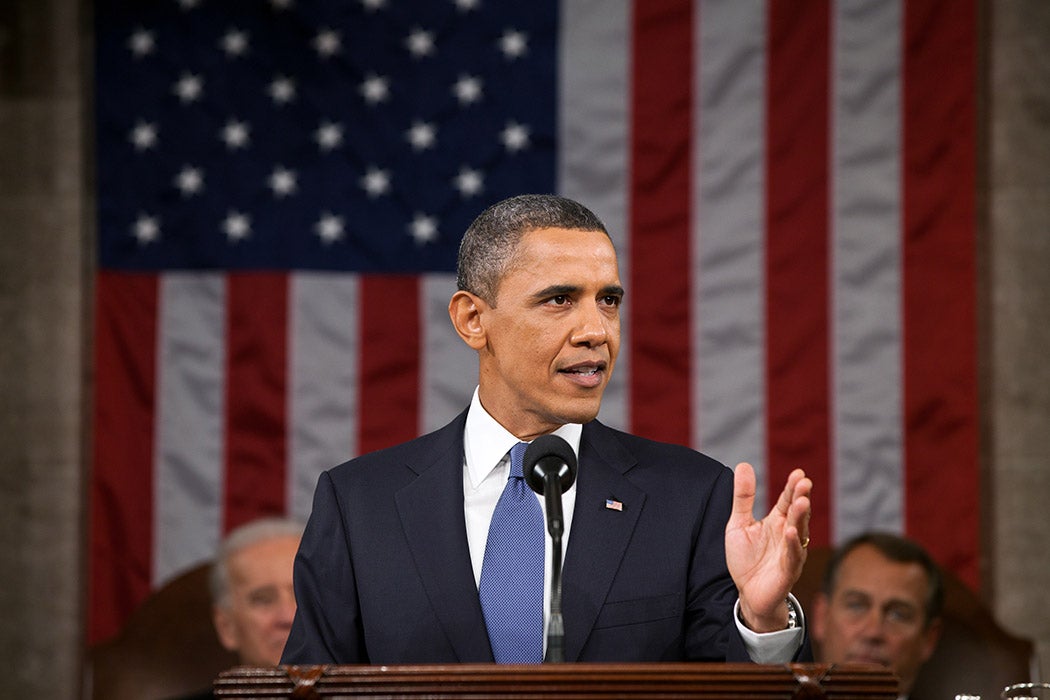
    President Obama delivers the State of the Union in 2011
    via Flickr/White House

    Black actors, entertainers, and everyday citizens often have a particular cadence to their voices that others can identify as “black,” whether or not the listeners can see the individual speaking. Popular culture seems to think that black men sound wise simply by their voices alone, leading to black actors narrating myriad commercials, including Dennis Haysbert for Allstate Insurance and Samuel L. Jackson for Capital One. In an article for Guernica, John McWhorter breaks down this speech pattern: “It differs from standard English’s sound in the same way that other dialects do, in certain shadings of vowels, aspects of intonation, and also that elusive thing known as timbre, most familiar to singers—degrees of breathiness, grain, huskiness, ‘space.’”

    While sound influences dialect, black oration goes back much further, to the idea of nommo, which is rooted in West African tradition. Through both dialect and nommo, former President Barack Obama was able to inspire black and white audiences, altering his word choice and patterns accordingly…

    Scholarship of nommo is wanting. However, in the Journal of Black Studies, Sheena C. Howard defines it in the following manner: “Nommo, the creative power of the word, is a delivery style that is unique to African Americans. Nommo is manifested in characteristics of African orality.” She focuses on four characteristics of nommo: rhythm, call and response, mythication, and repetition, and she analyzes their use in two of Obama’s speeches: one at Howard University and the other at Southern New Hampshire University, both in 2007…

    Read the entire article here.

  • Ask Code Switch: ‘Since You’re Black, You Must Be … ‘

    2017-08-26

    Ask Code Switch: ‘Since You’re Black, You Must Be … ‘

    Code Switch: Race and Identity, Remixed
    National Public Radio
    2017-08-26

    Leah Donnella, News Assistant, Code Switch


    Code Switch is tackling your trickiest questions about race.
    amathers/iStock

    Welcome back to Ask Code Switch, a segment where we dissect your trickiest questions about race. This week, we’re tackling one version of a question that we hear all the time: What do you do when people just won’t stop making assumptions about you because of how you look?

    Franchesca in San Francisco writes:

    I am mixed Filipino and black, but was raised by my Filipino side. Because I identify more with being Filipino, I get offended when people assume that I’m only black or that I’m only into “black things.” For example, they assume that I must be into black men, etc. It makes me feel like I’m being stereotyped based off my appearance (which is racially ambiguous and depends on who is looking at me and their own perceptions or experiences with different ethnicities). How can I avoid being offended and address the situation when I do feel like I am being boxed into a certain category, without making it a huge deal?…

    Read the entire article here.

  • Two Lessons in Prejudice

    2017-08-26

    Two Lessons in Prejudice

    The New York Times
    2017-08-26

    Saïd Sayrafiezadeh


    Niedring/Drentwett – MITO images, via Getty Images

    What I know of rural white America mostly begins and ends with the three times I went at the age of 8 to visit a friend’s farm in Butler County, Pa., about an hour north of Pittsburgh, where I grew up. I recall vast farmland, ample sunshine and no black people — or Hispanics or Jews, or for that matter, half-Iranian, half-Jewish people like me. There was, however, my friend’s father, who found it amusing to make fun of my name over dinner, coming up with a wide variety of ways to mispronounce it each time. I did my best to politely correct him each time, until it finally became apparent to me that I was participating in a game in which there was no chance of winning, and I ran from the table and out of the house and cried among the farmland.

    It is, of course, unfair to judge an entire county with a population of almost 200,000 on the behavior of one man 40 years ago, but I hope you can understand my disbelief when on a dark night last November, I watched on television as Hillary Clinton’s presidential campaign tried to assure her supporters that little Butler County was going to come through for her in the 11th hour and overtake Donald Trump’s lead in Pennsylvania, and by extension the Electoral College. Now, I thought, is as good a time as any to turn off the television and go bury my head under the pillow…

    Read the entire article here.

  • Danzy Senna: New People

    2017-08-26

    Danzy Senna: New People

    Bookworm
    KCRW FM
    Santa Monica, California
    2017-08-24


    Photo by Christopher Ho

    Danzy Senna relishes kicking political correctness to the curb. She believes that irony and humor are more effective than earnestness when writing about race and gender. In her novel New People, Senna takes on both the comedy and seriousness of race. Her mixed-race trickster heroine plays what she thinks is a funny prank on her mixed-race boyfriend – a racist prank that mushrooms into a full-scale drama on their 90s Stanford University campus… and that is just the beginning.

    Listen to the entire episode (00:28:29) here.

  • Sally Hemings, Thomas Jefferson and the Ways We Talk About Our Past

    2017-08-26

    Sally Hemings, Thomas Jefferson and the Ways We Talk About Our Past

    The New York Times
    2017-08-24

    Annette Gordon-Reed, Charles Warren Professor of American Legal History; Professor of History, Faculty of Arts & Sciences
    Harvard University


    A photograph of Monticello from the late 1800s. Credit University of Virginia Library

    It has been 20 years since the historian Annette Gordon-Reed published “Thomas Jefferson and Sally Hemings: An American Controversy,” a book that successfully challenged the prevailing perceptions of both figures. In a piece for The New York Times Book Review, submitted just before the tragic events in Charlottesville, Va., Gordon-Reed reflects on the complexities that endure in our understanding of Hemings and the language we use to characterize her.

    Sally Hemings has been described as “an enigma,” the enslaved woman who first came to public notice at the turn of the 19th century when James Callender, an enemy of the newly elected President Thomas Jefferson, wrote with racist virulence of “SALLY,” who lived at Monticello and had borne children by Jefferson. Hemings came back into the news earlier this year, after the Thomas Jefferson Foundation announced plans to restore a space where Hemings likely resided, for a time, at Monticello. A number of news reports as well as comments on social media discussing the plans drew the ire of many readers because they referred to Hemings as Jefferson’s “mistress” and used the word “relationship” to describe the connection between the pair, as if those words inevitably denote positive things. They do not, of course — especially when the word “mistress” is modified by the crucial word “enslaved.”

    When I published my first book, “Thomas Jefferson and Sally Hemings: An American Controversy,” in 1997, most people knew of Hemings from two works: Fawn Brodie’s biography “Thomas Jefferson: An Intimate History” (1974) and Barbara Chase-Riboud’s novel “Sally Hemings” (1979), both of which sought to rescue Hemings’s personhood. More typically, the scholarship written to disprove her connection to Jefferson routinely diminished Hemings’s humanity. The arguments that the story couldn’t be true because Jefferson would never be involved with “a slave girl” and that such a person was too low to have influenced Jefferson recurred in various formulations in historical writings over many years, as if the designation “slave girl” told readers all they needed to know. My first book was designed to expose the inanity of those, and other, arguments. I wrote a second book, “The Hemingses of Monticello: An American Family,” to flesh out Hemings’s personal history…

    Read the entire article here.

  • Sundance prize-winning doc ‘Unrest’ gets UK release

    2017-08-26

    Sundance prize-winning doc ‘Unrest’ gets UK release

    Screen Daily
    2017-08-25

    Tom Grater, Deputy online editor
    London, United Kingdom


    Unrest

    Unrest, the feature documentary about ME (also known as chronic fatigue syndrome) which premiered at this year’s Sundance Film Festival, will get a UK release in October.

    The film chronicles its director’s struggles with myalgic encephalomyelitis (ME). A PHD student at Harvard, she was suddenly struck by the mysterious illness and left bedridden.

    She has since become a filmmaker and activist for ME awareness and was invited to deliver a TED Talk on the subject in June 2016.

    Unrest will be independently released by its co-producers, Jennifer Brea’s Shella Films based in Los Angeles, and Lindsey Dryden’s Little By Little Films based in Gloucestershire, UK…

    Read the entire article here.

  • Living on the borderline: how I embraced my mixed-race status after years of denial

    2017-08-26

    Living on the borderline: how I embraced my mixed-race status after years of denial

    The Guardian
    2017-08-26

    Georgina Lawton


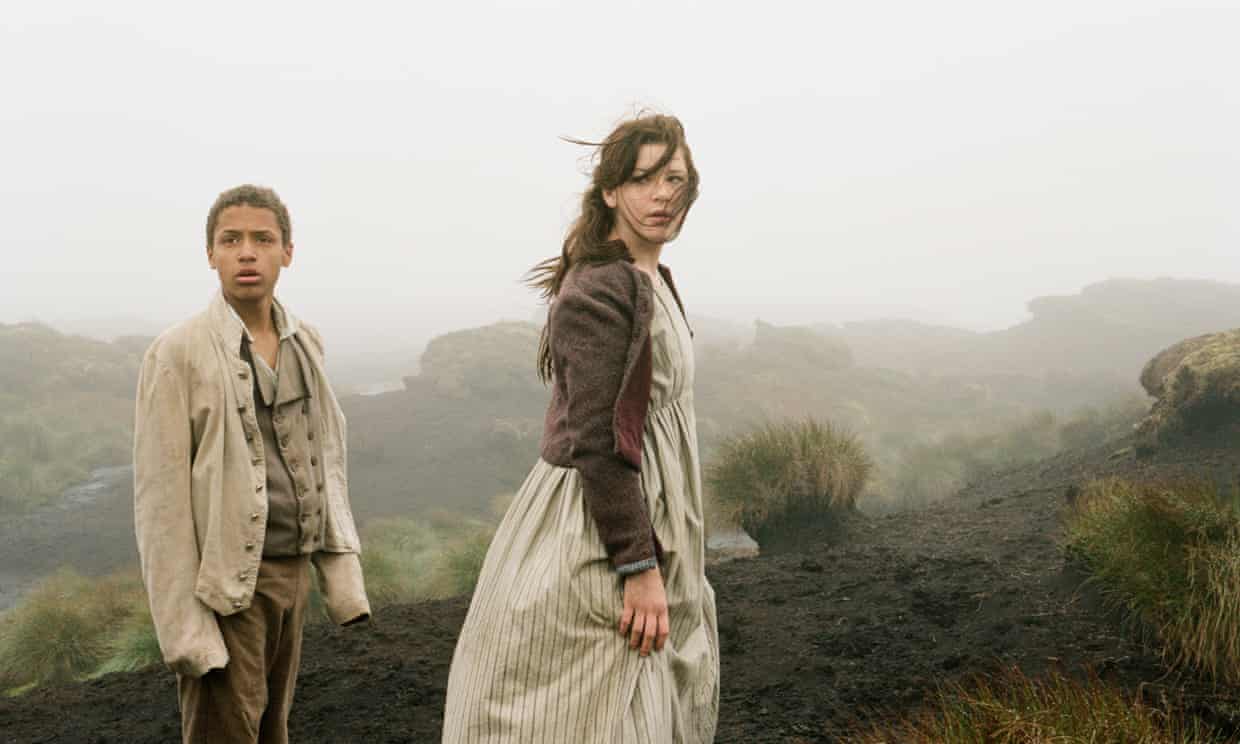
    Solomon Glave as Heathcliff in Andrea Arnold’s 2011 adaptation of Wuthering Heights Photograph: Artificial Eye

    I still have yet to uncover the full truth behind my heritage, but now feel that living in a racial no man’s land can actually be fun

    Wuthering Heights has been one of my favourite books since I studied it for A-level seven years ago. I was fascinated by the tumultuous (and oddly asexual) relationship between Cathy and Heathcliff, but mostly with the theme of liminality that runs through the book, and many other works of gothic literature. Liminality refers to something – or someone – that sits on the boundary between two things; it’s a middle ground between polar opposites. Kind of like being mixed race.

    I didn’t realise it at the time, but I identified with Heathcliff (he’s a dark-skinned Gypsy anti-hero) because I have been straddling the borders of race liminality my whole life. Growing up brown-skinned in a white family and facing questions as to why that was, I have had to navigate many different racial identities depending on who I was with, never quite owning one…

    Read the entire article here.

  • A moment that changed me: realising I was black

    2017-08-24

    A moment that changed me: realising I was black

    The Guardian
    2017-08-18

    Micha Frazer-Carroll, Founder and editor-in-chief
    Blueprint


    ‘Mixedness feels rich, full, and multifaceted.’ Photograph: Micha Frazer-Carroll

    I always thought I was mixed race until someone at school called me black. That started me thinking about racial identity

    “A ‘black girl’. How weird is that?” I laughed. I’m met with silence from my mum’s side of the dinner table.

    “It’s not weird. It’s what you are.”

    Like one million other people in the UK, I’m mixed race. Up until I was a teenager, I’d never considered I could be anything else.

    It’s year 8 – I’m probably about 12 or 13. The day hasn’t been hugely out of the ordinary, but something had happened earlier that made me feel a bit odd. For the first time in my life, I’ve been referred to as “black”.

    Sitting down to dinner that night, as a unit, my family look like a sort of Pantone colour chart of milky beige to deep brown; my mum’s black, my dad’s white, and me and my siblings are various shades of in-between – who’s darkest generally depends on who had been playing in the sun the longest. We exemplify the sort of image of modern Britain that was particularly prevalent during the run-up to the London Olympics. Despite the day’s confusion, early-adolescent me knows one thing for sure: while I am proud of my ethnicity, and being half black, I am not black, I am mixed race. Both parts are equally important to my identity. Mum is visibly getting a bit agitated now. “Most people don’t see that. Above all, you’re black.”…

    Read the entire article here.

Previous Page
1 … 258 259 260 261 262 … 1,428
Next Page

Designed with WordPress