Skip to content

Mixed Race Studies

Scholarly perspectives on the mixed race experience.

    • About This Site
    • Bibliography
    • Contact Information
    • Date and Time Formats
    • Forthcoming… (Updated 2021-09-01)
    • Likely Asked Questions
    • List of Book Publishers
    • List of Definitions and Terms
    • My Favorite Articles and Papers
    • My Favorite Posts
    • My Recent Activities
    • Praise for Mixed Race Studies
    • Tag Listing
      • Tag Listing (Ordered by Count)
    • US Census Race Categories, 1790-2010
    • 1661: The First ‘Mixed-Race’ Milestone
    • 2010 U.S. Census – Some Thoughts

recent posts

  • Mixed Roots: Writers on Multiracial Identity and Both/And Belonging
  • The Routledge International Handbook of Interracial and Intercultural Relationships and Mental Health
  • Loving Across Racial and Cultural Boundaries: Interracial and Intercultural Relationships and Mental Health Conference
  • Call for Proposals: 2026 Critical Mixed Race Studies Conference at UCLA
  • Participants Needed for a Paid Research Study: Up to $100

about

  • Twitter
  • Facebook
  • Instagram
  • Racial and Ethnic Homogamy and Gendered Time on Core Housework

    2017-07-17

    Racial and Ethnic Homogamy and Gendered Time on Core Housework

    Socius: Sociological Research for a Dynamic World
    First Published 2016-11-21
    15 pages
    DOI: 10.1177/2378023116676277

    Catherine Bolzendahl, Assistant Professor of Sociology
    University of California, Irvine

    Zoya Gubernskaya, Assistant Professor of Sociology
    University at Albany, State University of New York

    Racial/ethnic partner homogamy may contribute to gendered patterns in time on housework. To evaluate this, we pool 10 years of data from the American Time Use Survey and examine how time spent on housework varies by racial/ethnic homogamy across racial/ethnic groups and by gender. Interracial partnerships are more gender equitable, due to women spending less time on housework than women in homogamous relationships. Patterns vary by race/ethnicity; homogamy effects are strongest for Hispanic women but are also significant for Asian women. Homogamy has no significant effect among black or white respondents. Descriptive patterns by partner’s race/ethnicity reflect findings on biculturalism.

    Read the entire article here.

  • Is Race Real?

    2017-07-17

    Is Race Real?

    Multiracial Media
    2017-07-10

    Alex Barnett

    They say that race is not a real thing. They say there’s only one race. They say that race is just a person-made (see how I didn’t say “man-made”) construct designed to subjugate people of color, especially those of native African descent, and empower those of native European descent.

    They might well be right…

    Read the entire article here.

  • Allyson Hobbs’ A Chosen Exile makes summer reading lists

    2017-07-17

    Allyson Hobbs’ A Chosen Exile makes summer reading lists

    Stanford News
    Stanford University, Stanford, California
    2017-07-14

    Alex Shashkevich


    Allyson Hobbs

    A Chosen Exile: A History of Racial Passing in American Life, written by historian ALLYSON HOBBS, made it to the 2017 summer reading lists of Harvard University Press and The Paris Review.

    The 2014 book examines the phenomenon of racial passing, which is an intentional attempt by a person to assume a different racial identity, in the United States from the late 18th century to the present. Hobbs was inspired by a story her aunt told her about a distant cousin who passed as a white woman in the 1940s.

    “Necessarily, Hobbs writes, passing involves erasure: gradations gone, subtleties of color and culture reduced to black and white,” wrote Julie Orringer in The Paris Review. “What’s lost in the process: families and friends, a sense of belonging. A Chosen Exile illuminates those losses with acuity, rigor and compassion.”…

    Read the entire article here.

  • Rachel Dolezal represents everything I ever feared people would think about me when I told them I was half Nigerian-half Austrian.

    2017-07-16

    Rachel Dolezal represents everything I ever feared people would think about me when I told them I was half Nigerian-half Austrian. She embodies the cause of the doubt I first see flash across people’s faces when I tell them that yes, my biological mother is black, my father is white and I am a product of the two. The idea that someone would ever associate the two of us makes me feel ill and yet as I read about her I wonder increasingly where this leaves me. Where my voice fits into this story and whether or not I have the right to comment.

    Nina Grossfurthner, ““So If You’re From Africa, Why Are You White?”,“ FLY (Freedom. Love. You.), March 16, 2017. https://flygirlsofcambridge.com/2017/03/16/so-if-youre-from-africa-why-are-you-white-nina-grossfurthner/.

  • Schucman points to what she calls “the racism of intimacy” as a unique feature of Brazilian culture arising from its history.

    2017-07-16

    [Lia Vainer] Schucman points to what she calls “the racism of intimacy” as a unique feature of Brazilian culture arising from its history. In contrast with the segregationist racism that prevailed in South Africa or the South in the United States, what we have in Brazil is a kind of racism that presupposes interaction between ‘whites’ and ‘blacks’. This relationship may even be moderated by positive feelings of affection without ceasing to be racist. “My aim was to analyze how ‘interracial families’ experience, negotiate, construct or deconstruct racism in their intimacy,” she said.

    José Tadeu Arantes, “Study investigates marks of racism in “interracial families”,” Agência FAPESP, June 14, 2017. http://agencia.fapesp.br/study_investigates_marks_of_racism_in_interracial_families/25475/.

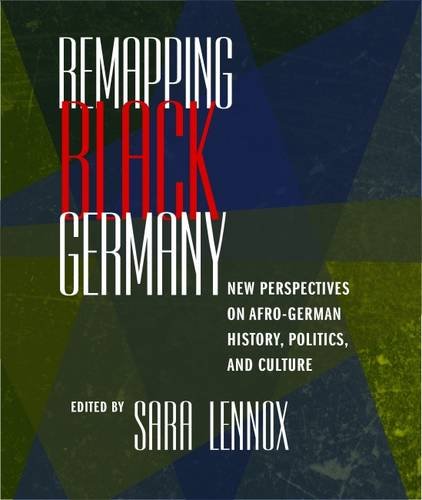
  • Remapping Black Germany: New Perspectives on Afro-German History, Politics, and Culture

    2017-07-16

    Remapping Black Germany: New Perspectives on Afro-German History, Politics, and Culture

    University of Massachusetts Press
    December 2016
    310 pages
    16 b&w illustrations
    6 x 9
    Paper ISBN: 978-1-62534-231-7
    Cloth ISBN: 978-1-62534-230-0

    Edited by:

    Sara Lennox, Professor Emerita of German Studies
    University of Massachusetts, Amherst

    A major contribution to Black-German studies

    In 1984 at the Free University of Berlin, the African American poet Audre Lorde asked her Black, German-speaking women students about their identities. The women revealed that they had no common term to describe themselves and had until then lacked a way to identify their shared interests and concerns. Out of Lorde’s seminar emerged both the term “Afro-German” (or “Black German”) and the 1986 publication of the volume that appeared in English translation as Showing Our Colors: Afro-German Women Speak Out. The book launched a movement that has since catalyzed activism and scholarship in Germany.

    Remapping Black Germany collects thirteen pieces that consider the wide array of issues facing Black German groups and individuals across turbulent periods, spanning the German colonial period, National Socialism, divided Germany, and the enormous outpouring of Black German creativity after 1986.

    In addition to the editor, the contributors include Robert Bernasconi, Tina Campt, Maria I. Diedrich, Maureen Maisha Eggers, Fatima El-Tayeb, Heide Fehrenbach, Dirk Göttsche, Felicitas Jaima, Katja Kinder, Tobias Nagl, Katharina Oguntoye, Peggy Piesche, Christian Rogowski, and Nicola Lauré al-Samarai.

  • Through an Indian’s Looking-Glass: A Cultural Biography of William Apess, Pequot

    2017-07-16

    Through an Indian’s Looking-Glass: A Cultural Biography of William Apess, Pequot

    University of Massachusetts Press
    January 2017
    310 pages
    16 b&w illustrations
    6.125 x 9.25
    Paper ISBN: 978-1-62534-259-1
    Cloth ISBN: 978-1-62534-258-4

    Drew Lopenzina, Associate Professor of English
    Old Dominion University, Norfolk, Virginia

    New insights on an important Native American writer

    The life of William Apess (1798–1839), a Pequot Indian, Methodist preacher, and widely celebrated writer, provides a lens through which to comprehend the complex dynamics of indigenous survival and resistance in the era of America’s early nationhood. Apess’s life intersects with multiple aspects of indigenous identity and existence in this period, including indentured servitude, slavery, service in the armed forces, syncretic engagements with Christian spirituality, and Native struggles for political and cultural autonomy. Even more, Apess offers a powerful and provocative voice for the persistence of Native presence in a time and place that was long supposed to have settled its “Indian question” in favor of extinction.

    Through meticulous archival research, close readings of Apess’s key works, and informed and imaginative speculation about his largely enigmatic life, Drew Lopenzina provides a vivid portrait of this singular Native American figure. This new biography will sit alongside Apess’s own writing as vital reading for those interested in early America and indigeneity.

  • “So If You’re From Africa, Why Are You White?”

    2017-07-16

    “So If You’re From Africa, Why Are You White?”

    FLY: (Freedom. Love. You.)
    Cambridge University
    2017-03-16

    Nina Grossfurthner

    I woke up a week ago and started my day eating breakfast and scrolling through Facebook. I usually read my Bible in the morning, but on that particular day I had a lot to get through before mid-day lectures so I decided I would leave it to the evening. Thinking back now, perhaps skimming through a quick verse would have allowed me to approach what happened next with a bit more grace. I don’t know how many of you have been keeping up with the story of Rachel Dolezal, in all honesty I don’t encourage you to do so. But, for those of you who haven’t I will briefly outline who this woman is and why I needed to write about her, a decision that didn’t come easy because I didn’t want to assign her any more space than that which she has so carelessly claimed.

    Rachel Dolezal blew up on the internet a few years ago by claiming that she, a fully Caucasian woman, identified as ‘black’. When I first came across the story, I quickly scrolled past because I didn’t think it worth my time to hear her try and justify why she should appropriately be called black. However, what made me stop scrolling that morning, was the recent name change which Dolezal has undertaken.

    Adding insult to injury, Rachel Dolezal recently made the decision to change her name to Nkechi Diallo – a confusing medley of both the Igbo language of southern Nigeria and that of the Fulani tribe whose people can be found in many West African nations (because African nations were effectively decided by white men using a ruler and a pen). Setting aside the obvious disturbance of taking on an ‘African sounding’ name, the seeming thoughtlessness behind picking whatever name she felt suited her reflects the same precarious attitude with which she chooses to engage with the ‘black’ identity…

    Read the entire article here.

  • From ADEFRA to Black Lives Matter: Black Women’s Activism in Germany

    2017-07-16

    From ADEFRA to Black Lives Matter: Black Women’s Activism in Germany

    Black Perspectives
    2017-07-05

    Tiffany Florvil, Assistant Professor of History
    University of New Mexico


    Black Lives Matter activists in Berlin in July 2016 (WOLFRAM KASTL/AFP/Getty)

    On Saturday, June 24, 2017 at 4:30pm, a Black Lives Matter (BLM) protest took place in Berlin, Germany with thousands of people expressing solidarity and promoting awareness of racial injustice. The event built from the momentum of two BLM marches that occurred last summer. Initially meeting at the 2016 BLM marches, Mic Oala, Shaheen Wacker, Nela Biedermann, Josephine Apraku, Jacqueline Mayen, and Kristin Lein remained in contact and eventually established a Berlin-based multicultural German feminist collective. With their new group and local connections, they planned the 2017 demonstration as a part of a month-long series of events, which included film screenings, poetry readings, workshops, exhibitions, and more.

    Taken together, these events highlight the diversity of Black protest and activism within the German context. Using these events, especially the protest, the organizers publicly drew attention to instances of racism and oppression and attempted to gain visibility for Black people in Germany and beyond. The different events as well as the BLM Movement in Berlin represent the conscious efforts of these feminist and anti-racist activists to not only engage in practices of resistance, but to create and own spaces of resistance, solidarity, and recognition within a majority white society. In this way, they demand their “right to the city” and continue to make Germany a critical site for blackness and the African diaspora.


    Ika Hügel-Marshall and Audre Lorde (Feminist Wire, Image Credit: Dagmar Schultz)

    …[Audre] Lorde was a visiting professor teaching courses at the Free University of Berlin (FUB) in 1984, which a few of these women attended. Black German women also cultivated connections to her outside of the classroom. Lorde emboldened Black German women to write their stories and produce and disseminate knowledge about their experiences as women of the African diaspora in Germany. Inspired, Oguntoye, Ayim, and Dagmar Schultz, a white German feminist, produced the volume Farbe bekennen: Afro-deutsche Frauen auf den Spuren ihrer Geschichte in 1986 (later published in 1992 as Showing our Colors: Afro-German Women Speak Out). The volume helped Black German women and men connect and socialize with one another and forge a dynamic diasporic community after years of isolation in predominantly white settings…

    Read the entire article here.

  • Liminality, hybridity and ‘Third Space:’ Bessie Head’s A question of power

    2017-07-15

    Liminality, hybridity and ‘Third Space:’ Bessie Head’s A question of power

    Neohelicon
    First Online: 2017-06-07
    pages 1–17
    DOI: 10.1007/s11059-017-0387-8

    Sayyede Maryam Hosseini
    University of Tehran, Tehran, Iran

    Hybridity has been a controversial issue not only in eugenic hypotheses of the nineteenth century but also in the postcolonial, cultural, linguistic, and geographical contexts. It can be seen as a ‘Janus-faced’ entity. Theorists like Bhabha consider it as a ‘Third Space’ which is fraught with ambiguities, while some use the term ‘liminal’ to point to its location in history, culture, and society in general. This essay deals with a ‘coloured’ writer’s coloured character in the light of hybridity. Elizabeth, the coloured protagonist of Bessie Head’s A question of power lives as a hybrid in a state of liminality, and tries to dismiss the worldview of colonialism and the postcolonial nationalism of South Africa and reconstruct her shattered identity in the ‘Third Space’ of Motabeng. Elizabeth’s hybridity and her iconoclastic condition are intensified by rampant liminal elements in the novel. The essay follows the intricate interrelationships of hybrid elements in terms of Elizabeth’s multi-faceted character, her garden, and the borders she crosses in the course of the novel. Hybridity here is by no means a mere inter-racial issue, the attempt here is to relate this concept to the anti-conventional and iconoclastic; the things that are liminal and indefinable within established epistemology.

    Read or purchase the article here.

Previous Page
1 … 267 268 269 270 271 … 1,428
Next Page

Designed with WordPress