• Malcolm Gladwell Wants to Make the World Safe for Mediocrity

    Conversations with Tyler
    Mercatus Center at George Mason University
    2017-03-15

    Tyler Cowen, Host and Professor of Economics
    George Mason University, Fairfax, Virginia


    Credit: Caren Louise Photographs

    Journalist, author, and podcaster Malcolm Gladwell joins Tyler for a conversation on Joyce Gladwell, Caribbean identity, satire as a weapon, Daniel Ellsberg and Edward Snowden, Harvard’s under-theorized endowment, why early childhood intervention is overrated, long-distance running, and Malcolm’s happy risk-averse career going from one “fur-lined rat hole to the next.”

    Listen to the interview (01:32:11) here. Read the transcript here.

  • The Horror of Smug Liberals

    The New York Times
    2017-03-18

    Frank Bruni


    Ben Wiseman

    Oh, those smooth-talking, self-congratulating white liberals. Listen to them moon over Barack Obama. Look at how widely they open their arms to a black visitor. Don’t be duped. They’re wolves in L. L. Bean clothing. There’s danger under the fleece.

    That’s a principal theme in the most surprising movie hit of the year so far, “Get Out,” whose box office haul in America crossed the $100 million mark last weekend. Heck, that’s the premise.

    The black protagonist heads with his white girlfriend from an apartment in the city to a house in the woods, where he’s gushingly welcomed by her parents. But their retreat is no colorblind Walden, not if you peek into the basement. I won’t say what’s down there. I don’t want to spoil the fun or sully the chill.

    Besides, I’m less fascinated by the movie’s horrors than by its reception. The most ardent fans of “Get Out,” many of them millennials, don’t just recommend it. They urge it, framing it as a “woke” tribe’s message to the slumbering masses, a parable of the hypocrisy that white America harbors and the fear with which black Americans move through it…

    …But the movie’s African-American writer and director, Jordan Peele, conceived and began developing it well before the possibility of a Donald Trump presidency came into focus. He wasn’t responding to stark examples of racism like that infamous tweet last week in which Representative Steve King, the Iowa Republican, warned against trying to “restore our civilization with somebody else’s babies.” …

    …“Get Out” is being categorized as a horror movie, though Peele prefers the neologism “social thriller,” and it’s more eerie than violent, with superb pacing that critics are rightly praising. It’s also a reminder that the best horror movies are intensely topical, putting a fantastical, grotesque spin on the tensions of their times…

    Read the entire article here.

  • A Tale Which Must Never Be Told: A New Biography of George Herriman

    Los Angeles Review of Books
    2017-03-18

    Ben Schwartz

    George Herriman, a Life in Black and White
    By Michael Tisserand

    Published 12.06.2016
    Harper
    560 Pages

    ON MARCH 4, 1913, Woodrow Wilson took the oath of office and became our 28th president. While we remember Wilson for his internationalist foreign policy and progressive labor laws, he was also the first Southerner elected since the mid-19th century, and his racial policies reflected it. Wilson saw Jim Crow as the necessary remedy to the aftermath of the Civil War. As president, he normalized his revanchist views from the White House by expanding segregation of federal workers. Not surprisingly, 1913 also saw a rebirth of the Ku Klux Klan. An excerpt from Wilson’s revisionist writings proclaiming the Klan “a veritable empire of the South” even appears in D. W. Griffith’s The Birth of a Nation, a box-office smash which Wilson personally screened at the White House, the first American film ever shown there.

    In that reactionary atmosphere, on October 28, 1913, in the New York Evening Journal, William Randolph Hearst debuted a new comic strip, Krazy Kat, by one of his favorite cartoonists, George Herriman. It starred Krazy, an androgynous cat in love with Ignatz, a brick-throwing, cat-chasing mouse. They lived in Coconino County, Arizona, desert mesa country, and Herriman shifted their backgrounds panel-by-panel — night to day, day to night, mountain to desert to town to river — with no rhyme or reason. They spoke in a patois of slang, Elizabethan English, Yiddish, Spanish, French, and tossed off literary allusions. When asked once about his basic upending of the natural order of cats, mice, dogs, time, and space, Herriman summed up his Weltanschauung: “To me it’s just as sensible as the way it is.”.

    Krazy Kat’s whimsy caught on quickly in the Age of Wilson, and its large and devoted fan base ranged from high society to poets to school children to the president himself. What none of them knew then was that George Herriman was black. He passed for white most of his life. And what we can only see now, thanks to an authoritative new biography of Herriman by New Orleans historian Michael Tisserand, is that, as far removed from social commentary as Krazy Kat may appear, race was as much on George Herriman’s mind as the president’s…

    Read the entire review here.

  • 50 Years of Loving: Seeking Justice Through Love and Relationships

    Creighton University | Werner Institute | 2040 Initiative
    Omaha, Nebraska
    2017-03-23, 17:30 through 2017-03-24, 17:00 CDT (Local Time)

    Loving v. Virginia – Background

    The U.S. Supreme Court’s 1967 decision in Loving v. Virginia ended legal prohibitions against interracial marriage in the U.S. By eliminating longstanding legal sanctions against “miscegenation,” Loving disrupted the pre-existing social system. The ruling rejected racial separation and hierarchy and endorsed relationships across previously uncrossable racial lines.

    The effects of Loving marriages extend beyond those who are themselves married. Since Loving, the proportion of the U.S. population with multiple racial heritages has grown dramatically. Moreover, the children born as a result of Loving have disrupted the social construction of race itself, with more people self-identifying as of more than one race, biracial, multiracial, or mixed.

    50 Years of Loving – Symposium Description

    The symposium will begin with a feature presentation open to the public on Thursday, March 23, by Mat Johnson, author of the novel “Loving Day” (2015). Symposium participants will then explore the effects that the U.S. Supreme Court’s 1967 decision in Loving v. Virginia has had on U.S. society – institutionally, demographically and relationally. Participants will also develop strategies for moving from thought to action by building relationships across difference…

    For more information, click here.

  • Specifically, many of the problems arose out of my claims of Irishness itself. That was what really seemed to offend people’s sensibilities. Irishness is synonymous with whiteness, it seemed. Whiteness is “pure” and doesn’t extend to brown girls, even those who can trace their Irish ancestry back to the 10th century. How frequently I heard that I “wasn’t really Irish”. But I am Irish. In addition to being born there, my mother, her parents before her, and theirs before them, for generations and generations, are all Irish.

    Emma Dabiri, “I’m Irish but I’m not white. Why is that still a problem as we celebrate the Easter Rising?,” The Guardian, March 29, 2016. http://www.theguardian.com/commentisfree/2016/mar/29/irish-white-easter-rising-ireland-racism.

  • Interview with Genarao Kỳ Lý Smith on “The Land Baron’s Sun”

    Interminable Rambling
    2015-12-10

    Matthew Teutsch, Instructor
    Department of English
    Auburn University, Auburn, Alabama

    Last post, I wrote about Genarao Kỳ Lý Smith’s The Land Baron’s Sun. Today, I am sharing a recent interview I conducted with Smith. In the video above, Smith talks more about his grandfather and reads two poems from The Land Baron’s Sun.

    In the acknowledgements of The Land Baron’s Sun, you write about Darrell Bourque telling you that your grandfather’s “story needs to be heard” because it is an important story to everyone. What makes Lý Loc’s story so significant?

    Lý Loc came from a privileged life: inherited land from his father who was only known as the land baron (to this day, my mother does not know his name), had seven wives, twenty-seven children, seven houses (1 per wife), mistresses to go with each wife; he was a major commander for the South Vietnamese Army.  When the Fall of Saigon occurred, he lost everything to the point of writing my mother a few years later asking for money, food, medicine, and clothes.  It is a tragic story that needs to be told.  The idea of someone who had it all to living as a pauper is and has always been an intriguing story.  Also, had I not known about his seven wives or his privileged lifestyle, his story would have died with my mother.  The goal therefore was to resurrect his life, the lives of his wives and their children.  The purpose of writing the book was to leave his legacy.  I simply did not want him to die…

    Read the entire interview here.

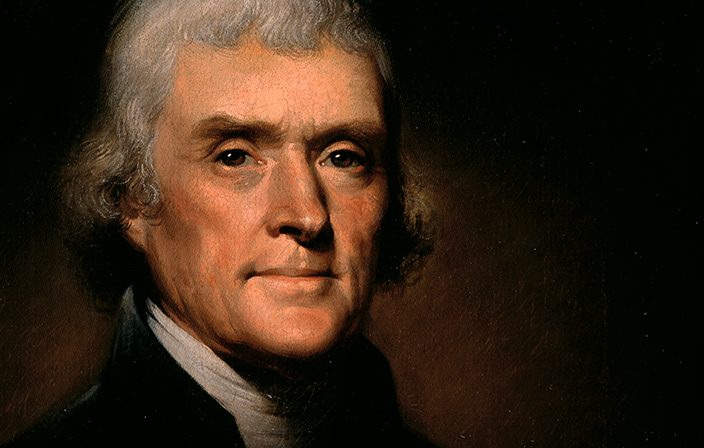
  • Sally Hemings, Thomas Jefferson, And The Normalization of Slave Rape Narratives

    black youth project
    2017-02-23

    Elizabeth Adetiba

    I am not the same person now as I was when I was 14—and thank God for that. I was remarkably naive and unbearably insecure, and stuck in an environment that did nothing but exacerbate those complex internal struggles that are so typical of adolescence.

    So imagine my outrage upon being continuously confronted with articles that insist on describing the affairs between Thomas Jefferson and a fourteen year-old enslaved Sally Hemings (simultaneously his slave and wife’s half-sister) as a ‘relationship.’ I cannot fathom, at fourteen, being denied the liberty to reject the sexual advances of a 44 year-old man (and not just any man, but a man who would become the President of the United States) only to have historians and writers skip over the imbalanced power dynamics and categorize it as a ‘relationship.’…

    Read the entire article here.

  • ‘My mum always told me I was white, like her. Now I know the truth’

    The Guardian
    2017-03-18

    Georgina Lawton


    Georgina Lawton: ‘Even though I would look in the mirror and see a brown, dark-eyed girl, I couldn’t identify as black.’

    As a child in a white Anglo-Irish family, Georgina Lawton’s curiosity about her dark skin colour was constantly brushed aside. Only when her father died did the truth surface

    You might not think it to look at me, but my upbringing was a very Anglo-Irish affair. I grew up on the outskirts of London with my blue-eyed younger brother, British father and Irish mother. Many happy weeks of the school holidays were spent in Ireland and I was educated at a Catholic school in Surrey. We ate roast beef and yorkshire puddings on Sundays, and Thin Lizzy, Van Morrison and the Clash formed the soundtrack to our lazy weekends.

    The only peculiar aspect to all this was the defining aspect of my identity. Because, although I look mixed-race, or black, my whole family is white. And until the man I called Dad died two years ago, I did not know the truth about my existence. Now, age 24, I’m starting to uncover where I come from…

    Read the entire article here.

  • On the Usefulness of Hispanic Heritage Month

    American Mestiza: Living In Between the In Between
    2016-10-15

    Sarah A. Chavez, Visiting Assistant Professor of English
    Marshall University, Huntington, West Virginia

    This fine fall day – and it is a fine fall day: sunny, the leaves are changing and floating softly to the ground in a light breeze, it’s not hot – is the last day of Hispanic Heritage Month. I have mixed feelings about Hispanic Heritage Month, the same way I do about Women’s History Month, and African American History Month. If we just lived in a world that held the accomplishments of Latinxs, women, and African Americans in the same esteem as Anglo Americans, and if we had more fair representation in U.S. text books, we wouldn’t need these token months. Largely, months like these end up being used to assuage liberal guilt for the rest of the year when no one is held accountable for the monolithic literature, art, history, sociological perspective teachers assign. These are the special months where a teacher brushes the dust off their copy of Martin Luther King Jr.’sI Have A Dream” speech and shows their students art by Diego Rivera and Frida Kahlo (even though they are solidly Mexican and therefore not “Latina/o” or “Hispanic”), and talks about how in the 1940s women got to put on pants and tie up their hair in red kerchiefs and that was very empowering…

    Read the entire article here.

  • All Day, Talking

    dancing girl press
    2014

    Sarah A. Chavez

    Sarah A. Chavez is a mestiza born and raised in the California Central Valley where she worked every job from farm laborer, to janitor and maintenance, to barista, to waitress, house-sitter, web editor, tutor, and finally administrative assistant for a Native American drug and alcohol recovery home before going back to school to pursue writing and teaching. She earned a PhD in English with a focus in Creative Writing (poetry) and an interdisciplinary specialization in Ethnic Studies, with a focus on Chican@/Latin@ & Native American literature and culture, from the University of Nebraska – Lincoln.

    During her academic career her work has been the recipient of the Fredrick A. and Minnie J.M. Stuff Memorial Placement Fellowship (2014), the Quercus Press Review, Fall Poetry Book Award, Honorable Mention (2013), Stuff Dissertation Fellowship (2013), the Susan Atefat Peckham Fellowship, Literary Contest (2013), the Arts & Letters/ Rumi Prize for Poetry, finalist (2012), the Ford Foundation Predoctoral Competition, Honorable Mention (2012), the Vreeland Award (2011), Chancellor’s Doctoral Fellowship (2009 – 2011), and the Excellence in Education, 2007 – 2008 teaching award from Ball State University’s Correctional Education Program.