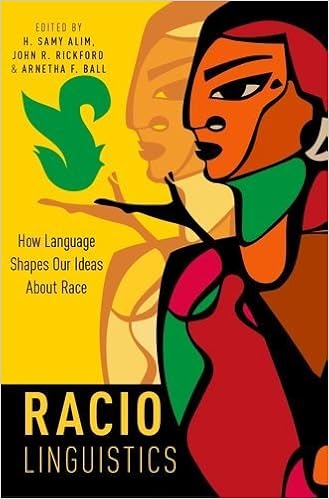
• Raciolinguistics: How Language Shapes Our Ideas About Race

    Oxford University Press
    2016-10-31
    376 pages
    6-1/8 x 9-1/4 inches
    Hardcover ISBN: 9780190625696

    Edited by:

    H. Samy Alim, Professor of Education; Professor of Anthropology and Linguistics (by courtesy)
    Stanford University

    John R. Rickford, J.E. Wallace Sterling Professor of Linguistics and the Humanities
    Stanford University

    Arnetha F. Ball, Professor
    Stanford Graduate School of Education
    Stanford University
    • Brings together a critical mass of scholars to form a new field dedicated to theorizing and analyzing language and race together-raciolinguistics.
    • Breaks new ground by integrating the deep theoretical knowledge gained from race and ethnic studies, and the ethnographic rigor and sensibility of anthropology, with the fine-grained, detailed analyses that are the hallmark of linguistic studies
    • Takes a comparative, international look across a wide variety of sites that comprise some of the most contested racial and ethnic contexts in the world, from rapidly changing communities in the U.S. and Europe to locations in South Africa, Brazil, and Israel
    • Builds upon and expands Alim and Smitherman’s ground-breaking analysis to form a new field dedicated to racing language and languaging race.

    Raciolinguistics reveals the central role that language plays in shaping our ideas about race. The book brings together a team of leading scholars-working both within and beyond the United States-to share powerful, much-needed research that helps us understand the increasingly vexed relationships between race, ethnicity, and language in our rapidly changing world. Combining the innovative, cutting-edge approaches of race and ethnic studies with fine-grained linguistic analyses, chapters cover a wide range of topics including the language use of African American Jews and the struggle over the very term “African American,” the racialized language education debates within the increasing number of “majority-minority” immigrant communities as well as Indigenous communities in the U.S., the dangers of multicultural education in a Europe that is struggling to meet the needs of new migrants, and the sociopolitical and cultural meanings of linguistic styles used in Brazilian favelas, South African townships, Mexican and Puerto Rican barrios in Chicago, and Korean American “cram schools,” among other sites.

    With rapidly changing demographics in the U.S.-population resegregation, shifting Asian and Latino patterns of immigration, new African American (im)migration patterns, etc.-and changing global cultural and media trends (from global Hip Hop cultures, to transnational Mexican popular and street cultures, to Israeli reality TV, to new immigration trends across Africa and Europe, for example)-Raciolinguistics shapes the future of studies on race, ethnicity, and language. By taking a comparative look across a diverse range of language and literacy contexts, the volume seeks not only to set the research agenda in this burgeoning area of study, but also to help resolve pressing educational and political problems in some of the most contested racial, ethnic, and linguistic contexts in the world.

    Contents

    • Introducting Raciolinguistics: Theorizing Language and Race in Hyperracial Times / H. Samy Alim, Stanford University
    • Part I. Languaging Race
      • 1. Who’s Afraid of the Transracial Subject?: Transracialization as a Dynamic Process of Translation and Transgression / H. Samy Alim, Stanford University
      • 2. From Upstanding Citizen to North American Rapper and Back Again: The Racial Malleability of Poor Male Brazilian Youth / Jennifer Roth-Gordon, University of Arizona
      • 3. From Mock Spanish to Inverted Spanglish: Language Ideologies and the Racialization of Mexican and Puerto Rican Youth in the U.S. / Jonathan Rosa, Stanford University
      • 4. The Meaning of Ching Chong: Language, Racism, and Response in New Media / Elaine W. Chun, University of South Carolina
      • 5. “Suddenly faced with a Chinese village”: The Linguistic Racialization of Asian Americans / Adrienne Lo, University of Illinois at Urbana-Champaign
      • 6. Ethnicity and Extreme Locality in South Africa’s Multilingual Hip Hop Ciphas / Quentin E. Williams, University of the Western Cape
      • 7. Norteno and Sureno Gangs, Hip Hop, and Ethnicity on YouTube: Localism in California through Spanish Accent Variation / Norma Mendoza-Denton, University of Arizona
    • Part II. Racing Language
      • 8. Towards Heterogeneity: A Sociolinguistic Perspective on the Classification of Black People in the 21st Century / Renée Blake, New York University
      • 9. Jews of Color: Performing Black Jewishness through the Creative Use of Two Ethnolinguistic Repertoires / Sarah Bunin Benor, Hebrew Union College
      • 10. Pharyngeal beauty and depharyngealized geek: Performing ethnicity on Israeli reality TV / Roey Gafter, Tel Aviv University
      • 11. Stance as a Window into the Language-Race Connection: Evidence from African American and White Speakers in Washington, D.C. / Robert J. Podesva, Stanford University
      • 12. Changing Ethnicities: The Evolving Speech Styles of Punjabi Londoners / Devyani Sharma, Queen Mary, University of London
    • Part III. Language, Race, and Education in Changing Communities
      • 13. “It Was a Black City”: African American Language in California’s Changing Urban Schools and Communities / Django Paris, Michigan State University
      • 14. Zapotec, Mixtec, and Purepecha Youth: Multilingualism and the Marginalization of Indigenous Immigrants in the U.S. / William Perez, Rafael Vasquez, and Raymond Buriel
      • 15. On Being Called Out of One’s Name: Indexical Bleaching as a Technique of Deracialization / Mary Bucholtz, University of California, Santa Barbara
      • 16. Multiculturalism and Its Discontents: Essentializing Ethnic Moroccan and Roma Identities in Classroom Discourse in Spain / Inmaculada García-Sánchez, Temple University
      • 17. The Voicing of Asian American Figures: Korean Linguistic Styles at an Asian American Cram School / Angela Reyes, Hunter College and The Graduate Center, CUNY
      • 18. “Socials”, “Poch@s”, “Normals” y Los de Más: School Networks and Linguistic Capital of High School Students on the Tijuana-San Diego Border” / Ana Celia Zentella, University of California, San Diego
    • Index
  • One thing I really stressed throughout the dissertation was focusing not so much on the forms of Blackness that can be accepted but focusing on the forms that can’t be accepted. For me that was a highly gendered and sexualized thing. So for example, the mulata can be accepted because she fits particular sexualized scripts that make her accessible to white men. And so that’s a way in which race intersects with gender – this racially mixed woman who is not white, but is not Black. She becomes aesthetically more beautiful yet still retains that hypersexual script. And so that’s another way of saying that Brazil is more benign because there are many interracial relationships and marriages and also [mixed race] children. Many people thought through interracial mixture, that Brazil could actually whiten itself within a hundred years. And it’s not just about women. Black men are expected to be able to have bodily mastery either in culture, such as music or dance, or athletics, such as capoeira or football, that can be consumed for national cultures and portray Brazil as more benign. As far as desire and attraction goes, Black men kind of take a back seat in the racial democracy discourses of miscegenation to white men. You see far less representations of Black men with white women in popular culture. The emphasis on interracial mixture is how non-Black men have access to Black women’s bodies, often without considering what her own desires are. And these really serve a heteropatriarchal and white supremacist desire to sexually and culturally consume Black bodies in various ways. And what is outside of what serves those interests is relegated to the realm of subalternity and deemed less worthy in Brazil. And so I wanted to emphasize that as the forms of Blackness that can’t be accepted in Brazil and using that as a site of critical inquiry. —Dr. Bryce Henson

    Morten Stinus Kristensen, “Disrupting Racialized Knowledges: Blackness in Salvador da Bahia,” Friktion Magasin for Køn, Krop and Kultur, October 2016. http://friktionmagasin.dk/index.php/2016/10/01/disrupting-racialized-knowledges-blackness-in-salvador-da-bahia/

  • The reality of being black in today’s Britain

    The Guardian
    2016-10-29

    David Olusoga


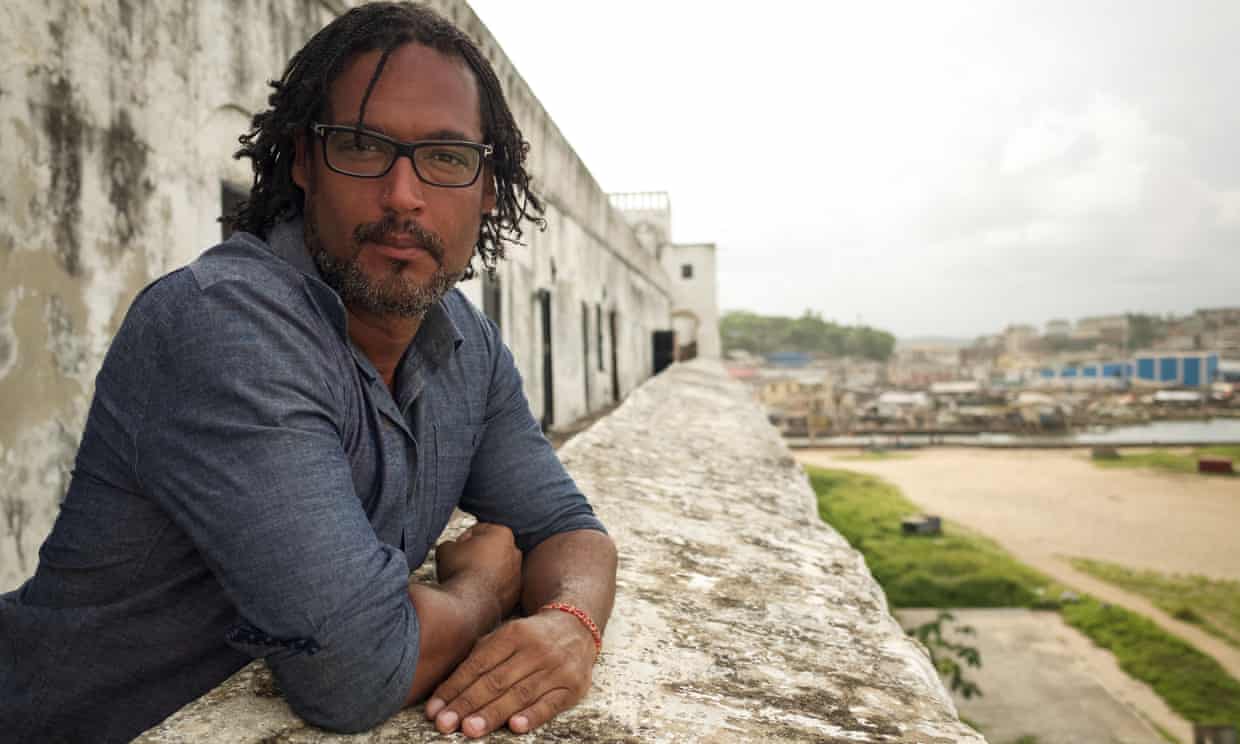
    David Olusoga at El Mina, a Portuguese-built fort in Ghana. ‘Many black British people, and their white and mixed-race family members, slipped into a siege mentality.’ Photograph: BBC

    David Olusoga grew up amid racism in Britain in the 70s and 80s. Now, in a groundbreaking new book and TV series, he argues that the story of black Britons, from Afro-Roman times to the present, is key to showing the depth of their Britishness. And, while we exult in black Britons’ success in culture, fashion and sport, discrimination still blights their lives

    When I was a child, growing up on a council estate in the northeast of England, I imbibed enough of the background racial tensions of the late 1970s and 1980s to feel profoundly unwelcome in Britain.

    My right, not just to regard myself as a British citizen, but even to be in Britain, seemed contested. Despite our mother’s careful protection, the tenor of our times seeped through the concrete walls into our home and into my mind and into my siblings’ minds. Secretly, I harboured fears that as part of the group identified by chanting neo-Nazis, hostile neighbours and even television comedians as “them” we might be sent “back”. This, in our case, presumably meant “back” to Nigeria, a country of which I had only infant memories and a land upon which my youngest siblings had never set foot..

    Read the entire article here.

  • October 29, 1949

    Black Quotidian: Everyday History in African-American Newspapers
    2016-10-29

    Matthew F. Delmont, Professor of History
    Arizona State University

    On October 29, 1949, the Chicago Defender published Walter White’s review of Elia Kazan’s film Pinky. The film, a drama about racial passing starring Jeanne Crain and Ethel Waters, was the top-grossing film of 1949. White, who led the NAACP from 1931 until his death 1955, wrote, “I have never in all my life wanted so much to like a moving picture as much as I did ‘Pinky.’ As I bought tickets at the Rivoli Theatre in New York I hoped fervently that the praise of most of the New York critics and friends of mine, both colored and white, would be justified…Unhappily for me, I have to say that, as far as my judgement is concerned, [producer Darryl] Zanuck has failed. Some new ground have been broken but they are mere scratches in the vast field of human relationships the picture sought to plow. Southern white police brutality and lechery are vividly and courageously exposed. But one would never know, unless he had other sources of information, that Negroes, even in the most backward areas of Mississippi are not resigned to their ‘place’ and are not only working but making progress against the kind of conditions portrayed in ‘Pinky.’” This review of this film about racial passing is particularly interesting because Walter White was very light skinned, and sometimes passed as white while working as a civil rights investigator in the South…

    Read the entire article here.

  • KING: Colin Kaepernick’s ‘I Know My Rights Camp’ cements his status as a cultural superhero in the black community

    The New York Daily News
    2016-10-29

    Shaun King


    Daily News columnist Shaun King, his son, and Colin Kaepernick pose for picture after Kaepernick’s camp. (Shaun King/New York Daily News)

    “Dad. Does Colin still have a game on Sunday?”

    The question was a smart one for any football fan to ask – particularly one who’s rooting hard for Colin Kaepernick and the San Francisco 49ers.

    It was 12:49 a.m. in Oakland late Friday night. My 10- year-old son, EZ, and I, made the trek there from New York and we were dragging. For our bodies it felt like 4 a.m.

    We were invited by Kaepernick to attend a camp on Saturday morning and I had just gotten a text from Colin.

    It read, “Hey Shaun. I just wanted to check and make sure you and your son made it safe my brother.”

    I replied, “Thanks man. Just now checking in at the hotel. We took a late flight. See you soon bro.”

    And his reply was what shocked my son and I both…

    Read the entire article here.

  • The Life and Times of Pío Pico, Last Governor of Mexican California

    Lost LA
    KCET
    Burbank, California
    2016-10-27

    William D. Estrada, Curator of California and American History and Chair of the History Department
    Natural History Museum of Los Angeles County


    Pío de Jesus Pico and his wife, María Ignacia Alvarado Pico, in 1852, with two of their nieces, María Anita Alvarado (far left) and Trinidad Ortega (far right). Courtesy of the Seaver Center for Western History Research, Natural History Museum of Los Angeles County.

    Pío Pico was the last governor of California under Mexican rule, serving from 1845-46, just before the U.S. military occupation. Today, the name Pico is a familiar place name. Driving or walking throughout Southern California one will encounter busy Pico Boulevard; the City of Pico Rivera; two Pío Pico elementary schools; the Pico-Union district near downtown L.A.; Pico Park; the Pío Pico Koreatown Library; the three-story Pico House building; natural landmarks such as Pico Canyon north of Los Angeles and Pico Creek near Oceanside; and Pío Pico State Historic Park in the City of Whittier, just to name a few. His name has been commercialized in several businesses from corner grocery stores, shopping malls and fast food restaurants. And yet, despite the veneration in the popular mind, much of what we know about Pío Pico remains clouded in myth. His significance as an historical figure, as well as his connection to the contemporary Latino and African-American communities, is worth remembering…

    Read the entire article here.

  • Trevor Noah: The First Time I Drove a Car. (I Was 6.)

    The New York Times
    2016-10-25

    Trevor Noah


    Trevor Noah, at 3 years old, with his mother.

    Trevor Noah is the host of “The Daily Show” and the author of “Born a Crime: Stories From a South African Childhood” (Spiegel & Grau). This is an edited excerpt from the book.

    When I was 5 years old, we moved to Eden Park, a neighborhood adjacent to several black townships on the outskirts of Johannesburg — half-colored and half-black, my mother figured, like us. It was me and her, alone. There was this sense of the two of us embarking on a grand adventure. We weren’t just mother and son. We were a team.

    Eden Park was one of those “suburbs” that are actually out on the edge of civilization, the kind of place where property developers have said: “Hey, poor people. You can live the good life, too. Here’s a house. In the middle of nowhere. But look, you have a yard!”

    It was when we moved to Eden Park that we finally got a car, the beat-up, tangerine Volkswagen Beetle my mother bought secondhand for next to nothing, which was more than it was worth. One out of five times, it wouldn’t start. There was no A-C. Any time I made the mistake of turning on the fan, the vent would fart bits of leaves and dust all over me.

    Whenever it broke down, we’d catch minibuses, or sometimes we’d hitchhike. My mom would make me hide in the bushes because she knew men would stop for a woman but not a woman with a child. She’d stand by the road, the driver would pull over, she’d open the door and then whistle, and I’d come running up to the car. I would watch their faces drop as they realized they weren’t picking up an attractive single woman but an attractive single woman with a fat little kid…

    Read the entire article here.

  • Review of Jonathan Kahn, Race in a Bottle: The Story of BiDil and Racialized Medicine in the Post-Genomic Age

    The American Journal of Bioethics
    Volume 15, 2015 – Issue 10
    pages W4-W5
    DOI: 10.1080/15265161.2015.1067339

    Nathan Nobis, Associate Professor of Philosophy
    Morehouse College, Atlanta, Georgia

    In 2005 the Food and Drug Administration (FDA) approved the drug BiDil, a combination of two generic vasodilators (hence bi-dil), with specific indication to treat heart failure in black patients. The drug was approved largely on the basis of results from a small clinical trial of only self-identified black patients.

    Obviously, however, if a drug works with a particular population, that gives no indication that drug will work only with that population or have unique benefits solely for that population: The drug might work for anyone, of any population, and so works well for a subpopulation. So there is some mystery why BiDil was approved, with this specific indication, on this basis. In Race in a Bottle: The Story of BiDil and Racialized Medicine in the Post-Genomic Age, law professor and historian Jonathan Kahn investigates this mystery.

    BiDil’s developers argued that there must be some latent genetic explanation for the drug’s success with black patients—this argument underlies their claim that BiDil uniquely benefits black people. They suggest that race serves as useful surrogate or proxy until further genetic information is revealed.

    A major goal of the book is to rebut this explanation. Kahn argues that, according to the best science (and philosophical theorizing about the nature of races), there is no genetic basis for race: There are no unique genes that classify (those who many see as) white people as white and (those who many see as) black people as black, and so on. Race-specific efficacy in drugs is therefore unlikely and dubious, given the lack of race-specific biological mechanisms needed for these drugs to perform as promised.

    What role should race play in medicine and public health, then? While Kahn provides positive proposals here, another of his major goals is to argue that race-specific drugs have the (typically unintended) negative consequence of undermining potentially effective projects to address racial health disparities. If we believe that health inequalities are, at root, an unfortunate consequence of genetics and biology—and not a consequence of unfair social, political, and educational opportunities, environmental quality, inequalities in health care access, racism in health care, and other social causes—then there is little reason to focus on these very challenging and demanding issues of justice and the distribution of health-related social, educational, and vocational goods: Just take a pill! But if the pills don’t work, and they lead us to ignore or downplay strategies that will work, then the drugs wrongfully distract—to the detriment of those the drugs were developed to benefit.

    In what follows, I briefly summarize the book’s introduction, eight chapters, and very helpful “Conclusions and Recommendations,” and comment on some of the main issues of each chapter…

    Read the entire review in HTML or PDF format.

  • The African American Museum chooses ‘Loving’ for its first film screening

    The Washington Post
    2016-10-25

    Helena Andrews-Dyer


    Joel Edgerton and Ruth Negga, stars of “Loving,” attend the premiere of the film on Thursday in Beverly Hills. (Chris Pizzello/Invision via Associated Press)

    Just one month after opening its doors, the National Museum of African American History and Culture is establishing itself as a permanent stop on the Washington social circuit. There have been cocktail parties, galas, private dinners and now one of D.C.’s favorite after-work pastimes — the movie screening.

    But not just any movie screening. On Monday, the museum hosted a sneak peek of “Loving” in the 350-seat Oprah Winfrey Theater–one of many for the new institution. The choice wasn’t coincidental, said Rhea L. Combs, the museum’s photography and film curator and head of its Earl W. and Amanda Stafford Center for African American Media Arts.

    “Showing this film at the museum is important because the story is symbolic of the mission of the museum,” Combs said. “It demonstrates the link between people of all backgrounds and culture.”

    “Loving” tells the true story of Mildred and Richard Loving, an interracial couple from Virginia who fought for nearly a decade to have their marriage recognized as legal. Their historic case went all the way to the U.S. Supreme Court, which eventually struck down laws against interracial marriage.

    Almost 50 years later the movie’s stars, Ruth Negga and Joel Edgerton, walked the red carpet at the museum that houses artifacts from the couple they play on screen. Everyone involved bowed to the movie’s role as An Important Film…

    Read the entire article here.

  • Disrupting Racialized Knowledges: Blackness in Salvador da Bahia

    Friktion Magasin for Køn, Krop and Kultur
    2016-10-01

    Morten Stinus Kristensen

    I had the pleasure of sitting down with Dr. Bryce Henson who recently defended his dissertation Rediasporizing Bahia: The Lived Experiences of Blackness and the Cultural Politics of Bahian Hip-Hop at the Institute of Communications Research at the University of Illinois, Urbana-Champaign. In the following interview, which has been edited for clarity, structure, and brevity, Dr. Henson discusses one element of his wide-ranging dissertation project: how the Black population of Salvador da Bahia, the former colonial capital of Brazil where Dr. Henson did his fieldwork, push back against the idealized idea of Blackness that dominates the Brazilian national imaginary of Bahia, and how this fantasy of Bahia serves a central function for upholding the fantasy of Brazil as a post-racial nation and culture.

    MSK: How do you define Blackness and how do you use it, conceptually and methodologically in your work?

    BH: So I work through three interlocking definitions of Blackness. I locate the first definition of Blackness within the African diaspora in how Black bodies or bodies ascribed to Africa are inscribed with negative cultural and moral values. Then, I define it not only as a racialization process but also as an ethnoracial identity formed by those within the community. Finally, I define Blackness by how Black subjects take this as a political imperative to critique white supremacy and, at another level, not only critique white supremacy and the way that Blackness operates in their own lives, but challenge that very stigma of Blackness itself and to alter and change those prescriptive values that are attached to their bodies.

    So methodologically and conceptually what I did [in this project] was I combined critical Black studies with British cultural studies. The first thing I did was to look at the dominant representations and [cultural] codes in which Blackness is understood. But also I intersect that with how these discourses are lived and the material conditions of [Black life] through ethnographic research. How do those everyday meanings, made out of the domain of Black lives, cause friction with these dominant representations or discourses? Then at a final stage, I tie this intersection between dominant representations and lived realities of race to Blacks’ own cultural production as a form of political participation. This serves not only as a site of media making, but also knowledge production that can at the very least disrupt racialized knowledges.

    So in short, what I do is loop Blackness from the dominant representations to the material and lived conditions – and then also back how that circulates and how people speak back. With that, I am drawing on scholars such as Tricia Rose, James Snead, and Henry Louis Gates, Jr. to emphasize Afro-diasporic models of culture that utilize repetition, layering, the cut, sampling and intertextuality in how Blackness is always in conversation with not only other Afro-diasporic members but also with the dominant society as well. So you have this transnational dialogue among each other but also the social forces that are impinging on their lives…

    MSK: All national and cultural contexts differ in how race in general and Blackness in particular is constructed and operate. How did this understanding of Blackness guide your work and what did you find?

    BH: The interesting thing about Brazil is how Blackness is celebrated in quite a few but extremely limited ways through Afro-Brazilian culture, such as the hypersexual mulata, samba music, and male football players. Brazil uses this to portray itself as being racially exceptional, which attempts to say that racism is not a factor there. In many instances, many people would say to bring up race or even racial divisions is itself racist. The kind of national mythology of Brazil or the grand narrative is what we broadly call racial exceptionalism is such: Brazil had much more benign colonizing and slavery structures. As a result, race is not a matter of social division and that racism is not a social ill. One way they do that is to stress the interracial mixture that began in its colonial era and continues today. Keep in mind that, like in the United States, the Portuguese colonizer coerced African and Indigenous women into sex, often forcibly through rape. But this gets erased under national mythologies which is articulated through the racial democracy myth, national identities, and the fetishization of the hypersexual mulata. In short, it says to be Brazilian is to be racially mixed –to be mixed with Indigenous, African, European ancestry—and that is evidence of a raceless society.

    Salvador da Bahia is crucial to these national mythologies. Bahia is crudely speaking the most African area in Brazil. Its population is approximately 80% African descendant in a city of three million. And that includes both dark-skinned and mixed Brazilians. But the discourses around Bahia are very much that of a city locked in the past with these kinds of premodern African cultural aesthetics that become widely known and celebrated and then circulate as the global imaginary…

    Read the entire article here.