Juxtaposed, “Mexican Chef” and “Black Stars” speak volumes about the ongoing evolution of [Xenia] Rubios’ identity. While she identifies as Afro-Latina, she tells Colorlines that she does not identify as Black. “My family history is complicated, and I still don’t fully know the extent of it,” she says after describing her Black maternal great grandmother, her Puerto Rican family’s Taino heritage and her paternal grandfather’s emigration from Spain. “I started reading on the Afro-Latina diaspora two years ago, and I’m still ignorant to a lot of that, but I started seeing myself in that term. I explore the ‘Afro’ part of my cultural identity, and how I do or don’t fit into that, on ‘Black Terry Cat.’” She says that’s a big part of why hip-hop permeates this album.
When I first participated in an online Austronesian community group, a member questioned me, in Tagalog, if I was Filipino. He thought by messaging me in Tagalog he could cleverly catch me out in an autonomous space he believed I shouldn’t be in…
On her funky second album, “Black Terry Cat,” the genre-bender explores identity, police violence and the hidden labor of Latino/a restaurant workers.
For our latest Breaking, we’re highlighting singer-songwriter Xenia Rubinos. The multi-instrumentalist, who hit the national scene with 2013’s “Magic Trix,” continues her personal and creative development on the funky, frenetic “Black Terry Cat.”
Sound: A chaotic mix of R&B, rock, hip-hop and jazz that underscores Rubinos’ robust mezzo-soprano. Her lyrics are sometimes wry, sometimes incorporating Spanish-language passages,
Why You Should Care: Depending on your background and worldview, Xenia Rubinos’ music sounds either like modern-day Latin pop, avant-garde R&B or a tapestry from an indie artist with too many influences to count. Either way, it sounds like nothing you’ve heard before—which, as she told us, is kind of the point.
…Juxtaposed, “Mexican Chef” and “Black Stars” speak volumes about the ongoing evolution of Rubios’ identity. While she identifies as Afro-Latina, she tells Colorlines that she does not identify as Black. “My family history is complicated, and I still don’t fully know the extent of it,” she says after describing her Black maternal great grandmother, her Puerto Rican family’s Taino heritage and her paternal grandfather’s emigration from Spain. “I started reading on the Afro-Latina diaspora two years ago, and I’m still ignorant to a lot of that, but I started seeing myself in that term. I explore the ‘Afro’ part of my cultural identity, and how I do or don’t fit into that, on ‘Black Terry Cat.’” She says that’s a big part of why hip-hop permeates this album…
At a time when the political utility of the Afro-Latino label is as urgent as ever, it’s easy to forget that the journey to embrace that identity isn’t always immediate. Before recording her sophomore album Black Terry Cat (ANTI- Records), Boricua-Cuban artist Xenia Rubinos did not identify as Afro-Latina. So when she embarked on the recording process this time around, Rubinos envisioned the album as a vehicle to explore her brownness and blackness, to rediscover her place in the African diaspora.
That’s why hip-hop is Black Terry Cat’s lifeblood. “I was listening to a lot of hip-hop at the time. It was a new exploration for me, getting into Slum Village and KRS-One, as well as going back to Erykah Badu, which was starting to become my daily diet,” she explains. Rubinos lays those influences bare on Black Terry Cat; the record vibrates with clanging percussive interludes, stream-of-consciousness lyrics, and deep pocket backbeats. It’s a clattering, experimental triumph that leaps from thick funk basslines to spooky horn sections and then to broken-down hip-hop beats, like a kid playing with Legos. Above it all, Rubinos’ warm, smoky voice flutters about, revealing a vocal dexterity and a slew of alter egos the listener is constantly trying to catch up with…
Although the human genome exists apart from society, knowledge about it is produced through socially-created language and interactions. As such, genomicists’ thinking is informed by their inability to escape the wake of the ‘race’ concept. This book investigates how racism makes genomics and how genomics makes racism and ‘race,’ and the consequences of these constructions. Specifically, Williams explores how racial ideology works in genomics. The simple assumption that frames the book is that ‘race’ as an ideology justifying a system of oppression is persistently recreated as a practical and familiar way to understand biological reality. This book reveals that genomicists’ preoccupation with ‘race’—regardless of good or ill intent—contributes to its perception as a category of differences that is scientifically rigorous.
Foreword, Joseph L. Graves, Jr.
Chapter 1: Genomics’ ‘Race’ Legacy
Chapter 2: Socialized Interpreters
Chapter 3: Racialized Culture—Genomic Nexus
Chapter 4: Racialization via Assertions of Objectivity and Heuristic Practice
Chapter 5: ‘Bad Science’ Discourse as Covering for Racial Thinking
Over the weekend the outspoken host was met with a backlash when he claimed Ali was responsible for a number of ‘racist’ comments following his death on Friday.
He tweeted: “Muhammad Ali said far more inflammatory/racist things about white people than Donald Trump ever has about Muslims. #fact.”
Piers looked to be trying to justify his comments about the boxer when he presented Good Morning Britain on Monday.
Speaking to barrister Miranda Brawn, he said: “There was another side to Ali, he was incredibly controversial.”…
…But guest Miranda didn’t let Piers’ comments go uncontested as she set the record straight about Ali’s racial agenda.
She instead reminded Piers that Ali was integral in helping improve self-pride amongst black people…
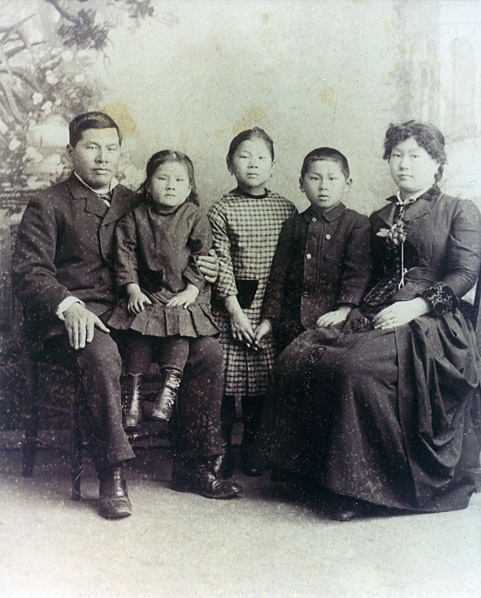
Mary Tape was a biracial Chinese American woman who believed that her daughter, Mamie, should have the same access to education as white children in San Francisco. In particular, Mary Tape wanted her daughter to be able to attend public school. When the local school principal, Jennie Hurley, stood in the schoolhouse door to bar Mamie’s entrance on the sole grounds that she was Chinese, Mary Tape took Jennie Hurley to court.
In 1885, almost seventy years before the famous Supreme Court Decision Brown v. Board of Education desegregated American public schools, Mary Tape sued the San Francisco School District to offer public education to all Chinese children. Tape v. Hurley was one of the most important civil rights decisions in American history. In this ground breaking case, Superior Court Judge James Maguire ruled that Chinese children must have access to public education: “To deny a child, born of Chinese parents in this state, entrance to the public schools would be a violation of the law of the state and the Constitution of the United States.”…
P. Khalil Saucier, Associate Professor of Africana Studies and Sociology Rhode Island College
Necessarily Black is an ethnographic account of second-generation Cape Verdean youth identity in the United States and a theoretical attempt to broaden and complicate current discussions about race and racial identity in the twenty-first century. P. Khalil Saucier grapples with the performance, embodiment, and nuances of racialized identities (blackened bodies) in empirical contexts. He looks into the durability and (in)flexibility of race and racial discourse through an imbricated and multidimensional understanding of racial identity and racial positioning. In doing so, Saucier examines how Cape Verdean youth negotiate their identity within the popular fabrication of “multiracial America.” He also explores the ways in which racial blackness has come to be lived by Cape Verdean youth in everyday life and how racialization feeds back into the experience of these youth classified as black through a matrix of social and material settings. Saucier examines how ascriptions of blackness and forms of black popular culture inform subjectivities. The author also examines hip-hop culture to see how it is used as a site where new (and old) identities of being, becoming, and belonging are fashioned and reworked. Necessarily Black explores race and how Cape Verdean youth think and feel their identities into existence, while keeping in mind the dynamics and politics of racialization, mixed-race identities, and anti-blackness.