Mixed Race Studies

Scholarly perspectives on the mixed race experience.

    • About This Site
    • Bibliography
    • Contact Information
    • Date and Time Formats
    • Forthcoming… (Updated 2021-09-01)
    • Likely Asked Questions
    • List of Book Publishers
    • List of Definitions and Terms
    • My Favorite Articles and Papers
    • My Favorite Posts
    • My Recent Activities
    • Praise for Mixed Race Studies
    • Tag Listing
      • Tag Listing (Ordered by Count)
    • US Census Race Categories, 1790-2010
    • 1661: The First ‘Mixed-Race’ Milestone
    • 2010 U.S. Census – Some Thoughts

recent posts

  • The Routledge International Handbook of Interracial and Intercultural Relationships and Mental Health
  • Loving Across Racial and Cultural Boundaries: Interracial and Intercultural Relationships and Mental Health Conference
  • Call for Proposals: 2026 Critical Mixed Race Studies Conference at UCLA
  • Participants Needed for a Paid Research Study: Up to $100
  • You were either Black or white. To claim whiteness as a mixed child was to deny and hide Blackness. Our families understood that the world we were growing into would seek to denigrate this part of us and we would need a community that was made up, always and already, of all shades of Blackness.

about

  • Twitter
  • Facebook
  • Instagram
  • How Pearl Hobson became the most popular African-American dancer and singer in Imperial Russia in the 1900s

    2022-01-20

    How Pearl Hobson became the most popular African-American dancer and singer in Imperial Russia in the 1900s

    Face2Face Africa
    2021-07-15

    Mildred Europa Taylor, Head of Content


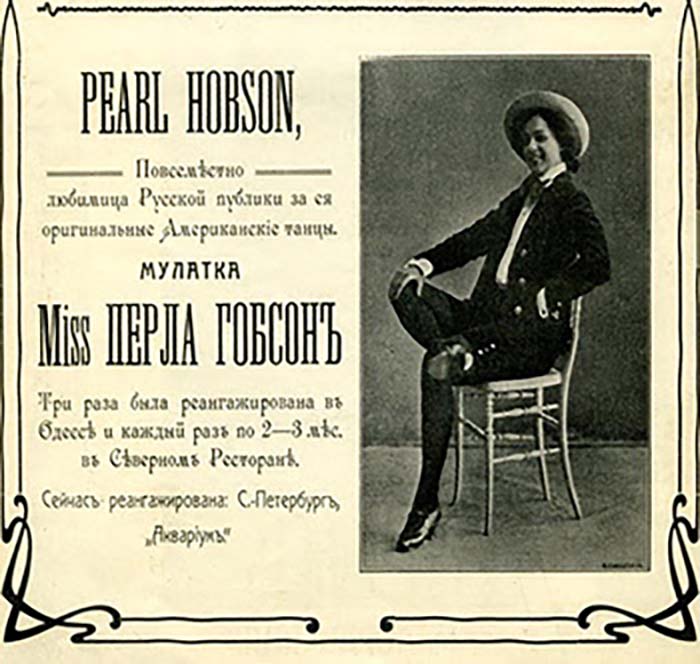
    Pearl Hobson poster, 1909. Public domain image

    Pearl Hobson was among a number of African-American performers who left the United States in the 1900s to somewhat escape racism. At the time, groups like the Fisk Jubilee Singers were making waves abroad due to the popularity of African-American culture through performance art. Hobson also wanted to profit from the situation. And so she did as she became the most popular African-American dancer and singer in Imperial Russia.

    The “Mulatto Sharpshooter,” as she was known, wowed elite audiences from St. Petersburg to Moscow by 1909 while living much of this period in Odessa, Ukraine in Southern Russia, as stated by one account. Not much is known about Hobson’s background. Born on July 7, 1879 in Lisbon, Bedford County, Virginia — even though some say she was born in Roanoke, Virginia — she worked as a maid before becoming a member of the Fencing Musketeers (also known as the Fencing Octoroons and Les Mousquetaires Noirs) which consisted of 11 Black women…

    Read the entire article here.

  • The German Crocodile: A Literary Memior (Das Deutsche Krokodil)

    2022-01-19

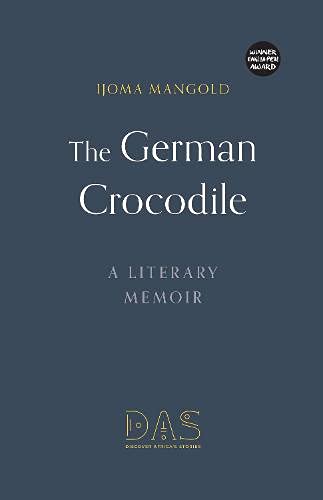
    The German Crocodile: A Literary Memior (Das Deutsche Krokodil)

    DAS Editions
    November 2021 (originally published in 2017)
    366 pages
    Hardcover 978-1838221508
    eBook ISBN : 978-1838221515

    Ijoma Mangold (Translated into English by Ruth Ahmedzai Kemp)

    In this compelling memoir of growing up different, Ijoma Mangold, today one of Germany’s best literary critics, remembers his youth in 1970s Heidelberg and the new Federal Republic, and momentous visits in early adulthood to the USA and Nigeria.

    His own story is inextricably linked with that of his mother, a German from the eastern province of Silesia, forced to escape as a refugee in the expulsions from 1944, and to start afresh in utter poverty in West Germany. His Nigerian father came to Germany to train in pediatric surgery but returned before Ijoma was old enough to remember him. His reappearance on the scene forces a crash collision with an unknown culture, one he grew up suspicious of, and a new complex family history to come to terms with. Mangold explores many existential questions in this lively narrative; How does a boy cope with an absent father? What was it like to grow up ‘bi-racial’ in the Federal Republic? Was he an opportunist, a master adaptor who had over-assimilated? What is the relationship between race and class? And what is more unusual in Germany: having dark skin or a passion for Thomas Mann and Richard Wagner? Ijoma shares his story with its dramatic twists and turns, not forgetting the surprises he uncovers about himself along the way.

  • Passing: A Film Discussion with Director/Writer Rebecca Hall and Actresses Tessa Thompson and Ruth Negga

    2022-01-19

    Passing: A Film Discussion with Director/Writer Rebecca Hall and Actresses Tessa Thompson and Ruth Negga

    National Museum of African American History and Culture
    Thursday, 2022-01-13 19:00-19:40 EST (Local Time); (Friday, 2022-01-14, 00:00-00:40Z)

    Join us in the New Year for a virtual discussion with Netflix film Passing screenwriter and director Rebecca Hall, alongside actresses Tessa Thompson and Ruth Negga. Based on Nella Larsen’s novel of the same name, Hall’s directorial debut explores not just racial identity but gender, class, the responsibilities of motherhood and the performance of femininity from the perspective of two Black women who choose to live on opposite sides of the color line in 1929 New York. For Rebecca Hall, creating Passing was a deeply personal journey, stemming from the discovery of her own family history. NMAAHC Curator Aaron Bryant will moderate the discussion. This program will be pre-recorded, and there will be no live Q & A. Passing is available now on Netflix.

    Watch the discussion here.

  • Passing for Racial Democracy

    2022-01-19

    Passing for Racial Democracy

    The Baffler
    2021-12-06

    Stephanie Reist

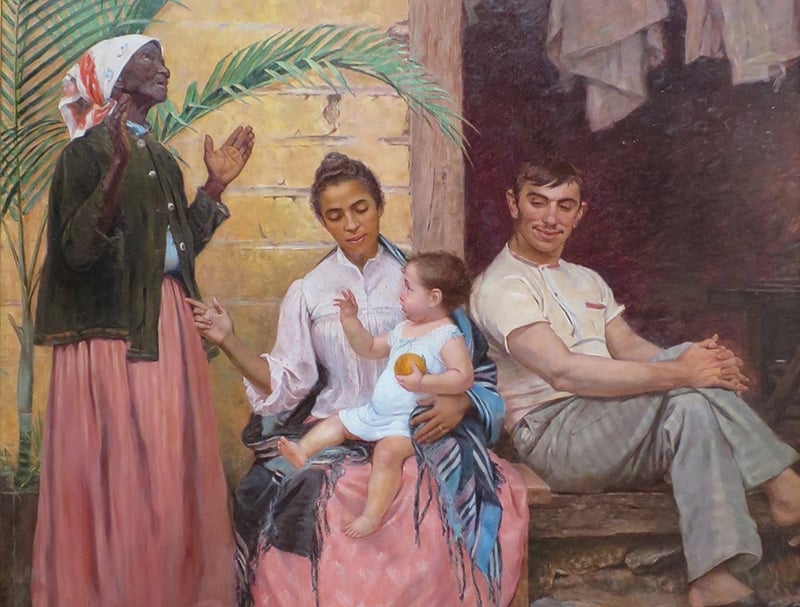
    Detail from A Redenção de Cam (Redemption of Ham), Modesto Brocos, 1895. | Museu Nacional de Belas Artes

    The complexities of the color line in the U.S. and Brazil

    A CENTRAL POINT OF TENSION between Irene Redfield (played by Tessa Thompson) and her husband Dr. Brian Redfield (André Holland) in Rebecca Hall’s Passing, based on the Nella Larsen novel of the same name, is whether their family should remain in the United States. While Irene can pass for white out of convenience, the same is not true of her darker sons and her husband, who routinely informs his children about lynchings and white violence. Irene disapproves of this talk, despite her work for the Negro Welfare League. In one pivotal scene, she drives her tired husband home after a long day of visiting patients, and the couple discuss going to South America, specifically mentioning Brazil. The issue returns when the couple fights over the consuming role that Clare (Ruth Negga)—who has chosen to pass as white to the point of marrying a bigoted white husband and having a daughter with him—exerts in their lives and marriage.

    In Larsen’s novel, Brian’s longing for Brazil, which becomes conflated with what Irene perceives as his desire for the effervescent, delightfully dangerous Clare, is even more pronounced: Brazil is the one that got away, Brian’s lost hope for a society where he and other black members of the talented tenth could be judged by their merits, not lynched because they failed to stay in their place. Irene even implicitly sanctions an affair between her husband and Clare to assuage her guilt for denying her family the chance to be truly “happy, or free, or safe”—a state she laments as impossible when speaking to Clare about her choice not to pass…

    Read the entire article here.

  • Americans Color Outside the Lines

    2022-01-19

    Americans Color Outside the Lines

    The Dispatch
    2021-04-26

    Chris Stirewalt, Contributing Editor

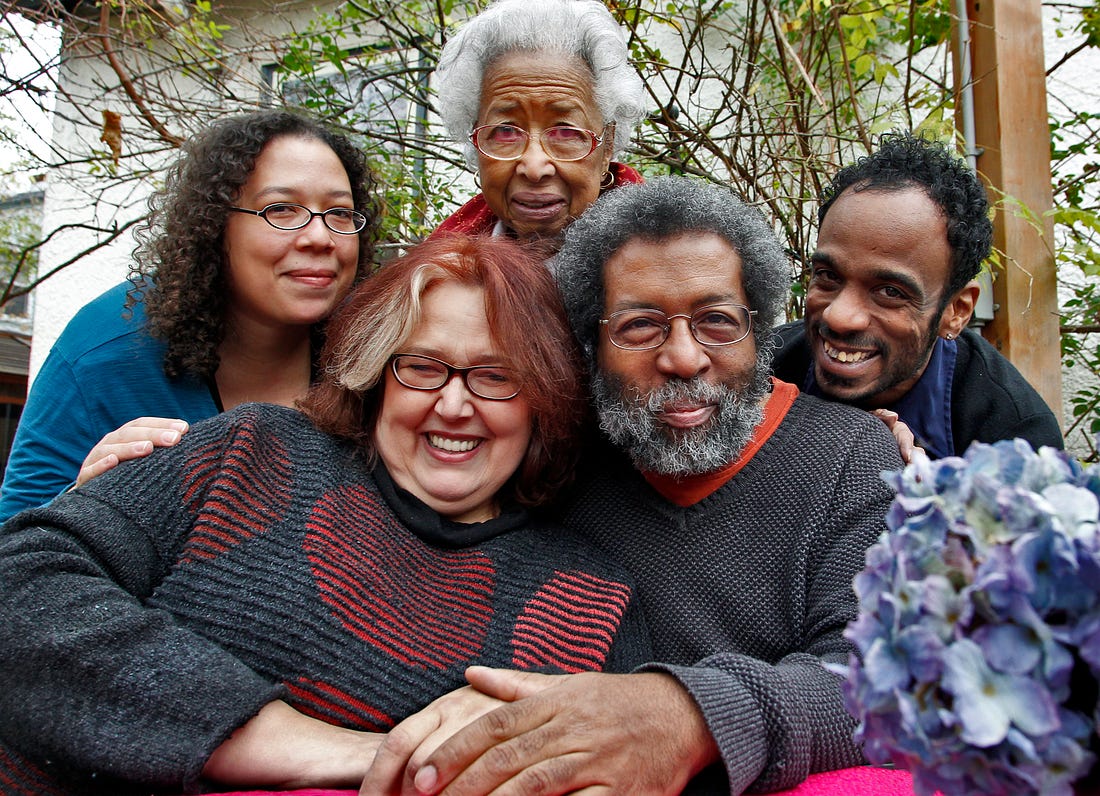
    Photograph By Marlin Levison/Star Tribune via Getty Images)

    Even today, bigots and the progressive proponents of race science hold fast to the idea of fixed race and ethnicity. Thankfully, Americans largely ignore them.

    In his autobiography, Life on the Color Line, Gregory Williams tells the story of discovering at the age of 10 that he was black—or at least that the world saw him that way.

    Williams, who would go on to serve as president of both City College of New York and the University of Cincinnati, was raised as a white boy when and where it really mattered: rural, central Virginia in the late 1940s and early 1950s. But when his parents’ marriage broke up and his mom ran off, his no-account, alcoholic father could not manage to care for his two sons. So, Williams’ dad moved them to his hometown of Muncie, Indiana. It was on the bus trip there that Williams’ dad told his boys that he was not the Italian-American called “Tony” who ran a roadhouse west of Richmond but a light-skinned black man from the wrong side of tracks in the industrial Midwest. “Miss Sallie,” the black woman who had worked at the family bar for a time, was really the boys’ grandmother.

    Ultimately abandoned by both of his parents, Williams found himself brutally rejected by both cultures. And what a time to live on that line. In 1954, the year after he arrived in Muncie, the Supreme Court struck down school segregation laws. Segregationists had warned after Harry Truman integrated the military six years earlier that the federal government was intent on the mixing of the races—and ultimately making intermarriage appear to be normal, leading to the dilution of the white race. The blending of children in classrooms was to them just the next step in the demise of America’s dominant white culture by miscegenation. Williams remembered a Klansman on television saying the court was trying to encourage race mixing and the rise of the “bestial mongrel mulatto, the dreg of human society.”…

    Read the entire article here.

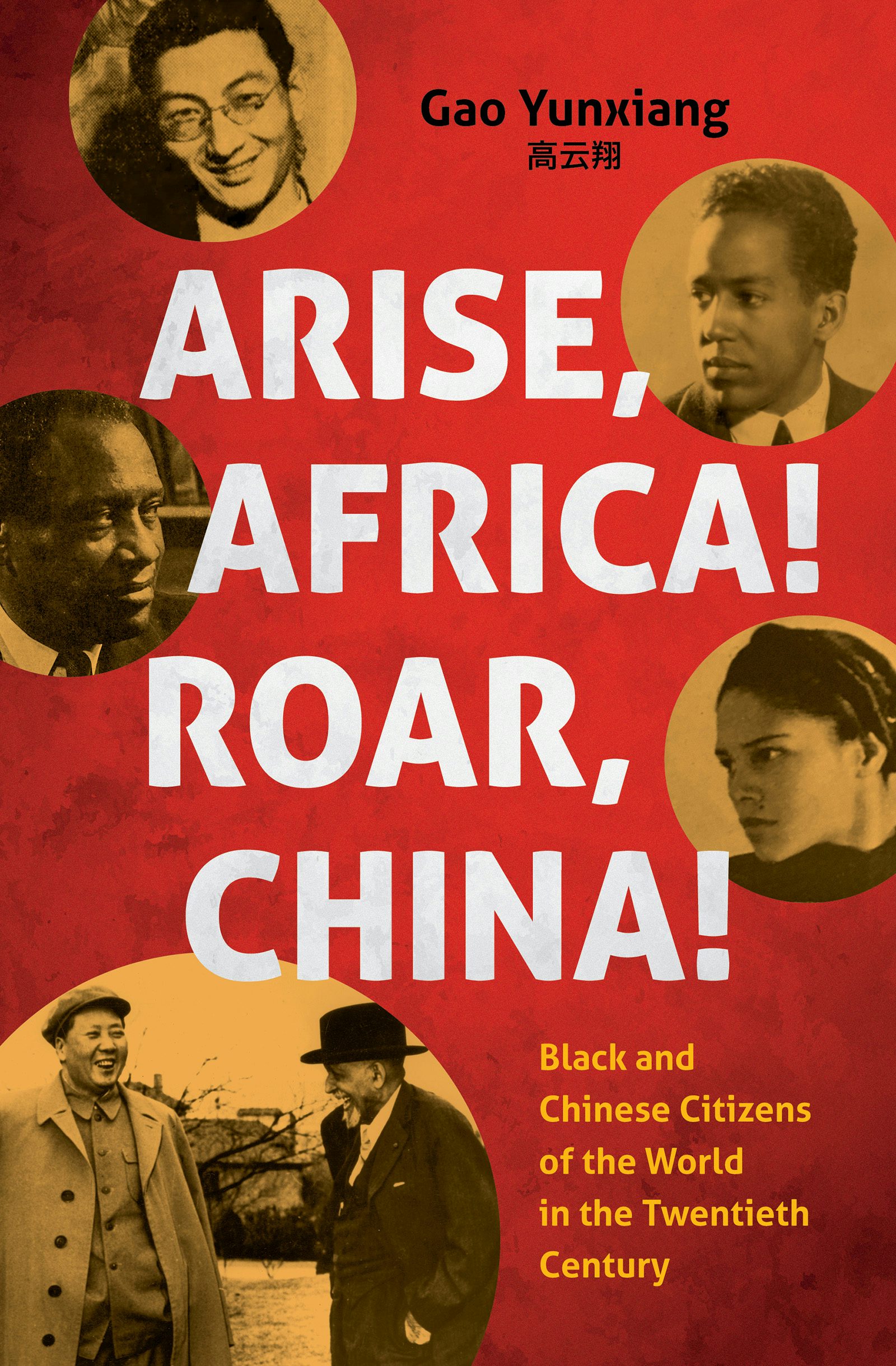
  • Arise Africa, Roar China: Black and Chinese Citizens of the World in the Twentieth Century

    2022-01-19

    Arise Africa, Roar China: Black and Chinese Citizens of the World in the Twentieth Century

    University of North Carolina Press
    December 2021
    408 pages
    49 halftones, notes, bibl., index
    6.125 x 9.25
    Hardcover ISBN: 978-1-4696-6460-6
    eBook ISBN: 978-1-4696-6461-3

    Yunxiang Gao, Professor of history
    Ryerson University, Toronto, Ontario, Canada

    This book explores the close relationships between three of the most famous twentieth-century African Americans, W. E. B. Du Bois, Paul Robeson, and Langston Hughes, and their little-known Chinese allies during World War II and the Cold War—journalist, musician, and Christian activist Liu Liangmo, and Sino-Caribbean dancer-choreographer Sylvia Si-lan Chen. Charting a new path in the study of Sino-American relations, Gao Yunxiang foregrounds African Americans, combining the study of Black internationalism and the experiences of Chinese Americans with a transpacific narrative and an understanding of the global remaking of China’s modern popular culture and politics. Gao reveals earlier and more widespread interactions between Chinese and African American leftists than accounts of the familiar alliance between the Black radicals and the Maoist Chinese would have us believe. The book’s multilingual approach draws from massive yet rarely used archival streams in China and in Chinatowns and elsewhere in the United States. These materials allow Gao to retell the well-known stories of Du Bois, Robeson, and Hughes alongside the sagas of Liu and Chen in a work that will transform and redefine Afro-Asia studies.

    Table of Contents

    • Title Page
    • Copyright Page
    • Dedication
    • Contents
    • Acknowledgments
    • Introduction
    • 1. Africa, Arise! Face the Rising Sun! W. E. B. and Shirley Graham Du Bois
    • 2. Arise! Ye Who Refuse to Be Bond Slaves! Paul Robeson, “the Black King of Songs”
    • 3. Transpacific Mass Singing, Journalism, and Christian Activism: Liu Liangmo
    • 4. Choreographing Ethnicity, War, and Revolution around the Globe: Sylvia Si-lan Chen Leyda
    • 5. Roar, China! Langston Hughes, Poet Laureate of the Negro Race
    • Epilogue
    • Notes
    • Bibliography
    • Index
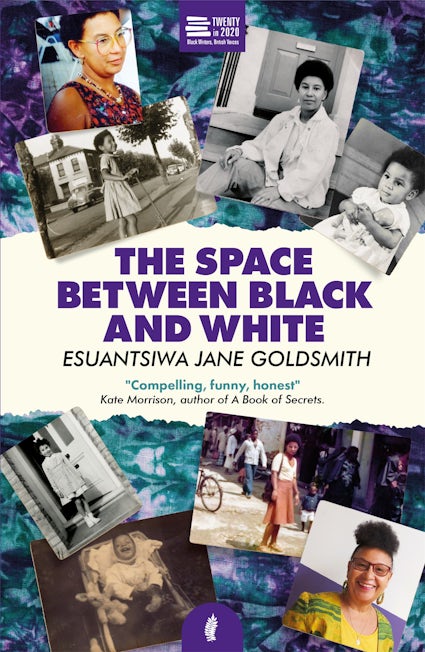
  • The Space Between Black and White

    2022-01-18

    The Space Between Black and White

    Jacaranda Books
    2020-03-03
    Paperback ISBN: 9781913090128

    Esuantsiwa Jane Goldsmith

    This unique #TwentyIn2020 memoir sheds light on Esuantsiwa Jane Goldsmith’s journey as a feminist and political activist. The book illuminates her inner journey of self-discovery and uncovers truths that could help a growing community of mixed-race people struggling to find their own space in the world.

    Illuminating her inner journey growing up mixed-race in Britain, Esua Jane Goldsmith’s unique memoir exposes the isolation and ambiguities that often come with being ‘an only’.

    Raised in 1950s South London and Norfolk with a white, working-class family, Esua’s education in racial politics was immediate and personal. From Britain and Scandinavia to Italy and Tanzania, she tackled inequality wherever she saw it, establishing an inspiring legacy in the Women’s lib and Black Power movements.

    Plagued by questions of her heritage and the inability to locate all pieces of herself, she embarks on a journey to Ghana to find the father who may have the answers.

    A tale of love, comradeship, and identity crises, Esua’s rise to the first Black woman president of Leicester University Students’ Union and Queen Mother of her village, is inspiring, honest, and full of heart.

  • Black Americans on the Way to Sainthood: Henriette Delille

    2022-01-18

    Black Americans on the Way to Sainthood: Henriette Delille

    St. Charles Borromeo Church
    Brooklyn, New York
    2021-02-13

    Josephine Dongbang

    Henriette Delille, (1812-1862), founder of Sisters of the Presentation of the Blessed Virgin Mary
    “For the love of Jesus Christ, she had become the humble and devout servant of the slaves.”

    Henriette Delille was born in 1812 in New Orleans, Louisiana, to a loving Catholic family. While Henriette was born a free woman, she was descended from an enslaved African woman and white slave owner. Thus, following the tradition of the females in her family, she was groomed to form a monogamous relationship with wealthy white men under the plaçage system. She was trained in French literature, music, and dance, and expected to attend balls to meet men who would enter into such civil unions. Most of these agreements often ended up with the men later marrying white women in “official” marriages and/or abandoning their promises of support for the women and their mixed-race children. As a devout Catholic, Henriette opposed such system, believing it went against the Catholic sacrament of marriage…

    Read the entire article here.

  • And the 2022 Oscar Nominees Should Be…

    2022-01-18

    And the 2022 Oscar Nominees Should Be…

    The New York Times
    2022-01-14

    Illustrations by Ben Denzer

    If our chief critics Manohla Dargis and A.O. Scott had their way, these are the films and the people who would be up for Academy Awards.

    • Best Picture: Drive My Car, Passing, The Power of The Dog
    • Best Director: Jane Campion, The Power of the Dog; Rebecca Hall, Passing
    • Best Actress: Kristen Stewart, Spencer; Tessa Thompson, Passing
    • Best Supporting Actress: Ariana DeBose, West Side Story; Aunjanue Ellis, King Richard; Kathryn Hunter, The Tragedy of Macbeth; Toko Miura, Drive My Car; Ruth Negga, Passing
    • Best Adapted Screenplay: Drive My Car, Passing, The Power of The Dog…

    Read the entire article here.

  • Rebecca Hall’s Brief But Spectacular take on ‘Passing’ and racial identity

    2022-01-13

    Rebecca Hall’s Brief But Spectacular take on ‘Passing’ and racial identity

    PBS Newshour
    2022-01-12

    Melissa Williams

    Rebecca Hall has been on-screen since age 10, but in her new film “Passing” she steps into the director role for the first time. It is based on a novel that was written in 1929 by Nella Lawson Larsen at the height of the Harlem Renaissance. Hall shares her Brief But Spectacular take on “Passing” and on her own racial identity as part of our arts and culture series, CANVAS.

    Read the full transcript here.

Previous Page
1 … 40 41 42 43 44 … 1,428
Next Page

Designed with WordPress