• An Interview with Poet Brian Komei Dempster

    Hyphen: Asian America Unabridged
    2015-02-02

    Jeffrey Thomas Leong, San Francisco Bay Area poet; 2014 graduate of the Vermont College of Fine Arts MFA in Writing program in poetry

    I first met Brian Komei Dempster in Winter 2000 as a student in his Kearny Street Workshop writing class, held in his grandfather’s Buddhist church in San Francisco’s Japantown, and was immediately impressed by his warmth and patience. Brian has edited two books of personal stories by Japanese Americans who were incarcerated in WW II campsFrom Our Side of the Fence and Making Home from War. His debut poetry book Topaz, which won the 15 Bytes 2014 Book Award in Poetry, was published in 2013 by Four Way Books.

    What I admire most about Topaz is its skillful interweaving of the historical and the personal, which reflects the way that inherited family legacies are both a burden and a gift for one to sort through and integrate. Brian’s story — and the speaker’s quest in the book — is further complicated by his mixed race heritage and upbringing by a Japanese American mother and white father. As a Chinese American, I’ve experienced cultural bifurcation but, through Brian’s work, have discovered a new world of racial dualism. His fearless investigation of its nuances and conflicts is inspiring. He can write of a grandmother’s grief and then seamlessly present the sexual angst of adolescent males: his ordering and juxtaposition of poems reflects the multi-layered resonances of the speaker’s life.

    Brian’s poetry is carefully crafted, with formal experimentation, yet remains accessible to a broad audience. It is personally expressive, though grounded within the context of family and community. His poems chart new territory and speak hard truths. Most importantly, for me as a writer, they feel authentic.

    Brian’s poems have appeared in New England Review, North American Review, Ploughshares, and numerous other journals as well as various anthologies, including Language for a New Century and Asian American Poetry: the Next Generation. He is a professor of rhetoric and language and a faculty member in Asian Pacific American Studies at the University of San Francisco, where he also serves as Director of Administration for the Master of Arts in Asia Pacific Studies.

    ***

    Jeffrey Thomas Leong: Can you tell us about your name — Brian Komei Dempster — and where it comes from?

    Brian Komei Dempster: My father’s name is Dempster, which has European roots, and my mother’s maiden name is Ishida, which is Japanese. The name Komei was given to me by my grandfather, Archbishop Nitten Ishida. I didn’t always use Komei, but as I got older and became a writer, I felt I had to use Komei; otherwise someone might not know who I was, not get the half Asian part of my identity. According to my grandfather, the name means “tall, high, clear –like a mountain. ” The fact that my grandfather — who’s a priest — gave me the name imbues it with gravitas…

    Read the entire interview here.

  • The Great New Orleans Kidnapping Case: Race, Law, and Justice in the Reconstruction Era [Tejada Review]

    Washington Independent Review of Books
    2015-01-15

    Susan Tejada

    When a Crescent City toddler goes missing, the tensions of the post-Civil War South are exposed.

    Ross, Michael A., The Great New Orleans Kidnapping Case: Race, Law, and Justice in the Reconstruction Era (New York, Oxford: Oxford University Press, 2014)

    The case was combustible. Two mixed-race women, abetted by the son of one of them, stood accused of kidnapping a blonde, blue-eyed white baby girl in New Orleans in 1870. How did it end? Author Michael Ross expertly keeps readers in suspense as he weaves this true tale of crime, culture, politics, and colorful Southern characters — including a riverboat captain, “mulatresses,” and a precedent-setting Afro-Creole detective.

    The case began on the afternoon of June 9, 1870, when Bridgette Digby sent her 10-year-old son, Georgie, and toddler daughter Mollie outside to play under the supervision of a teenage babysitter. Two stylish, fair-skinned African-American women happened to be strolling by. As they stopped to admire Mollie, a fire broke out a few blocks away, and the excited babysitter asked Georgie to hold his sister while she ran to watch the fire.

    “No bubby, I will take the baby,” one of the women said. The women asked Georgie to lead them to the home of a certain neighbor. Once there, they told Georgie it was the wrong house, and then sent him to the market to buy a treat for his sister. A heart-stopping shock awaited Georgie when he came out of the market. The women were gone, and so was his baby sister…

    Read the entire review here.

  • The Great New Orleans Kidnapping Case: Race, Law, and Justice in the Reconstruction Era

    Oxford University Press
    2014-10-14
    320 Pages
    30 half-tones
    6-1/8 x 9-1/4 inches
    Hardcover ISBN: 9780199778805

    Michael A. Ross, Associate Professor of History
    University of Maryland

    • Offers a glimpse into the volatile racial world of Reconstruction era New Orleans
    • Guides readers through one of the first sensationalized kidnapping trials of the late 19th Century
    • Offers fresh insights on the complexities and possibilities of the Reconstruction era

    In June 1870, the residents of the city of New Orleans were already on edge when two African American women kidnapped seventeen-month-old Mollie Digby from in front of her New Orleans home. It was the height of Radical Reconstruction, and the old racial order had been turned upside down: black men now voted, held office, sat on juries, and served as policemen. Nervous white residents, certain that the end of slavery and resulting “Africanization” of the city would bring chaos, pointed to the Digby abduction as proof that no white child was safe. Louisiana’s twenty-eight-year old Reconstruction governor, Henry Clay Warmoth, hoping to use the investigation of the kidnapping to validate his newly integrated police force to the highly suspicious white population of New Orleans, saw to it that the city’s best Afro-Creole detective, John Baptiste Jourdain, was put on the case, and offered a huge reward for the return of Mollie Digby and the capture of her kidnappers. When the Associated Press sent the story out on the wire, newspaper readers around the country began to follow the New Orleans mystery. Eventually, police and prosecutors put two strikingly beautiful Afro-Creole women on trial for the crime, and interest in the case exploded as a tense courtroom drama unfolded.

    In The Great New Orleans Kidnapping Case, Michael Ross offers the first full account of this event that electrified the South at one of the most critical moments in the history of American race relations. Tracing the crime from the moment it was committed through the highly publicized investigation and sensationalized trial that followed, all the while chronicling the public outcry and escalating hysteria as news and rumors surrounding the crime spread, Ross paints a vivid picture of the Reconstruction-era South and the complexities and possibilities that faced the newly integrated society. Leading readers into smoke-filled concert saloons, Garden District drawing rooms, sweltering courthouses, and squalid prisons, Ross brings this fascinating era back to life.

    A stunning work of historical recreation, The Great New Orleans Kidnapping Case is sure to captivate anyone interested in true crime, the Civil War and its aftermath, and the history of New Orleans and the American South.

    Table of Contents

    • Acknowledgments
    • Introduction
    • Ch 1 A Kidnapping in the Back of Town
    • Ch 2 Detective John Baptiste Jourdain and His World
    • Ch 3 A Trace of a Missing Child?
    • Ch 4 A Knock at the Digbys’ Door
    • Ch 5 The Arrest of the Alleged Accessories
    • Ch 6 The Woman in the Seaside Hat
    • Ch 7 The Recorder’s Court
    • Ch 8 A Highly Unusual Proceeding
    • Ch 9 Unveiling the Mystery
    • Ch 10 The Case “That Excited All New Orleans”
    • Afterword and Acknowledgments
    • Notes
    • Index
  • Claiming Race, Identity and a Right to Education

    Mixed Roots Stories
    2015-02-02

    Briellen Griffin, Doctoral Student of sociology in Cultural and Educational Policy Studies
    School of Education
    Loyola University Chicago

    It is my job to think about school. Everyday, I read, write, and speak about education. I ask, and often try to answer, the big questions. Like, why do we have schools? Or, what is the purpose of education? Even more specifically, how do I make sure all kids get the education they deserve? Since I now have my own children, these questions have taken on new meaning in my life. They have become personal. More than I expected, they have become questions that challenge who we are; who I am and who my children will become.

    When I think back to my earliest years of schooling, I can’t pinpoint a specific moment when I knew that I was getting a different education that my friends. I grew up in urban public schools, not unlike the one my own kids attend today. I LOVED SCHOOL. I mean, LOVED it. All parts. Carrying the milk crate for snack, practicing handwriting, chasing friends on the playground. Later, the love grew to encompass algebra and writing, student council and more writing… I was good at school and that made every moment satisfying and fulfilling.

    At some point, I began to realize that I got more credit than I deserved. It wasn’t just that I was good at what I did. Maybe, I thought, it wasn’t even that I was better than anyone else at school, at all. It did have something to do with having blond hair and blue eyes. It had to do with feeling free in a place that didn’t criminalize me. It had to do with looking white.

    I am, perhaps, one of the more stereotypical American multiracial blends, one that connotes the taboo of race-mixing specific to slavery in this country. My mother is white and my father is Black, though his heritage includes European & American Indian and is evidenced by a “high yellow” complexion and wavy black hair. What is less stereotypical about my multiracial identity is that I look white, especially to most white people. And the result is that I benefit from white privilege…

    Read the entire article here.

  • ‘One Drop’ at Cambridge Rindge & Latin

    The Boston Globe
    2015-02-03

    Meredith Goldstein, Entertainment Reporter


    From left: Junot Díaz, Fanshen Cox DiGiovanni, and Kate Ellis. (Aram Boghosian for The Boston Globe)

    Actor-producer Fanshen Cox DiGiovanni brought her one-woman show, “One Drop of Love,” to the Cambridge Rindge & Latin School on Friday night. The play, co-produced by famous Rindge alums Ben Affleck and Matt Damon, is about family, race, class, and reconciliation. DiGiovanni stuck around to talk about the big themes with a panel that included Pulitzer-Prize-winning author and MIT professor Junot Díaz and educator Donald Burroughs. The evening benefited the school’s Kimbrough Scholars Program.

  • Brooklyn is: Feature of the Week [Beth Consetta Rubel]

    Brooklyn Artistry
    Brooklyn, New York
    2015-02-02

    The latest and greatest untouched talent of the borough.

    Being a biracial woman from the South we wanted to know what it was like for Beth Consetta Rubel as an artist. So many things can be triggering for an artists like her. You’d think she would have to battle for both sides, especially now when it seems like racial tension is at an all time high. We spoke with Consetta, one of the illest portraiture painters today, about her experience. Talk about in your face! Beth Consetta Rubel is not the one to hold back especially through her work. Her new series Paper Bag Test shows her pride in all of it’s grace.

    If you haven’t already heard about her here’s a little something you should know, her name is Beth Consetta Rubel. She’s an Austin based visual artist. Raised in the South, Rubel draws upon her personal narrative and mixed-race ancestry to create work deeply rooted in her ethnic heritage. Focusing on painting and drawing in college, she received her BFA from the University of Texas San Antonio. Her recent “Paper Bag Test Series” references historical tests used to ascertain race based on phenotype, addressing contentious political and social issues on race, cultural identity, and class struggle…

    Read the entire interview here.

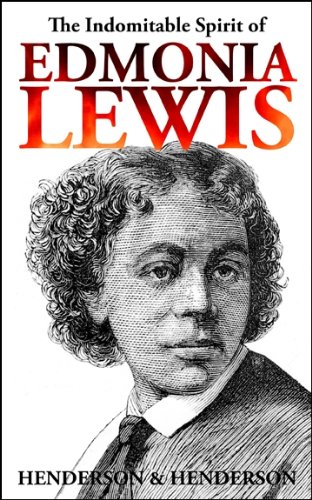
  • The Indomitable Spirit of Edmonia Lewis. A Narrative Biography

    Esquiline Hill Press
    2012
    567 pages (est.)
    mobi ISBN: 978-1-58863-450-4
    PDF ISBN: 978-1-58863-451-1
    ePub ISBN: 978-1-58863-452-8

    Harry Henderson

    Albert Henderson

    Edmonia Lewis was the first famous “colored sculptor” and the first to idealize her African and American Indian heritages in stone. She flourished from 1864 through 1878, and, as an artist, was a rare instrument for social change in the aftermath of the Civil War. She pressed her case for equality from her studio in Rome, Italy, and with annual tours of the United States.

    Our new narrative of Lewis’s life and art updates many “established facts” – well beyond erroneous birth and death dates – with more than 100,000 words, 50 illustrations, 800 references, bibliography, index, and a reference list of more than 100 works with notes on museum holdings. It is based on private letters, public documents, essays, hundreds of news items, reviews of her work, museum collections, and more than two dozen published interviews. It reveals how a world biased against her color, class, gender and religion received her. Of special interest to African-American and American-Indian studies, as well as art, women’s, and American history, the narrative opens an abundance of previously unrecognized sources, reinterprets important relationships, names missing works, and corrects the identification of an important portrait. Students of the nineteenth century will find it a cool counterpoint to the bitter rage of Civil War and Reconstruction.

    Readers familiar with her legendary icons of race may be surprised by her many portraits and her untold moves to Paris and London. They will also find answers to long-standing questions: Where, when, and how did she die? Why did her encounter with a bronze Ben Franklin leave her reeling? Why did she idealize a woman with African features only once in her career? Why did she never cite the now-famous Forever Free after her first interviews in Rome? Why did she have to stalk Henry Wadsworth Longfellow through the streets to make his portrait? Where was her studio? How often did she tour America? How did she enter her work in the 1876 Centennial expo, which had barred colored people absolutely? What were her relationships with fans, mentors, and fellow sculptors? Who were her rivals, her best friends, and her worst enemies? Fresh evidence, never before collected and collated, argues a novel motive for her erotic masterwork, the Death of Cleopatra, which sits apart in her œuvre like a hussy in a small town church. Newly realized sources also change our view of her childhood and provide ample support to refute distortions of her personal character, sexuality, and appearance.

  • Rhineland Children

    Arriving In The Future: Stories of Home and Exile
    2015-01-20

    Asoka Esuruoso & Philipp Khabo Koepsell

    Germany’s brief colonial period saw an increase in the community of Africans and Afro Germans in Germany. Many Black Germans were also descendants of Black Askari troops recruited from Germany’s former colonies. Thousands of these men had fought and died for Kaiser Wilhelm during the First World War in Germany’s East African campaign.[i]

    Living within a self proclaimed “white” society with a history of misunderstanding, mistreating, and misrepresenting “People of Color,” life was never easy. This was especially so since much of the Colonial German literature at that time depicted Africa and its people in a negative light. The sexuality of African women and men was often described in white colonial literature in base, animalistic ways. In the 1800’s there were even exotic exhibitions of live human zoos[1] where African individuals[2] were displayed in recreated African villages within regular zoos and toured through major European metropolises including Hamburg and Berlin.[ii]

    The end of the First World War and the occupation of the Rhineland by French soldiers, including many Afro French soldiers, resulted in the birth of another generation Afro German children that were often referred to within German society by degrading terms such as Besatzungskinder “War Babies” or RheinlandbastardRhineland Bastard.”[iii] For white German nationalists the occupation and policing of the former German colonizer by Black African solders was the final humiliation…

    Read the entire article here.

  • Evidence-based care eliminates racial disparity in colon cancer survival rates, study finds

    Stanford Medicine News Center
    2015-01-26

    Lisa Marie Potter
    Office of Communication & Public Affairs

    A new study finds that equitable delivery of evidence-based care eliminates the racial disparity in colon-cancer survival rates.

    For the past two decades, the National Cancer Institute has documented a persistent racial disparity in colon cancer survival rates in the United States.

    African-American patients have consistently had lower survival rates when compared with white patients, despite a nationwide decline in colon cancer deaths overall.

    Now, a study by researchers at the Stanford University School of Medicine shows that more equitable delivery of evidence-based care can close this gap. Furthermore, the investigators found that evidence-based care was delivered at higher rates within integrated health-care organizations — those in which one organization provides all the patient’s health-care services, hospital care and insurance. The study reports that five-year death rates were lower for all colon cancer patients treated in an integrated health-care system, and the differences in survival by race were eliminated.

    The study’s findings, published online Jan. 26 in the Journal of Clinical Oncology, support the idea that providing equitable, high-quality, evidence-based care is a powerful tool in eliminating cancer-treatment disparities.

    “Historically, we’ve taken less than a critical eye on our own health-care system in terms of how we can take the lead in addressing disparities,” said lead author Kim Rhoads, MD, MPH, assistant professor of surgery. “The big takeaway in this paper is that it’s treatment, not necessarily patient factors, but following evidence-based guidelines that gives all patients the best chance for survival. Our work also suggests a real opportunity to equalize these racial differences.”…

    Read the entire press release here.

  • How Do Integrated Health Care Systems Address Racial and Ethnic Disparities in Colon Cancer?

    Journal of Clinical Oncology
    Published online: 2015-01-26
    DOI: 10.1200/JCO.2014.56.8642

    Kim F. Rhoads, Colon and rectal surgeon, Colorectal surgeon, Surgical oncologist; Assistant Professor of Surgery at the Stanford University Medical Center
    Stanford Cancer Institute
    Stanford University School of Medicine

    Manali I. Patel, MD
    Stanford Cancer Institute
    Stanford University School of Medicine

    Yifei Ma, Statistician
    Stanford University School of Medicine

    Laura A. Schmidt, Professor of Health Policy
    Philip R. Lee Institute for Health Policy Studies
    University of California, San Francisco

    Presented as a poster at the American Society of Clinical Oncology Quality Care Symposium, San Diego, CA, November 30-December 1, 2012.

    Purpose: Colorectal cancer (CRC) disparities have persisted over the last two decades. CRC is a complex disease requiring multidisciplinary care from specialists who may be geographically separated. Few studies have assessed the association between integrated health care system (IHS) CRC care quality, survival, and disparities. The purpose of this study was to determine if exposure to an IHS positively affects quality of care, risk of mortality, and disparities.

    Patients and Methods: This retrospective secondary-data analysis study, using the California Cancer Registry linked to state discharge abstracts of patients treated for colon cancer (2001 to 2006), compared the rates of National Comprehensive Cancer Network (NCCN) guideline–based care, the hazard of mortality, and racial/ethnic disparities in an IHS versus other settings.

    Results: More than 30,000 patient records were evaluated. The IHS had overall higher rates of adherence to NCCN guidelines. Propensity score–matched Cox models showed an independent and protective association between care in the IHS and survival (hazard ratio [HR], 0.87; 95% CI, 0.85 to 0.90). This advantage persisted across stage groups. Black race was associated with increased hazard of mortality in all other settings (HR, 1.15; 95% CI, 1.04 to 1.27); however, there was no disparity within the IHS for any minority group (P > .11 for all groups) when compared with white race.

    Conclusion: The IHS delivered higher rates of evidence-based care and was associated with lower 5-year mortality. Racial/ethnic disparities in survival were absent in the IHS. Integrated systems may serve as the cornerstone for developing accountable care organizations poised to improve cancer outcomes and eliminate disparities under health care reform.

    Read or purchase the article here.