• Living Color: Fathers Talk to Their Bi-Racial Sons

    NBC News
    2015-01-14

    Photographs by André Chung

    Teaching lessons they never had to learn, fathers speak to their bi-racial sons about identity, perception, and dealing with law enforcement.


    Mark Johnson-Lewis, 48, and his son, Tyler Lewis, 22, of Columbia, MD (André Chung/NBC News)

    Mark: You’re black in this world, and it doesn’t matter what you think of who you are, you have to be conscious of how others are going to see you. And when you bump up against the law, it’s probably not going to be the best experience because of how others see you.

    Tyler: I want to become a police officer and it’s kind of something that I struggle with being a black man. There needs to be a change in mindset of the way people view law enforcement. And there needs to be a change in the way law enforcement views the average American. You know, not as a black American, not as a white American, but as a person, as a human being…
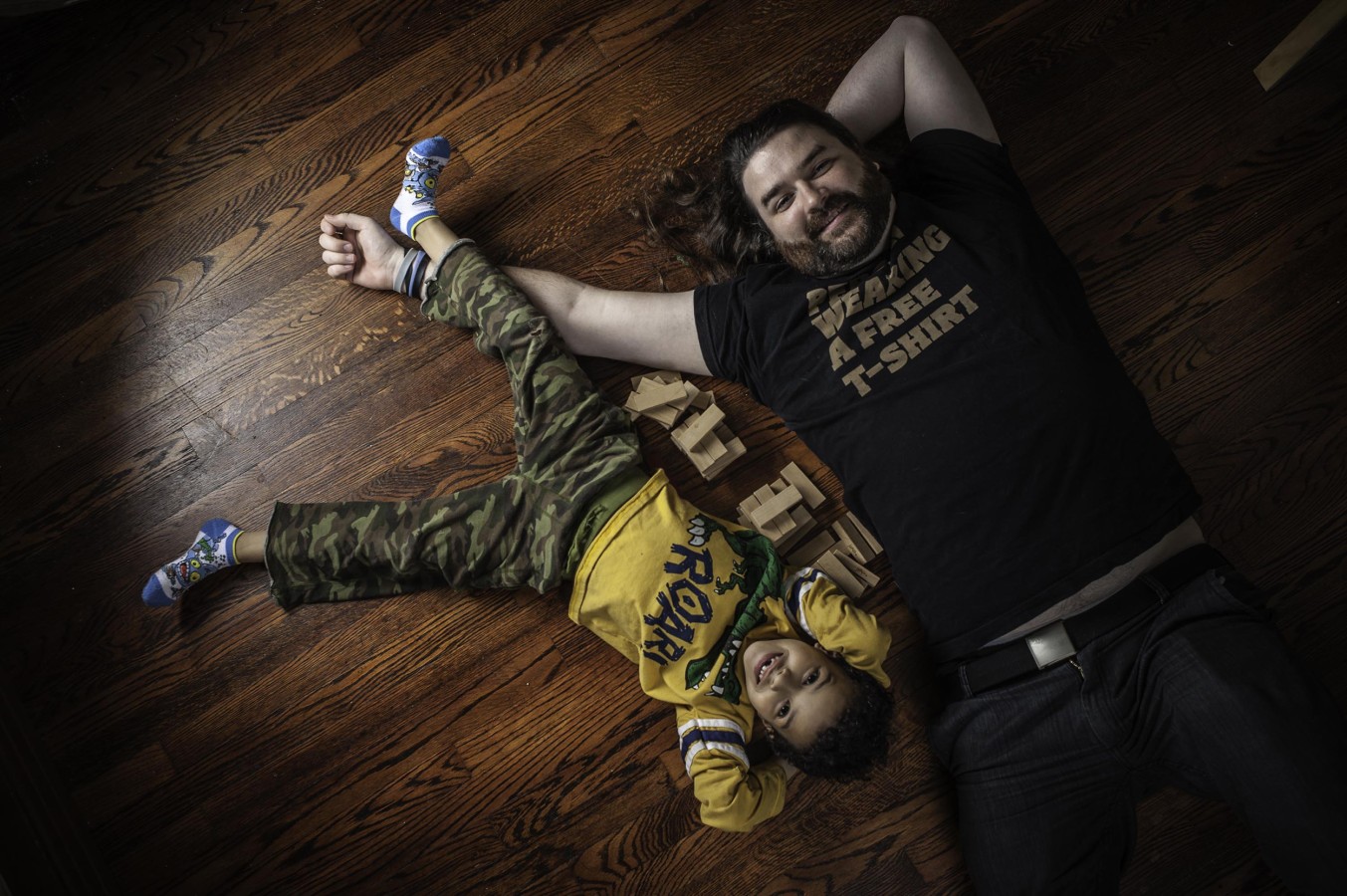

    Benjamin Jancewicz, 31, with his son, Arion, 6, of Baltimore, MD. (André Chung/NBC News)

    Benjamin: Regardless of how light he is, he’s still going to be, you know, with a lot of other people doing a lot of other things. And he needs to be prepared. And that just really worries me because, you know, as much of a perspective as I do have coming from a– a [diverse] culture, I still know that my own skin tone allows me to get away with a lot of other stuff…

    View the entire photo-essay here.
  • What If Everything You Know About Race Is Wrong?

    Texas Public Radio
    San Antonio, Texas
    2015-01-15

    Jack Morgan, Arts and Culture Reporter


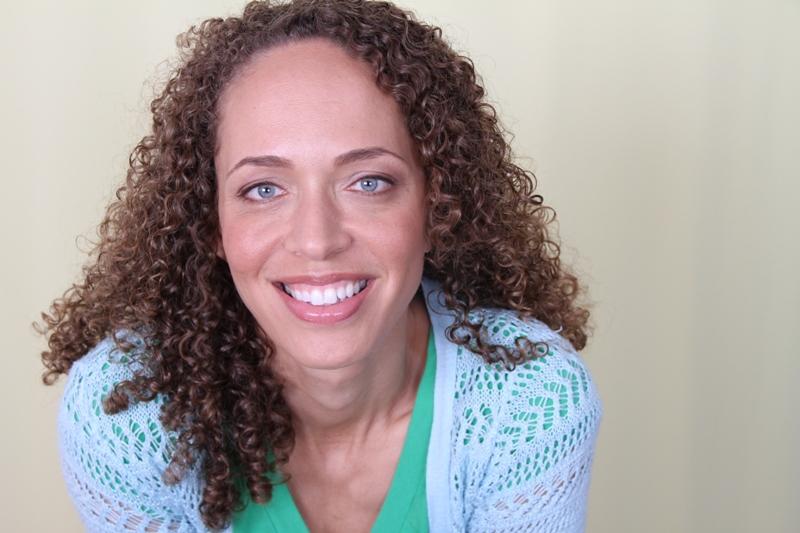
    Fanshen Cox DiGiovanni

    A one-woman show is coming to the Tobin Center and it’s probably unlike anything you’ve ever seen. It’s called “One Drop of Love.” starring Fanshen Cox DiGiovanni, produced by Ben Affleck and Matt Damon.

    “How did you get mixed up with Ben Affleck and Matt Damon?” I asked.

    (Laughs) “I think I met Matt when I was about 12 and Ben when we started high school together,” DiGiovanni told me. “And we did theater—we had a very wonderful theater program at Cambridge Rindge and Latin High School. And these two guys are such wonderful human beings.”

    A year ago, DiGiovanni first produced this one-woman show for a Master of Fine Arts degree thesis performance.

    “Ben came and saw my thesis performance and just said afterwards ‘I think this is really great and important and I’d like to help you get it to a wider audience.’”

    Matt Damon also saw it and agreed with his friend. Thus DiGiovanni’s tour was conceived. So exactly what is One Drop of Love? It’s talking about one of this country’s most difficult subjects: race.

    “I never know what kinds of experiences the people in the audience have had with race and racism,” DiGiovanni explains.

    The whole show revolves around this premise.

    “I start off the show as the character from a 1790 census, on which there were only three racial categories.”

    In her show, she goes around her audience, linking audience members to one of those racial categories.

    Walking through an audience, she names them: “Okay, white…black…mulatto…Chinese? Yes, hello…quadroon…no, I see you! An Indian…”

    It’s one part history, one part performance art.

    “There are people who look at me and shake their head and say ‘no, that’s not what I am!’ Which is very much the point, because that’s how the census was counted until 1970. A census worker would just go around and guess the race of the person they were looking at.”

    She says race, in a sense, isn’t even real…

    Read the entire article here. Listen to the interview (00:03:34) here.

  • One Drop of Love

    Tobin Center for the Performing Arts
    Carlos Alvarez Studio Theater
    100 Auditorium Circle
    San Antonio, Texas 78205
    2015-01-17, 14:00 CST and 20:00 CST (Local Time)

    BMW OF SAN ANTONIO SIGNATURE SERIES
    “Amazing performance, staging, autobiography and artistry, and an amazing meditation on race and examination of America.” – Ben Affleck, 2013 Academy Award for Best Picture: Argo

    One Drop of Love is beautiful and brave. Cox DiGiovanni’s honesty, insight, dedication, and love are an inspiration. She takes us into the intimate places where family, race, love, and pain intertwine. In this sometimes searing, sometimes funny, and always smart play she shows us both the terrible things we do to those we love and a way forward to a better future.” – Paul Spickard, professor of history at University of California, Santa Barbara

    How does our belief in ‘race’ affect our most intimate relationships? One Drop of Love is a solo performance exploring family, race, love and pain – and a path towards reconciliation. The show is produced by Ben Affleck, Matt Damon and the show’s writer/performer Fanshen Cox DiGiovanni.

    For more information, click here.

  • Toward a Sociology of Race and Ethnicity

    Sociology of Race and Ethnicity
    Volume 1, Number 1
    pages 1-9
    DOI: 10.1177/2332649214562028

    David L. Brunsma, Professor of Sociology
    Virginia Polytechnic Institute and State University, Blacksburg, Virginia

    David G. Embrick, Associate Professor of Sociology
    Loyola University, Chicago, Chicago, Illinois

    Megan Nanney
    Department of Sociology
    Virginia Polytechnic Institute and State University, Blacksburg, Virginia

    “The ideal that I visualize for SREM is that it will constantly seek to maintain and develop the highest levels of interest in, scholarly-concern about, and professional focus upon, all aspects of racial and ethnic minorities within the sociological domain.”

    —Charles U. Smith, 1980 Founder of SREM

    “Much more needs to be done, and I am certain that we have both tapped and untapped resources within our Section membership.”

    Loretta J. Williams, 1981 Chair of SREM

    Introduction

    In 1981, the Chair-Elect of the Section of Racial and Ethnic Minorities (SREM) of the American Sociological Association (ASA), Loretta J. Williams, succeeding the section’s founder, Charles U. Smith, wrote in the section newsletter, Remarks (short for Racial & Ethnic Minorities Announcements Reminders Kudos Statements), about a Spring 1981 issue of Daedalus that sounded a national call for a “greater working knowledge of racial and ethnic identity issues.” Williams continues to report on the article as well as the then recent spring issue of Annals, writing, “Little is known of the myriad forms of racial and ethnic relations of other groups within the U.S. and beyond. Conceptualizations of race relations exclusively based on data and theories relating to black/white conditions in the U.S. are insufficient” (Williams 1981:1). The opening quote represents one of the clarion calls from the founding leadership of SREM to the members of an urgent need for a sociology of race and ethnicity and that SREM members have the methodological tools, theoretical acuity, and epistemological breadth to breathe it to life. SREM has served as the social and professional space for sociologists focused on issues of race and ethnicity for over 35 years now. Throughout those decades, and up until now, SREM has lacked a home to publish, debate, and build that sociology of race and ethnicity. Welcome home. Welcome to the inaugural issue of The Sociology of Race and Ethnicity!…

    Read the entire introductory article here.

  • Hawaii As ‘Racial Paradise’? Bid For Obama Library Invokes A Complex Past

    Code Switch: Frontiers of Race, Culture and Ethnicity
    National Public Radio
    2015-01-15

    Ellen Wu, Associate Professor of History
    Indiana University

    Sometime in March, President Obama is expected to announce his choice of the institution that will hold his presidential archive. Vying for the honor (and the money that comes with it) are the University of Chicago, the University of Illinois at Chicago, Columbia University in New York, and the University of Hawai’i (the Hawaiian language spelling of the state’s name). So heated has the competition been that some have called it the “next big presidential race before the 2016 presidential race.”

    The front-runner status of both Windy City schools is now in question. The University of Chicago may lack exclusive ownership rights to the proposed sites, while the University of Illinois anticipates future leadership changes.

    Yet media reports still cast Hawaii as the underdog. Its fundraising capabilities are out-muscled by the others. Its location is too remote by mainland standards.

    But don’t be surprised if Hawaii comes out on top, because the island has a compelling advantage: It’s the one place in the U.S. that has long been imagined as a “racial paradise.”

    Liberal white missionaries and sociologists invented this fiction in the early 20th century to convince the nation that Hawaii’s significant Asian population was capable of assimilating harmoniously into American life. Asian laborers were the backbone of the islands’ industrial sugar plantation workforce. By 1945, Life pronounced Hawaii “the world’s most successful experiment in mixed breeding … unmatched … for interracial tolerance and affection.” Today, the “Aloha State” is widely celebrated as the most racially and ethnically diverse in the country, where hapas and multiracial families are the norm. The Root recently named Hawaii one of “The Five Best States for Black People.”…

    Read the entire article here.

  • Plaçage and the Performance of Whiteness: The Trial of Eulalie Mandeville, Free Colored Woman, of Antebellum New Orleans

    American Nineteenth Century History
    Volume 15, Issue 2, 2014
    pages 187-209
    DOI: 10.1080/14664658.2014.959818

    Carol Wilson, Arthur A. and Elizabeth R. Knapp Professor of American History
    Washington College, Chestertown, Maryland

    Depictions of plaçage, a type of concubinage found in pre-Civil War New Orleans, have tended toward the romantic. A group of scholars have shown recently that, contrary to popular perception, many plaçage unions were no different from common-law marriages. This article takes a case-study approach to examine one such relationship in detail – one that was the subject of a legal challenge involving the fortune of perhaps the wealthiest free black woman in Louisiana. I apply Ariela J. Gross’s theory of “performance of whiteness” to demonstrate why free woman of color Eulalie Mandeville won her case over her white partner’s numerous white relatives at a time when free blacks in Louisiana and the rest of the nation were losing rights.

    Read or purchase the article here.

  • You Can be Both! (And Not In the Way You Might be Thinking)

    Mixed In Canada
    2015-01-14

    Rema Tavares

    Dr. Maria P. Root’sBill of Rights for Racially Mixed People” has greatly influenced how many mixed-race folks identify today. One of the things I learned from the Bill was that I had the right to identify however I wanted to, regardless of how my family, friends, society etc thought I should identify. On top of that, I had the right to change my identity as many times as I felt necessary throughout my life. To that point, I have identified as a lot of things during my 30 years on this earth. As a young child who understood nothing about race, growing up completely surrounded by white folks, I thought I was a mutated white person (*cringe*). Once I realized that I was in fact Black at around 8 years old, I was incredibly happy and immediately began to identify that way (or as “Jamaican” again in my limited understanding of race, conflating race & nationality). Named after my grandmother whom I loved dearly, I was so happy to find out that I was Black, just like her. Despite having a white mother, for years I avoided a mixed-race identity, because for the longest time it didn’t feel right. I didn’t feel mixed. I felt Black…

    Read the entire article here.

  • “Does it take work leaving your hair like that?” – We resist! Sou negra (I am a black woman)!” – The development of black identity for a negro-mestiça

    Black Women of Brazil
    2015-01-15

    We resist! Negra Soy (I am a black woman)!” (August, 2014) from Biscate Social Club

    Lia Siqueira


    Lia Siqueira

    “Yes, it takes work. Prejudice beats us, but we resist.” That’s what I said when a lady on the bus asked: “Does it take work leave your hair like that?” I understood what she wanted to know. But what suffocated me at that moment needed to be said. I didn’t want to exchange secrets to give freshness and volume to the hair. I didn’t want to speak of aloe, bepantol (1) or the potential for a good hydration schedule. Until then, I had been giving the aesthetic responses to that type of question. Those responses were expected by those who had their curiosity aroused by my “petulant” hair. However, there comes a time that all we need to transcend the aesthetic question of resistance – to communicate the subversion of our blackness and assume responsibly, our place – to show what is most valuable was born from the roots on our heads. The intimacy of looking at our roots without relaxing, which infests them, and celebrating our heads, our ideas.

    Cultivating a relationship of love with our black hair and taking from ourselves the most powerful us. I don’t mean some natural mix ups provoked by the texture of the curls. I speak of what makes it difficult for us, the looks, the ridicule, judgments, the racism…

    …I am the daughter of a white woman and a black man. I was born of the mixture so hypocritically celebrated by the gringos in this our pseudo-racial democracy. I came into the world like this: mixed up in this being-not being black. With “morena” (brown/light brown) skin, in this Brazil where todas as gatas são “pardas” (all the cats are “brown”) (2), “toasted ones”, “mulatas”, “brown colored”, but not “negras”. In my home, I learned not to reject blackness or to whiten myself. I was loved with my curly hair, by my white mother – there I was me and I was secure. But socialization comes, it is inevitable. With it, we are run over by filters of prejudices. The incomprehension of classmates at school quickly became racism. As in the beginning of the poem by Victoria Eugenia Santa Cruz Gamarra, “Me gritaron negra” (they screamed negra at me), I retreated before the laughter because of my cabelo crespo (curly/kinky hair). Before the age of thirteen I was using straighteners and relaxers

    Read the entire article here.

  • 53 Historians Weigh In on Barack Obama’s Legacy

    New York
    2015-01-11

    “It’s a fool’s errand you’re involved in,” warned Pulitzer Prize-winning historian Gordon Wood when approached recently by this magazine to predict Barack Obama’s historical legacy. “We live in a fog, and historians decades from now will tell their society what was happening in 2014. But we don’t know the future. No one in 1952, for example, could have predicted the reputation of Truman a half-century or so later.”

    Wood is right, of course. Historians are experts on the past, not the future. But sometimes the wide-angle perspective they inhabit can be useful in understanding the present. And so, on the eve of Obama’s penultimate State of the Union address, we invited a broad range of historians — academic and popular — to play a game.

    Over the past few weeks, New York asked more than 50 historians to respond to a broad questionnaire about how Obama and his administration will be viewed 20 years from now. After the day-to-day crises and flare-ups and legislative brinkmanship are forgotten, what will we remember? What, and who, will have mattered most? What small piece of legislation (or executive inaction) will be seen by future generations as more consequential than today’s dominant news stories? What did Obama miss about America? What did we (what will we) miss about him?

    Almost every respondent wrote that the fact of his being the first black president will loom large in the historical narrative — though they disagreed in interesting ways. Many predict that what will last is the symbolism of a nonwhite First Family; others, the antagonism Obama’s blackness provoked; still others, the way his racial self-consciousness constrained him. A few suggested that we will care a great deal less about his race generations from now — just as John F. Kennedy’s Catholicism hardly matters to current students of history. Across the board, Obamacare was recognized as a historic triumph (though one historian predicted that, with its market exchanges, it may in retrospect be seen as illiberal and mark the beginning of the privatization of public health care). A surprising number of respondents argued that his rescue of the economy will be judged more significant than is presently acknowledged, however lackluster the recovery has felt. There was more attention paid to China than isis (Obama’s foreign policy received the most divergent assessments), and considerable credit was given to the absence of a major war or terrorist attack, along with a more negative assessment of its price — the expansion of the security state, drones and all. The contributors tilted liberal — that’s academia, no surprise — but we made an effort to create at least a little balance with conservative historians. Their responses often echoed those from the far left: that a president elected on a promise to unite the country instead extended the power of his office in alarming, unprecedented ways. Here, we have published a small fraction of the answers we found most thought-provoking, along with essays by Jonathan Chait, our national-affairs columnist, and Christopher Caldwell, whom we borrowed from The Weekly Standard. A full version of all the historians’ answers can be found here

    Read the entire introduction here.

  • The myth of race, debunked in 3 minutes

    Vox
    2015-01-13

    Jenée Desmond Harris

    You may know exactly what race you are, but how would you prove it if somebody disagreed with you? Jenée Desmond Harris explains. And for more on how race is a social construct, click here.