• Sleeping with the enemy

    Sick Chickens: A blog for enthusiasts of American history and politics
    2014-12-23

    James Owen Heath, PhD Candidate
    University of Warwick, Coventry, United Kingdom

    I have never been struck by the intelligence of Jon Stewart’s remarks in the past but I have to agree with him that it is indeed possible to be outraged by the execution of two NYPD officers and also deeply concerned by police treatment of black Americans, simply because the two are not mutually exclusive. New York Mayor Bill de Blasio may have committed political suicide by making remarks which suggest sympathy or even solidarity with black Americans as a result of insensitive policing, but this does not suggest that he has betrayed his city’s police force. The very idea that his remarks incited a deeply disturbed man to go out and execute two police officers before taking his own life is just absurd.

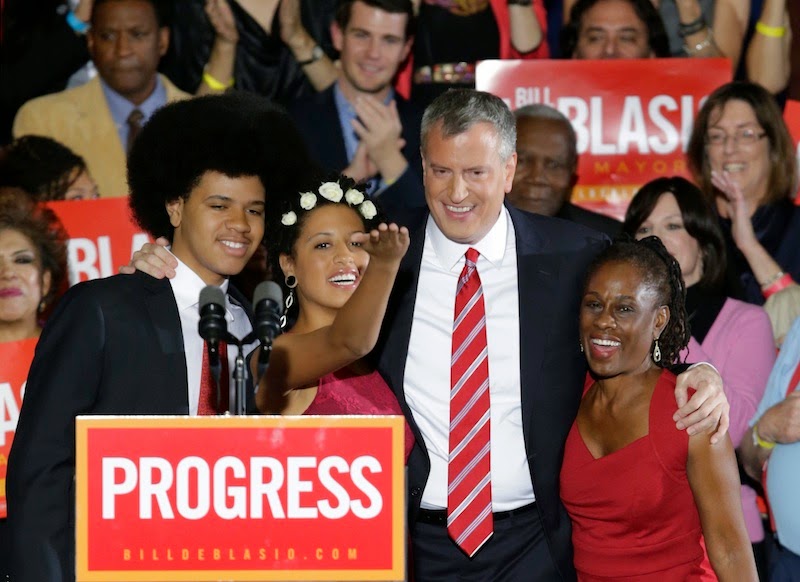
    This debate is simply illustrative of the dogmatic attitudes which exist at each end of the political spectrum, and how these continue to dominate US politics without any sensible middle ground being in view. But the real reason for the appalling manner in which de Blasio has been scapegoated is quite evident in the photo above…

    Read the entire article here.

  • Mixed: Race cannot be invisible

    The Daily of the University of Washington
    2012-10-27

    Hayat Norimine

    For most of my life, I was opposed to the concept of “diversity.” Half-Japanese, half-Syrian, I was the definition of racially diverse, but I also loathed being labeled.

    I thought diversity was difficult to define. I thought race alone was never a good indication of someone’s personal experiences.

    I was afraid of what my race meant. And of all the superpowers that I could wish for, invisibility was always my choice — not just for me, but for the world. Colorblindness seemed like the opposite of racism to me: Ignore race and move beyond seeing race as essential. To be completely free from judging eyes is something I would have wished on everyone growing up. To be both colorblind and color-free…

    …We don’t live in a post-racial world. Luckily, we live in a world after Martin Luther King Jr. We live in a country in which “diversity” is no longer used as slander and is actually seen as a positive attribute. But even in Brazil — arguably the most diverse country in the world — where there are up to 500 racial categorizations, there is still discrimination. There is still historical oppression…

    Read the article here.

  • White? Black? A Murky Distinction Grows Still Murkier

    The New York Times
    2014-12-24

    Carl Zimmer

    In 1924, the State of Virginia attempted to define what it means to be white.

    The state’s Racial Integrity Act, which barred marriages between whites and people of other races, defined whites as people “whose blood is entirely white, having no known, demonstrable or ascertainable admixture of the blood of another race.”

    There was just one problem. As originally written, the law would have classified many of Virginia’s most prominent families as not white, because they claimed to be descended from Pocahontas.

    So the Virginia legislature revised the act, establishing what came to be known as the “Pocahontas exception.” Virginians could be up to one-sixteenth Native American and still be white in the eyes of the law.

    People who were one-sixteenth black, on the other hand, were still black.

    In the United States, there is a long tradition of trying to draw sharp lines between ethnic groups, but our ancestry is a fluid and complex matter. In recent years geneticists have been uncovering new evidence about our shared heritage, and last week a team of scientists published the biggest genetic profile of the United States to date, based on a study of 160,000 people…

    Read the entire article here.

  • Why I Passed For White

    The Archipelago: Stories about community, identity, and the ongoing quest to belong.
    Medium
    2014-12-19

    Shawna Ayoub Ainslie

    I erased my own heritage to feel safe. I hope to teach my children not to do the same.

    When I was 16, I started letting people believe that I was white.

    In 1996, my family relocated upward from the Bible Belt. We moved from the southwest corner of Arkansas to the Midwest. At sixteen, I experienced a new definition of self — which, for me, meant shedding my ethnic heritage and the abuse that came with it. My coming of age was more than an exit from youthful innocence. It was an escape.

    Innocence, in this case, is a misleading term. The naivete that defines the wishful, carefree young was lost to me much earlier than 16. It began at the age of 9, the fourth year in a row I was assigned the part of Native American in the school Thanksgiving play because I “looked the part.” That year, I stood onstage dressed in a paper-bag-cum-leather-vest with an Indian-American boy. Both of us sported handmade headbands with oversized feathers. Our single spoken line was accompanied by the arcing of one folded arm upward. “How!” I shouted, having practiced the line with aplomb. “How,” my cohort whispered, barely gumming the word and ducking his head as though ashamed. Our white peers were grouped together at the Pilgrim’s table, waiting to take the giant ears of paper mache corn we handed them.

    It was weeks later, during International Day, when we were both paraded once more onstage, when I began to understand my fellow actor resistance to the role of food-bearing native. After all, even though Native Americans had saved the Pilgrims with offerings of corn and hunting instruction, the Pilgrims were the true saviors; they came bearing God and civility to the dark-skinned heathen.

    That International Day, we were exhorted to wear our ethnic best, and so we came to school in costume. Indian-American boy, Arab-American girl, dressed in pantaloons and tunic and ornate housedress. I came with jeans and a t-shirt in my bag because those were the items most comfortable. But the boy, whose name I cannot recall, had only his waist-tie pants. After we were questioned onstage about our weird, foreign at-home customs, we exited stage right. Just off the stage in the cafeteria’s corner, the tie must have let go. My peer lost his pants. They slipped soundlessly down around his ankles. He turned, his brown eyes meeting mine. He was not panicked. He said nothing. He simply looked resigned.

    I had shifted to block him from view, but a redhead named Ashley caught sight of the spectacle. He ran toward the dispersing classes to notify everyone he knew. “Shawna was there!” he squealed. “Shawna saw it.”

    Here it was: the moment that could elevate me beyond the nickname Gorilla — a nod to my hairy, Arab legs. The boy was not my friend, but neither were the children who clamored around me. I looked back into the boy’s brown eyes. He waited.

    “Did you see his underwear?” someone asked. “Are they as weird as his clothes?”

    In that moment I found a kinship in the brownness the boy and I shared. I squared my feet. “It didn’t happen,” I said. And then, “Ashley is lying.”

    Aside from my body hair, the thing I was most known for was honesty. The story was deflated. Ashley narrowed his eyes at me. I had made an enemy. I looked around. The brown boy was gone.

    I wish I could remember his name. I have thought about assigning one to him, but it feels disingenuous. Of the peers that litter my history, he is one who deserves a label other than ethnicity. Especially as he ushered me out of my innocence into an awareness of my physical self and its perception. Still, he remains nameless, like so many of our other dark-skinned brothers…

    Read the entire article here.
  • Researchers have been thinking about race all wrong

    Vox
    2014-12-15

    Jenée Desmond-Harris

    Studies on race are a dime a dozen: researchers examine its relationship to everything from elementary school test scores to who’s most likely to develop diabetes to which groups are overrepresented in ethnic militias to who Americans vote for, and we read about the results in news stories that are supposed to help us makes sense of the world.

    But two Ivy League scholars say race is actually much more complicated than decades of social science research has acknowledged, and they’re working to change that.

    In their paper, “Race a Bundle of Sticks: Designs that Estimate Effects of Seemingly Immutable Characteristics,” which will be published in the Annual Review of Political Science, Harvard’s Maya Sen and Princeton’s Omar Wasow explain that people who do quantitative research on race typically treat it as a single, fixed trait — what scientists call an “immutable characteristic.”

    Instead, they argue, quantitative researchers should acknowledge that any one person’s racial identity is more like a collection of many different factors — from skin color, to neighborhood, to language, to socioeconomic status. With this insight, it becomes possible to study race not as a single, unchanging variable, but rather as a “a bundle of sticks” that can be pulled apart and carefully examined one by one…

    Read the entire article here.

  • Do Races Differ? Not Really, Genes Show

    The New York Times
    2000-08-22

    Natalie Angier, Science Columnist

    In these glossy, lightweight days of an election year, it seems, they can’t build metaphorical tents big or fast enough for every politician who wants to pitch one up and invite the multicultural folds to ”Come on under!” The feel-good message that both parties seek to convey is: regardless of race or creed, we really ARE all kin beneath the skin.

    Yet whatever the calculated quality of this new politics of inclusion, its sentiment accords firmly with scientists’ growing knowledge of the profound genetic fraternity that binds together human beings of the most seemingly disparate origins.

    Scientists have long suspected that the racial categories recognized by society are not reflected on the genetic level. But the more closely that researchers examine the human genome — the complement of genetic material encased in the heart of almost every cell of the body — the more most of them are convinced that the standard labels used to distinguish people by ”race” have little or no biological meaning.

    They say that while it may seem easy to tell at a glance whether a person is Caucasian, African or Asian, the ease dissolves when one probes beneath surface characteristics and scans the genome for DNA hallmarks of “race.”…

    Read the entire article here.

  • Race as a ‘Bundle of Sticks’: Designs that Estimate Effects of Seemingly Immutable Characteristics

    Annual Review of Political Science
    Number 19 (2016)
    2014-10-05
    49 pages

    Maya Sen, Assistant Professor
    Harvard Kennedy School
    Harvard University

    Omar Wasow, Assistant Professor
    Department of Politics
    Princeton University

    Although understanding the role of race, ethnicity, and identity is central to political science, methodological debates persist about whether it is possible to estimate the effect of something “immutable.” At the heart of the debate is an older theoretical question: is race best understood under an essentialist or constructivist framework? In contrast to the “immutable characteristics” or essentialist approach, we argue that race should be operationalized as a “bundle of sticks” that can be disaggregated into elements. With elements of race, causal claims may be possible using two designs: (1) studies that measure the effect of exposure to a racial cue and (2) studies that exploit within-group variation to measure the effect of some manipulable element. These designs can reconcile scholarship on race and causation and offer a clear framework for future research.

    Read an advanced copy of the entire article here.

  • The uncanny return of the race concept

    Frontiers in Human Neuroscience
    Volume 8, 2014-11-04
    DOI: 10.3389/fnhum.2014.00836

    Andreas Heinz
    Department of Psychiatry and Psychotherapy
    Charité—University Medicine Berlin, Berlin, Germany

    Daniel J. Müller, Associate Professor of Psychiatry
    Centre for Addiction and Mental Health
    Department of Psychiatry
    University of Toronto, Toronto, Ontario, Canada

    Sören Krach
    Department of Child and Adolescent Psychiatry
    Philipps-University Marburg, Marburg, Germany

    Maurice Cabanis
    Center for Mental Health, Klinikum Stuttgart, Stuttgart, Germany

    Ulrike P. Kluge
    Department of Psychiatry and Psychotherapy
    Charité—University Medicine Berlin, Berlin, Germany

    The aim of this Hypothesis and Theory is to question the recently increasing use of the “race” concept in contemporary genetic, psychiatric, neuroscience as well as social studies. We discuss “race” and related terms used to assign individuals to distinct groups and caution that also concepts such as “ethnicity” or “culture” unduly neglect diversity. We suggest that one factor contributing to the dangerous nature of the “race” concept is that it is based on a mixture of traditional stereotypes about “physiognomy”, which are deeply imbued by colonial traditions. Furthermore, the social impact of “race classifications” will be critically reflected. We then examine current ways to apply the term “culture” and caution that while originally derived from a fundamentally different background, “culture” is all too often used as a proxy for “race”, particularly when referring to the population of a certain national state or wider region. When used in such contexts, suggesting that all inhabitants of a geographical or political unit belong to a certain “culture” tends to ignore diversity and to suggest a homogeneity, which consciously or unconsciously appears to extend into the realm of biological similarities and differences. Finally, we discuss alternative approaches and their respective relevance to biological and cultural studies.

    TABLE OF CONTENTS

    • Abstract
    • Introduction
    • The Origin of the “Race Concept” and Controversies about its Biological Usefulness
    • Cultural Impact on Race Classifications
    • Racial Classifications, Colonial Hierarchies and the Construction of the Psychotic Patient as Primitive Man
    • The Social Impact of “Race” Classifications
    • “Culture” as a Proxy of “Race”
    • Implications of Cultural and Genetic Diversity in Psychiatry
    • Summary and Outlook
    • Conflict of Interest Statement
    • Acknowledgments
    • References

    Read the entire article here.

  • Chowan Discovery Group, Marvin T. Jones

    Backintyme.biz
    Blog Talk Radio
    2014-12-20

    Stacey Webb, Host

    Marvin T. Jones, Executive Director
    Chowan Discovery Group

    Author & Historian Marvin T. Jones, Executive Director & owner of Marvin T. Jones and Associates, specializing in corporate communications photography and photographic design. His love of the community of his birth led him to create the now defunct Rowan-Chowan.com website, a personal website of stories and photo essays. jones is a native of Cofield, North Carolina. He attended the Winton Triangle’s C.S. Brown School and graduated from Ahoskie High School.

    Marvin also wrote a chapter in Carolina Genesis, Beyond The Color Line and presents the first history of the Winton Triangle. Marvin’s essay “The Leading Edge of Edges-The Tri-Racial People of the Winton Triangle”, tells the story of a people who emerge from the meeting of the New and Old Worlds and how they created success from century to century in northeastern North Carolina. Highlights of the essay include: Origins of the Winton Triangle and the Triangle’s contribution to the Civil War in expanding freedom in the United States, Founding of Pleasant Plains Baptist Church & the C.S. Brown & Robert L. Vann Schools, and the achievements of their members & graduates. Leadership in worship, education, business & government.

    Associates; Laverne Jones, Director & Dr. Harold Mitchell, Director.

    Mission of the Chowan Discovery Group is to Collect, Preserve & present materials that describe & illustrate the Winton Triangle history. Dating back to the 1740’s, North Carolina’s Winton Triangle is one of the oldest communities if land-owning people of color in America. The Triangle originally encompassing the towns of Winton, Cofield & Union. In the late 19th century the Triangle expanded toward the newly incorporated town of Ahoskie.

  • Lacey Schwartz came to terms with her true racial identity in ‘Little White Lie’

    The New York Daily News
    2014-11-30

    Justin Rocket Silverman, Senior Features Writer

    Documentary film chronicles how she grew up believing she was a white Jewish girl and then learned her biological father was black

    Lacey Schwartz didn’t know she was black — until the college she applied to classified her as that.

    “I come from a long line of New York Jews,” the 37-year-old filmmaker says in “Little White Lie,” her new documentary feature. “I wasn’t pretending to be something I wasn’t. I actually grew up believing I was white.”

    The story of how Schwartz came to understand her real identity is the subject of “Little White Lie,” now playing in select theaters. The movie is more than a decade in the making, as Schwartz began filming herself in her college dorm room and in sessions with her therapist, often in tears, as she struggled to understand who, and what, she is.

    That story began in 1968, the year her white Jewish parents were married. Her mom got a job that same year at a playground in East Flatbush, Brooklyn, and met a black man there who would become Schwartz’s biological father. But Schwartz’s mom never told her husband that her child wasn’t really his. Instead, the baby’s dark complexion was explained as a genetic echo of an Italian grandfather…

    Read the entire article here.