• The Disappearing Mestizo: Configuring Difference in the Colonial New Kingdom of Granada

    Duke University Press
    2014
    368 pages
    6 illustrations
    Cloth ISBN: 978-0-8223-5629-5
    Paperback ISBN: 978-0-8223-5636-3

    Joanne Rappaport, Professor of Anthropology, and Spanish and Portuguese
    Georgetown University, Washington, D.C.

    Much of the scholarship on difference in colonial Spanish America has been based on the “racial” categorizations of indigeneity, Africanness, and the eighteenth-century Mexican castas system. Adopting an alternative approach to the question of difference, Joanne Rappaport examines what it meant to be mestizo (of mixed parentage) in the early colonial era. She draws on lively vignettes culled from the sixteenth- and seventeenth-century archives of the New Kingdom of Granada (modern-day Colombia) to show that individuals classified as “mixed” were not members of coherent sociological groups. Rather, they slipped in and out of the mestizo category. Sometimes they were identified as mestizos, sometimes as Indians or Spaniards. In other instances, they identified themselves by attributes such as their status, the language that they spoke, or the place where they lived. The Disappearing Mestizo suggests that processes of identification in early colonial Spanish America were fluid and rooted in an epistemology entirely distinct from modern racial discourses.

    Table of Contents

    • Acknowledgments
    • Author’s Note on Transcriptions, Translations, Archives, and Spanish Naming Practices
    • Introduction
    • 1. Mischievous Lovers, Hidden Moors, and Cross-Dressers: Defining Race in the Colonial Era
    • 2. Mestizo Networks: Did “Mestizo” Constitute a Group?
    • 3. Hiding in Plain Sight: Gendering Mestizos
    • 4. Good Blood and Spanish Habits: The Making of a Mestizo Cacique
    • 5. “Asi lo Paresçe por su Aspeto”: Physiognomy and the Construction of Difference in Colonial Santafé
    • 6. The Problem of Caste Conclusion
    • Appendix: Cast of Characters
    • Notes
    • Glossary
    • Bibliography
  • Albert Chong: “The Photomosaics: Works on Paper, Wood, and Stone”, on view through November 1, 2014

    Counterpath
    613 22nd Street
    Denver, Colorado 80205
    (303) 953-2692
    2014-10-03 through 2014-11-01


    “Angela” (2011) by Albert Chong

    Opening Friday, October 3, 2014, at 7 p.m., and on view through November 1, 2014, Counterpath is excited to host an exhibit of recent work by Albert Chong, “The Photomosaics: Works on Paper, Wood, and Stone.” The work consists of image transfers onto gridded ceramic or stone tiles that combine to make up a larger image. Included are blatantly political portraits of presidents George W. Bush and Barack Obama, made from portraits of thousands of dead soldiers, to a portrait of activist and former Black Panther Party member Angela Davis, her iconic afro consisting of thousands of portraits of African American women with processed hair. Photomosaics have the mass and presence of sculpture and the transmissive abilities of photography.

    For more information, click here.

  • I raised my sons to be racially neutral

    Salon
    2014-10-18

    Terry Baker Mulligan

    Two mixed-race boys, one lighter skinned than the other. Did I make a mistake telling them they were the same?

    One Saturday night in St. Louis about decade ago my younger son, then a teen, was driving around town with two white friends. I’m black and my husband is white, so our two sons are biracial. This particular son has his father’s straight hair and aquiline nose. His skin is brown like mine.

    The friend in the back seat behind my son stuck a paint pellet gun out the back window and shot a stop sign. He didn’t see two police cars parked just ahead. The cops hustled out of their squad cars and did the “Whoa, what the ‘F’ are you doing?” routine. The kids were taken to the police station, the gun was confiscated, and eventually all the parents were called to come to the station.

    Back up about eight years. As a young family, we usually didn’t talk about race or even acknowledge it, because at the time we didn’t see the need. Then one night at the dinner table I got my first reality check when our younger boy, who was 7 at the time, said, “Dad, I want white skin and braces. And a new first name, like Michael.”…

    Read the entire article here.

  • Ebola has exposed America’s fear, and Barack Obama’s vulnerability

    The Guardian
    2014-10-19

    Gary Younge

    The virus is a metaphor for all that conservatives loathe, and sees the president’s policies under renewed attack

    In a column ostensibly explaining why moderates struggle in the Republican party, Washington Post columnist Richard Cohen last year wrote: “People with conventional views must repress a gag reflex when considering the mayor-elect of New York – a white man married to a black woman and with two biracial children. (Should I mention that Bill de Blasio’s wife, Chirlane McCray, used to be a lesbian?) This family represents the cultural changes that have enveloped parts – but not all – of America.”

    If the thought of New York’s first family’s interracial marriage makes many Republicans (and apparently Cohen) gag, imagine how many sick bags they are filling over Ebola. The arrival of the virus in America has crystallised a range of Conservative anxieties: immigration, race, terrorism, science, big government, Barack Obama – you name it. For the right, Ebola is not just a disease, it is a metaphor for some of the things they don’t understand and many of the things they loathe…

    …Finally, Ebola serves as a proxy for the many long-held Conservative prejudices about Obama – that he is an African-born interloper come to destroy America. A 2010 poll showed that just under a third of Republicans believed Obama was a “racist who hates white people”. Michael Savage, another rightwing radio host, calls him “Obola”. “Obama wants equality and he wants fairness, and it’s only fair that America have a nice epidemic or two … to really feel what it’s like to be in the third world. You have to look at it from the point of view of a leftist.”…

    Read the entire article here.

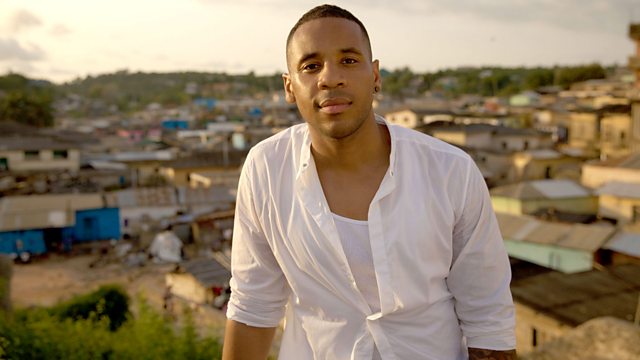
  • Who Do You Think You Are? Reggie Yates [with Reggie Yates]

    Who Do You Think You Are?
    BBC One
    Series 11: Episode 8 of 10
    Running Time: 00:59:09
    First Aired: 2014-09-25

    Presenter and DJ Reggie Yates grew up knowing very little about his father’s side of the family. Reggie sets out on the trail of his grandfather, Harry Philip Yates. His journey takes him to Ghana, where he unravels a complex family history where Ghanaian culture and British colonialism collide.

    [Features Fordham University history professor Carina Ray.]

    For more information, click here.

  • Passing For White

    South Florida Sun-Sentinel
    Fort Lauderdale, Florida
    2003-11-01

    David Crary
    The Associated Press

    America is more diverse than ever and racial pride is strong, yet a new movie and book are highlighting a phenomenon that seems like a relic of the segregationist past — black people passing as white.

    The film, The Human Stain, is an adaptation of Philip Roth’s novel about a classics professor, played by Anthony Hopkins, who conceals his racial background.

    The book, Passing: When People Can’t Be Who They Are, by Brooke Kroeger, includes a sympathetic profile of a black man who passed as a white Jew during the 1980s and ’90s.

    Kroeger, a New York University journalism professor who spent four years researching her book, said passing has a profound resonance for many black Americans.

    “Over and over, I’d hear personal stories about members of their family who didn’t return for reunions, who led clandestine lives,” she said.

    “Traditionally, the attitude toward passing was you accepted it, you never exposed a passer. Post-1960s, when people are so proud of their racial and ethnic identities, it seems more like cultural treason, yet still people don’t give passers up.”

    Paul Johnston, a retired X-ray technician, knows of passing firsthand. His parents, Albert and Thyra Johnston, passed as white along with Paul and his three older siblings while the family lived in two New Hampshire towns during the 1930s and ’40s. Albert was a physician in the community.

    The truth of the Johnstons’ background came out in 1941, when Albert was rejected as a Navy officer. But despite the family’s fears, townspeople in Keene, N.H., were generally receptive to them even after the news spread, and the Johnstons’ experience was movingly depicted in a 1949 film, Lost Boundaries.

    Paul Johnston, 68, is now married to a woman of Irish descent who has nine children from a previous marriage.

    “Some of the kids were pretty prejudiced, but they grew to like me,” he said in a telephone interview. “They thought it was quite fascinating that something like this [his family’s passing] would happen.”

    Johnston, who says some of his relatives continue to pass for white, lives in a predominantly white town on Cape Cod.

    “Almost nobody knows of my background, not because I’ve kept it a secret, just because I haven’t talked about it much except to a few people in my church,” he said. “I don’t think it would make any difference to people, but you never can tell.”…

    …In The Human Stain, Roth’s fictional protagonist, Coleman Silk, was loosely modeled on the late Anatole Broyard, for many years a prominent literary critic for The New York Times

    Read the entire article here.

  • The Whiteness Project will make you wince. Because white people can be rather awful

    The Guardian
    2014-10-15

    Steven W. Thrasher, Weekly Columnist

    You’ve never seen privilege quite like this: ‘You can’t even talk about fried chicken or Kool-Aid without wondering if someone’s going to get offended’

    White and black Americans see race from radically different perspectives, to the point that the white, world-saving New York Times columnist Nicholas Kristof has rung the alarm that “whites just don’t get it”. As someone who is half black and half white, I can certainly attest to the truth of that.

    So I had misgivings about director Whitney Dow’s The Whiteness Project, the new interactive documentary launched over the weekend by POV. “I made this project for white people, not for people of color,” Dow told me on Tuesday, because “if white people are going to participate in changing the racial dynamic, we need to deal with our own shit first.

    Dow, who is white, has been making smart films about race with his black filmmaking partner Marco Williams since 2002’s Two Towns of Jasper. But it was still hard to believe that white people talking about whiteness could do anything more than produce the gazing of blue eyes at pale navels.

    After all, Dow’s project sounds a lot like “whiteness studies”, which is an actual field of academia I’ve recently encountered. The field is often credited with having its intellectual origins in a WEB Du Bois meditation, but more recently evolved to the point that it simply allowed white scholars to talk more about … well, white people…

    Read the entire article here.

  • The American history that most of us are familiar with is one that paints a picture of segregated ethnic groups, depicting Whites as slave owners, Africans as slaves, and Native Americans as tribe members. In most of our minds, all three groups were separate and played a very specific and hierarchical role in history. Yet, before North America was widely colonized, distinct segregation did not exist, and the interaction between Africans and Native Americans was somewhat frequent. Enslaved Africans escaped to Native American tribes (some tribes even hosted stops on the Underground Railroad), some Native Americans were enslaved by Europeans alongside Africans, and some Native Americans had African slaves. Often times, the two groups worked alongside each other, lived together, and shared recipes, myths, legends, and herbal remedies. Africans and Native Americans intermarried and had children. In fact, relations were so frequent that when a census was taken in the early 1800s, 10% of the Cherokee Nation was of African descent; 100 years later, this number increased to 50%.

    Leslie Ann Berg, “Down Blige Road: Where There’s No Place Like Home,” Richmond Hill Reflections, (Volume 10, Number 4, September, 2014). 60. http://www.richmondhillreflectionsmag.com/wp-content/uploads/2014/09/RelectionsVol10No4.pdf.

  • Does Diversity Breed Intolerance?

    BU Today
    Boston University, Boston, Massachusetts
    2014-09-25

    Rich Barlow, Staff Writer
    Telephone: 617-358-3877

    Some whites fear impending minority status, research says

    “Diversity” is said to be the sun of our civic solar system, shining bright harmony everywhere from society at large to university campuses. Katherine Levine Einstein is certainly an apostle of this view. The College of Arts & Sciences assistant professor of political science studies racially segregated areas and finds that separation polarizes and paralyzes those places’ politics.

    But Boston’s commuter rail system shakes her faith.

    Harvard colleague Ryan Enos surveyed white subjects about their views on Mexican immigration levels, asking, among other things, if they favored allowing noncriminal, employed illegal immigrants to remain in the country. Enos sought responses twice: once before exposing the whites to more Hispanic commuters on train platforms and once after. Support for immigration and allowing the undocumented to stay plunged in the “after” follow-up from what it had been in the “before” survey.

    In addition to the Harvard research, two Northwestern University studies fuel Einstein’s pessimism. One found that as whites learned that they will become a minority, they grew more conservative and Republican-leaning. The other reported that whites who were aware of their future minority status became more negative towards nonwhites and preferred hanging out with their own race…

    Marilyn Halter (GRS’86), a CAS history professor, sees a fundamental flaw in the Northwestern methodology. “I have found no evidence whatsoever of backsliding on racial tolerance in the marketplace, whether from the marketers or the consumer side of the equation,” says Halter, whose 2000 book Shopping for Identity: The Marketing of Ethnicity is about how American businesses have tailored their products to immigrant consumers in recent decades.

    She also argues that the growth of mixed-race Americans—more than nine million checked two or more race categories on the 2010 US Census, up 32 percent from 2000, she says—means “it will be increasingly irrelevant to divide up the electorate into white, black, and brown.”

    “Future projections about the impact of a minority white nation don’t take into account the changing meaning of whiteness,” she says. “I know that the research is attempting to measure how people react to the idea of a future white minority, but the very concept is so oversimplified and inaccurate, I think it invalidates the findings.…I do not think that greater diversity leads to more intolerance.”…

    Read the entire article here.

  • I’m more than someone who’s of mixed race

    The Appleton Post-Crescent
    Appleton, Wisconsin
    2014-10-08

    Mia Sato, Post-Crescent Community Columnist

    Identity can be tough to sort out sometimes, but it doesn’t change some things about me

    My life is defined by numerical classifications. I’m 19 years old, a second-year college student, the eldest of four children. I have a zip code, a GPA, 16 credits on my fall semester schedule, with 60 more to complete before I graduate. Each of these numbers reflects some aspect of my existence, and each number is grounds for people to make a judgment.

    For as long as I can remember, I have been identified as “half” Japanese and “half” white American. On government forms, my pen would meander, hovering over the White and Asian boxes equally, unsure of which to check. Sometimes, I’d check both and was asked to pick one. Sometimes, I’d check one or the other and consider if it was the correct choice. Sometimes, I’d check neither and let my mother complete the rest for me.

    I’ve learned that racial identity is more than a choice between clear-cut, straightforward options for children with parents of mixed heritage. It’s at times alienating, divisive and difficult to make sense of…

    Read the entire article here.