• Anatole Broyard’s Kafka Was the Rage: A Greenwich Village Memoir

    Journal of American Ethnic History
    Volume 32, Number 1 (Fall 2012)
    pages 95-100
    DOI: 10.5406/jamerethnhist.32.1.0095

    Greg Carter, Associate Professor of History
    University of Wisconsin, Milwaukee

    I DESIGNED MY FIRST COURSE, Mixed Race Identity in American Culture, an elective surveying the history of racial mixing in the United States, as a doctoral candidate at the University of Texas at Austin. Four sections of the class have convened at two universities since then. During the first sessions, I always introduce undergraduates to the analytic lenses of race (and ethnicity), class, and gender, emphasizing that their meanings shift across time and place. From there, Gary Nash’s essay, “The Hidden History of Mestizo America” presents interracial intimacy of many configurations, privileging no particular combination (i.e., black and white). In addition to equipping students with the tools they will need throughout the term, these first two weeks emphasize that the class is historical, going from first contact to the present moment.

    However, the class is also interdisciplinary, drawing from popular culture, sociological texts, feature articles, and scientific tracts. Along with helping students contextualize ideas around racial mixing, sampling various discourses addresses complex themes from different perspectives. Anti-intermarriage laws in colonial Virginia introduce students to the gradual development of the one-drop rule in the seventeenth century. Through antebellum ethnological and literary writings, they see the beginnings of hybrid degeneracy notions that follow racially mixed people well past the nineteenth century. An introduction to blackface minstrelsy shows that, in addition to deploying a hateful set of stereotypes, this mainstay of American popular culture involves a sort of racial mixing on the bodies of the actors. Later they see much of the same in the yellowface minstrelsy that targeted Asians in the United States.

    I also present students with positive notions regarding racial mixing in the United States, from the Pocahontas myth to Thomas Jefferson’s policy of civilization and assimilation to some of the radical abolitionists’ visions of a post-Civil War racial democracy. In the unit immediately before the two weeks we focus on racial passing, we analyze the birth of the melting…

    Read or purchase the article here.

  • Race, Religion, and Law in Colonial India. Trials of an Interracial Family [Review]

    Reviews in History: Covering books and digital resources across all fields of history
    October 2012

    Peter Robb, Research Professor of the History of India
    School of Oriental and African Studies
    University of London

    Race, Religion, and Law in Colonial India. Trials of an Interracial Family, Chandra Mallampalli, Cambridge, Cambridge University Press, 2011, ISBN: 9781107012615; 286pp.

    This book uses the story of one family and its legal battles to uncover relationships between religion, race, gender, identity, and personal law in south India in the first half of the 19th century. Matthew Abrahams was an Indian Roman Catholic of lowly background but increasing wealth. He married an Anglo-Portuguese woman, Charlotte Fox, and adopted what was regarded as a largely ‘East Indian’ (or Anglo-Indian) lifestyle. His money was made from the abkari (liquor) contract, trading in arms and money lending in Bellary and also Kurnool after the annexation of 1839. One of his sons, Charles, was sent to Cambridge University to study for the law. After Matthew’s death, intestate, in 1842, his younger brother, Francis, continued to manage and develop the business. Starting in 1854, suits were brought against Francis by Charlotte and her sons, for possession of Matthew’s estate. They progressed from the Bellary District Court, on appeal to the Sadr Adalat in Madras, and then to the Privy Council in London.

    The main point at issue was whether or not Matthew and Francis had operated on a joint family basis, as partners, or as master and servant. It suited Francis’s case to claim that the Abrahams were a joint family, in line with supposed Hindu custom, but also with the alleged practice of many Indian converts to Christianity. It suited Charlotte to insist that Francis had been a mere employee with no rights in his brother’s estate, which therefore ought to devolve according to ‘Christian’ principles. The District Court agreed with Charlotte; the appellant court found for Francis; and the Privy Council cut through both arguments, arguing that personal law ought to follow not inherited traditions but the lifestyle. This final judgment (of 1863) favoured Charlotte on the point of inheritance. But it also supported Francis’s rights as an active partner in business, entitled to rewards at very much the level Francis had offered to accept before the litigation began.

    The story is used to advance several themes. The first concerns the conditions of life in the towns and military cantonments of a southern dry zone during a period of transition, from around 1812 to the 1850s. The second covers questions of family life, custom, and identity, particularly among liminal peoples such as the Abrahams, comprising as they did ‘Hindu’ Christians and mixed-race Protestant ‘East Indians’. (A chapter on Charles in Cambridge provides an intriguing but inconclusive footnote to this story.) Finally there are the legal and policy changes in the run-up to the establishment of the Indian High Courts in 1862, and in particular the development of a personal law according to religion – and hence the re-invention or formation of ‘communities’ in British India.

    There is much of interest under the first two themes, many details being revealed in the trial papers. Several chapters are devoted to the growing wealth and status of the Abrahams. Bellary, ceded to the Company by Hyderabad in 1800 under the subsidiary alliance, is painted as a frontier place, dominated by the Company’s army and a host of camp followers. A very good impression is conveyed of the intermixture of races and communities. Bellary was clearly changing and offered opportunities to the resourceful, such as Matthew Abrahams. The Rev. John Hands of the non-denominational LMS, who converted Matthew to Protestantism, and who was later known for his translation of the Bible into Kannada, arrived in Bellary in 1810, before the change in the charter that permitted missionaries in Company territories (1813). On his arrival, Hands reported, the settlement already had seven native schools with 300 children.In this milieu, Matthew and then Francis shrugged off any links to an ‘untouchable’ paraiyar ancestry and became dora (big man). Their patterns of marriage and association show, it is suggested, somewhat obscurely, ‘how lower orders of society within an economic dry zone were uniquely suited for various forms and degrees of mixture’ (p. 26). More obviously, the circumstances seem to have provided for upward mobility…

    Read the entire review here.

  • Spirometry, Measurement, and Race in the Nineteenth Century

    Journal of the History of Medicine and Allied Sciences
    Volume 60, Number 2, April 2005
    pages 135-169

    Lundy Braun, Royce Family Professor in Teaching Excellence and Professor of Medical Science and Africana Studies
    Brown University

    Race correction is a common practice in contemporary pulmonary medicine that involves mathematical adjustment of lung capacity measurements in populations designated as “black” using standards derived largely from populations designated as “white.” This article traces the history of the racialization and gendering of spirometry through an examination of the ideas and practices related to lung capacity measurements that circulated between Britain and the United States in the nineteenth century. Lung capacity was first conceptualized as a discrete entity of potential use in the diagnosis of pulmonary disease and monitoring of the vitality of the armed forces and other public servants in spirometric studies conducted in mid-nineteenth-century Britain. The spirometer was then imported to the United States and used to measure the capacity of the lungs in a large study of black and white soldiers in the Union Army sponsored by the U.S. Sanitary Commission at the end of the Civil War. Despite contrary findings and contestation by leading black intellectuals, the notion of mean differences between racial groups in the capacity of the lungs became deeply entrenched in the popular and scientific imagination in the nineteenth century, leaving unexamined both the racial categories deployed to organize data and the conditions of life that shape lung function.

  • Racial Commodification in the Era of Elective Race: Affirmative Action and the Lesson of Elizabeth Warren

    University of Southern California Legal Studies Working Paper Series
    Working Paper 92
    31 pages
    2012-08-20

    Camille Gear Rich, Associate Professor of Law
    Gould School of Law
    University of Southern California

    This Essay uses the current controversy over the racial self-identification decisions of former Harvard Law Professor Elizabeth Warren as an occasion to explore incipient cultural and legal anxieties about employers’ ability to define race under affirmative action programs. The Essay characterizes Warren’s racial self-identification decisions as proof of what I call “elective race,” a contemporary cultural trend encouraging individuals to place great emphasis on their “right” to racial self-identification and a related desire for public recognition of their complex racial identity claims. I argue that our failure to attend to the importance placed on racial self-identification by Americans today places persons with complex racial identity claims at special risk for racial commodification. The Essay further suggests that the Warren controversy gives us an opportunity to rethink the way we conceptualize racial diversity. I argue that we must shift away the current model, which conflates race and cultural difference, toward a model that assumes racial diversity initiatives are sampling for employees that can teach us about the diverse ways that race is actualized and experienced. The Essay suggests that diversity initiatives that stress race’s use value as a source of insight into the social process of racialization avoid the cultural commodification risks posed by current affirmative action programs, reorient employers away from thin concepts of diversity, and give employers a basis for making principled distinctions between employees’ racial identification claims. The Essay concludes by identifying and defending a three-part inquiry that can be used to identify proper beneficiaries of diversity-based affirmative action programs.

    TABLE OF CONTENTS

    • INTRODUCTION
    • PART I. THE POLITICS OF RACIAL IDENTIFICATION IN THE ERA OF ELECTIVE RACE
      • A. The Right to Racial Self-identification In the Era of Elective Race
      • B. Employer Discretion In the Era of Elective Race
    • PART II. REVISITING MALONE IN THE ERA OF ELECTIVE RACE
      • A. Authenticity Tests Versus Functionalist Inquiries About Race
      • B. Functionalist Inquiries About Race and the Risk of Racial Commodification
      • C. Re-writing Malone : Understanding the Social Processes of Racialization
        • 1. Physical Race or Phenotype-Based Race
        • 2. Documentary Race
        • 3. Social Race
    • PART III. DEFENDING FUNCTIONALIST INQUIRIES INTO RACE
      • A. The Dangers of Laissez Faire Approaches to Race
      • B. The Dangers of Liberty- Based Approaches to Race (or the Return of the Honestly Held Belief Standard)
      • C. Applying the Functionalist Inquiry to Warren and Malone
    • CONCLUSION

    INTRODUCTION

    Over the past fifty years, despite periodic Supreme Court skirmishes, Americans have lived under a negotiated peace with affirmative action programs. Meanwhile employers have labored in the trenches, attempting to implement affirmative action programs in a principled fashion. Employers’ primary challenge in this process is balancing employees’ dignity interests in racial self-identification and employers’ countervailing interest in making so-called racial “authenticity” judgments to ensure the benefits of these programs are properly allocated.  This normally invisible struggle was put on national display when we learned that Harvard Law School seemingly had manipulated the complex racial identification claims of law professor Elizabeth Warren after Warren disclosed that she was part Native American, based on family lore indicating that she had a biracial Native American grandfather. Given Harvard Law School’s reported difficulty in finding minority faculty candidates, the school was quick to bracket Warren’s primary claim of whiteness, and categorize her as a Native American professor to improve the school’s diversity record. Years later, when Warren’s Senate campaign led political muckrakers to uncover the tenuous basis for her claim of Native American identity, Warren was quick to point out that she was an “innocent victim” of Harvard’s racial categorization decisions, as she neither sought nor received any affirmative action benefits based on her decision to identify as Native American. However, Warren’s caveats did little to assuage the concerns of race scholars about the harms threatened by her case. For the Warren controversy revealed that there was no protective force that stood between Harvard’s strategic diversity interests, its related desire to commodify Warren by race, and Warren’s personal interest in racial selfidentification. The Warren controversy warns about the ways in which an employee’s complex, racial identification decisions can be drafted to serve an employer’s purposes.

    Concerns about the Warren controversy intensify when her treatment is contrasted against that of the Malone Brothers, two men who in 1977 self-identified as Black in their employment applications for the Boston Fire Department and were hired under an affirmative action program. Although the brothers previously had identified as white in their employment applications, they switched their racial identification to Black after they failed the Department’s standard entrance exam and learned of the more generous standards for Blacks under the Department’s court-ordered affirmative action program. The brothers felt entitled to make the switch, as family lore established that they had a Black greatgrandmother. In stark contrast to Warren, the Malone brothers were fired when the tenuous basis for their claims of Blackness were discovered, and they were adjudged to have committed “racial fraud.” The different results in the two scenarios, more than forty years apart, again raise complex questions about how to negotiate employees’ interests in “elective” or voluntary self-identification by race, employers’ discretionary power to define racial categories, and authenticity contests under affirmative action. For the fire department employer in Malone, just like Harvard in the Warren case, felt entitled to exercise its discretion to determine the character and content of racial categories, but this time employed a stricter, more rigorous authenticity-based standard that required further testing beyond the Malones’ simple act of self-identification.

    Students of race look at the two cases and are puzzled. Why is it that Warren’s employer would embrace her tenuous claim of Native American ancestry today, but forty years ago the Malone Brothers similar claims about Blackness were the basis for termination? What happened in the four decades that separate the two cases to fundamentally change the employer’s orientation from one invested in restrictive definitions of race that test the racial authenticity of employees, to one prepared to accept the most tenuous act of self-identification as proof positive of racial status? Additionally, as a normative matter, what should we make of the extraordinary power we seem to have given employers to shape and mold an employee’s racial identity claims and draft them to its own purposes? Does an employer’s strategic approach to racial identity issues operate on a different moral or ethical plane than the strategic maneuvering of individuals? What role, if any, is there for law to play in negotiating these conflicts?

    Indeed, contrary to post-racialists’ claim that Americans are being acculturated to ignore race, the sociological literature shows that individuals are actually being acculturated to demand that government and private employers respect and recognize their ever more complicated interests in racial self-identification. To document this trend, this essay explores contemporary changes in our views about racial identity over the past forty years and considers the consequences these changes have for the administration of affirmative action programs. After documenting the challenges our changed cultural views about racial
    identity pose, the essay also warns that we must be mindful of the changed incentives of employers or affirmative action administrators in the era of elective race. In prior decades administrators might have opted for rather strict definitions of race; however, diversity demands and other factors have caused administrators contemporarily to prefer strategically deployed, flexible, and wide definitions for racial categories. Thus far, these changes in the understanding and treatment of race and their implications for affirmative action have gone unexplored…

    …Part I of the Essay charts our path into the era of “elective race,” identifying the demographic, political and social changes that have encouraged Americans to regard the right to racial self-identification as a key dignity interest. This evolution has occurred simultaneous with employers litigating Title VII and Fourteenth Amendment affirmative action cases challenging their authority to define racial categories and the qualifications necessary to claim membership in a particular group. Although there is a rich scholarship on affirmative action and voluntary racial identification, no legal scholar has considered the impending conflict between employer’s discretionary definitional power over racial categories and the racial dignity interests of employees influenced by elective race understandings. I argue that, if employer discretion is left unbounded, employers will exercise broad power to shape race in ways that should give all Americans pause. Part II revisits the so-called racial authenticity inquiry conducted in Malone to reveals its functionalist foundations, and to retool this functionalist logic in ways appropriate for contemporary diversity-based affirmative action programs. I show that, by mining the inchoate concepts of race articulated in Malone, we gain insight into the diverse range of racialization processes that are the proper focus of diversity initiatives. Part II then considers Leong’s concerns about racial capital exchanges that occur in diversity-based affirmative action programs. I argue that the functionalist standard outlined here will clarify the proper terms on which racial status inquiries are conducted, and in this way ensure that we move away from the thin conceptions of diversity that lead to the commodification of race in its worst form.

    Part III turns to the most common concerns about the functionalist inquiry, namely that it involves government in the elaboration and policing of the definition of racial groups. Specifically, Richard Thompson Ford and Cristina Rodriguez have warned against involving courts in disputes over the definition of racial categories, as they believe that in order to resolve these disputes government is required to give legal imprimatur to racial stereotypes and create “identity group subsidies” for putative racially-linked cultural practices. The revised functionalist analysis offered here is based on the understanding that we need greater demarcation between cultural diversity initiatives and racial diversity initiatives. I show that diversity initiatives that focus on diverse experiences of racialization largely avoid the stereotyping dangers that are the source of their concern. However, I also show that the law must recognize the link between race, culture and social subordination if it is to take account of the full range of racialization experiences that cause social subordination. Part III concludes by exploring Randall Thomas’s liberty-based arguments in support of relaxed approaches to racial identification, and the more contemporary manifestation of this argument in the work of Kenji Yoshino. This liberty-based approach to racial selfidentification again stresses the dignity injury employers and government inflict when they challenge employees’ racial identification decisions. The essay explains that this dignity interest must bow to queries about one’s experience of racialization when one claims, based on race, that one can advance an employer’s diversity goals…

    …A. The Right to Racial Self-identification In the Era of Elective Race

    Most Americans identify by race; however, the racial identity claims that most characterize the modern era are those made by multiracial Americans: persons who make complex claims regarding their racial ancestry and who in prior decades more willingly would have been absorbed into monoracial categories. Scholars such as Tanya Hernandez and Naomi Mezey have shown how in the 1990s multiracial advocacy groups shaped the national conversation on race as they petitioned for the addition of a new “multiracial” race category in the 2000 Census and 2010 Census. Multiracial advocates’ request for a separate multiracial category was ultimately rejected in favor of an option that allows multiracials to check off all racial categories with which they identify. Despite this setback, the multiracial movement still profoundly shaped federal policy and national discourse about race. Most significantly, the movement’s efforts caused the Office of Management and Budget to issue a revised “Directive 15,” the administrative guidance document that controls all federal racial data collection efforts. The new Directive 15 requires that all federal agencies respect an individual’s interest in racial self-identification and allow the exercise of this right or interest whenever possible in government-sponsored or solicited data collection processes…

    …While Americans have been encouraged to see these moments of racial identity selection as important, the values and understandings that guide their decisions are surprisingly unclear. Some Americans may regard these inquiries as moments in which they are required to identify how they are racially perceived by others, regardless of whether their perceived race matches their personal racial identity commitments. Others answer these questions based on how they believe they are expected to answer these questions, either because of their family’s racial identity commitments or those of their cultural group. Still others answer these questions based on their symbolic commitment to particular communities, regardless of whether they have had any social experiences in which they were recognized as members of a given racial category. The wide variation in how individuals make their racial self-identification decisions makes these decisions ripe for misunderstanding, exploitation and abuse.

    In addition to shaping federal racial-data-collection efforts, the multiracial movement also had a profound discursive impact on the language and constructs Americans use to articulate their relationship to race. For example, Census data shows that after the multiracial movement there was a surge in the number of persons that describe themselves as mixed race. Relatedly, a new group of “white multiracials” has emerged. These are persons who identify as white in certain circumstances, but also are willing to shift to a minority or multiracial identity when they enter a particular cultural context that makes minority background relevant, in response to significant life events, or even to gain potential strategic advantages in social interactions. Also, many more Americans are willing to challenge traditional, established racial categories and resist the default racial designation that would normally be assigned to them. For example, although persons who identify as Latino may regard this identity as a racial identity, federal law treats being Latino as a kind of ethnic designation and requires Latinos to further racially identify as white, Black or by using another federally recognized racial category. At present, large numbers of Latinos, particularly the young, resist this attempt to structure their racial identification choices and choose “other race” rather than select another option. Similarly, federal standards indicate that Middle Easterners should be categorized as white, but persons who identify as Middle Eastern may reject this proposition, citing their special experiences of discrimination as evidence that they are of a different race.

    Further complicating matters, sociologists have raised questions about the integrity of peoples’ elective race decisions over time, as multiracials may change their responses to inquiries about race depending on the kind of form that is used, the order of the questions, and the context in which these questions are asked. Also, although the law review literature has devoted almost no attention to this issue, structural variables strongly influence racial identification decisions. For example, issues such as class, history of imprisonment and other experiences of social marginalization can trigger multiracials to “choose” to claim a minority identity. These insights are important, as they reveal that in many cases fluctuations in multiracials’ racial self-identification decisions are not driven by thin expressive interests or strategic considerations, but may be profoundly linked to grounding experiences of alienation and marginalization. Given the diverse array of influences that affect individuals’ racial self-identification decisions, we must develop legal analyses that treat elective race decisions in a manner that gives due weight to their complexity. Government has an obligation to develop an intelligent, coherent response on how to manage and interpret individuals’ shifting and sometimes conflicting racial identification choices as, in many cases,  individuals fail to fully appreciate the legal significance that attaches to these decisions.

    Indeed, the law may be on a collision course with the cultural default emphasizing the importance of the right to racial self-identification, for most individuals are unaware that, to the extent this right exists, it is a defeasible one. Census officials still rely on third party observation or other categorization methods when it is impossible or more likely inconvenient to get racial self-identification information. This rule may result in a census official racially categorizing an individual in a way that fundamentally contradicts the individual’s own understanding of her race. Similarly, employers also retain the ability to racially identify employees when the employee declines to state his or her race, when conditions make racial data collection impossible or impracticable, or when the employee appears to have engaged in racial fraud. Education officials enjoy the same discretion. Last, and perhaps most important for our discussion here, employers and public entities retain the ability to define racial categories and the ultimate authority to determine whether an individual’s racial identity claims will be respected. Indeed Malone, while not cited for this proposition, stands for the principle that a public employer may define the content of a racial category and its membership. Subsequent cases have made this point more explicitly, as employees have challenged the technical definitions of race used by employers or government agencies when these definitions would prevent them from accessing benefits…

    Read the entire paper here.
  • Beyond Confronting the Myth of Racial Democracy: The Role of Afro-Brazilian Women Scholars and Activists

    Gettysburg College Faculty Publications
    Paper 1 (November 2007)
    55 pages

    Nathalie Lebon, Assistant Professor of Women, Gender, and Sexuality Studies
    Gettysburg College, Gettysburg, Pennsylvania

    This paper offers a synopsis of the current scholarship mapping the social and economic exclusion of women of African descent in Brazil. It highlights the work of and role played by Afro-Brazilian women scholars and activists in redressing the paucity, until recently, of basic data and research on the life conditions of women of African descent. Finally, it provides some initial thoughts on the national and transnational dynamics of knowledge production underlying this state of affairs.

    Despite its rank as the ninth largest economy in the world, Brazil holds the unsavory distinction of being a showcase for the socio-economic inequalities that characterize much of Latin America. The divide cuts many ways, European versus African or Native American descent, male versus female, urban versus rural, as well as along class of origin and region of residence. Forty-five percent of Brazilians are of African descent (or, according to census categories 5.39% “preto” (black) and 39.9% “pardo” (brown)). This places Brazil second only to Nigeria in the world in terms of the size of its black population. Women of African descent thus represent nearly a quarter of all Brazilians (Articulação de Mulheres Brasileiras (Brazilian Women’s Articulation, hereafter AMB), 2001: 10). Despite this incontrovertible fact, until recently, very little research has been conducted about this segment of the Brazilian population. This paper offers a synopsis of the emerging scholarship mapping the social and economic exclusion of women of African descent in Brazil. The race and gender disaggregated statistics that pioneering scholars and activists, in many cases Afro-Brazilian women, have been painstakingly gathering and/or compiling, are beginning to reveal in concrete ways the depth of the inequalities that shape the lives of women of African descent in the birthplace of the now embattled myth of racial democracy…

    …INTERLOCKING RACE AND GENDER HIERARCHIES AND THE DYNAMICS OF KNOWLEDGE PRODUCTION

    Understanding the paucity of data on the lived experiences of women of African descent, especially in some areas, demands that we consider both racial and gender ideology and related structural features in the social, political and academic realms. For most of the 20th century, the notion that Brazil was a racial democracy was an essential component of the Brazilian racial formation. Later denounced as myth, this founding narrative of the modern Brazilian nation focused on mestiçagem (racial mixing), claiming since the 1930s, that there is no racism in Brazil due to the fact that most Brazilians are of mixed descent. It is interesting to note that it was equally adopted by elites as by pre-64 black movements as an ideal to be reached. While there is much debate as to what extent this myth truly prevailed in the past and to what extent it still is -as sociologist Antonio Guimarães (2001) argues-, the first roadblock to the dismantling of racial inequalities in Brazil, most would agree that we now need to move beyond simply denouncing it. Yet there is no doubt that some form of denial of racial inequalities has contributed to the erasure of race as a fundamental structuring axis of Brazilian institutions, including the academy, and daily life. In academia, throughout most of the 20th century and until the late 1990s, the majority of scholars of racial difference steered clear of discussions of contemporary racial inequalities to focus on studies of African culture and religions, synchretisms, and regional variation in and resistance to slavery (Reichmann, 1999: 24). Reichman rightly surmises that this was in part a result of the difficulties of facing white privilege for the majority of academics, and of the insecure position within academia of the first academics of African descent (ibid: 24). One could argue it was even more difficult in a cultural and political context, which extolled racial harmony.

    More pointedly, at the hands of the authoritarian State, the myth of racial democracy was used to justify the complete elimination of the gathering of racially disaggregated data from the 1970 census, leading to almost twenty years without information (Berquó, 2001). As late as the 1990s, Brazilian scholars still faced an indifferent census bureau administration, unable “to disseminate timely statistical data on race and to disaggregate socioeconomic indicators by race (or gender)” (Reichmann 1999:26). Due to scarce resources many were unable to pay for the much needed “special tabulations”(ibid: 26) as well as suffered from having to work in isolation…

    Read the entire article here.

  • The essence of this [racial democracy] myth is contained within an allegory common to school texts in Brazil addressing the origins of that nation’s population: the “fable of three races” (Da Matta 1997). This fable holds that the people of Brazil originated from three formerly discrete racial entities: Europeans, Africans, and Indians. These “races” subsequently mixed, each contributing to the formation of a uniquely Brazilian population, culturally and biologically fused, whose strength is in its hybridism. Results from a 1998 national survey speak to the embedded nature of this fusion understanding. Brazilians were asked in open-ended format: “Of what ancestry (origem) do you consider yourself to be?” To this question, 68 percent responded simply “Brazilian,” with only 3.5 percent replying “indigenous,” 5.8 percent answering “Portuguese,” and 1.4 percent saying “African”) (Schwartzman 1999).

    Stanley R. Bailey, “Group Dominance and the Myth of Racial Democracy: Antiracism Attitudes in Brazil,” American Sociological Review, Volume 69, Number 5 (October 2004): 728. http://dx.doi.org/10.1177/000312240406900506.

  • Race, Nation, And Cultural Identity In Brazil (AN200)

    IES Abroad
    Chicago, Illinois
    Program(s): Rio de Janeiro – Study Brazil
    Terms offered: Fall, Spring

    Enrique Larreta, Director of the Institute of Cultural Pluralism
    Candido Mendes University

    The main focus of the course is the construction of national identity in modern Brazil, exploring the different processes that led to a range of cultural representations.  The course will start examining the concepts of race, racism and ethnicity in a comparative perspective, and will then discuss the issues of miscigenação, or the myth of racial democracy, and the contemporary politics of identity. Through the analysis of Brazilian modernism in architecture and culture, students will become acquainted with the dimension of Brazil as a future-oriented country.  A special focus of the course will be the study of the African slave trade until the abolition of slavery in 1888: during their visit to Bahia, students will be exposed to the ground-breaking work of photographer Pierre Verger.

    Learning outcomes: By the end of the course, students will be able to:

    • Articulate the many dimensions of Brazilian cultural identity
    • Conceptualize race and ethnicity in a comparative perspective
    • Study the religious experience in Brazilian culture and society
    • Elaborate on the notion of Brazil as land of the future

    For more infomation, click here.

  • Multiracial Children – How Racial Identities Develop

    City Families: Helping New Yorkers Adopt New York’s Children
    The Vincent J. Fontanta Center
    27 Christopher Street
    New York, New York 10011
    2012-10-26, 18:00-20:00 EDT (Local Time)
     
    Have you ever wondered about how children from multiracial backgrounds develop their racial identity?  Please join us in welcoming Dr. Ricia Weiner, School Psychologist, who will share valuable information with families about the stages and factors that impact the development of identity in multiracial children. Dr. Weiner comes to us from Arlington Public Schools in Arlington, VA where she has practiced as a school psychologist for over 11 years. In this exciting session, Dr. Weiner will review current theories, explain and dispel myths and inaccuracies, help participants understand external influences in multiracial identity development and discuss the impact of adoption and exposure to multiple languages on this population.  Participants will learn specific factors that support successful and adaptive multiracial identity development.

    For more information, click here.

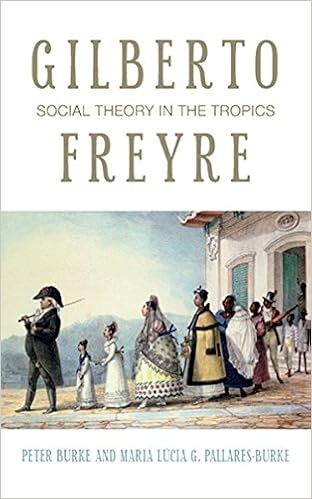
  • Gilberto Freyre: Social Theory in the Tropics

    Peter Lang
    2008
    261 pages
    Hardcover ISBN: 978-1-906165-09-3
    Softcover ISBN: 978-1-906165-04-8

    Peter Burke
    University of Cambridge

    Maria Lúcia G. Pallares-Burke
    Centre for Latin American Studies
    University of Cambridge

    Gilberto Freyre was arguably the most famous intellectual of twentieth-century Latin America. He was active as a sociologist, a historian, a journalist, a deputy in the Brazilian Assembly, a novelist, poet and artist. He was a cultural critic, with a good deal to say about architecture, past and present, and a public intellectual, whose pronouncements on race, region and empire – not to mention sex – made him famous in some quarters and notorious in others.

    The Masters and the Slaves, his most famous work, went through forty editions and has been translated into nine languages, made into a comic book and a television miniseries, while two directors (one of them Robert Rossellini) planned to turn it into a film. Yet he is not well known outside Brazil. Freyre was a major social thinker, one of the few who have not come from Western Europe or the USA, and this book argues that we should take account of the pioneering work of this gifted intellectual. His ideas are of particular relevance today for both political and academic reasons. His interest in gender, ethnicity, hybridity, identity, globalization, and capitalism ensures that his ideas are still provocative and topical, and ready to be introduced to a wider audience.

    Contents

    • The Importance Of Being Gilberto
    • Portrait of the Artist as a Young Man
    • Masters and Slaves
    • A Public Intellectual
    • Empire and Republic
    • The Social Theorist
    • Gilberto Our Contemporary
  • Race, Religion and Law in Colonial India: Trials of an Interracial Family

    Cambridge University Press
    November 2011
    286 pages
    6 b/w illus. 3 maps
    228 x 152 mm; 0.51kg
    Hardback ISBN: 9781107012615
    Adobe eBook ISBN: 9781139181242
    Mobipocket eBook: ISBN:9781139184861

    Chandra Mallampalli, Associate Professor of History
    Westmont College, Santa Barbara, California

    How did British rule in India transform persons from lower social classes? Could Indians from such classes rise in the world by marrying Europeans and embracing their religion and customs? This book explores such questions by examining the intriguing story of an interracial family who lived in southern India in the mid-nineteenth century. The family, which consisted of two untouchable brothers, both of whom married Eurasian women, became wealthy as distillers in the local community. When one brother died, a dispute arose between his wife and brother over family assets, which resulted in a landmark court case, Abraham v. Abraham. It is this case which is at the center of this book, and which Chandra Mallampalli uses to examine the lives of those involved and, by extension, of those – 271 witnesses in all – who testified. In its multilayered approach, the book sheds light not only on interracial marriage, class, religious allegiance, and gender, but also on the British encounter with Indian society. It shows that far from being products of a “civilizing mission” who embraced the ways of Englishmen, the Abrahams were ultimately – when faced with the strictures of the colonial legal system – obliged to contend with hierarchy and racial difference.

    Features

    • A singular court case from the nineteenth century is at the heart of this intriguing book on race and hierarchy in colonial India
    • A rich and engaging multi-layered approach which interrogates legal documents and interviews with witnesses to unveil social history of the period
    • For students and scholars of colonial India, and legal and social historians

    Table of Contents

    • Introduction
    • 1. Remembering family
    • 2. Embodying ‘Dora-hood’: the brothers and their business
    • 3. A crisis of trust: sedition and the sale of arms in Kurnool
    • 4. Letters from Cambridge
    • 5. The path to litigation
    • 6. Litigating gender and race: Charlotte sues at Bellary
    • 7. Francis appeals: the case for continuity
    • 8. Choice, identity, and law: the decision of London’s Privy Council.