• Just Black?: Multi-Racial Identity

    Filmakers Library
    1992
    00:59:00

    Produced by:

    Francine Winddance Twine

    Jonathan F. Warren

    Francisco Ferrandiz

    Most of us at one time or other are faced with an official form requiring us to “check” the applicable ethnic designation. What “box” does a person check if his or her parents come from different racial backgrounds?

    In this provocative documentary, we meet several articulate young men and women of mixed racial heritage. Each has one black parent, and a white, Asian or Hispanic second parent. They share with us their struggle to establish, acquire and assert a racial identity. Their experiences lead one to question whether there is room in America for a multi-racial identity.

    The interviews presented reflect the research of anthropologist Francine Winddance Twine. Her searching questions on dating, family relationships, friendships and childhood experiences reveal a wide range of reactions to having a dual heritage. As these young people speak of their hopes and frustrations, they all reveal the tension of having their multicultural background overlooked and being classified as having one racial identity.

    The candor with which these college students reveal themselves makes this compelling viewing for university and general audiences.

    Awards

    • American Psychological Association, 1993
    • Honorable Mention, American Film & Video Festival,1992
    • Special Jury Award, National Educational Film & Video Festival, 1992
  • New Film Shows Misty Copeland’s Journey as a Black Ballerina

    NBC News
    2015-09-30

    Maya Chung

    The 2015 Urbanworld Festival closed out on Saturday night with the highly anticipated documentary “A Ballerina’s Tale,” which details Misty Copeland’s journey to become a principal ballerina.

    The film festival, founded in 1997, is a five-day event that showcases narrative features, documentaries, short films, and spotlight screenings with the goal of redefining and advancing the impact of the multicultural community in the film world.

    “A Ballerina’s Tale” is one film that is making that impact. The documentary gives an in-depth picture of Copeland’s struggles with being black in a predominantly white Ballet world and it chronicles her experience recovering from a leg fracture – one that could’ve stopped her dream of becoming a principal dancer…

    …Copeland, 33, beat the odds and became the American Ballet Theatre’s first black female principal dancer in the company’s 75-year history this past June. But, it wasn’t easy and the film makes that clear. She explained that she struggled being a black dancer when she first began in the professional ballet world.

    “I’ve never strayed away from being black. I’m biracial but something that my mom constantly said to me growing up in southern California was ‘Yes, you are Italian, you are German, and you are black, but you are going to be viewed by the world as a black woman’,” Copeland said. “I never felt different growing up but when I came into the ballet world as a professional I immediately felt different.”…

    Read the entire interview here.

  • New ‘Hysterical’ Web Series Explores Single Life for 40-Something Women of Color

    Chic Rebellion
    2015-10-01

    Elayne Fluker, Chief Executive Officer

    “You know, marriage is hard. I’m not always happy–the shit gets hard.” So goes a line by Rain Pryor to actress Esther Friedman in Friedman’s new web series, Hysterical Historical Hillary–which screens at the Bushwick Film Festival on Saturday, October 3, 2015 in Brooklyn, New York. Friedman plays Hillary, a 40-something woman longing for love in New York City. Having had a successful web series on FunnyorDie.com in 2008 and a successful Kickstarter campaign in 2014 that raised $8430, the New York native teamed up with her sixteen-year-old brother Sam Friedman, already an award winning filmmaker, to tell stories of what they call “the not-so-hot topics of human experiences.” And as any singleton in New York knows that if dating in the Big Apple is anything it is certainly an experience!

    ChicRebellion.TV caught up with Friedman to chat about meaning of the phrase “hysterical historical, her personal connection to Hillary, if web series have helped even the playing field for women of color who have a story to tell, and why she chose the path less traveled when deciding how to distribute her work…

    Read the entire interview here.

  • Public Symposium — DNA and Indigeneity

    Intellectual Property Issues in Cultural Heritage (IPinCH)
    Simon Fraser University Harbour Centre
    Vancouver, British Columbia, Canada
    2015-10-22, 12:30-17:30 PDT (Local Time)

    On October 22 at 12:30 pm, join us for the DNA and Indigeneity: The Changing Role of Genetics in Indigenous Rights, Tribal Belonging, and Repatriation conference in downtown Vancouver. This event will bring together an international and interdisciplinary group of archaeologists, anthropologists, bioethicists, geneticists, and representatives from Indigenous organizations to explore the promise and perils of using biological and genetic information to inform understandings of identity. Ultimately, this event will investigate the degree to which biology and genetics currently inform these areas, and—perhaps most importantly—identify the limitations of this approach.

    The public symposium will be held at Simon Fraser University Harbour Centre in downtown Vancouver and is free for all to attend (make sure you RSVP). The symposium will include presentations that weave together perspectives from anthropology, bioethics, and genetics.

    For more information, click here.

  • Korla Pandit — Disguising identity: From Black to Indian

    Northwest Asian Weekly
    Seattle, Washington
    Volume 34, Number 43 (October 17 – October 23, 2015)
    2015-10-16

    Andrew Hamlin


    Korla Pandit

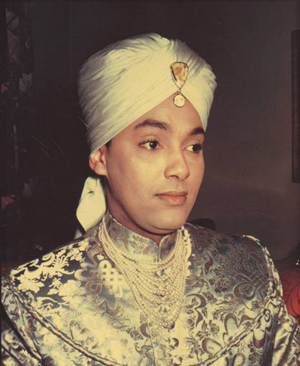
    Two hands hold a large censer. A voice speaks of wisdom and rubies. A deep, slightly scraggly voice. The action fades-in to a man in a turban with a jewel mounted between his eyes. Fixing his eyes upon the camera, Korla Pandit begins his act.

    And his act was the Hammond Organ, augmented with a Steinway piano to his right. Playing mostly organ, occasionally piano, sometimes one with each hand, Pandit played for fifteen minutes on Los AngelesKTLA-TV from 1949 until 1951. He did not rock and roll and he did not get down and dirty with the blues, but he flitted easily between all other types of music, playing popular tunes, show tunes, traditional, and ethnic music from around the world. He was one of the first television stars, but he never spoke on camera. The narrator off-screen was someone else.

    And Korla Pandit had reason to never speak. Speaking might have given away his secret…

    Read the entire article here.

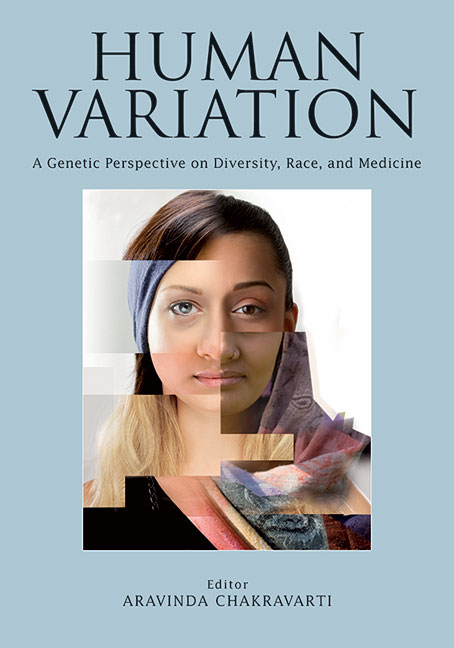
  • Human Variation: A Genetic Perspective on Diversity, Race, and Medicine

    Cold Spring Harbor Laboratory Press
    2014
    131 pages
    (21 4C, 5B&W), index
    Hardcover ISBN: 978-1-621820-90-1
    Paperback ISBN: 978-1-936113-25-5

    Edited by:

    Aravinda Chakravarti, Professor of Medicine, Pediatrics, Molecular Biology & Genetics, and, Biostatistics
    Johns Hopkins University School of Medicine, Institute of Genetic Medicine

    Since the appearance of modern humans in Africa around 200,000 years ago, we have migrated around the globe and accumulated genetic variations that affect various traits, including our appearance, skin color, food tolerance, and susceptibility to different diseases. Large-scale DNA sequencing is now allowing us to map the patterns of human genetic variation more accurately than ever before, trace our ancestries, and develop personalized therapies for particular diseases. It is also reinforcing the idea that human populations are far from homogeneous, are highly intermixed, and do not fall into distinct races or castes that can be defined genetically.

    This book provides a state-of-the-art view of human genetic variation and what we can infer from it, surveying the genetic diversity seen in Africa, Europe, the Americas, and India. The contributors discuss what this can tell us about human history and how it can be used to improve human health. They also caution against assumptions that differences between individuals always stem from our DNA, stressing the importance of nongenetic forces and pointing out the limits of our knowledge. The book is thus essential reading for all human geneticists and anyone interested in how we differ and what this means.

    Contents

    • Preface
    • Perspectives on Human Variation through the Lens of Diversity and Race / Aravinda Chakravarti
    • What Type of Person Are You? Old-Fashioned Thinking Even in Modern Science / Kenneth M. Weiss and Brian W. Lambert
    • Social Diversity in Humans: Implications and Hidden Consequences for Biological Research / Troy Duster
    • Demographic Events and Evolutionary Forces Shaping European Genetic Diversity / Krishna R. Veeramah and John Novembre
    • Genetic Variation and Adaptation in Africa: Implications for Human Evolution and Disease / Felicia Gomez, Jibril Hirbo and Sarah A. Tishkoff
    • A Genomic View of Peopling and Population Structure of India / Partha P. Majumder and Analahba Basu
    • How Genes Have Illuminated the History of Early Americans and Latino Americans / Andres Ruiz-Linares
    • Can Genetics Help Us Understand Indian Social History? / Romila Thapar
    • Race in Biological and Biomedical Research / Richard S. Cooper
    • Personalized Medicine and Human Genetic Diversity / Yi-Fan Lu, David B. Goldstein, Misha Angrist, and Gianpiero Cavalleri
    • Index
  • Regulating Mixed Marriages through Acquisition and Loss of Citizenship

    The ANNALS of the American Academy of Political and Social Science
    Volume 662, Number 1, November 2015
    pages 170-187
    DOI: 10.1177/0002716215595390

    Betty de Hart, Professor of Law
    Radboud University, The Netherlands

    Mixed marriages have always had an ambiguous and often problematic relationship with the law. On one hand, mixed marriages have been seen as a key indicator of sociocultural integration into mainstream society. In terms of the law, this perception has been expressed, for example, as privileged access to citizenship status for immigrant family members of citizens. On the other hand, mixed marriages have been seen as a threat to society and social cohesion. In this article, I argue that these contradictory perceptions of mixed relationships have informed the development of citizenship law over time. Building on literature on the regulation of mixed marriages in law, as well as gender and citizenship law, I use the Netherlands as a case study to demonstrate how citizenship law has been used as a tool to prevent certain types of “undesirable” mixed couples and how this approach has informed Dutch citizenship law until today.

    Read or purchase the article here.

  • The “mixed race” community—powered to a significant (embarrassing?) extent by white mothers of kids who are not white—seeks a unique “mixed” identity, and Obama could be a poster child. But I don’t think we need poster children for mixed identity: we need a world in which a Black man can be president, no matter who his mother is. In such a world, “mixed” wouldn’t matter politically—we could still have our cultural identities, as many as we want, actually, us Americans with our occasional Cherokee grandmother, French great grandfather, Italian immigrant great, great grandmother, and maybe a couple of Jews and the occasional Black ancestor. Celebrating ethnicity can be fun. But race in America is not about fun or celebration: it’s about power. In the world we’ve got, it’s the Black ancestor that sets the identity, because that’s still the racial fault line in America.

    Barbara Katz Rothman, “Obama’s Mixed Heritage: A Mother’s Perspective,” Beacon Broadside, February 14, 2008. http://www.beaconbroadside.com/broadside/2008/02/obamas-mixed-he.html.

  • Diversity and cohesion in Britain’s most mixed community

    Financial Times
    2015-10-14

    John McDermott

    At the Barking Road Community Centre in Plaistow, dancers sway and twirl to calypso beats. If the music hints at the centre’s past as an Afro-Caribbean club, the mix of elderly boppers suggest how the composition of this pocket of east London is changing. As well as women with Nigerian and Jamaican heritage, there are those with roots in India, Pakistan, Colombia, Poland and the Philippines. They show why Plaistow is the clearest example of what researchers describe as London’s “super-diversity”.

    “If London is the most diverse city in the world, and Plaistow is the most diverse part of the city, Plaistow might be the most diverse place in the world,” says Forhad Hussain, a local councillor. When Hussain came to the area in 1983 with his Bangladeshi-born parents, this part of the city was mostly white and working-class, home to dockers and their families who had stayed put as Plaistow was rebuilt after the devastation wrought by the Blitz

    Read the entire article here.

  • Race Correction and Inequalities in Medicine

    ANTH 1310 S01: International Health: Anthropological Perspectives
    Brown University, Providence, Rhode Island
    2015-10-02

    Methma Udawatta

    The history of medicine is fraught with unnecessary racialization. In “The Diseased Heart of Africa: Medicine, Colonialism, and the Black Body,” Comaroff writes about how the black body became “associated with degradation, disease, and contagion” and how colonial medicine “link[ed] racial intercourse with the origin of sickness.” These overtly racist ideas have decreased in influence over time. However, even today, the remainders of these ideas still manifest themselves in racial inequalities in treatment and access to medical resources, and in the general racialization of medicine, both in the U.S. and around the world.

    Smedley and Smedley write about the consistent racial and ethnic disparities in health care in their paper, “Race as Biology is Fiction, Racism as a Social Problem is Real.” They report a series of shocking statistics, which include that Africans Americans and Hispanics in the U.S. tend to receive lower quality health care across many different disease areas, African Americans are more likely than whites to “receive less desirable services, such as amputation,” and that these disparities are “found across a wide range of clinical settings including public and private hospitals, teaching and nonteaching hospitals.…” Similarly, Livingston details a scenario where a patient O (a black man) is expected to endure an incredible amount of pain during a bone-marrow biopsy without making any sounds of pain. When Mr. J (a white man) undergoes a similar bone marrow aspiration, Dr. A holds his hand and the Motswana nurse comforts him. Livingston writes that “his whiteness apparently creates different expectations around his stoicism.” Smedley and Smedley write that racialized science (and any science that looks for differences between racial groups) can only maintain and reinforce existing inequalities. Although many racial disparities in health are also the product of socioeconomic differences, Smedley and Smedley argue that when we accept this concept, there is the implicit idea that these socioeconomic differences are acceptable…

    Read the entire article here.