• I live the paradox that though my brown skin has excluded me from so called white privilege, all my life I have benefited from the plunder of privileged whites. From the time I read Thackeray’s novel “Vanity Fair” as a teenager, I have been fascinated by the character of Rhoda Swartz, the “woolly-haired mulatto from St. Kitts,” a mixed race heiress to a lucrative plantation, and real-life figures like her. Now I know why: Their stories are mine, and like them, I occupy the uneasy limbo between exploiter and exploited. I, an African-American woman, am every bit as much a “debtor” to my “race” as any descendant of John C. Calhoun’s or indeed as Georgetown University itself.

    Susan Fales-Hill, “I Named My Mixed-Race Daughter for a Slave-Trading Town,” The New York Times, July 16, 2016. http://www.nytimes.com/2016/07/17/opinion/sunday/i-named-my-mixed-race-daughter-for-a-slave-trading-town.html.

  • ‘Thomas Jefferson Dreams of Sally Hemings’ reimagines difficult history

    The Chicago Tribune
    2016-07-23

    Meredith Maran

    “Until the lions have their own historians,” says an African proverb, “the history of the hunt will always glorify the hunter.” The proverb offers one answer to a question that has long plagued writers, activists and historians. Who gets to tell the stories of those who have been denied the right to tell their own?

    Given that heterosexual white men still get the, um, lion’s share of book contracts, should straight people write books about the gay rights movement? Should men write about the struggle for women’s equality? And — as with Harriet Beecher Stowe’sUncle Tom’s Cabin,” Mark Twain’sAdventures of Huckleberry Finn,” William Styron’s Pulitzer-winning “Confessions of Nat Turner” and now Stephen O’Connor’s Thomas Jefferson Dreams of Sally Hemings” —should a white person write a book whose central dilemma is slavery?

    “Anyone has the right to write about any subject available to be written about,” historian Henry Louis Gates Jr. has said. But the white person who writes a 624-page novel about the 37-year love affair between a white slave owner — who happens to be the third president of the United States and author of the phrase “All men are created equal” — and a mixed-race slave — whom he happens to own and who happens to give birth to six of his children — had better have the politics, the courage and, most importantly, the storytelling skills to get it right.

    Fortunately, O’Connor manifests an abundance of these qualities in “Thomas Jefferson Dreams of Sally Hemings,” his debut novel. Ambitious doesn’t begin to describe the scope of the project O’Connor undertook. And successful doesn’t begin to describe the wildly imaginative techniques he used to realize his authorial goal, which is clearly to humanize — equalize, you might say — the two members of this passionate, conflicted couple: the lionized, hypocritical Jefferson, who railed against slavery while owning slaves, and the powerful yet complicit Hemings, who loved and loathed her owner…

    Read the entire review here.

  • The Evolution of My Mixed Race Identity

    NASPA Student Affairs Administrators in Higher Education
    2016-07-11

    Jeanette Snider, Assistant Director in the Undergraduate Program
    Robert H. Smith School of Business
    University of Maryland

    I recently took an intergroup dialogue-training course for administrators and graduate students interested in leading a related course offered at my university. We were ushered through a number of activities to explore our own life experiences and interrogate any biases we might bring to our class as facilitators. One of the exercises that particularly stood out to me during the training was the “Racialized Life Map” worksheet. We were asked to record the first 5 experiences we can recall in which we encountered or recognized ourselves as racialized beings.

    As a Black biracial (African American and German American) woman several moments came to mind. I can remember in kindergarten, being asked if I was adopted by my classmates after my father came in for career day. I recall getting strange stares from my father’s coworkers on take-your-daughter-to-work-day or even being called the “N word” by a white classmate in 6th grade after school.

    The memories continue…my first recollection of being tokenized by my middle school history teacher occurred when she asked me to speak on behalf of African Americans in class when the topics of slavery and the Civil Rights movement arose. As a high school senior, I vividly recall my guidance counselor telling me I had a strong chance of getting admitted to my top college choice, an elite, small public university in southern Virginia, because I am black. I was constantly socialized and treated as an African American woman. You see, in my mind, I didn’t have a choice to be biracial. Based on the aforementioned interactions along with a lifetime of experiences, I have identified as Black for most of my life. This, often conscious decision is based on people’s perceptions of my racial identity…

    Read the entire article here.

  • Dido Belle: Britain’s first black aristocrat

    The Telegraph
    2016-07-06

    Nisha Lilia Diu

    Amma Asante’s award-winning film Belle arrives on Netflix today. In this feature, first published in June 2014, Nisha Lilia Diu reveals the true story that inspired it

    The amazing thing about Dido Elizabeth Belle is not that she was mixed-race. Who knows how many white men’s children were born to black slave women in the 18th century? It’s not even that her father was a wealthy English aristocrat – there were plenty of titled captains tearing around the Caribbean at that time, capturing French and Dutch schooners during the Seven Years’ War and making off with their sugar, coffee and other (often human) cargo. The extraordinary thing about Dido Belle is that her father, a 24-year-old Navy officer called John Lindsay, took her home to England and asked his extended family to raise her. And they did. They did it in some style, too.

    Belle grew up in Kenwood House in north London. It was the palatial weekend retreat of Lindsay’s uncle, the first Earl of Mansfield, set in landscaped gardens with a view of St Paul’s Cathedral six miles away. Mansfield was Lord Chief Justice, and he made a number of landmark rulings on slavery that were among Britain’s first steps towards abolition. Did Belle’s presence in his home have anything to do with it? Plenty of his contemporaries thought so, and they didn’t admire him for it.

    “Dido was very, very privileged,” says William Murray, a descendant of the earl and the son of the heir apparent. “She was in the top 5 per cent, perhaps the top 1 per cent, in terms of how she lived, her allowance, her dress, her education.” But Belle’s position was far from clear-cut…

    Read the entire article here.

  • I Named My Mixed-Race Daughter for a Slave-Trading Town

    The New York Times
    2016-07-16

    Susan Fales-Hill


    An oil painting of Susan Fales-Hill’s great-great-great-grandfather hangs in her apartment in Manhattan. He turned out to be not as upstanding as she once thought. Credit Hilary Swift for The New York Times

    FOR nearly 20 years, my great-great-great-grandfather’s portrait has watched over me from my red dining room wall. With his high collar, ruffled cravat and black waistcoat, Samuel Fales, 1775-1848, is the very image of the upstanding 19th-century New England gentleman. An eminent merchant and alderman of Boston, he was the founder of the family’s shipping business. I’ve known his face and taken comfort in his smile since I was a child attending Sunday lunch at my grandmother’s in the 1960s.

    Samuel Fales seemed utterly unperturbed by the changes the 20th century had wrought, among them his great-great-grandson’s unorthodox choice of bride: my mother, a black Haitian-American actress, and my brother and me, his mixed-race descendants. His portrait has stood as an emblem of our family’s pride in its history. “You have relatives on both sides of your family who fought in the American Revolution,” my mother would frequently remind me.

    To honor my forebears, my husband and I named our only child Bristol, after the town in Rhode Island where some of the Faleses first settled in the 17th century. A year ago, I learned through new historical research that Bristol had in fact served as a main hub of the trans-Atlantic slave trade. This gave me great pause. Had I done my daughter a dreadful disservice? Upon reflection, I decided that naming a multicultural African-American after a slave port was in fact redemptive, the ultimate act of reclamation.

    It never occurred to me that my family might have participated in the port’s inhumane commerce…

    Read the entire article here.

  • Biography: ‘The Strange Career of William Ellis: The Texas Slave Who Became a Mexican Millionaire,’ by Karl Jacoby

    The Dallas Morning News
    2016-06-24

    Karen M. Thomas, Professor of Journalism
    Southern Methodist University, Dallas, Texas

    From all accounts, Guillermo Enrique Eliseo commanded attention. The elegantly dressed Mexican-born Wall Street baron in Gilded Age Manhattan was known for his gold watch, fine taste and ability to strike business deals on both sides of the border. He also had a huge secret.

    Eliseo began life not on a Mexican hacienda but across the border on a Texas plantation where he was born into slavery as William Henry Ellis. How he transformed himself into Eliseo is the topic of The Strange Career of William Ellis.

    Karl Jacoby is a stellar researcher, and the topic is fascinating. He ferrets out Ellis’ tale of reinvention from historical documents, news accounts and Ellis’ personal material, including letters to his family. Where records are scarce, such as for the years Ellis was a slave on a Victoria plantation, Jacoby instead turns to what is known about American slavery itself. He describes Texas’ role in trying to keep cotton as king and what life was like in Victoria, a town close to the U.S. and Mexican borders, in the 1800s. By doing so, Jacoby is able to extrapolate Ellis’ experience, motivation and preparation for ultimately redefining his personal racial boundaries

    Read the entire review here.

  • Early black lawyer, wife endured bigotry

    Minneapolis Star-Tribune
    2016-02-13

    Curt Brown

    Nellie and William Francis were doing so well in 1924 they decided to move four miles southwest in St. Paul — leaving their Rondo neighborhood for a house in the Groveland Park area near the Mississippi River.

    The 1920 census listed the couple, married for 27 years, as “Mu” for mulatto. Skin color hadn’t deterred William Francis from becoming “prominent in religious, political, social and fraternal circles,” according to the Twin City Star newspaper.

    He was a railroad lawyer and she was a suffragette and civic activist. But when they moved into their house at 2092 Sargent Av., just east of Cretin Avenue, their race would render them “direct victims of virulent racial hatred,” according to former law school dean Douglas Heidenreich’s 2000 article in William Mitchell magazine.

    Nellie Griswold was born in 1874 in Nashville, but moved north in time to graduate from St. Paul Central High School in the 1890s and become president of the Minnesota State Federation of Colored Women in the early 20th Century.

    As leader of the Everywoman Suffrage Club, she helped women earn the right to vote in 1920. The next year, she was credited with writing the state anti-lynching bill that allowed survivors to collect $7,500 in damages, nearly $100,000 in today’s dollars. The legislation — spawned by the 1920 lynching of three black circus workers in Duluth — also punished neglectful police who allowed lynchings under their watch. They could be fired for malfeasance.

    In 1893, Nellie married William Francis — an Indiana native five years her senior. At 19, he had moved to Minnesota, where he graduated in 1904 from St. Paul College of Law (now Mitchell Hamline School of Law)…

    Read the entire article here.

  • The stories of the ‘War Brides’ of Japan need to be told

    International Examiner
    Seattle, Washington
    2016-07-21

    Yayoi Lena Winfrey

    One day in the early 1980s, my Japanese mother took my sister and me to an International District gift shop. A middle-aged Japanese American man working there glanced briefly towards us, before turning away apathetically. His body language seemed to indicate a reluctance to wait on us. I looked at my mother and, without the necessity of my uttering a single word, she said, “He not like me.”

    Then, pointing at us, her two half-black daughters, she declared in her broken English, “He see I have you two. He know I am war bride.”

    Even though I’d heard her use that phrase before, I knew it was not something she was proud to be called. As I stood there reflecting, I realized my mother meant that the Japanese American man didn’t like the fact that she had obviously married someone outside of her race, likely an American G.I. But the irony was he wasn’t living in Japan. Might not the Japanese in that country have considered him as much a traitor for living in America as he thought my mother was for marrying a non-Japanese? Or maybe it wasn’t the same if you left your home country, but married someone of the same ethnicity. I’ve often wrestled with those thoughts in the decades following that 1980s incident.

    In the case of Japanese “war brides” like my mother, women who wedded American military men, they were guilty of both marrying an outsider and leaving their country. Considered disloyal by some Japanese nationals for wedding their former enemies, they were also considered disloyal by some Japanese Americans for marrying Americans that were not Japanese. It’s a complicated issue that my documentary War Brides of Japan will address. I also want to eradicate the stigma attached to the term “war bride,” often fallaciously interchangeable with “prostitute.”…

    Read the entire article here.

  • A JewAsian July 4th

    The ProsenPeople: Exploring the world of Jewish Literature
    Jewish Book Council
    2016-07-22

    Helen Kiyong Kim, Associate Professor of Sociology
    Whitman College, Walla Walla, Washington

    Noah Samuel Leavitt, Associate Dean of Students
    Whitman College, Walla Walla, Washington

    Earlier this week, Helen Kiyong Kim and Noah Leavitt determined the three takeaways on raising Jewish-Asian families worth sharing from their research for their coauthored book JewAsian: Race, Religion, and Identity for America’s Newest Jews. They are blogging for Jewish Book Council all week as part of the Visiting Scribe series here on The ProsenPeople.

    The publication of JewAsian, coming just prior to the 4th of July holiday, provides a unique lens through which to observe the United States and try to learn about the state of our nation in 2016. Indeed, the way that young mixed-race Jews think about themselves allows us to make larger observations about our society.

    On one hand, we are in the hot season of a mean-spirited presidential campaign in which race and diversity are focal points for voters’ anger and activism. On the other, on this final Independence Day during the administration of America’s first mixed-race President, the multicultural cast of Hamilton is on magazine covers and red carpet runways, challenging us to think in new ways about our nation’s founding story and current identity. Moreover, the United States Supreme Court’s recent decision to uphold the University of Texas affirmative action admission plan reminds us that we cannot avoid taking race into consideration when we attempt to describe America.

    Writing JewAsian helped us confront the central role that race plays for the young people at the center of our investigation. Like our nation, our mixed-race Jewish interviewees feel both the stress and the optimism of their complex identities…

    Read the entire article here.

  • Across the Border

    The Nation
    2016-07-21

    Michael A. Elliott, Professor of English
    Emory University, Atlanta, Georgia
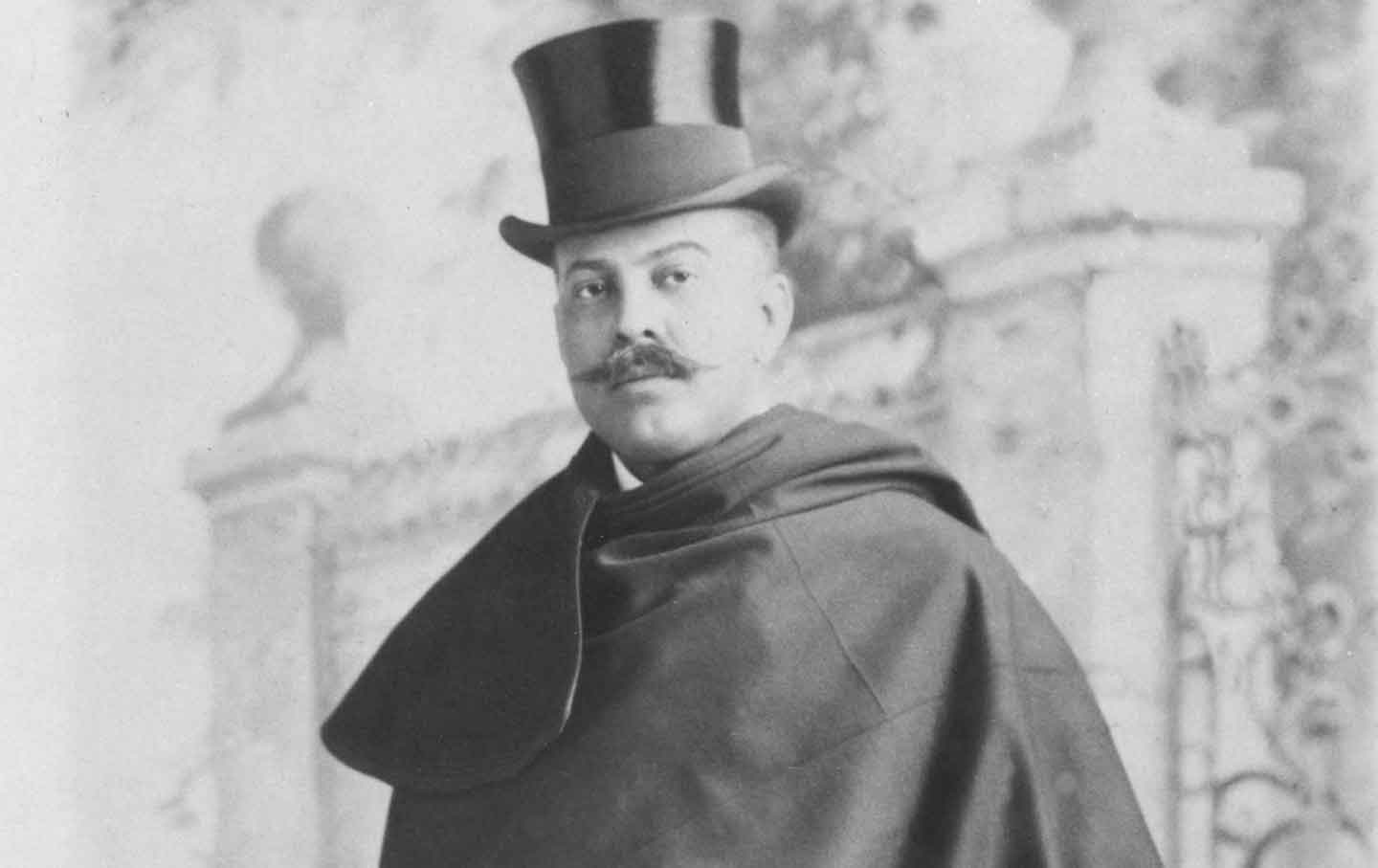

    William Henry Ellis, (Photo courtesy of Fanny Johnson-Griffin)

    A new biography of William Henry Ellis reminds us how much we still don’t know about the elusive history of racial subterfuge in America.

    When, in 1912, James Weldon Johnson published his sly and searching novel of racial passing, The Autobiography of an Ex-Colored Man, he did so anonymously, leaving readers to assume it was a factual account of a light-skinned African American crossing the color line to travel in the world of whiteness. In the aftermath of its publication, Johnson took pleasure in listening to others puzzle over its authorship. He even had “the rarer experience,” as he later described it, of being introduced to someone else claiming to have written the book. The story, it seems, was too good not to be true.

    In the long era of Jim Crow, fact could be as strange, if not stranger, than fiction. At precisely the same moment that Johnson was enjoying his literary ruse, a fellow New Yorker calling himself Guillermo Enrique Eliseo was frantically trying to keep his financial interests in Mexico afloat as that country convulsed under wave after wave of political revolt. With each new regime, the businessman sought to curry favor and press for new investment opportunities, but the changes were so rapid that he struggled to find the proper currency in which to pay his taxes. Many of those who knew Eliseo presumed him to be a Mexican from near the US border (though others thought he was Cuban, or even Hawaiian), a well-traveled gentleman active in Latin America’s quest for modernization.

    Had Johnson known Eliseo, he might have nodded in recognition. Eliseo had been born as an African-American slave on a South Texas cotton plantation in 1864, just as the entire social order of the region was being transformed by the conclusion of the Civil War. Over the course of a lifetime, Eliseo—or, as he was more commonly known, William Henry Ellis—built both elaborate fictions and an impressive network of business interests that spanned North America and beyond. His biography is the subject of a new book by historian Karl Jacoby, with a title that gives away its story: The Strange Career of William Ellis: The Texas Slave Who Became a Mexican Millionaire. Ellis’s life and Jacoby’s reconstruction of it remind us how much we still don’t know about the elusive history of racial subterfuge in America…

    Read the entire article here.