Mixed Race Studies

Scholarly perspectives on the mixed race experience.

    • About This Site
    • Bibliography
    • Contact Information
    • Date and Time Formats
    • Forthcoming… (Updated 2021-09-01)
    • Likely Asked Questions
    • List of Book Publishers
    • List of Definitions and Terms
    • My Favorite Articles and Papers
    • My Favorite Posts
    • My Recent Activities
    • Praise for Mixed Race Studies
    • Tag Listing
      • Tag Listing (Ordered by Count)
    • US Census Race Categories, 1790-2010
    • 1661: The First ‘Mixed-Race’ Milestone
    • 2010 U.S. Census – Some Thoughts

recent posts

  • The Routledge International Handbook of Interracial and Intercultural Relationships and Mental Health
  • Loving Across Racial and Cultural Boundaries: Interracial and Intercultural Relationships and Mental Health Conference
  • Call for Proposals: 2026 Critical Mixed Race Studies Conference at UCLA
  • Participants Needed for a Paid Research Study: Up to $100
  • You were either Black or white. To claim whiteness as a mixed child was to deny and hide Blackness. Our families understood that the world we were growing into would seek to denigrate this part of us and we would need a community that was made up, always and already, of all shades of Blackness.

about

  • Twitter
  • Facebook
  • Instagram
  • Can You Be “White Passing” Even if You Aren’t Trying?

    2022-01-12

    Can You Be “White Passing” Even if You Aren’t Trying?

    Mother Jones
    January-February 2022 Issue

    Andrea Guzmán, Ben Bagdikian Editorial Fellow


    Lisa Taniguchi

    The phrase has become popular on social media. But there’s a lot left out of the conversation.

    When pop star Olivia Rodrigo released her album Sour in May 2021, listeners took to TikTok to debate whether she was “white passing.” The question was not really about how Rodrigo perceives or publicly identifies herself. She is of both Filipino and white ancestry. Rather, it was about whether others see her as white. The Rodrigo discourse soon enflamed more general discussion about who deems one “white passing.” As one Iranian-born TikToker explained, she “did not grow up being white” when she came of age in post-9/11 America, but after others began to associate her appearance with whiteness—partially because of the rise of the Kardashians—she now recognizes the privilege of being “white passing.”

    The conversation differed from how “passing” has traditionally been used in the United States. In the Jim Crow era—when “one drop” of Black ancestry subjected a person to segregation—“passing” was a deception to assume the privileges of whiteness. From 1880 to 1940, experts suspect about 20 percent of Black men passed for white at some point. It was commonly an attempt to “access things that wouldn’t have been available to them otherwise,” says Nikki Khanna, a sociology professor at the University of Vermont. But it was also a certain betrayal—leaving behind collective uplift for personal gain…

    Read the entire article here.
  • 62 Mixed-Race Celebrities Who Have Actually Talked About Their Multiracial Identity

    2022-01-12

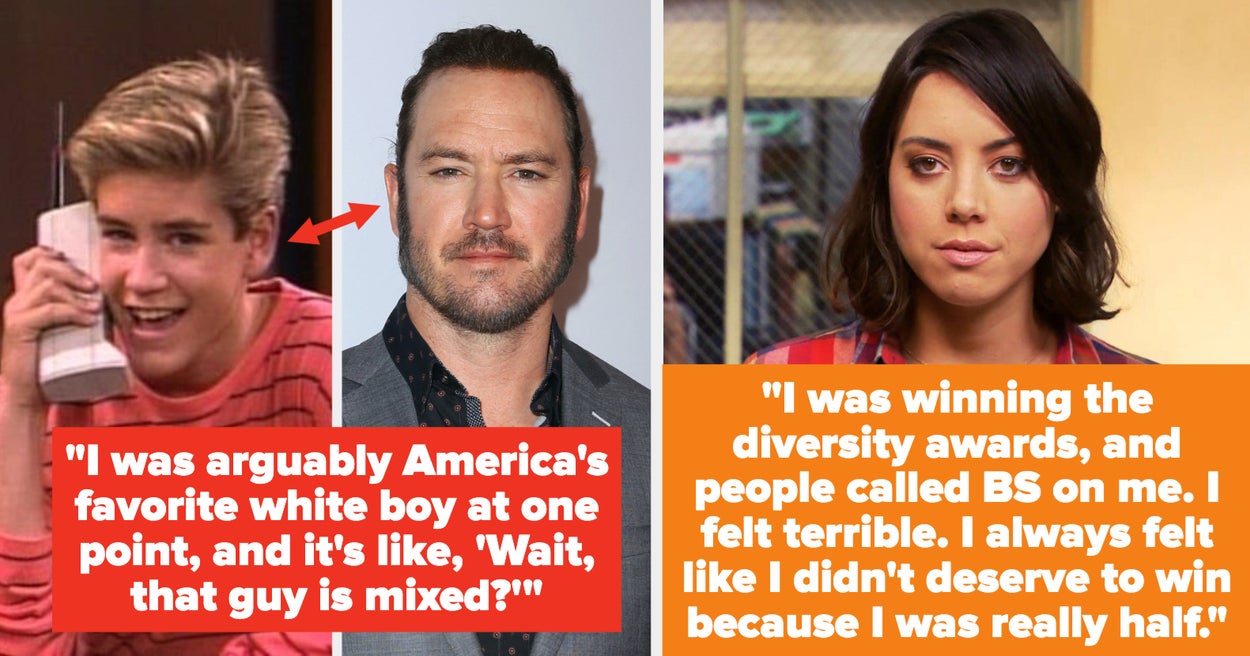
    62 Mixed-Race Celebrities Who Have Actually Talked About Their Multiracial Identity

    BuzzFeed
    2021-12-23

    Victoria Vouloumanos, Associate Editor

    “I am who I am. I’m good with it. You might need to figure it out, but I’m fine with it.”

    Read the entire article here.

  • Hannah Lowe

    2022-01-12

    Hannah Lowe

    Writers Mosaic
    August 2020

    Hannah Lowe was born in Essex in 1976 to a white English mother and Afro-Chinese Jamaican father. She studied American Literature at the University of Sussex, followed by an MA in Refugee Studies. She undertook her PhD in Creative Writing at Newcastle University in 2012.

    Broadly, Lowe’s work is concerned with migration histories, multicultural London and the complex legacies of the British Empire. Her first poetry collection, Chick (Bloodaxe, 2013), blended these political concerns with a deeply personal and elegiac commemoration of her father, a member of the Windrush generation, who earnt a living in London through playing cards and dice. Her second collection, Chan (Bloodaxe, 2016), expanded these explorations of family in writing about the life and untimely death of her father’s cousin, the jazz saxophonist, Joe Harriott. In this book, Lowe developed a new poetic form – the ‘borderliner’ – which uses typography and double narration to explore ideas about multi-heritage experiences. Lowe’s work is often concerned with historical omissions, and in Ormonde, (Hercules Editions, 2014), she excavates the story of the SS Ormonde, on which her father migrated, and which arrived in Britain before the better known Empire Windrush. Most recently she has published the chapbook, The Neighbourhood, (Outspoken Press, 2019), which explores how communities respond to the pressures of austerity, gentrification and deportation. Her third full-length collection, The Kids, inspired by her work as an inner-city sixth form teacher, won the 2021 Costa Poetry Award…

    Read the entire article here.

  • To a Dark Girl

    2022-01-12

    To a Dark Girl

    North Star
    Louisiana Public Broadcasting
    Source: Louisiana Digital Media Archive
    1985

    Contributors:

    • Genevieve Stewart, Host
    • Sister Barbara Marie, Interviewee
    • Leslie Williams, Interviewee
    • Michelle Diaz, Interviewee

    This episode of the series “North Star” from 1985 focuses on two intertwined stories related to the history of New Orleans in the 19th century: the quadroon balls held at the Orleans Ballroom, clandestine events where white men met free women of color, who would become their mistresses; the founding of the Sisters of the Holy Family, an African American congregation of Catholic nuns, by Henriette DeLille; and a visit to St. Mary’s Academy, the school run by the Sisters of the Holy Family, which was once located at the Orleans Ballroom. Host: Genevieve Stewart

    Watch the video (00:14:20) here.

  • “The Bluest Eye” and “Imitation of Life” (1934): Variations on a Theme (Maggie Tarmey)

    2022-01-11

    “The Bluest Eye” and “Imitation of Life” (1934): Variations on a Theme (Maggie Tarmey)

    Toni Morrison: A Teaching and Learning Resource Collection
    2021-06-08

    Maggie Tarmey

    The following essay is written by student Maggie Tarmey, with edits by Amardeep Singh.

    While the two appear quite different from one another, Toni Morrison’s novel The Bluest Eye and the 1934 film adaptation of Imitation of Life (directed by John Stahl and adapted from Fannie Hurst’s 1933 novel of the same name) share many similarities. The Bluest Eye follows a young, dark-skinned Black girl in a small Ohio town in 1940. This girl, named Pecola Breedlove, wants to have blue eyes. It is her number one desire, and she believes that blue eyes, and only blue eyes, will make her beautiful.

    In contrast, Imitation of Life follows the story of a white widow, Bea, and her Black domestic servant, Delilah, as they start a business selling Delilah’s famous pancakes. Delilah has a daughter named Peola who is so light skinned that she passes for white. Peola struggles throughout the film with her identity. While these sound like two entirely different stories, they are really not so different. I would argue that these two works similar stories from rather different perspectives. The Bluest Eye tells the story of young girls struggling with colorism and white supremacy from a Black cultural perspective with a Black audience in mind, while Imitation of Life puts forward a sanitized, far less nuanced version of a similar narrative, one that is authored by white creators (Hurst and Stahl) and targeted to predominantly white audiences…

    Red the entire essay here.

  • Marginal Citizens: Interracial intimacies and the incarceration of Japanese Canadians, 1942–1949

    2022-01-11

    Marginal Citizens: Interracial intimacies and the incarceration of Japanese Canadians, 1942–1949

    Canadian Journal of Law and Society / La Revue Canadienne Droit et Société
    Published online 2021-09-08
    DOI: 10.1017/cls.2021.18

    Mary Anne Vallianatos, Ph.D. Candidate
    University of Victoria School of Law, British Columbia

    Following Japan’s 1941 attacks on Hawai’i and Hong Kong, Canada relocated, detained, and exiled citizens and residents of Japanese ancestry. Many interracial families, however, were exempted from this racial project called the internment. The form of the exemption was an administrative permit granted to its holder on the basis of their marital or patrilineal proximity to whiteness. This article analyzes these permits relying on archival research and applying a critical race feminist lens to explore how law was constitutive of race at this moment in Canadian history. I argue that the permits recategorized interracial intimacies towards two racial ends: to differentiate the citizen from the “enemy alien”; and to regulate the interracial family according to patriarchal common law principles. This article nuances received narratives of law as an instrument of racial exclusion by documenting the way in which a new inclusive state measure sustained old exclusions.

    Read or purchase the article here.

  • Quadroon Balls | LFOLKS (1985)

    2022-01-11

    Quadroon Balls | LFOLKS (1985)

    Louisiana Public Broadcasting
    2022-01-05

    This segment from the February 10, 1985, episode of the series “Folks” features Genevieve Stewart’s report on the history of the quadroon balls in 19th century New Orleans, clandestine events where white men met free women of color, who would become their mistresses. She visits the Orleans Ballroom at the Bourbon Orleans Hotel in the French Quarter, one of the possible sites of the quadroon balls. Stewart also interviews Clive Hardy, the archivist at the University of New Orleans, who discusses his research into the history of the quadroon balls. Host: Rob Hinton

  • Passing as white would make it easier to work in Mexico, she said. White migrant advocates seem to automatically command respect from locals in Reynosa. But instead of passing, Rangel-Samponaro has tried to leverage being biracial.

    2022-01-11

    Passing as white would make it easier to work in Mexico, she said. White migrant advocates seem to automatically command respect from locals in Reynosa. But instead of passing, [Felicia] Rangel-Samponaro has tried to leverage being biracial.

    When she tells Mexican officials about her father, they smile and give her high fives. When she tells them she’s Black, they’re surprised.

    “In their minds, Black people don’t cross into Mexico to help others,” she said.

    Black migrants usually assume she’s Latina. So she makes a point of saying that she identifies as Black and that, “We are going through the same struggles.”

    Molly Hennessy-Fiske, “The woman defending Black lives on the border, including her own,” The Los Angeles Times, December 27, 2021. https://www.latimes.com/world-nation/story/2021-12-27/the-woman-defending-black-lives-on-the-border.

  • Overlooked No More: Elizabeth A. Gloucester, ‘Richest’ Black Woman and Ally of John Brown

    2022-01-11

    Overlooked No More: Elizabeth A. Gloucester, ‘Richest’ Black Woman and Ally of John Brown

    The New York Times
    2019-09-18

    Steve Bell, Senior Staff Editor

    Elizabeth Gloucester amassed a fortune from running more than 15 boardinghouses, including the Remsen House in Brooklyn, which drew an elite clientele.

    Overlooked is a series of obituaries about remarkable people whose deaths, beginning in 1851, went unreported in The Times.

    She ran boardinghouses whose lodgers included members of New York’s elite, raised money for an orphan asylum and was active in the abolitionists’ cause.

    With a fortune built largely from operating boarding homes in Brooklyn and beyond, Elizabeth A. Gloucester was considered by many to be the richest black woman in America at her death at age 66 on Aug. 9, 1883.

    Attending her funeral was “a congregation of people such as has seldom come together,” The Brooklyn Daily Eagle reported, made up of “richly dressed white ladies, fashionably attired gentlemen and a number of well-known colored people.”

    Whether her fortune of about $300,000 (the equivalent of about $7 million today) actually made her the nation’s wealthiest black woman may be impossible to prove. Some white women were much richer; the financial whiz Hetty Green was then building a net worth that might rival or exceed that held by President Trump today.

    But Gloucester was notable for more than just her money. She was linked — for a time dangerously so — to the antislavery firebrand John Brown, whom some blamed for leading the nation into the Civil War. She also led efforts to raise money for New York’s Colored Orphan Asylum, which would be set afire in the deadly draft riots of 1863. In her final year she even managed to land a cameo role in a high-society scandal that made headlines across the country…

    Read the entire article here.

  • Overlooked No More: Si-lan Chen, Whose Dances Encompassed Worlds

    2022-01-11

    Overlooked No More: Si-lan Chen, Whose Dances Encompassed Worlds

    The New York Times
    2021-05-27

    Jennifer Wilson, Contributing Writer
    The Nation

    Si-lan Chen in 1944. A socialist, she approached dance as a way to build international solidarity.
    Man Ray 2015 Trust/Artists Rights Society (ARS), NY, ADAGP, Paris 2021; Telimage

    This article is part of Overlooked, a series of obituaries about remarkable people whose deaths, beginning in 1851, went unreported in The Times.

    As a dancer and choreographer, she sought to represent a broad range of ethnic groups, but audiences often sexualized and exoticized her by focusing on her mixed race.

    In 1945, the dancer Si-lan Chen sent a draft of her memoir to the writer Pearl S. Buck, with a letter asking for her thoughts on why she was struggling to get the attention of a publisher.

    The problem, Buck explained, was that while Chen had dined with the Nationalist leader Chiang Kai-shek in revolutionary China, had been romanced by the poet Langston Hughes in Soviet Moscow, and had worked in Hollywood for the producer Joseph Mankiewicz, no one actually knew who she was.

    The autobiography, Buck said, of a mixed-race girl growing up in Trinidad, studying ballet at the Bolshoi and choreographing films like “Anna and the King of Siam” (1946), was too focused on, well, her…

    Read the entire article here.

Previous Page
1 … 41 42 43 44 45 … 1,428
Next Page

Designed with WordPress