Mixed Race Studies

Scholarly perspectives on the mixed race experience.

    • About This Site
    • Bibliography
    • Contact Information
    • Date and Time Formats
    • Forthcoming… (Updated 2021-09-01)
    • Likely Asked Questions
    • List of Book Publishers
    • List of Definitions and Terms
    • My Favorite Articles and Papers
    • My Favorite Posts
    • My Recent Activities
    • Praise for Mixed Race Studies
    • Tag Listing
      • Tag Listing (Ordered by Count)
    • US Census Race Categories, 1790-2010
    • 1661: The First ‘Mixed-Race’ Milestone
    • 2010 U.S. Census – Some Thoughts

recent posts

  • The Routledge International Handbook of Interracial and Intercultural Relationships and Mental Health
  • Loving Across Racial and Cultural Boundaries: Interracial and Intercultural Relationships and Mental Health Conference
  • Call for Proposals: 2026 Critical Mixed Race Studies Conference at UCLA
  • Participants Needed for a Paid Research Study: Up to $100
  • You were either Black or white. To claim whiteness as a mixed child was to deny and hide Blackness. Our families understood that the world we were growing into would seek to denigrate this part of us and we would need a community that was made up, always and already, of all shades of Blackness.

about

  • Twitter
  • Facebook
  • Instagram
  • RCM Museum celebrates the life of Samuel Coleridge-Taylor

    2018-01-30

    RCM Museum celebrates the life of Samuel Coleridge-Taylor

    Classical-music.com: The official website of BBC Music Magazine
    2017-10-19

    Anna Maria Barry, Museum Research Assistant
    Royal College of Music’s Museum of Music


    Samuel Coleridge-Taylor

    The composer’s musical fight for civil rights is the focus of an intriguing new digital exhibition, explains Anna Barry

    The Royal College of Music Museum has launched a new digital exhibition about composer Samuel Coleridge-Taylor (above). Released to coincide with Black History Month, the exhibition, entitled Samuel Coleridge-Taylor and the musical fight for Civil Rights celebrates the composer’s important role within civil rights movements in the UK and the US at the turn of the 20th century. Coleridge-Taylor was a student at the college and the exhibition draws on his remarkable collections which are held at its museum.

    Samuel Coleridge-Taylor was born in London in 1875. His mother Alice was British, while his father hailed from Freetown in Sierra Leone. Dr Daniel Taylor had met Alice while studying in Britain, but most likely returned to West Africa without realising that she was pregnant. He never met his son. The young Coleridge-Taylor was given a violin by his maternal grandfather, and soon displayed great musical talent. He joined the Royal College of Music in 1890, studying composition under Charles Villiers Stanford. Coleridge-Taylor soon became a musical celebrity thanks to his trilogy of cantatas, known collectively as The Song of Hiawatha. Until World War II, this was one of the most performed choral pieces in Britain, rivalled only by Handel’s Messiah and Mendelssohn’s Elijah…

    Read the entire article here.

  • How Battersea Gave The UK ‘Its Own Barack Obama’

    2018-01-30

    How Battersea Gave The UK ‘Its Own Barack Obama’

    Londonist
    2017-03-21

    Will Noble


    John Richard Archer began his mayoralty with a cheeky dig at his detractors

    He has been described as Britain’s Barack Obama. Except John Richard Archer was elected to power almost a century before the 44th US president. And his seat wasn’t in Washington DC, but Battersea, London.

    Born in Liverpool in 1863, Archer’s rise to political stardom was by way of being a naval man, medical student and photographer. In the early 1900s he set up a photography studio on Battersea Park Road. Ironically, it’s said he didn’t allow photographs taken of himself without consent, leading to some papers purposefully publishing dated images of him.

    Voted onto Battersea’s council in 1906, Archer was elected Mayor of Battersea on 10 November 1913. He won by a single vote; the margin may have been slim, but the result was monumental. (Though the first mayor in London to be black, Archer was not the first in the UK. That was Allen Glaser Minns of Thetford, Norfolk, elected in 1904.)

    Not everyone was pleased for Archer; during his campaign, and following his victory, he was battered with the kind of racist abuse and cockamamie conspiracy theories that will sound familiar to those who’ve followed politics in recent years…

    Read the entire article here.

  • Seeking Participants for Study Examining Influences on the Racial Identity and Mental Health of Self-Identified Multiracial People

    2018-01-30

    Seeking Participants for Study Examining Influences on the Racial Identity and Mental Health of Self-Identified Multiracial People

    Georgia State University
    College of Education & Human Development
    Counseling and Psychological Services
    2018-01-24

    Marisa Franco, Associate Professor of Counseling Psychology

    Participants are wanted for a study examining influences on the racial identity and mental health of self-identified multiracial people.

    Anyone who identifies as multiracial and is over the age of 18 can participate. Up to 1,000 people will participate in this study. All participants will have the option of being entered into a raffle to receive one of three $25 gift cards.

    The survey is administered on an online platform called Qualtrics. Participation in the study is expected to take up to 30 minutes.

    To participate, click here.

    The research will not provide direct benefits to you but it will benefit the scientific community through increasing awareness of race-related experiences and well-being for multiracial people.

    Participation is confidential and participants may withdraw from the study at any time.

    For further information, contact the principal investigator at: mfranco@gsu.edu.

  • Xenia Rubinos is Behind the New Theme Song for NPR’s Latino USA

    2018-01-30

    Xenia Rubinos is Behind the New Theme Song for NPR’s Latino USA

    Remezcla
    2018-01-03

    Julyssa Lopez
    Berlin, Germany


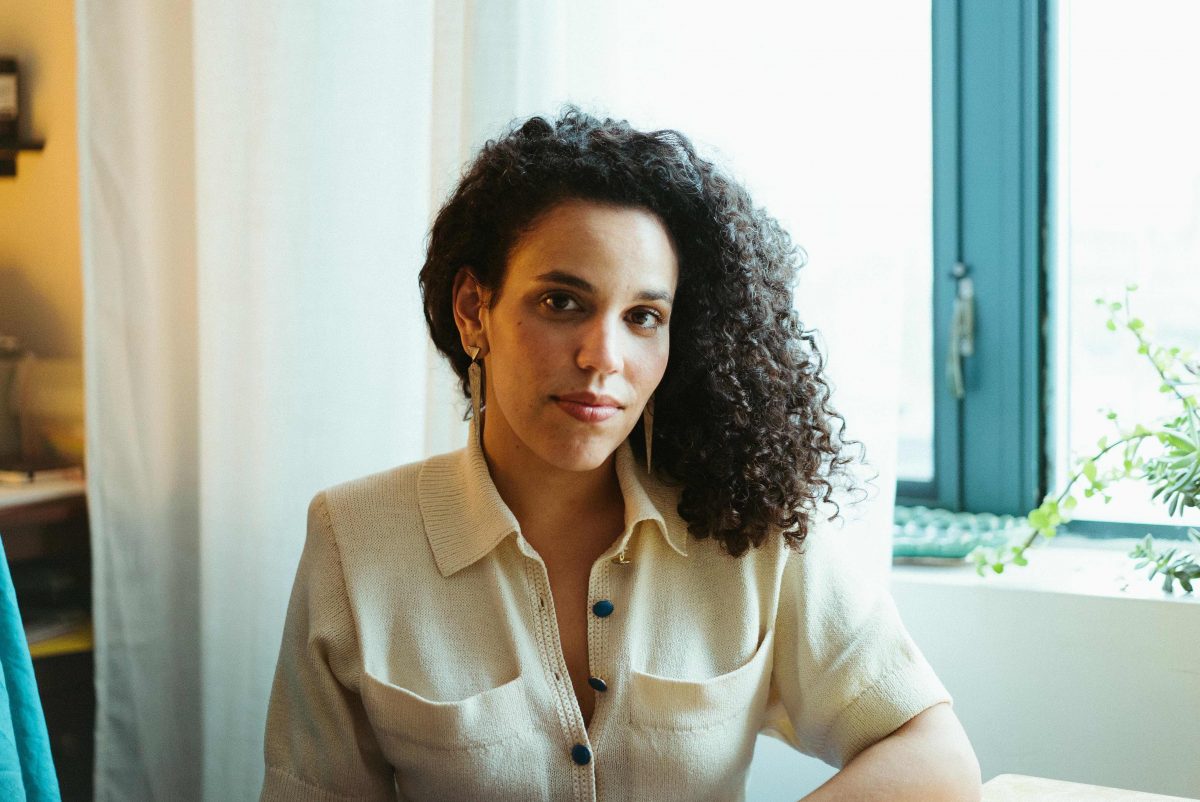
    Photo by Max Schiano. Courtesy of Xenia Rubinos

    Boricua-Cuban artist and multi-instrumentalist Xenia Rubinos is no stranger to Latino USA, the longest-running Latino-focused radio program on American public media, distributed nationally by NPR. She’s a devoted listener who says she’s regularly tuned in to learn about everything from Pedro Almodóvar movies to the Puerto Rican debt crisis—and she’s also been on the show herself to discuss her music and identity with Latino USA host Maria Hinojosa.

    “They are able to educate through really personal storytelling, which instantly brings you in and keeps you listening,” Rubinos told Remezcla. “I’m also a huge fan and admirer of Maria Hinojosa; she is a hero of mine. I think she will be an iconic and important voice in American journalism for many years to come…she’s a totally fierce badass journalist and woman.”

    So, Rubinos was absolutely floored last July when the Latino USA team asked her to compose the program’s first-ever theme song, which will open each episode of Latino USA moving forward. Latino USA announced this week that in addition to its Rubinos-designed theme song, it is also premiering a new format. The team will focus on deep-dives into single stories and topics, dropping multiple 15- to 30-minute podcasts weekly and covering extended cuts of interviews, roundtable discussions and short “explainers” of the news. Devotees who want to stick to the original Latino USA hour can still get the whole show on terrestrial radio…

    Read the entire article here.

  • Passing and Being Passed Over in the United States

    2018-01-30

    Passing and Being Passed Over in the United States

    Los Angeles Review of Books
    2017-12-15

    Kavita Das

    We Wear the Mask: 15 True Stories of Passing in America
    By Brando Skyhorse, Lisa Page
    Published 10.10.2017
    Beacon Press
    216 Pages

    IN THE YEARS preceding the 2016 presidential election, the “birther” movement that had dogged Barack Obama during his initial run for president raised its ugly head once again, revived by Donald Trump, a bombastic businessman/reality-show celebrity, and one of Obama’s most outspoken critics. Using the platform afforded to him as a rich and powerful white man, Trump made claims that Obama was not an American citizen, calling for him to prove otherwise by producing his birth certificate. This claim was made — and repeated often — despite the abundance of unassailable proof to the contrary.

    Trump — and the rest of the “birther” movement — essentially accused President Obama of passing as an American citizen. According to Brando Skyhorse, co-editor of the new anthology We Wear the Mask: 15 True Stories of Passing in America, passing is the “knowing decision about hiding or omitting one’s background to obtain acceptance into a community.” Skyhorse knows whereof he speaks since he acknowledges engaging in the practice himself. The phenomenon of passing is neither new nor unique to the United States. Age-old fairy tales like “Cinderella” and “The Little Mermaid” depict young women who pass as something other than their true selves in order to meet their Prince Charmings. Despite our country’s founding documents declaring that “all men are created equal,” endowed with rights to “life, liberty and the pursuit of happiness,” entrenched inequalities and stigmas associated with race, class, and sexuality have helped contribute to a long history of passing in the United States: African Americans and other people of color passing as white, poor people passing as affluent, LGBTQ individuals passing as straight…

    Read the entire review here.

  • Phoebe Collings-James: the artist and model taking on tokenism

    2018-01-30

    Phoebe Collings-James: the artist and model taking on tokenism

    The Chain
    The Guardian
    2017-11-14

    The British artist’s paintings, video and sculpture explore desire, sexuality and violence. She’s the second link in The Chain. Scroll down to see images from her day

    British artist Phoebe Collings-James grew up a poster girl for teen-zine, mixed-race models. But rather than being the break-out star, she broke out of the industry. She was 18 and increasingly uncomfortable with the casting process and lingerie shows under the male gaze. “As a model, I have often felt very conflicted as a reluctant acceptable face of blackness,” the Hackney-born, Goldsmiths graduate in fine art told Nylon magazine last year. “I have been used as a token black woman purely because I am ‘not too dark’.”…

    Read the entire article here.

  • Jefferson’s Three Daughters — Two Free, One Enslaved

    2018-01-29

    Jefferson’s Three Daughters — Two Free, One Enslaved

    Book Review
    The New York Times
    2018-01-26

    Mary Beth Norton, Mary Donlon Alger Professor of American History History
    Cornell University, Ithaca, New York

    JEFFERSON’S DAUGHTERS
    Three Sisters, White and Black, in a Young America
    By Catherine Kerrison
    Illustrated. 425 pp. Ballantine Books. $28.


    Martha Jefferson Randolph
    Credit Thomas Jefferson Foundation

    Fawn Brodie would be astonished — and gratified. In 1974, her biography “Thomas Jefferson: An Intimate History” contended that the third president had fathered children with his slave Sally Hemings. For this, Catherine Kerrison, a professor of American history at Villanova University, accurately notes, Brodie was “excoriated by a cadre of Jefferson experts.” A lot has changed, and largely because of the work of Annette Gordon-Reed, who took seriously Hemings family stories and, bolstered by a DNA study, convinced nearly all scholars, including Kerrison, that Brodie was correct. “Jefferson’s Daughters,” Kerrison’s beautifully written book, takes the relationship’s existence as a given.

    And so, to a nuanced study of Jefferson’s two white daughters, Martha (born 1772) and Maria (born 1778), she innovatively adds a discussion of his only enslaved daughter, Harriet Hemings (born 1801). The result is a stunning if unavoidably imbalanced book, combining detailed treatments of Martha’s and Maria’s experiences with imaginative attempts to reconstruct Harriet’s life…

    Read the entire review here.

  • Indian Slavery Once Thrived in New Mexico. Latinos Are Finding Family Ties to It.

    2018-01-29

    Indian Slavery Once Thrived in New Mexico. Latinos Are Finding Family Ties to It.

    The New York Times
    2018-01-28

    Simon Romero


    St. Thomas the Apostle Church in Abiquiú, N.M., a village settled by former Indian slaves, or Genízaros, in the 18th century.
    Credit Adria Malcolm for The New York Times

    ALBUQUERQUE — Lenny Trujillo made a startling discovery when he began researching his descent from one of New Mexico’s pioneering Hispanic families: One of his ancestors was a slave.

    “I didn’t know about New Mexico’s slave trade, so I was just stunned,” said Mr. Trujillo, 66, a retired postal worker who lives in Los Angeles. “Then I discovered how slavery was a defining feature of my family’s history.”

    Mr. Trujillo is one of many Latinos who are finding ancestral connections to a flourishing slave trade on the blood-soaked frontier now known as the American Southwest. Their captive forebears were Native Americans — slaves frequently known as Genízaros (pronounced heh-NEE-sah-ros) who were sold to Hispanic families when the region was under Spanish control from the 16th to 19th centuries. Many Indian slaves remained in bondage when Mexico and later the United States governed New Mexico.

    The revelations have prompted some painful personal reckonings over identity and heritage. But they have also fueled a larger, politically charged debate on what it means to be Hispanic and Native American…

    …Many Hispanic families in New Mexico have long known that they had indigenous ancestry, even though some here still call themselves “Spanish” to emphasize their Iberian ties and to differentiate themselves from the state’s 23 federally recognized tribes, as well as from Mexican and other Latin American immigrants.

    But genetic testing is offering a glimpse into a more complex story. The DNA of Hispanic people from New Mexico is often in the range of 30 to 40 percent Native American, according to Miguel A. Tórrez, 42, a research technologist at Los Alamos National Laboratory and one of New Mexico’s most prominent genealogists.

    …“I have Navajo, Chippewa, Greek and Spanish blood lines,” said Mr. Tórrez, who calls himself a mestizo, a term referring to mixed ancestry. “I can’t say I’m indigenous any more than I can say I’m Greek, but it’s both fascinating and disturbing to see how various cultures came together in New Mexico.”…

    Read the entire article here.

  • Killing Us Softly With the US Colonial Song: Puerto Ricans Matter

    2018-01-29

    Killing Us Softly With the US Colonial Song: Puerto Ricans Matter

    Radiant Roots, Boricua Branches: Musings on My Tri-racial Black and Puerto Rican Ancestry
    2017-12-31

    Teresa Vega

    On Becoming Comfortable with My Rice & Beans & Collard Greens Self

    On December 27th, 2013, I wrote one of my first blogposts about what it meant to find my Boricua Branches — my father’s side of my family. I will always say, without an ounce of hesitation, that the best part of taking my DNA tests was finding my Puerto Rican cousins. My father’s absence for 20 years of my life — from the age of 3-years old until 23-years old — resulted in a critical disjuncture in how I saw myself. While I always knew I was half-Puerto Rican, my pre-23 year old self did not know what that meant having been born and raised in Brockton, MA, a suburb of Boston. Brockton was not the diverse community it is today when I was growing up. It was a predominately white community with a small African-American and Cape Verdean population. We were often seen as Black and sometimes as Cape Verdean. Pre-23-year old Teresa was definitely Black culturally-identified. Though I always knew I had a diverse maternal extended family and equally diverse ancestors, having been raised by my maternal grandparents, I grew up within the confines of an African-American community.

    I arrived in New York City in the Fall of 1990 to attend graduate school in a city that had one of the largest populations of Puerto Ricans outside of Puerto Rico. With a name like Teresa A. Vega, I had a hard time convincing anyone that I was anything other than a Latina. People assumed that I was either in denial about being a Latina or had some sort of hangup about speaking Spanish. It never occurred to most people that maybe I didn’t grow up with my Puerto Rican father, that maybe Spanish wasn’t my first language, or maybe I was raised in a place that didn’t have a Latino community…

    Read the entire article here.

  • How did we lose a president’s daughter?

    2018-01-29

    How did we lose a president’s daughter?

    The Washington Post
    2018-01-25

    Catherine Kerrison, Associate Professor of History
    Villanova University, Villanova, Pennsylvania


    Thomas Jefferson is shown in a painting by Rembrandt Peale. Jefferson was the father of several children born to Sally Hemings, an enslaved woman at Monticello, one of whom chose to pass as white rather than claim her relation to the president. (AP/New York Historical Society)

    What the disappearance of Thomas Jefferson’s daughter can tell us about racism in America.

    Many people know that Thomas Jefferson had a long-standing relationship with his slave, Sally Hemings. But fewer know that they had four children, three boys and a girl, who survived to adulthood. Born into slavery, Sally’s daughter Harriet boarded a stagecoach to freedom at age 21, bound for Washington, D.C. Her father had given her $50 for her travel expenses. She would never see her mother or younger brothers again.

    With her departure from Monticello in 1822, Harriet disappeared from the historical record, not to be heard of again for more than 50 years, when her brother told her story. Seven-eighths white, Harriet had “thought it to her interest to go to Washington as a white woman,” he said. She married a “white man in good standing” in that city and “raised a family of children.” In the half-century during which she passed as white, her brother was “not aware that her identity as Harriet Hemings of Monticello has ever been discovered.”

    So how did we lose a president’s daughter? Given America’s obsession with the Founding Fathers, with the children of the Revolution and their descendants, why did Jefferson’s child disappear? As it turns out, America has an even greater obsession with race, so that not even Harriet Hemings’s lineage as a president’s daughter was sufficient to convey the benefits of freedom. Instead, her birth into slavery marked her as black and drove her decision to erase her family history…

    Catherine Kerrison is an associate professor of history at Villanova University, and the author of the forthcoming book “Jefferson’s Daughters: Three Sisters, White and Black in a Young America.”

    Read the entire article here.

Previous Page
1 … 233 234 235 236 237 … 1,428
Next Page

Designed with WordPress