• Bias in the Flesh: Skin Complexion and Stereotype Consistency in Political Campaigns

    Public Opinion Quarterly
    First published online: 2015-12-17
    DOI: 10.1093/poq/nfv046

    Solomon Messing, Director of Data Labs
    Pew Research Center, Washington, D.C.

    Maria Jabon, Senior Software Engineer
    LinkedIn, Mountain View, California

    Ethan Plaut, Postdoctoral Fellow
    Stanford University, Stanford, California


    Researchers manipulated the tone of President Obama’s skin to measure viewers’ stereotypes. (Courtesy of Solomon Messing / Political Communication Lab, Stanford University)

    There is strong evidence linking skin complexion to negative stereotypes and adverse real-world outcomes. We extend these findings to political ad campaigns, in which skin complexion can be easily manipulated in ways that are difficult to detect. Devising a method to measure how dark a candidate appears in an image, this paper examines how complexion varied with ad content during the 2008 presidential election campaign (study 1). Findings show that darker images were more frequent in negative ads—especially those linking Obama to crime—which aired more frequently as Election Day approached. We then conduct an experiment to document how these darker images can activate stereotypes, and show that a subtle darkness manipulation is sufficient to activate the most negative stereotypes about Blacks—even when the candidate is a famous counter-stereotypical exemplar—Barack Obama (study 2). Further evidence of an evaluative penalty for darker skin comes from an observational study measuring affective responses to depictions of Obama with varying skin complexion, presented via the Affect Misattribution Procedure in the 2008 American National Election Study (study 3). This study demonstrates that darker images are used in a way that complements ad content, and shows that doing so can negatively affect how individuals evaluate candidates and think about politics.

    Read the entire article here.

  • Dominicans, just like any other people of the world, have the right to come up with their own identifiers without judgment or interference as long as they aren’t subjugating any group of people. Wanting equality is a universal human trait, and being that the Dominican Republic has also been colonized by white supremacy, racism and colorism is prevalent, to an extent. Although, it shouldn’t be enough to hold anti-Dominican sentiments like most people have in the States when discussing the dire situation of Haitian immigrants and their Dominican-born descendants. Because that hate ricochets to most innocent Dominicans who have absolutely no power to be racist, and it trickles down to those even more powerless than them; Haitian immigrants and their Dominican-born descendants themselves.

    César Vargas, “Black in a Foreign Land: In Defense of Dominican Identity,” The Huffington Post, Latino Voices, December 17, 2015. http://www.huffingtonpost.com/casar-vargas/black-in-a-foreign-land-i_b_8807772.html.

  • Bell: How do you identify yourself?

    [Misty] Copeland: My mom told me I was black. I filled out paperwork at school that said I was black. Those were the boxes I checked. Misty laughed. She laughs a lot. But she’s serious when discussing race. Both of Misty’s parents were mixed race. Sylvia DelaCerna, Misty’s mother, was Italian and black, adopted and brought up by a black woman and her black husband in Kansas City, Missouri. DelaCerna’s adoptive mother worked for child services. DelaCerna grew up to be a professional cheerleader for the Kansas City Chiefs. Misty’s father split for Chicago when Misty was a child and left her mom with six kids.

    Ian Spencer Bell, “The Caramel Variations,” Ballet Review, Spring 2012. 22. http://www.balletreview.com/images/Ballet_Review_40-1_Caramel_Variations.pdf.

  • Plessy v. Ferguson Re-Argument

    C-SPAN: Created by Cable
    Program ID: 71350-1
    1996-04-20

    Hosted by Harvard University

    Distinguished jurists heard a re-argument of Plessy v. Ferguson, the 1896 Supreme Court case in which the Court found that Louisiana did not discriminate against Homer A. Plessy when it refused to let him sit in the white only section of a passenger train. In this decision, the Court established the legal doctrine of “separate, but equal,” which governed discrimination cases until the 1954 decision of Brown v. The Board of Education of Topeka, Kansas. The participants had access only to the facts and case law available in 1896 for their arguments. Following the arguments, the “Court” deliberated in public and unanimously reversed its original 6-1 decision.

    Watch the video (02:31:49) here.

  • Rulemaking under way for DNA testing for Hawaiian homelands

    The Associated Press
    2015-12-28

    Jennifer Sinco Kelleher


    This Dec. 24, 2015 photo provided by Pat Kahawaiolaa shows Kahawaiolaa taking a selfie at Keaukaha Beach Park in Hilo, Hawaii. He is among those with at least 50 percent Native Hawaiian blood who are eligible for low-cost land leases from the Department of Hawaiian Home Lands. The department is proposing a rule that would allow use of DNA evidence as proof of an applicant’s Hawaiian blood quantum. (Pat Kahawaiolaa via AP)

    HONOLULU (AP) — When the state deemed Leighton Pang Kee ineligible for one of the most valuable benefits available to Native Hawaiians — land at almost no cost — because he couldn’t show that he was at least 50 percent Hawaiian, he sued.

    Pang Kee knew he was, and needed to figure out a way to prove it. According to his lawsuit, his mother was at least 81.25 percent Native Hawaiian, but his birth certificate didn’t list his biological father.

    But he knew who his father was. Pang Kee, who was adopted, found his late father’s brother, got a DNA sample that showed there was a 96.35 percent probability that Pang Kee and the man were related, the lawsuit said.

    While that initially wasn’t enough for the state Department of Hawaiian Home Lands, the agency eventually settled, and has proposed rules that would allow the use of DNA evidence to prove ancestry.

    Hawaiians don’t typically fixate on how much Hawaiian blood they have when it comes to asserting ancestral identity.

    “A Hawaiian is a Hawaiian is a Hawaiian,” said Michelle Kauhane, president and CEO of the Council for Native Hawaiian Advancement. “Whether they have a drop or more than 50 percent.”

    One of the only times blood quantum is relevant is for applying for a homestead lease. Those with at least 50 percent Hawaiian blood quantum can apply for a 99-year lease for $1 a year…


    This Thursday, Dec. 24, 2015 photo shows houses in the the Hawaiian homestead community of Papakolea in Honolulu.The state Department of Hawaiian Home Lands has proposed rules that would allow people applying for a homestead lease to use DNA evidence to prove ancestry. (AP Photo/Audrey McAvoy)

    Read the entire article here.

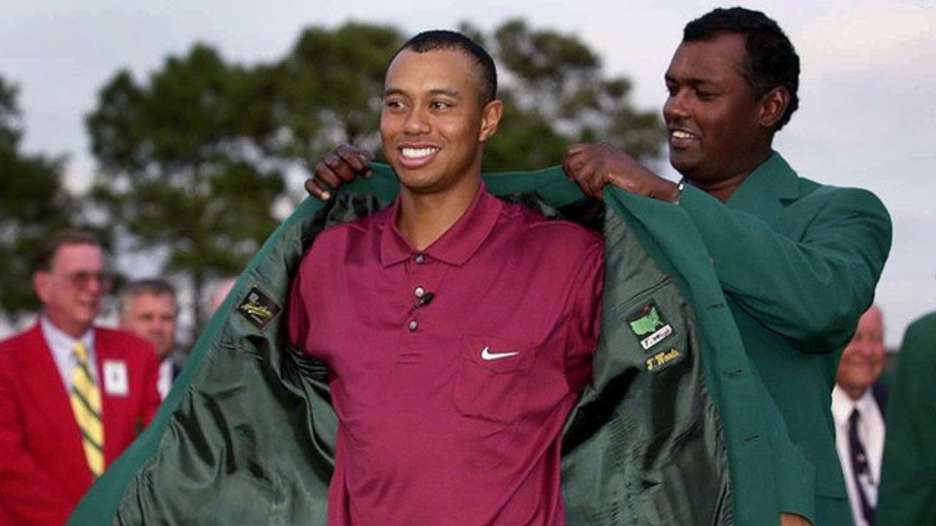
  • Tiger Woods at 40: The 14-time major champion’s legacy

    BBC Sport
    2015-12-30

    Iain Carter, Golf Correspondent


    Masters 2001: Woods seals ‘Tiger’ slam

    Imagine Earl Woods choosing to put a baseball bat rather than a golf club into the hands of young Eldrick, his toddler son.

    How different would golf be if Tiger Woods, who turns 40 on 30 December, had chosen to play something else?

    As the ailing 14-time major champion struggles to swing a club again, he can celebrate this landmark birthday by reflecting that no-one has had a bigger impact on the game…

    …Woods was golf’s poster boy. He was different – a black man in an overwhelmingly white sport – and he became the inspiration for the players who populate the top of the current world rankings.

    “What Tiger Woods has done for golf, I’m not sure anyone would do again,” four-time major champion Rory McIlroy told the BBC.

    “Not just how unbelievably talented he was, but what he stood for, where he came from. He brought a whole new demographic into golf and sort of made golf cool again for kids.”…

    Read the entire article here.

  • The truth is that African Americans are essentially all mixed race. From the beginning, enslaved and other Africans had close relationships with poor and indentured servant whites, that’s one reason why so many black people have Irish last names. During slavery, sexual relationships between enslavers and the enslaved, occurring on a range of coercive levels, were routine. Children born to enslaved women from these encounters were identified as “black.” The one-drop rule—you are black if you have one drop of black blood—was an economic tool used to protect the institution of racialized slavery (by preserving the distinction between two increasingly indistinct racial groups) and enrich the individual enslaver (by producing another human being he could own). Those enslaved children grew up and had children with other enslaved people as well as other whites.

    Lisa Wade, “Why It Was Easy for Rachel Dolezal to Pass as Black,” Pacific Standard, June 15. 2015. http://www.psmag.com/books-and-culture/why-it-was-easy-for-rachel-dolezal-to-pass-as-black.

  • Hairy Paws and Bald Heads: Anxiety and Authority in W. D. Howells’ An Imperative Duty

    American Literary Realism
    Volume 48, Number 2, Winter 2016
    pages 95-111

    James Weaver, Assistant Professor of English
    Denison University, Granville, Ohio

    Intensely concerned with the cultural and personal implications of miscegenation and its resultant social upheaval, W. D. Howells’ An Imperative Duty (1891) documents how late-nineteenth-century racial fears become entangled in the medical discourse of the period. Ultimately a romance that brings together the liberal-minded nerve doctor Edward Olney and the refined but tragically mulatta Rhoda Aldgate, the novel traces the ways in which Olney both contests and affirms a racially and socially conservative point of view. As Michele Birnbaum points out, the novel “narrate[s] the young woman’s coming of age as a medical condition.” We might also see Howells’ novel as the coming-of-age story of its protagonist doctor—a coming of age that relies heavily upon his personal and professional relationship with that young woman. Importantly, we can see Olney’s change over the course of the narrative not just as the expression of his developing love for Aldgate but as the incremental recovery of his professional identity. Despite the personal transformations Olney experiences during the course of Howells’ novel, his professional transformation emerges as the more accurate index of Olney’s attitude toward issues of race and class. As Olney assumes a democratic openness toward Aldgate’s “taint” of dark ancestry, he also assumes a medical authority that transforms his romance with her into a doctor-patient relationship. That relationship is further predicated on Olney’s lingering anxieties over his medical authority and economic stability as well as on a troubling erasure of Aldgate’s racial identity. Reading An Imperative Duty in light of such influential contemporary medical texts as S. Weir Mitchell’s Doctor and Patient and George M. Beard’s American Nervousness, then, enables us to see Olney’s transition from nervous doctor to nerve doctor—a distinction that, however coy, aptly indicates how Howells’ hero-doctor is able to “cure” not only his and Aldgate’s racial anxieties but also his own nagging fears about his social, cultural, and medical authority.

    Recent criticism of Howells’ novel has usefully explored the ways in which it engages with the racial discourse of the time, as critics have tried to assess the race politics ultimately articulated by Howells. Many of those essays have situated An Imperative Duty against the backdrop of U.S. immigration debates and concerns over citizenship; in dialogue with developments in realist aesthetics and American pragmatism; or in relation to the tradition of passing novels, the trope of the tragic mulatto, and late-nineteenth-century fears about miscegenation. In this essay I’d like to frame my analysis of An Imperative Duty and Dr. Olney against a different cultural backdrop: the rise of “nervous diseases” and the corresponding efforts in the American medical community to organize professionally and consolidate power and privilege through its possession of scientific knowledge. By folding this consideration of Dr. Olney’s professional identity into our larger understanding of Howells’ novel, I hope to illuminate the ways in which the racial and medical discourses of the novel intersect with and reinforce one another, reasserting an entrenched white male privilege despite initially seeming to question those avenues of power.

    Before I turn to Howells’ novel, though, let me contextualize that analysis by rehearsing in general terms the late-nineteenth-century medical discourse regarding neurasthenia and by outlining the power relations embedded in the diagnosis and treatment of the disease. George M. Beard first employed the term “neurasthenia” to describe a state of nervous exhaustion in an 1869 speech to the New York Medical Association. A Yale graduate and two-year veteran of the Union navy’s medical staff during the Civil War, Beard finished his medical degree at New York’s College of Physicians in 1866 and almost immediately began a focused study of nervous diseases that culminated in his 1881 text American Nervousness, his most comprehensive treatise on neurasthenia, its causes and effects, and its national significance. In that text, Beard argues against a faculty psychology interpretation of nervousness, contending that the term does not indicate “unbalanced mental organization” or “a predominance of the emotional” but rather “a lack of nerve-force.” As he writes, “Nervousness is nervelessness.” For Beard, neurasthenia was thus a strictly…

    Read or purchase the article here.
  • Racial Fictions and the Cultural Work of Genre in Charles W. Chesnutt’s The House Behind the Cedars

    American Literary Realism
    Volume 48, Number 2, Winter 2016
    pages 128-146

    Melissa Asher Rauterkus, Assistant Professor of English
    University of Alabama, Birmingham

    I intend to record my impressions of men and things, and such incidents or conversations which take place within my knowledge, with a view to future use in literary work. I shall not record stale negro minstrel jokes, or worn out newspaper squibs on the “man and brother.” I shall leave the realm of fiction, where most of this stuff is manufactured, and come down to hard facts.

    Charles W. Chesnutt, 16 March 1880, The Journals of Charles W. Chesnutt

    Fifteen years of life in the South, in one of the most eventful eras of its history; among a people whose life is rich in the elements of romance; under conditions calculated to stir one’s soul to the very depths;—I think there is here a fund of experience, a supply of material. . . . [I]f I do write, I shall write for a purpose. . . . The object of my writings would be not so much the elevation of the colored people as the elevation of the whites.

    Charles W. Chesnutt, 29 May 1880, Journals of Chesnutt

    In a pivotal scene in The House Behind the Cedars (1900), Judge Straight and John Warwick, the formerly black office boy turned white attorney, discuss the legal loopholes that permit his racial passing. Pleased to see his old disciple, but afraid that John’s stay in Patesville will compromise his new identity, Straight reminds John that “custom is stronger than law” and in matters of race “custom is law.” Alluding to the legal technicality that makes John a white man in South Carolina (where race is determined by reputation and social standing) but a black man in North Carolina (where race is defined by fractions of blood), Straight suggests that when it comes to the color line, the cultural fictions we create (as in the one-drop rule) ultimately organize our reality. In many respects, this critical observation sits at the center of the novel’s racial critique, opening up into a broader analysis of the relationship between the fictiveness of race and fiction in a more literal sense. Exploring the subject of racial passing through the lenses of realism and romance, the text issues a complex metaliterary statement that articulates how generic traditions and conventions produce racial identities.

    That genre is tangled up in the novel’s deconstruction of race suggests that literary traditions and their conventions can in fact perform important cultural work. In some ways, the novel’s greatest realist achievement is its insistence that popular fiction can be deployed to bring about social and literary change. In the epigraphs that begin this essay, Chesnutt expresses his desire to use fiction as a means to initiate an ethical and moral revolution to eradicate racism. The first passage promises a more realistic approach while the second one highlights the romantic quality of black life, suggesting that it might provide the ideal material for socially conscious fiction; that is, documenting the unbelievably horrific conditions under which most black people suffer may be the single most effective strategy for softening white people’s feelings towards blacks and stamping out racial injustice. In The House Behind the Cedars, Chesnutt combines both perspectives, playing out the story of racial passing along generic lines to demonstrate the power of fiction to alter the social and literary landscape.

    In what follows, I offer a metaliterary critique of the novel’s textual complexity, calling specific attention to the racial uses of genre. In a series of close readings, I explore the at times puzzling and seemingly contradictory aspects of a novel whose formal intricacies have not yet been fully acknowledged or evaluated. Focusing on three major developments that stand at the center of the novel’s subtly ironic deconstruction of race—the opening sequence, the tournament, and the fatal conclusion in the swamp—I investigate how Chesnutt and his characters marshal the discourses of realism and romance to manipulate the fictions of race. Accentuating the ways in which they use genre as a tool to reinvent their racial identities, I want to underscore the connections between literary fictions and racial fictions. By working through these connections, I seek to bring into greater relief the generic significance of Chesnutt’s…

    Read or purchase the article here.