Mixed Race Studies

Scholarly perspectives on the mixed race experience.

    • About This Site
    • Bibliography
    • Contact Information
    • Date and Time Formats
    • Forthcoming… (Updated 2021-09-01)
    • Likely Asked Questions
    • List of Book Publishers
    • List of Definitions and Terms
    • My Favorite Articles and Papers
    • My Favorite Posts
    • My Recent Activities
    • Praise for Mixed Race Studies
    • Tag Listing
      • Tag Listing (Ordered by Count)
    • US Census Race Categories, 1790-2010
    • 1661: The First ‘Mixed-Race’ Milestone
    • 2010 U.S. Census – Some Thoughts

recent posts

  • The Routledge International Handbook of Interracial and Intercultural Relationships and Mental Health
  • Loving Across Racial and Cultural Boundaries: Interracial and Intercultural Relationships and Mental Health Conference
  • Call for Proposals: 2026 Critical Mixed Race Studies Conference at UCLA
  • Participants Needed for a Paid Research Study: Up to $100
  • You were either Black or white. To claim whiteness as a mixed child was to deny and hide Blackness. Our families understood that the world we were growing into would seek to denigrate this part of us and we would need a community that was made up, always and already, of all shades of Blackness.

about

  • Twitter
  • Facebook
  • Instagram
  • No white person, no non-Black person, has the right to claim proximity to or belonging in a Black community by virtue of abuse, trauma, non-acceptance, and non-belonging in a white community.

    2020-09-12

    No white person, no non-Black person, has the right to claim proximity to or belonging in a Black community by virtue of abuse, trauma, non-acceptance, and non-belonging in a white community. The abuse within and alienation from my birth family and society are no one’s burden but my own, and mine alone to address. Black people and Black communities have no obligation to harbor the refuse of non-Black societies. I have done this. I know it is wrong and I have done this anyway.

    Jessica A. Krug, “The Truth, and the Anti-Black Violence of My Lies,” Medium, September 3, 2020. https://medium.com/@jessakrug/the-truth-and-the-anti-black-violence-of-my-lies-9a9621401f85.

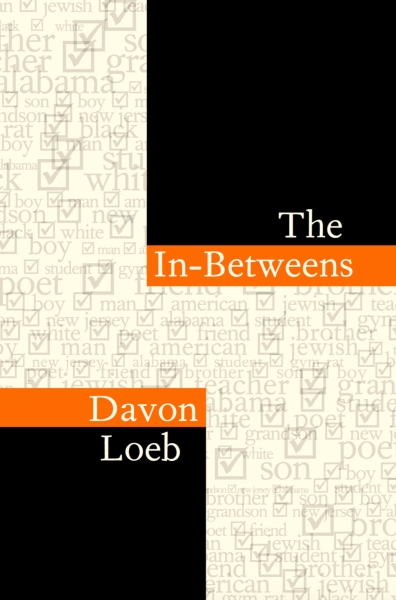
  • The In-Betweens: A Lyrical Narrative

    2020-09-12

    The In-Betweens: A Lyrical Narrative

    Everytime Press
    2018-12-10
    202 pages

    Davon Loeb

    Beginning with the challenges of how his White father and Black mother met, with their desire “to run away and start fresh and new”—resulting in a sometimes “pretend family”—to a near-archetypal description of his grandfather having just cut the grass as the author watches with a swollen lip and a black eye, to incessant moments in which different expressions of masculinity get inculcated, in The In-Betweens: A Lyrical Narrative Davon Loeb frequently captures the disturbing poesy of life growing up. With painstaking detail, Loeb revisits family tales of slavery, Alabama, domestic labor, church, cornrows, and the significance of studying one’s history, specters that continue to haunt him. This work is in the vein of James McBride’s The Color of Water, Justin Torres’s We the Animals, and Jamaica Kincaid’s Annie John, that is, work in which we learn about hardship from the perspective of the child. Confession, manifesto, bildungsroman, and prayer, The In-Betweens is a meditation on bruise and healing. Loeb’s struggles become snapshots of how transformation occurs even where shards have been piled, where one waits “for something to happen, like flashes of red and blue sirens pulsing.” A truly extraordinary new voice!

    ~ Roy G. Guzmán, author of Restored Mural for Orlando

  • Are We Home Yet?

    2020-09-12

    Are We Home Yet?

    Jacaranda Books
    2020-09-10
    Paperback ISBN13: 9781913090197

    Katy Massey

    One of Jacaranda’s #TwentyIn2020, Are We Home Yet? is a moving memoir of a mixed-race woman from a working class community in Leeds and her outspoken French-Canadian mother. Exploring issues of shame, immigration and class, the pair share their stories but struggle to understand each other’s choices in a fast-changing world.

    Spanning the years from 1935 to 2010, Are We Home Yet? is the moving and funny story of a girl and her mother.

    As a girl, Katy accidentally discovers her mother is earning money as a sex worker at the family home, rupturing their bond. As an adult, Katy contends with grief and mental health challenges before she and her mother attempt to heal their relationship. From Canada, to Leeds and Jamaica, and exploring shame, immigration and class, the pair share their stories but struggle to understand each other’s choices in a fast-changing world.

    By revealing their truths, can these two strong women call a truce on their hostilities and overcome the oppressive ghosts of the past?

  • Instead, it’s because he was born mixed-race, on a Georgia plantation, to a wealthy Irish father who looked after his welfare and paid tuition for several children to attend Catholic schools, that the brilliant Patrick Healy could become the Jesuit university’s most celebrated President.

    2020-09-12

    Had [Patrick Francis] Healy been born in Maryland, he could have been sold along with the 272 individuals Georgetown [University] President Thomas Mulledy sold in 1838. Instead, it’s because he was born mixed-race, on a Georgia plantation, to a wealthy Irish father who looked after his welfare and paid tuition for several children to attend Catholic schools, that the brilliant Patrick Healy could become the Jesuit university’s most celebrated President. The black lives held in bondage by the Jesuits in 1838 did not matter to Mulledy. Healy and his brothers, however, did matter to him.

    Bryan Greene, “Born Enslaved, Patrick Francis Healy ‘Passed’ His Way to Lead Georgetown University,” Smithsonian Magazine, September 8, 2020. https://www.smithsonianmag.com/history/born-enslaved-patrick-francis-healy-passed-his-way-lead-georgetown-university-180975738/.

  • Interracialism: Biracials Learning About African-American Culture (B.L.A.A.C.)

    2020-09-12

    Interracialism: Biracials Learning About African-American Culture (B.L.A.A.C.)

    YouTube
    2020-04-09

    Dr. Zebulon Miletsky, Associate Professor of Professor of Africana Studies and History
    State University of New York, Stony Brook

    ‘Interracialism: Biracials Learning About African American Culture (B.L.A.A.C.)’ with Dr. Zebulon Miletsky. February 19th 4:00PM-5:30PM Melville Library, Central Reading Room, Stony Brook University.

    A discussion of #interracialism and #interracialmarriage, and the phenomenon of “#antiblackness”—identity and #mixedrace in the 21st century, and the possible stakes for those who identify as multiracial and biracial—in these politically divided times.

    Watch the video (01:08:02) here.

  • Born Enslaved, Patrick Francis Healy ‘Passed’ His Way to Lead Georgetown University

    2020-09-11

    Born Enslaved, Patrick Francis Healy ‘Passed’ His Way to Lead Georgetown University

    Smithsonian Magazine
    2020-09-08

    Bryan Greene
    Washington, D.C.


    Because the 19th-century college president appeared white, he was able to climb the ladder of the Jesuit community

    This back-to-school season, as the coronavirus pandemic demands continued social distancing, many college students are logging onto their classes remotely. While the country fights this public health crisis on one front, it fights the ongoing effects of systemic racism on another, and the battle is joined on America’s college campuses, where skyrocketing tuition costs, debates over academic freedom, and reckonings with the legacies of institutional racism come together.

    The University of North Carolina, for instance, has had to tackle both crises this summer, as it shuttered dorms and sent students home after Covid-19 cases spiked soon after opening. In July, administrators approved guidelines for renaming buildings that currently honor North Carolinians who promoted the murderous 1898 overthrow of Wilmington’s elected multiracial government. In June, meanwhile, Princeton acceded to longstanding demands to strip Woodrow Wilson’s name from its public policy school, since his most notorious public policy as President of the United States was to segregate the federal workforce. Following the Minneapolis police killing of George Floyd, an ever-widening circle of students on campuses nationwide are re-examining their institutions’ unquestioned genuflection to their white-supremacist heritage.

    But at Georgetown University, students, faculty, alumni, and administration have been re-appraising the school’s racist past for years. In 1838, when the Jesuit school was deep in debt, its president, Reverend Thomas F. Mulledy, on behalf of the Maryland Jesuits, sold 272 black men, women and children to Louisiana plantations to keep the school afloat. Three years ago, Georgetown pulled Mulledy’s name off a dormitory, replacing it with the name of enslaved laborer Isaac Hawkins. Georgetown will now consider applicants who are descendants of these enslaved persons in the same light as the children of faculty, staff and alumni for purposes of admission.

    What makes Georgetown’s reflective moment most remarkable, however, and complicated, is that 35 years after Mulledy salvaged the school’s finances by selling human property, the school would be led by a man who, himself, was born enslaved. The story of Georgetown president Reverend Patrick Francis Healy reveals how a university built by enslaved persons, and rescued from collapse by the sale of enslaved persons, saw its “second founding” in the late 19th century under the guidance of a man whom the Jesuits knew had been born black but helped “pass” as white…

    Read the entire article here.
  • The Black Violinist Who Inspired Beethoven

    2020-09-11

    The Black Violinist Who Inspired Beethoven

    The New York Times
    2020-09-04

    Patricia Morrisroe


    The violinist George Bridgetower has, like so many other Black artists, been largely forgotten by a history that belongs to those who control the narrative. The Trustees of the British Museum, via Art Resource, NY

    George Bridgetower, the original dedicatee of the “Kreutzer” Sonata, was a charismatic prodigy but faded into history.

    Six months after Beethoven contemplated suicide, confessing his despair over his increasing deafness in the 1802 document known as the Heiligenstadt Testament, he was carousing in taverns with a charismatic new comrade, George Polgreen Bridgetower. This biracial violinist had recently arrived in Vienna, and inspired one of Beethoven’s most famous and passionate pieces, the “Kreutzer” Sonata.

    Beethoven even dedicated the sonata to Bridgetower. But the irritable composer — who would later remove the dedication to Napoleon from his Third Symphony — eventually took it back.

    While Napoleon didn’t need Beethoven to secure his place in history, this snub reduced Bridgetower to near obscurity. Though his name was included in Anton Schindler’s 1840 biography of Beethoven, he was described inaccurately as “an American sea captain.” Like so many Black artists prominent in their lifetimes, he has been largely forgotten by a history that belongs to those who control the narrative.

    Bridgetower was born on Aug. 13, 1778, in eastern Poland, and christened Hieronymus Hyppolitus de Augustus. His father, Joanis Fredericus de Augustus, was of African descent; his mother, Maria Schmid, was German-Polish, making Bridgetower what was then known as a mulatto, a person of mixed race. (The poet Rita Dove’s 2008 book “Sonata Mulattica,” an imagined chronicle of Bridgetower’s life, has helped raise his profile a bit in recent years.)…

    Read the entire article here.

  • There is something specifically traumatic about listening to your own parent expressing prejudiced views against people who look like you, and denying or trivialising your existence.

    2020-09-11

    There is something specifically traumatic about listening to your own parent expressing prejudiced views against people who look like you, and denying or trivialising your existence. Unlike arguing with a stranger, it’s almost impossible to completely disregard their opinion. Often, we can’t help but care what they think. No matter how old we get, there exists in most of us a small child that still longs for validation from our parents. Accordingly, their words can shatter whatever anti-racism defences we have spent years carefully constructing. This isn’t simply a matter of overlooking political differences, it is deeply personal. As Pauline tells me, her mother’s “complete lack of empathy and eagerness to learn from her own child” is what she finds most hurtful.

    Emma, “‘My mum calls me the N-word’ – the reality of growing up mixed race with a racist parent,” gal-dem, September 5, 2020. https://gal-dem.com/my-mum-calls-me-the-n-word-the-reality-of-growing-up-mixed-race-with-a-racist-parent/.

  • Jessica Krug and the theft of Black Latina identity.

    2020-09-11

    Jessica Krug and the theft of Black Latina identity.

    Daily Kos
    2020-09-05

    Denise Oliver Velez


    Professor Jessica A. Krug, a white woman from Kansas, who has been passing herself off as an Afro-Latina
    Professor Jessica Krug, panelist, Diasporic Politics panel Institute for Research in African-American Studies (IRAAS) 25th Anniversary Conference, Friday , Columbia University, April 26, 2019

    We all know what identity theft is, in a world filled with cyber crimes. We’ve all watched horror films with body snatchers as the main villains. Things become far more complicated when we address the issue of humans who, for a host of warped reasons, assume a false racial or ethnic identity.

    Such is the case of Professor Jessica A. Krug, who is currently an Associate Professor of African American history at George Washington University. Krug has for years portrayed herself as Black, and Afro-Latina, while publishing her academic work, receiving grant funding, teaching and also acting as a Afro-Latina political activist from the Bronx under the pseudonym “Jess La Bombalera,” all the while hiding her real self — a white woman from Kansas City.

    Her exposure as a fraud, has unleashed a firestorm of pushback on social media and in academia, similar to the exposure of black-passing Rachel Dolezal in 2015…

    Read the entire article here.

  • ‘My mum calls me the N-word’ – the reality of growing up mixed race with a racist parent

    2020-09-11

    ‘My mum calls me the N-word’ – the reality of growing up mixed race with a racist parent

    gal-dem
    2020-09-05

    Emma

    Being a person of colour with a white parent who holds racist views is more common than you might think. Emma explores the emotional trauma of being brought up in a racist home.

    A few days after the tragic death of George Floyd, when Americans took to the streets in righteous anger, my dad condemned the protests, remarking that Black people should be less afraid of the police and more so of “blacks with guns in inner cities”. Unsurprisingly, this unsavoury conversation escalated. My dad, as you might guess, is white, but I am not. Not for the first time, I was left wondering how, as a mixed race Black woman with a socially conservative white father, I reconcile with the fact that my dad might be racist?

    The current racial climate has led to many people having difficult conversations about race with their families, often for the first time. Social media has been awash with handy tips and tricks for instigating conversations with uninformed family members. Instagram swipe-through posts with titles like “How to tell someone you love that they’re being racist” and “Nine counter-arguments to use against your conservative parents” ad infinitum have proliferated.

    This is all well and good for white people. But what happens when the white parent in question has a Black child? Mixed race families are sometimes heralded as the ultimate antidote to racism, and a signifier of racial progress – but the reality is often far more complex. Family setups like mine are often difficult to navigate and can produce emotionally challenging situations. While the sense of urgency and pressure to educate friends and family generated by the Black Lives Matter movement is incredibly important, it can put mixed race people in an uncomfortable position. How do you balance the obligation to educate a white parent who holds racist views while protecting your own mental health?…

    Read the entire article here.

Previous Page
1 … 99 100 101 102 103 … 1,428
Next Page

Designed with WordPress