• More metro Atlantans say they’re multiracial: Fast-growing segment represents a cultural shift that’s nationwide

    Atlanta Journal-Constitution
    2011-09-03

    Bo Emerson

    When Evelyn Brown-Wilder was growing up in Tuscaloosa, Ala., in the 1950s, life was a matter of warring opposites. Though some of her ancestors were white and her face was pale, the law said she was black. She wrapped both arms around that identity.

    Her daughter, Sonya Colvin-Boyd, lives in a different world and chooses a different identity. When it came time for Colvin-Boyd to indicate her race on her 2000 U.S. census form, she picked both white and black. “We’re all mixed,” said the Powder Springs resident.
     
    Claiming both races puts her in one of the fastest-growing segments of America’s population. It’s a trend that reveals seismic shifts in both outward social and cultural relations and inward notions of individual identity.
     
    Across metro Atlanta’s counties, the last decade saw a doubling or tripling of the number of people identifying themselves as being of more than one race, according to the Census Bureau. In Gwinnett County, the number of respondents checking two or more races rose from 12,673 in 2000 to 25,292 in 2010, a 99 percent jump. In Fulton County, the number rose from 11,853 to 20,279, a 71 percent increase. In Henry County, the numbers went up 269 percent…

    …Yet mixed ancestry is a matter of fact for most Americans whose ancestors include people from Africa; they operate in a world of gradations where skin color sometimes determines status. “A lot of darker-complected blacks saw it as the ‘house Negro’ syndrome versus the ‘field Negro’ syndrome,” said Troy Gordon, 42, who teaches elementary school in Lithonia. Gordon is a copper-skinned mix of African-American and American Indian, and his light skin drew “flak” when he was younger.
     
    He knew, growing up, that “black” was a whole range of colors, from his white great-grandmother, to his “paper-sack brown” aunt and his green-eyed, red-haired uncle. “I was black,” said Gordon, “but you’d see family pictures and say, ‘Wow, who’s this white lady?’”
     
    Such conversations were limited back then. Today, there are many more talks about their multiracial heritage with his light-skinned 4-year-old son Chase. Chase’s mother is white, and he considers himself white, though he pronounces it “wipe.”…

    Read the entire article here.
  • Generation, Degeneration, Miscegenation

    Intstitute for Research on Women
    IRW Distinguished Lecture Series 2011-12: (De)Generations: Reimagining Communities
    Rutgers University
    Thursday, 2012-04-12
    (16:00 EDT reception; 16:30 EDT lecture)

    César Braga-Pinto, Associate Professor of Brazilian Studies
    Northwestern University

    Focusing on the cases of Brazil and the U.S., this presentation proposes to articulate the role played by gender representations in debates around miscegenation in the turn of the 19th to the 20th century. Generation, understood in its vertical, genealogical, reproductive aspect is one of the most contested issues in the late 19th century both in Brazil and the U.S., and it is always haunted by miscegenation and the threat of degeneration. This paper aims to understand how horizontal calls for the formation of a new generation (in the sense of brotherhood, nationality, contemporaneity and intellectual-literary communities) in the beginning of the 20th century struggles to resolve the pessimism associated with mixed-race subjects and communities.

    For more information, click here.

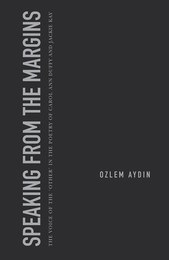
  • Speaking from the Margins: The Voice of the ‘Other’ in the Poetry of Carol Ann Duffy and Jackie Kay

    Academica Press
    2010-06-15
    124 pages
    Trim Size: 6 x 9
    Cloth ISBN: 978-1-933146-92-8/ 1933146-92-3

    Özlem Aydin

    Speaking from the Margins: The Voice of the ‘Other’ in the Poetry of Carol Ann Duffy and Jackie Kay studies Carol Ann Duffy and Jackie Kay as poets who identify and represent some key forms of “otherness” may take in the British society of the 1980s and the 1990s. Indeed, although Duffy’s poetry is political and concerned with the British society of the 1980s and the 1990s, particularly with the condition of the underprivileged and people pushed to the margins of society as a result of Thatcherite policies, criticism of her poetry is more concerned with her feminist representation of gender in her work. Thus, it is important that her poetry of the 1980s and the 1990s is recognised as a poetry of the “other” as Duffy in this poetry gives specifically a panorama of Thatcherite Britain through the voice of the “other”. Similarly, this thesis analyses Jackie Kay’s poetry as a poetry which is critical not only of Britain but also is particularly concerned with the condition of the racial and the sexual other in the 1980s and the 1990s Britain. Although “The Adoption Papers” has often been discussed and analysed mostly by focusing on the issues of identity and adoption, “Severe Gale 8”, the sequel to “The Adoption Papers”, Other Lovers and Off Colour have not been the focus of much academic study from the aspect of the voice given to the racial and the sexual other.

    This research monograph studies Jackie Kay and Carol Ann Duffy as poets representing the voice of the “other” in the 1980s and the 1990s British society because there is a considerable lack of criticism on this particular aspect of their poetry. The works of these two poets are part of contemporary British poetry in which as Kennedy puts it “the heterogeneity of the ‘ex-centric’, the marginal and the peripheral is raided in order to revitalise and refurbish the homogeneity of the centre. Diversity is used to underwrite a new uniformity” (“Mapping Value”).

    • Introduction
    • Overview of the 1980s and the 1990s poetry scene in the United Kingdom given to serve as a background framework for the poetry of the two poets under study.
    • Part I: The Voice of the “Other” in the Poetry of Carol Ann Duffy
      • After a brief introduction to the social and economic background of contemporary British society and its impact on the poetry of the 1980s and the 1990s, the voice of the “other” in selected poems of Carol Ann Duffy from her poetry collections Standing Female Nude (1985), Selling Manhattan (1987), The Other Country (1990) and Mean Time (1993) will be studied in Chapter I.
    • Part II: The Voice of the “Other” in the Poetry of Jackie Kay
      • The poetry of Jackie Kay from The Adoption Papers (1991), Other Lovers (1993) and Off Colour (1999) are studied closely with respect to the racial and sexual “other” she represents concerning the voice of the other in society.
    • Conclusion
      • The study of the relevantly selected poetry of Carol Ann Duffy and Jackie Kay shows that Duffy, through her use of the dramatic monologue, and Kay, by using her own experiences present the voice of the “other” in their poetry. Duffy gives voice to the outcasts in the society such as the criminal, the mentally ill, the rejected, the silenced, the marginalized, the unemployed and the immigrant, and Kay herself already an “other” as a black girl adopted and raised by a Scottish family deals with racial issues, racial and sexual otherness in contemporary Britain. Both Duffy and Kay have their poetry represent the contemporary Britain through the experience and voice of the “other”.
  • Race, Racism, and Multiraciality in American Education

    Academica Press
    2006
    504 pages
    Trim Size: 6 x 9
    Paper ISBN: 1-933146-27-3

    Christopher Knaus, Associate Professor of Education
    California State University, East Bay

    This research monograph analyses and describes how multiracial undergraduates have come to think about race and racism. The work begins with an overview of the problem of race and racism in education, then discusses the way in which race is typically construed along a continuum of mono-racial thinking( a surprisingly inept conceptualization given the increasing birth rates of mixed or multiracial school populations). The text is then split into seven distinct case studies based on individuals with multiracial, multicultural and ambiguous racial identities and their K-12 experience. Since this work is part of a growing field of research that incorporates a critical analysis of race and racial identity theory it also moves the discussion into areas of multiracial experience and concludes with analysis of higher education’s role in developing awareness of the dynamics and suggestions for practioners in helping the student navigate the question “ What are you?” in a society so long divided along traditional color lines.

  • ASEM 2535: The Multiracial Individual

    The Womens College, University of Denver
    Fall Quarter, 2011

    Arthur C. Jones, Clinical Professor and Chair of Culture and Psychology

    From the beginning of its history, the United States has always been a place where bi-ethnic and bi-racial romantic alliances have been common, producing children with multi-ethnic and multi-racial roots. This was inevitable in a country that evolved as an international “melting pot,” including Native American peoples, enslaved Africans, and successive waves of immigrants and refugees from around the world. Yet, it was not until the year 2000 that the U.S. Census included a category that allowed respondents to indicate a bi-racial or multi-racial heritage/identity. This course will explore the historical racial tensions in the U.S. that have made it difficult to acknowledge the reality of multi-racial peoples in its midst, and will trace the trends in culture and national consciousness that made it possible for a change to occur in the 2000 Census. We will survey the varying ways in which multiracial people have been regarded by the larger society in different social contexts, as well as the ways in which the sociological, psychological, and political dynamics of multiracial identity have changed over time, and have impacted the experience of multiracial people themselves. Finally, we will examine the contemporary social and psychological dynamics of race and ethnicity in the U.S., including the continuing controversy surrounding the very idea of a multiracial identity.

    For more information, click here.

  • Taste, Manners, and Miscegenation: French Racial Politics in the US

    American Literary History
    Volume 19, Issue 3 (2007)
    pages 573-602
    DOI: 10.1093/alh/ajm025

    Robert Fanuzzi, Assistant Chair and Associate Professor of English
    St. Johns University, Queens, New York

    A prequel:

    A French gourmand, in flight from political turmoil at home, arrives in post-Revolutionary America with a taste for satire, a Rabelaisian eye for folly, and a gargantuan appetite for turkey. Journeying from the Francophone enclave of Philadelphia to the “backwoods” of Hartford, he enjoys the hospitality of a Mr. Bulow, “a worthy old American farmer,” and his “four buxom daughters, for whom our arrival was a great event” (Brillat-Savarin 77). Having charmed his hosts, he enjoys still more success as a member of their shooting party, bagging the prize turkey for “sport.” Afterwards, the gourmand makes sport of one of the most widely noted mannerisms of Americans, the childlike but grating chauvinism for their nation that stops every conversation in its tracks. True to form, his American host foregoes the customary bon voyage wishes in order to drill into his departing guest the national creation myth. His own well-tended estate, he reminds his French visitor, pays eloquent tribute to the providential system of mild laws and low taxes that has rewarded the labor of self-sufficient yeomen like him. He means to leave his listener with the thrilling prospect of continual, self-perpetuating prosperity, but all the gourmand has heard is a steady droning in his ear. “I was thinking,” he recalls as he rode away, “of how I would cook my turkey” (81).

    In The Physiology of Taste (1825), an eccentric philosophical treatise on cookery, cuisine, and conviviality, Jean-Anthelme Brillat-Savarin made quick work of the Americanist commentary that so many of his fellow travelers inscribed into their narratives of North American travel. The most well known of these French travel writers, Jean de Crevecoeur and Alexis de Tocqueville, used their narratives to generate the synthetic, formalized images of democracy—the pervasive equality of condition; the assimilation …

    Read the entire article here.

  • Review: ‘Spit Back a Boy’ by Iain Haley Pollock

    BuzzleGoose.com
    2011-09-01

    Nick Defina

    A student of MIT once remarked that attending that particular institution as an undergraduate was much like taking a drink of water from a firehose. The same could be said about reading Iain Haley Pollock’s collection of blistering poems, selected by Elizabeth Alexander as winner of the Cave Caanem Award, and graced with the outlandish title of Spit Back a Boy. Pollock’s main concern with his poems seems to be the sharp, undeniable close-knittedness of family and race, and the demanding, life-long connotations those two ideas carry with them.

    …The closing poem (in my opinion one of the strongest in the collection) starts out bitter and distant, yet miraculously Pollock becomes grounded by the very skin he so longed to shed. After growing up in a world of black and white, with Pollock caught in his own private purgatory of mixed-race chaos, he comes to understand that people are not as short-sighted as they used to be. People, in the end, are not as self-absorbed and clueless as they seem…

    Read the entire review here.

  • An Interview with UW’s Lynet Uttal: Making the Asian American experience visible through learning

    Asian Wisconzine
    Volume 7, Number 9 (September 2011)

    Heidi M. Pascual

    Part 1 of 2

    It was “quite an accident of fate” that Lynet Uttal became the director of the  University of Wisconsin-Madison’s Asian American Studies Program. Although Uttal has been a faculty affiliate of Asian American Studies since 2003, she never considered being in that position.

    “I was in Mexico on sabbatical when I received an email from then director Leslie  Bow asking me if I would consider being the next director,” Uttal said in an interview with Asian Wisconzine. “Although I teach about Asian Americans in my courses, yet I never considered myself as doing research about Asian Americans or being part of the field of Asian American Studies.”

    Four years into her position, Uttal has loved her work as she learned the importance of the program in terms of education offering and how it also helps her grow professionally.

    “I love being the director of the Asian American Studies Program because the program is very important for the mission of the University as well as for my own professional growth as a race scholar,” she explained. “I have grown in the last four years to believe that the Asian American Studies Program is important because Asian Americans are a racialized group in the United States that is invisible in the practices and understanding of race in the the United States. For example, although it was Asian American graduate students who were extremely active in creating all of the ethnic studies programs and ethnic studies requirement at the University of Wisconsin-Madison, very little has been done to acknowledge their activism and contributions.  Yet, Asian Americans have a history in U.S. society parallel to African Americans in terms of having experienced legal exclusions and discrimination on the basis of race.”

    Uttal has a mixed racial, cultural and national background, with a Japanese American mother and a Russian American Jewish father, but according to her, neither of these cultures (which were not mainstream Euro-American) was used to create a sense of ethnic identity in her parents’ home.

    “My mother is a Japanese American who grew up in Japan from age 9-23 years and returned to the U.S., almost as if she were a Japanese immigrant,” Uttal said.  “She raised my two sisters and me to think of ourselves as American, because according to Japanese standards we certainly were not Japanese.  But we also were not Japanese American.  The cultural and socialization values in the home I grew up in reflected my Japanese grandparents’ values as well as my mother’s transnational identity ideas, and also father’s upbringing as a Russian American Jewish father.”…

    Read the entire article here.

  • The Invitation That Never Came: Mary Seacole After the Crimea

    History Today
    Volume 55, Issue 2 (2005)

    Helen Rappaport

    Helen Rappaport on Queen Victoria, Florence Nightingale and the Post-Crimean War reputation of the woman recently voted ‘greatest black Briton’: Mary Seacole.

    In the summer of 1856, after the last British troops had made their weary journey home from the Crimea at the end of hostilities, there were numerous public celebrations to mark the end of what had been a bitter and difficult campaign. Among those welcomed back was a stout, middle-aged Jamaican widow, whose familiar nom de guerre – ‘Mother Seacole’–had become legendary during the sixteen months she had been in the Crimea. But it wasn’t just the troops who held her in high regard; their families too had come to hear of her exploits—as nurse, cook and sutler—in all the newspapers. Mary Seacole (c.1805-81) was by no means unique in her native skills as a nurse and doctress. She came from a long line of Creole women trained in the herbal arts, many of whom had been integral to the care of sick slaves on the British plantations. Traditional, too, was the combination of the professions of doctress and lodging-house keeper, which Mary had pursued in Kingston until the early 1850s. Here she had earned a reputation for the care of sick British army and naval officers and their wives. She had then run a provisioning business and a succession of boarding houses in the Panamanian Isthmus during the Gold Rush years of the early 1850s, where her medical skills had frequently been called upon, particularly in the treatment of yellow fever. Not content with this adventure, the intrepid Seacole had then taken her freelance nursing skills and business enterprise to the war in the Crimea, after being turned down as an official nurse by the War Office, most probably on racial grounds. At her ramshackle ‘British Hotel’ at Spring Hill outside Balaclava, her Creole herbal decoctions to fight the scourge of camp life–enteric disease–were much in demand. She became legendary for her fearlessness under fire, often riding to the frontlines to offer help and sustenance to the wounded, and returned to England armed with testimonials to her good works. These had already been brought to the public’s attention by The Times correspondent W.H.Russell, who in September 1855 had reported how ‘in the hour of their illness’ men from the Army Work Corps in particular, had ‘found a kind and successful physician’ in Seacole, who ‘doctors and cures all manner of men with extraordinary success’. Such sentiments were echoed in letters and journals by the troops themselves, all commending Seacole’s unstinting service to the sick, whom she often treated gratis, as well as her ‘bountiful kindness’, her good humour and the prodigious energy with which she boiled up dozens of plum puddings during the Crimean Christmas of 1855. At a ‘Dinner to the Guards’ held at the Royal Surrey Gardens in August 1856, Mary Seacole had been a guest of honour, ‘conspicuous among the fair visitors in the upper side gallery’, according to the News of the World, ‘whose dark features were quite radiant with delight and good humour as she gazed on the pleasant scene below’. So rapturous was the welcome she was given, reported The Times, as a group of soldiers ‘chaired her around the gardens’, that two burly sergeants had to rush forward to protect Mary from the crush of the 20,000 people trying to get a look at her. In July 1856 The Times announced that ‘copies of an admirable likeness of the MOTHER of the British ARMY’ were now on sale at the Royal Polytechnic Institution in Regent Street, priced 5s., 10s. and £2 2s. Taking into account all the public acclaim accorded Seacole after her return, as a nursing heroine of the Crimean conflict like Florence Nightingale, one might have thought she would be deemed worthy of her monarch’s commendation and certainly of a personal audience with the Queen at Windsor. But such an invitation never came. Its absence is particularly puzzling given Queen Victoria’s curiosity about her black and Asian colonial subjects. For, when it came to issues of race, class and religion the Queen had very determined and, for her times, unconventional views. In particular, she appeared immune, if not ‘colour blind’, to the preconceived ideas of her peers about racial inferiority–priding herself that she always judged individuals on their merits alone…

    Read the entire article here.

  • Professor: Racial categorization remains necessary in Census

    Medill Washington
    Medill News Service
    Medill School, Northwestern University
    2011-08-08

    Angie Chung

    WASHINGTON—Does where we come from tell us whom we are? Why do we come in different colors? Does skin color equal race?
     
    Talking about racial issues can be a never-ending discussion. It’s complicated.

    The Census Bureau adopted a question that allowed for checking more than one box to describe ancestry in 2000. Ever since, questions have surfaced about the effectiveness of asking people to affirm their identity.
     
    The notion of race is not a scientific construct, said Phil Tajitsu Nash, an Asian American studies professor at the University of Maryland. But the U.S. needs to have those categories in the Census to create a better understanding of its multiracial population.
     
    During the discussion with visitors at the Smithsonian National Museum of Natural History’s ‘Race: Are We So Different?’ exhibition on Wednesday,  Nash pointed out that people often don’t want to confront the notion of racism, saying they’re opposed to racial society.
     
    “I personally would love to see a post-racial society, but we’re not living in a one now.”…

    Read the entire article here.