• The Truth About Dublin—An Unfair City

    The Evening Herald
    Dublin, Ireland
    2010-10-02

    Zélie Asava

    The tradition of a big Irish welcome isn’t always evident to a mixed-race Irish woman in Dublin, writes Zélie Asava

    “So where are you from?”

    “Dublin .”

    “No, like originally”

    This is a conversation I have with people on average once every two days. I am a mixed-race Irish woman. But when I tell people that I’m Irish they ask: “Where are you really from?” Instead of red hair and freckles, I have brown hair and skin. Sometimes I tell people I’m from London. After that they don’t ask again because London—unlike Dublin—is regarded as a racial melting pot.

    The alternative involves explaining why and how I am from Dublin—where I was born, where my mother is from, where I went to school, where my father is from, and of course, how he met my mother. This sparks other questions like: “How would a Kenyan ever meet an Irish woman?” And: “Are you from Africa?” Understandably, when you’re having the same conversation over and over again, this gets tiresome…

    Read the entire article here.

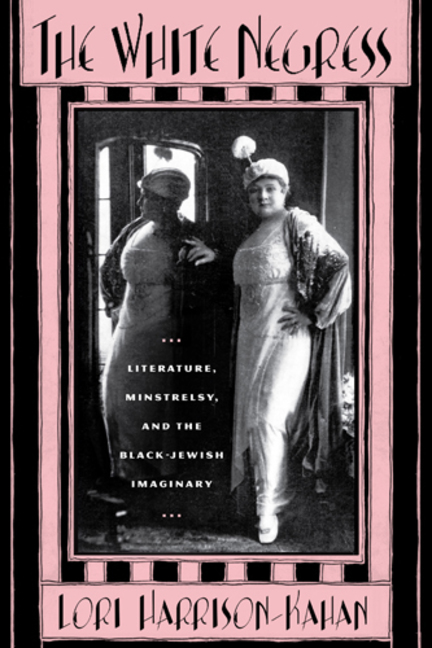
  • The White Negress: Literature, Minstrelsy, and the Black-Jewish Imaginary

    Rutgers University Press
    2011-01-19
    248 pages, 3 photographs
    Paper ISBN: 978-0-8135-4783-1
    Cloth ISBN: 978-0-8135-4782-4
    eBook ISBN: 978-0-8135-4989-7

    Lori Harrison-Kahan, Full-time Adjunct Faculty in English
    Boston College

    During the first half of the twentieth century, American Jews demonstrated a commitment to racial justice as well as an attraction to African American culture. Until now, the debate about whether such black-Jewish encounters thwarted or enabled Jews’ claims to white privilege has focused on men and representations of masculinity while ignoring questions of women and femininity. The White Negress investigates literary and cultural texts by Jewish and African American women, opening new avenues of inquiry that yield more complex stories about Jewishness, African American identity, and the meanings of whiteness.

    Lori Harrison-Kahan examines writings by Edna Ferber, Fannie Hurst, and Zora Neale Hurston, as well as the blackface performances of vaudevillian Sophie Tucker and controversies over the musical and film adaptations of Show Boat and Imitation of Life. Moving between literature and popular culture, she illuminates how the dynamics of interethnic exchange have at once produced and undermined the binary of black and white.

  • Not an “Other”

    Online Newshour
    1997-07-16

    Paul Solman, Host

    Increasingly, many Americans find they don’t easily fit into any racial group. But will adding a new “multiracial” category on the census take away the effectiveness of the count? After a background piece by Betty Ann Bowser, Paul Solman leads a debate.

    PAUL SOLMAN: Well, what should the Census Bureau do? To answer that question, we’re joined by Harvard Sociologist Orlando Patterson, who has just completed a book on race: “Ordeal of Integration;” Charles Byrd publishes “Multiracial Voice,” an Internet journal on mixed race issues; Carlos Fernandez founded the Association of Multiethnic Americans and teaches law at Golden Gate University. And we’re trying to get his signal. We’ve had some trouble with it. And demographer, Linda Jacobsen, works for Claritas, a consumer database firm and also advises the Census Bureau. And welcome to you all.

    Mr. Byrd, should there be a multiracial box on the census form, as we’ve just seen some talk about?

    CHARLES BYRD, Internet Journal Publisher: (New York) Yes. Well, actually the name of my publication is the Interracial Voice, not multiracial. But, yes, we’ve been advocating for a separate multiracial category for a number of years now. We’re not terribly happy with the OMB decision. We don’t think it’s a great compromise. It’s a step forward towards this nation recognizing multiracialialty, but it’s not a huge one. The same check all that applies format could fit very easily underneath a multiracial header. What we have–what OMB has essentially recommended–…

    …PAUL SOLMAN: Okay. Well, Ms. Jacobsen, I mean, how do you look at this? Do you like the check-off provision that is now the proposal before us? How do you respond to this idea of the multiracial box?

    LINDA JACOBSEN, Demographer: Well, I think the difficulty with the multiracial box is that it provides less rich information and less detail about the composition of that group that Charles is describing as being multiracial. And it also has some disadvantages in the sense that it provides less of a link to historical data on race and ethnicity, as well as providing a disadvantage, for example, to health researchers, who know that certain health conditions or health problems are linked to particular races, such as sickle cell anemia, for example.

    PAUL SOLMAN: Play that out for a second. Exactly how would it work with sickle cell anemia if you did or didn’t have a multiracial box? I mean, what would happen?

    LINDA JACOBSEN: Well, for example, if an individual who say was black–had one parent who was black and one parent who was white–and then checked the multiracial box, they would be indistinguishable from say another individual who was multiracial, checked the multiracial box, and was say of Asian and white parentage. So a health researcher would not be able to count or to categorize those with any black heritage who might be at risk for sickle cell anemia…

    …PAUL SOLMAN: Okay. So, Professor Patterson, you’ve heard both of these proposals, if you will, where you come down on this multiracial box, checking off more than one?

    ORLANDO PATTERSON, Harvard University: I don’t think we need a racial box at all. And I noticed that Mr. Byrd said that race is a social construct, something we invent, an identification, partly imposed on us, partly what we select and choose. I agree with that. The only problem is that there’s another term, another category which is exactly like that, is the ethnic ancestry category…

    …LINDA JACOBSEN: –that whether or not we like it, whether or not we think that should be the case, historically certain population and specifically racial groups have suffered discrimination on the basis of their race and ethnicity. And if we can–if we discontinue collecting that information, we don’t eliminate discrimination, we really eliminate our ability to measure it and to monitor compliance with civil rights laws such as Mr. Byrd suggested…

    Read the entire transcript here.

  • Charles W. Chesnutt and the Engendering of a Post-Reconstruction Multiracial Politics

    The Conversation
    Number 2 (2009-2010)

    Kirin Wachter-Grene

    Once a promising fiction writer and would-be spokesman for African-Americans, Charles W. Chesnutt promoted a form of multiracialism but is largely forgotten today. Kirin Wachter-Grene traces the development of Chesnutt’s ideas about the amalgamation of races and their afterlife in the 21st century.

    Introduction: The Roots of Multiracialism

    Multiracialism, as the movement, academic field, and media discourse has come to be known, is a politics that is both controversial and particularly apropos to our contemporary moment in which terms like “post-racial” are frequently used in public discourse in reference to the era of President Obama and to the cultural climate in general.  Multiracialism should not be confused with multiculturalism. Where multiculturalism generally promotes the acceptance of divergent people and cultures for the sake of diversity, multiracialism maintains a decidedly conservative agenda of colorblind ideology that strives to blur the color line at the expense of racialized (particularly black) politics, culture, and identity. (I say particularly black because, as critics have long argued, blackness is one of the most, if not the most explicitly, racialized identities in the United States).  The driving force behind multiracialism is not a celebration of racial and ethnic diversity, but rather a disappearing of this diversity and a supposed de-emphasis of race.  Despite its idealized intentions, what multiracialism tends to achieve is a re-emphasis of rigid racial classifications by subsequently “othering” those who cannot “transcend” race.  The politics of multiracialism can only apply to the people who are privileged enough to be seen as, or who see themselves as, “race neutral” or crossover figures, or as racially ambiguous.  It does little to affect the lived realities of those whom society still continues to stereotype and demonize on a daily basis as a result of their explicit racialization, or identifiable racial identity. Furthermore it disregards and de-legitimizes people who choose to identify with, and take pride in their race or ethnicity, whatever that means to them.

    Conceptions of a multiracial politics, a “mestizo” (“mixed”) America (as it is called in such politics), or a post-racial, “colorblind” culture is not an idea endemic to the late 20th century, although cultural critics, like Jared Sexton, have recently suggested it to be so.  In his new book Amalgamation Schemes: Antiblackness and the Critique of Multiracialism, Sexton locates his argument concerning multiracialism within the last thirty years, referring to it as a “decidedly post-civil rights era phenomenon,” (p. 1, italics author’s own).  This is partly because Sexton bases his argument on the careful consideration of the rhetoric of contemporary multiracialists, such as Charles Byrd, the founding editor of Interracial Voice, and writers Randall Kennedy, Gregory Stephens, and Stephen Talty to name a few.  While it is true that multiracialism as a politics has benefited greatly from the civil rights movement of the 1960s, in that a space was created for this kind of cultural discourse, the anxieties inherent to it are much older, and can readily be traced to some of the literature produced during an inchoate period in the history of the United States­­—the end of the nineteenth and beginning of the twentieth centuries. This literature, in which themes of multiracialism, “miscegenation” (i.e. an antiquated and offensive term for interracial reproduction), and calls for a homogenous national identity are explicit, reveals nothing if not the socio-political debates and struggles for subjectivity that continue to obsess our culture today.

    One of the most understudied and provocative American authors of the era, Charles W. Chesnutt, was publishing essays and fiction from 1881 to 1931.  This was a time in which the country was struggling to articulate its burgeoning identity in everything from politics and imperialism to concepts of sexuality, class, race, and ethnicity.  The Reconstruction and post-Reconstruction years in particular seemed to be consumed with an existential crisis as to what the nation was and who its citizens were, and a palpable fear that the unification of the country could once again disintegrate without rigid social and political classifications.  Chesnutt’s work in particular provides an excellent example with which to think about the developing ideas of race, subjectivity, community, and nationality, because his work, perhaps more so than any other author’s work at the time, is rather strange, controversial, and challenging.

    Chesnutt was a man of mixed race and white enough to “pass,” but he chose to identify himself as black and affiliate himself with the problem of race prejudice. While Chesnutt was a “civil rights activist, literary artist, student of social history, educator, business man, and cultural savant,” (Charles W. Chesnutt: Essays and Speeches. p. xxxvi), he was also a multiracialist, and his politics were not always, if at all, articulated in the best interest of the advancement of the black community for the sake of itself. Most notably, several of his essays do not shy away from advocating total racial amalgamation as the solution to the “Negro Problem,”—he argues for “miscegenation” to be enacted to the point of racial obliteration, an idea echoed by contemporary multiracialists. While Chesnutt advocated these ideas blatantly in several of his speeches and essays, he had a difficult time constructing a cohesive rhetoric, demonstrated by his struggles to rationalize his politics within his fiction. In other words, while his explicit amalgamation essays boldly take one tone, his fiction is much more ambiguous as he experimented with different “solutions” to race antagonism. His curious literature combined with the historical moment at which he was publishing, make for rich material with which to think about both Chesnutt’s particular authorial anxieties and the tensions inherent in these issues as they relate to our current politics…

    Read the entire essay here.

  • The Cuneys: A Southern Family in White and Black

    Texas Tech University
    August 2000
    289 pages

    Douglas Hales, Professor of History
    Temple College, Temple, Texas

    A Dissertation in History Submitted to the Graduate Faculty of Texas Tech University in Partial FulfiUment of the Requirements for the Degree of Doctor of Philosophy

    [Note from Steven F. Riley: See the book based on the dissertation titled, A Southern Family in White and Black: The Cuneys of Texas.]

    The study begins with Philip Cuney. He had much in common with other paternalistic slaveholders of the South. He believed in the institution of slavery and had grown accustomed to the lifestyle that the peculiar institution afforded him. By Texas standards, his large tracts of land and his large number of slaves made him a wealthy man. He became a respected and prominent leader in Austin County. Cuney also went into Texas politics and gained some success both before and after Texas became a state. Cuney, like many Southern planters, used his powerful position as a slaveholder to begin a sexual relationship with one of his female slaves. His relationship with his slave Adeline Stuart produced eight slave children. Along with his white wife and children, Cuney in effect had two families, one white and one black.

    TABLE OF CONTENTS

    • ACKNOWLEDGMENTS
    • CHAPTER
    • I. INTRODUCTION
    • II. PHILIP CUNEY: POLITICIAN AND SLAVEHOLDER
    • III. NORRIS WRIGHT CUNEY: LABOR AND CIVIC LEADER
    • IV. POLITICAL EDUCATION, 1869-1883
    • V. NEW LEADER OF THE PARTY
    • VI. PARTY AND PATRONAGE
    • VII. MAUD CUNEY: EDUCATION AND MARRIAGE
    • VIII. MAUD CUNEY-HARE: MUSICIAN, DIRECTOR, WRITER
    • IX. CONCLUSION
    • BIBLIOGRAPHY

    …[Norris Wright] Cuney, as an urban black, seemed far removed from the mass of nineteenth-century black Texans who lived in rural areas pursuing agricultural endeavors in impoverished conditions. In many ways, Cuney represented a new urban black middle class. As a mulatto he represented a minority within a minority. Cuney strongly identified himself as a “Negro.” Many men of mixed heritage within the first generation of black leadership following the Civil War became a black elite both culturally and politically. As the son of an upper-class white man and a mulatto slave, Cuney represented an even more select group of blacks who received an education and freedom from their white fathers. According to Joel Williamson, “It was almost as if mixing of this special sort in late slavery had produced a new breed, preset to move into the vanguard of their people when freedom came.”

    White southerners, steeped in the ideology of slavery and black inferiority, and feelings of guilt over miscegenation, refused to see a difference between mulattoes and darker skinned blacks. Most Southern states codified this view into law. Some Antebellum mulattoes, especially house servants and others in close contact with their white fathers, often viewed themselves as distinct from other blacks; but following the Civil War, their interests fused with those of the black community. When freedmen entered the political arena they shared common enemies and objectives that made this fusion permanent. Dark-skinned blacks viewed this relationship as positive. According to Williamson, “they needed verbal and mathematical literacy, economic, political, and social education, and people to teach their teachers.” The mulatto elite along with Northern missionaries provided that help.”…

    Read the entire dissertation here.

  • Ethnic Identity of Biethnic Mexican American/European Americans Raised in Texas

    Texas Tech University
    May 2005
    73 pages

    Kristal L. Menchaca

    A Thesis in Human Development and Family Studies Submitted to the Graduate Faculty of Texas Tech University in Partial Fulfillment of the Requirements for the Degree of Master of Science

    The primary purpose of this qualitative study was to explore the experiences of Mexican American/European American biethnic individuals raised in Texas. The present study looked at the applicability of Poston’s (1990) five-stage model of biracial identity development to the experiences of 8 Mexican American/European Americans.

    Results indicated that Poston’s (1990) model was applicable to this cohort. The respondents gave responses indicating progression through the five stages of Personal Identity, Choice of Group Categorization, Enmeshment/Denial, Appreciation and Integration. These responses were narrations of current involvement or memories of childhood experiences. Also, Poston’s (1990) suggestion that biracial individuals experience confusion and maladjustment because of their ethnicity was also applicable to the biethnic individuals in this study.

    Other themes that influenced identity development of the respondents and also considered salient to their experiences were family experiences and what it means to be Mexican American and European American, separately. Respondents were aware of family’s experiences with discrimination. There was an overall positive meaning assigned to being Mexican American and European American, however, it was not as strong for the latter.

    Table of Contents

    • ACKNOWLEDGMENTS
    • ABSTRACT
    • CHAPTER
      • I. INTRODUCTION
        • Statement of the Problem
      • II. LITERATURE REVIEW
        • Mexican Americans in Texas
        • Definition of Terms
        • Identity Development
        • Model of Biracial Identity Development
        • Biracial Identity Development
        • Purpose of Current Study
      • III. METHODS
        • Qualitative Research
        • Phenomenology
        • Participants
        • Measures
        • Ethnicity Survey
        • Autobiographical Interview Probe
        • Procedures
      • IV. RESULTS
        • Data Analysis
        • Personal Identity
        • Choice of Group Categorization
        • Enmeshment/Denial
        • Appreciation
        • Integration
        • Confusion/Maladjustment
        • Family Experiences
        • What it Means to be Mexican American
        • What it Means to be European American
      • V. DISCUSSION
        • Personal Identity
        • Choice of Group Categorization
        • Enmeshment/Denial
        • Appreciation
        • Integration
        • Confusion/Maladjustment
        • Family Experiences
        • What it Means to be Mexican American
        • What it Means to be European American
        • Conclusions
        • Strengths of Study
        • Limitations of Study
        • Recommendations for future research
    • REFERENCES
    • APPENDICES
      • A. TABLE ONE
      • B. EMAILS FOR RECRUITMENT
      • C. CONSENT FORM
      • D. ETHNICITY SURVEY
      • E. AUTOBIOGRAPHICAL INTERVIEW PROBE

    Read the entire thesis here.

  • The Anti-Miscegenation History of the American Southwest, 1837 To 1970: Transforming Racial Ideology into Law

    Cultural Dynamics
    Volume 20, Number 3 (November 2008)
    pages 279-318
    DOI: 10.1177/0921374008096312

    Martha Menchaca, Professor of Anthropology
    University of Texas at Austin

    This article proposes that a historical analysis of court cases and state statutes can be used to illustrate how racist ideologies were transformed into practice and used to legalize racism. To exemplify this argument, marriage prohibition laws in the United States Southwest from 1837 to 1970 are examined.  This analysis demonstrates that African Americans and Anglo Americans were not the only groups affected by anti-miscegenation legislation.  Mexican Americans, Asian Americans, and Native Americans were also profoundly affected and their respective histories contribute to a more indepth understanding of the policies and practices used by state governments and the courts to discriminate against people of color.  This article also reveals that most legal cases reaching state supreme courts in the Southwest involved Mexican Americans because their mixed racial heritage placed them in a legally ambiguous position.

    …Afromestizos and the First Anti-Miscegenation Law in the American Southwest

    The history of anti-miscegenation law in the American Southwest began after Texas obtained independence from Mexico in 1836. One year later, on 5 June 1837, the newly formed Republic became the first nation in the Southwest to prohibit people of different races from marrying freely (Marital Rights, art. 4670, 2466, in Paschal, 1878: 783). People of European blood and their descendants were prohibited from marrying Africans and their descendants. A racially mixed person could marry a White person if they had no African ancestors in the last three generations. If the law was broken, the White person was sentenced to two to five years in prison. Texan congressmen justified imprisonment by the seriousness of ‘the offense against public morals, decency, and chastity’ (Tex. Penal Code 386, in Paschal, 1878: 429).

    Texas’s anti-miscegenation codes were part of the Republic’s larger body of racially discriminatory laws passed after independence. In 1836, Mexico’s liberal racial legislation was rescinded. Citizenship was no longer extended to all people and Mexico’s Emancipation Proclamation of 1829 was nullified. Only Anglo Americans and Mexicans who were not of African heritage were given citizenship (Cx. of the Repu. of Tex. 1836, art. 6, s. 6, in Laws of Tex., vol. 2, p. 1079). Slavery was also reinstated and freed Blacks who had been emancipated under Mexican law were returned to bondage…

    Read or purchase the article here.

  • Hapa Japan Conference

    Center for Japanese Studies
    Institute of East Asian Studies
    University of California, Berkeley
    2011-04-08 through 2011-04-09

    Introduction

    Hapa is a Hawaiian term that is now widely used to describe someone of mixed racial or ethnic heritage. A New York Times article cites that just within the United States, one in seven marriages are now between people from different racial/ethnic backgrounds.

    The Center for Japanese Studies, along with the Hapa Japan Database Project and All Nippon Airways, will host the Hapa Japan Conference on April 8th and 9th, featuring specialists in the study of mixed-race Japanese history, identity, and representation. Topics range from the history of mixed-race Japanese in the 1500s, part-Japanese communities in Australia, to the exploration of identity and representation through story-telling, films, and a photo-exhibit. For more information, please reference the conference agenda or contact cjs-events@berkeley.edu.

  • Enka Superstar Jero: A Conversation and Mini-Concert

    University of California, Berkeley
    Wheeler Hall
    2011-04-08, 20:00-21:15 PDT (Local Time)

    Free and open to the public

    The Center for Japanese Studies at the University of California, Berkeley, is proud to announce that Jero, the Japanese-African-American enka singer, has been selected as the winner of the 2nd annual Berkeley Japan New Vision Award. The Center will host an invitation-only award ceremony at 5:00pm on Friday, April 8, at the Doe Library Morrison Room on the UC Berkeley campus followed by a public on-stage interview and mini-concert at 8:00pm in Wheeler Hall.

    Part Japanese and part African American, Jero (born Jerome Charles White) is enka’s rising star ever since his hit single Umiyuki burst onto the charts in 2008. His albums, Yakusoku (2009), Covers (2008), Covers 2 (2009), and Covers 3 (2010) have been widely acclaimed as he has revived interest in this music genre. Winner of the 2008 Best New Artist Award at the Japan Record Awards and the 2011 Berkeley Japan New Vision Award, he has also regularly appeared on Japanese TV and commercials as well as performing at the prestigious New Year’s Eve Kôhaku Utagassen concert twice.

    The Berkeley Japan New Vision Award was established in 2009 to award an individual who has, in recent times, dramatically transformed our vision of Japan. Singing traditional Japanese ballads in an American idiom, not only has Jero rekindled an interest in enka among the younger generation of Japanese but he has also opened up the possibilities for fluent Japanese-speakers from around the world breaking into the entertainment and other industries in Japan. Given his mixed-race background, he has also become a symbol for the acceptance of a more multiethnic society for 21st-century Japan…

    For more information, click here.

  • Mixed Blood: Intermarriage and Ethnic Identity in Twentieth-Century America [Review: Pascoe]

    Journal of Social History
    Volume 25, Number 1 (Autumn, 1991)
    pages 174-176

    Peggy Pascoe (1954-2010), Beekman Professor of Northwest and Pacific History
    University of Oregon

    Mixed Blood: Intermarriage and Ethnic Identity in Twentieth-Century America. By Paul R. Spickard (Madison, Wisconsin: University of Wisconsin Press, 1989. xii plus 532 pp.).

    Intermarriage must surely rank as one of the most neglected topics in American social history. Only a handful of historians have attempted to study it, some of  whom focused on the enactment of laws that prohihited interracial marriages while others traced changes in the social patterns of intermarriage over time. Whichever route they chose, historians relied heavily on the statistical data and theoretical constructs put forth by social scientists. This alliance between historians and social scientists, a sort of intermarriage of its own, has been something of a love-hate relationship: dependent on social scientists for both data and theories, historians tend to use their insight into change over time to challenge the very theories they borrow.

    The most recent—and surely the most ambitious—historical study of intermarriage in the United States, Paul Spickard’s Mixed Blood: Intermarriage and Ethnic Identity in Twentieth-Century America, is a case in point. Spickard focuses on intermarriage in three different ethnic groups over the entire twentieth century. The unprecedented range of his study puts him in an ideal position to criticize social science theories, which, he argues, are flawed because they concentrate too much on social structure and not enough on culture. In an attempt to redress the balance, he adds the “cultural factors” of “a group’s own perception of its relative social status, the general society’s toleration of intergroup relationships, and different ethnic groups images of each other” to the analysis (pp. 343—44). Mixing data from statistical studies with cultural images from oral history interviews, popular journals, and movies, Spickard tests the validity of a wide range of social science theories about intermarriage and ethnic identity.

    Mixed Blood is organized into four separate sections, one each on Japanese Americans, Jewish Americans, and Black Americans, and an additional one on Japanese women who married American soldiers. Within each section, Spickard considers a melange of topics. The most innovative are those Spickard considers “cultural” topics, including the “images” mainstream and ethnic groups held of each other, the “hierarchy of preference” each group showed in choosing marriage partners, and (a particularly useful choice) the interethnic divisions usually invisible to dominant groups. The rest are topics far more familiar, including such old chestnuts as the “success” of intermarriages and the ethnic identity of the children. On several issues Spickards determination to explore the attitudes of ethnic groups as well as those of the dominant society pays off impressively. He demonstrates, for example, that some ethnic groups, like Japanese Americans, held their own notions of racial superiority so strongly that they were even less likely than Anglo Americans to welcome the children of intermarriages into their communities. On others, his findings are too narrow to be of much help. In trying to measure the “success” of intermarriages, for example, Spickard compares the divorce rate of intermarriages with the divorce rate of marriages within each ethnic group; curiously, he never compares them with the divorce rate in American society as a whole.

    In the end, only two theories about intermarriage survive Spickard’s scrutiny: the general proposition that the extent of intermarriage has increased over the twentieth century and the assertion that the larger the ethnic community is, the lower the rate of intermarriage will be. Several others, including the theory that an unbalanced sex ratio leads to intermarriage, that intermarriages fall into a “triple melting pot” pattern, and that barriers of race are harder to breach than barriers of religion or national origin, fail to survive because they cannot account for all of the widely disparate groups Spickard has chosen for his study. Still others, including nearly every theory about gender and class in intermarriage, fail for more fundamental reasons. Theories about ethnic identity fare no better: Spickard discards the notion that children of mixed marriages invariably fit into subordinate groups, raises doubts about whether intermarriage is a reliable indicator of assimilation, and finds tremendous variation in the extent to which intcrmarriers maintain ethnic ties and ethnic identity.

    Well-documentcd as they are, these results should scarcely come as a surprise, for historians have plenty of reason to be suspicious of social scientists’ transhistorical explanations for social patterns. More surprising is the extent to which Spickard’s critique of social science theories itself remains embedded in transhistorical categories. Spickard is adept at using his comparative data to disprove the theories of social scientists. Yet, like the social scientists he ultimately rejects, Spickard takes for granted that two of the fundamental axes of intermarriage—race and gender—are fixed, immutable categories, the “givens” of historical analysis. As a result, he overlooks the possibility that his data point not only to comparative variability in ethnic identity but also to significant historical reformulations of the notions of race and gender. To take one striking example: because Spickard discovered that there were more similarities between the intermarriage patterns of Japanese Americans and Jewish Americans than between those of Japanese Americans and Black Americans, he concludes that perhaps, race is not so fundamental a category of social relationships in America as has often been supposed” (p. 343). The more reasonable point, 1 suspect, is that over the time period which Spickard covers, there were significant shifts in the social construction of the idea of race, shifts that might help make interpretive sense of Spickard’s own finding that over the course of the century, Japanese Americans, once labeled by dominant Americans as “Black,” later came to be considered “White” (p. 347). Scholars interested in these questions should consult anthropologist Virginia Dominguez’s White by Definition: Social Classification in Creole Louisiana, a recent social science study of intermarriage that pays unusually close attention to the social construction of race/ A similar attempt to map shifts in the social construction of gender would seem to be in order as well, for as Spickards critiques of existing theories show, gender is perhaps the least understood aspect of interracial marriage.

    In the future, more attention to the social construction of race and gender may lead studies of intermarriage in a different direction. For the moment, though, one thing is certain: for its sheer ambition, for its unsurpassed range of data, for its painstaking critiques of social scientific theories, Mixed Blood is indispensable reading for historians interested in the study of intermarriage.