• Hollywood at the Intersection of Race and Identity

    Rutgers University Press
    2019-11-15
    314 pages
    31 b-w photographs
    6 x 9
    Paperback ISBN: 978-0-8135-9931-1
    Cloth ISBN: 978-0-8135-9932-8
    PDF ISBN: 978-0-8135-9935-9
    EPUB ISBN: 978-0-8135-9935-9

    Edited by:

    Delia Malia Caparoso Konzett, Professor of English, Cinema/American/Women’s Studies
    University of New Hampshire, Durham

    Contributions by: Ruth Mayer, Alice Maurice, Ellen C. Scott, Delia Malia Caparoso Konzett, Jonna Eagle, Ryan Jay Friedman, Charlene Regester, Matthias Konzett, Chris Cagle, Dean Itsuji Saranillio, Graham Cassano, Priscilla Peña Ovalle, Ernesto R Acevedo-Muñoz, Mary Beltrán, Jun Okada, and Louise Wallenberg.

    Hollywood at the Intersection of Race and Identity explores the ways Hollywood represents race, gender, class, and nationality at the intersection of aesthetics and ideology and its productive tensions. This collection of essays asks to what degree can a close critical analysis of films, that is, reading them against their own ideological grain, reveal contradictions and tensions in Hollywood’s task of erecting normative cultural standards? How do some films perhaps knowingly undermine their inherent ideology by opening a field of conflicting and competing intersecting identities? The challenge set out in this volume is to revisit well-known films in search for a narrative not exclusively constituted by the Hollywood formula and to answer the questions: What lies beyond the frame? What elements contradict a film’s sustained illusion of a normative world? Where do films betray their own ideology and most importantly what intersectional spaces of identity do they reveal or conceal?

    Table of Contents

    • Introduction
    • Hollywood Formulas: Codes, Masks, Genre, and Minstrelsy
      • Daydreams of Society: Class and Gender Performances in the Cinema of the Late 1910s / Ruth Mayer
      • The Death of Lon Chaney: Masculinity, Race, and the Authenticity of Disguise / Alice Maurice
      • MGM’s Sleeping Lion: Hollywood Regulation of the Washingtonian Slave in The Gorgeous Hussy (1936) / Ellen C. Scott
      • Yellowface, Minstrelsy, and Hollywood Happy Endings: The Black Camel (1931), Charlie Chan in Egypt (1935), and Charlie Chan at the Olympics (1937) / Delia Malia Konzett
    • Genre and Race in Classical Hollywood
      • “A Queer, Strangled Look”: Race, Gender, and Morality in The Ox-Bow Incident / Jonna Eagle
      • By Herself: Intersectionality, African American Specialty Performers, and Eleanor Powell / Ryan Jay Friedman
      • Disruptive Mother-Daughter Relationships: Peola’s Racial Masquerade in Imitation of Life (1934) and Stella’s Class Masquerade in Stella Dallas (1937) / Charlene Regester
      • The Egotistical Sublime: Film Noir and Whiteness / Matthias Konzett
    • Race and Ethnicity in Post-World War II Hollywood
      • Women and Class Mobility in Classical Hollywood’s Immigrant Dramas / Chris Cagle
      • Orientalism, Diaspora, and Indigeneity in Go for Broke! (1951) / Dean Itsuji Saranillio
      • Savage Whiteness: The dialectic of racial desire in The Young Savages (1961) / Graham Cassano
      • Rita Moreno’s Hair / Priscilla Peña Ovalle
    • Intersectionality, Hollywood, and Contemporary Popular Culture
      • “Everything Glee in ‘America’”: Context, Race, and Identity Politics in the Glee Appropriation of West Side Story / Ernesto R. Acevedo-Muñoz
      • Hip Hop “Hearts” Ballet: Utopic Multiculturalism and the Step Up Dance Films / Mary Beltrán
      • Fakin da Funk (1997) and Gook (2017): Exploring Black/Asian Relations in the Asian American Hood Film / Jun Okada
      • “Let Us Roam the Night Together”: On Articulation and Representation in Moonlight (2016) and Tongues Untied (1989) / Louise Wallenberg
    • Acknowledgments
    • Selected Bibliography
    • Contributors
    • Index
  • The difficulty with asserting your beauty identity when you’re mixed race

    Dazed Beauty
    2019-11-05

    Layla Haidrani
    London, United Kingdom

    Rachel Rumai
    ©Rachel Rumai

    We explore the confusion of navigating your personal identity when you have multiple heritages with conflicting beauty standards

    I’ve grappled with the complex relationship between mixed race identity and beauty for a long time. Both my location and my heritage – I’m half-Lebanese, half-Pakistani – upheld beauty ideals that were at odds with each other. Looking too overdone would court much derision growing up in North London, but this minimalist approach conflicted greatly with Beirut’s – a city I spent most summers a teenager where ‘more is more’ is the unofficial beauty mantra. Once the plastic surgery capital of the Middle East, appearing permanently preened and polished with a face full of make-up isn’t just encouraged, it’s expected – even if you’re simply loitering in a shopping mall.

    I’d never seen myself reflected in advertisements in the Middle East, where heavily groomed women subscribe to traditionally narrow ideas of femininity – carefully sculpted arched eyebrows, immaculate nails, hairless body, paired with long, sleek black hair – but that didn’t stop me from trying. In the lead-up to visiting for my holiday, I’d spend hours in beauty salons having head-to-toe treatments including a manicure and pedicure, eyebrow shaping, and a full-body wax. It wasn’t unusual for me to have an entirely separate make-up bag bursting with products. It was trickier when I factored in my Pakistani roots and when I spent time with my Desi London-based friends, I’d deliberately kohl my eyes and straighten my hair so our differences wouldn’t be glaringly obvious.

    The fluidity of my beauty regime, which shifted according to the spaces I inhabited and the people I was surrounded by, felt stifling, as if there was only one ‘right’ way to look. This would be further exacerbated by Instagram, where I’d be confronted with dozens of images of what a ‘normal’ Lebanese or Pakistani girl should look like.

    The term ‘mixed race’ itself tends to lump people as a monolith, and just as their experiences and heritages can wildly differ, so can their beauty identities. Dr Sarah Gaither, an assistant professor at Duke University who studies racial identity and social interactions, says that mixed race people report higher rates of social exclusion than other racial and ethnic groups. “They’re constantly being questioned about their racial backgrounds and denied their identities and group memberships,” she explains. “These experiences are known to cause increased levels of stress and depression at times and can be associated with more difficulties in forming a true sense of self and a sense of being an ‘imposter’.”…

    Read the entire article here.

  • Internalization of Race Messages Among Mixed Race Individuals

    Loyola University, Chicago
    December 2014
    102 pages

    Jennifer Moulton, Associate Psychologist
    University of Wisconsin, Madison

    A DISSERTATION SUBMITTED TO THE FACULTY OF THE GRADUATE SCHOOL IN CANDIDACY FOR THE DEGREE OF DOCTOR OF PHILOSOPHY

    The present study used grounded theory qualitative methodology to explore mixed race individuals’ experiences within specific racial socialization contexts of family, friends, community, and society, to identify messages received within these contexts. How messages influence both their understandings of mixed race identity and how they racially identify themselves was also examined. Mixed race identity development was found to follow an ecological framework, in which racial socialization messages serve as a mechanism through which experiences within contexts may be interpreted, to then inform conceptions of racial identity and identification choices. Common themes of experiences emerged within contexts, including disownments/disapproval, sibling differences, race dialogues, seeking diversity and racial awareness, community racial dynamics, `What are you?’ questions, racial categorization, normativity, attractiveness, and the President Obama effect. Additionally, general message themes of belonging, racial physical features, racial teasing, and racism, emerged across these contexts. Messages influenced understandings of mixed race identity through the cultural consciousness, racial discourse, pride, and awareness of mixed race privilege. While personal racial identifications varied, messages influenced conscious decisions in identifying to others as mixed, rather than choose one race over the other.

    Read the entire dissertation here.

  • Today, this hyper-sexualization and fetishization of mixed race people has unfortunately become the norm. A disproportionate amount of mixed women experience sexual violence compared to other minority women. The 2010 National Intimate Partner and Sexual Violence study found that mixed race women experienced rape, physical abuse, and stalking by an intimate partner at a rate of thirty-two point two percent, a rate second only to American Indian/Alaska Natives at thirty-seven point five percent.

    Alia Shaukat, “Me, Myself, and My Mixed Identity,” The Bull & Bear: McGill’s Student-Run News Magazine, October 17, 2019. http://bullandbearmcgill.com/me-myself-and-my-mixed-identity/.

  • Color, culture or cousin: FSU researcher explores interracial dating

    Florida State University News
    Tallahassee, Florida
    2019-11-15

    Kara Irby, News and Media Relations Specialist


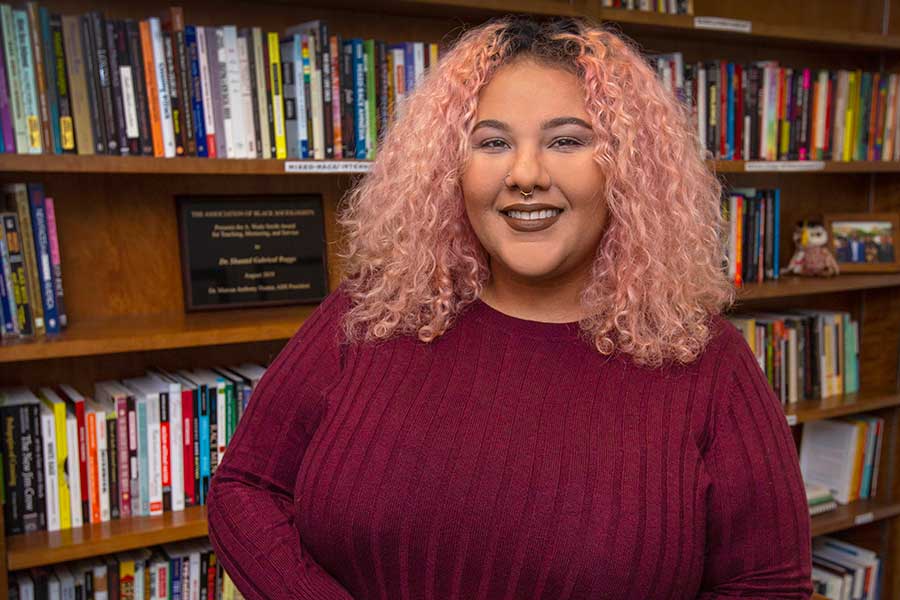
    Shantel G. Buggs, assistant professor of sociology and African American studies. (FSU Photo/Bruce Palmer)

    The U.S. Census predicts America will become a majority-minority country between 2040 and 2050, with great growth projected for multiracial populations.

    A new study from Florida State University researcher Shantel G. Buggs examined how this growing population of multiracial women view interracial relationships and what that illustrates about American’s broader views about race.

    Buggs wanted to determine how multiracial women classify interracial relationships and what factors influence their decision to engage with a potential suitor.

    “As a multiracial person myself, I was always interested in what happens when multiracial people become adults who then have to navigate relationships with other people,” Buggs said. “It was a goal of this study to debunk this racial fetishizing that is common in society today — the idea that multiracial people are more attractive, are the best of both worlds and will end racism.”

    Her findings are published in the Journal of Marriage and Family

    Read the entire article here.

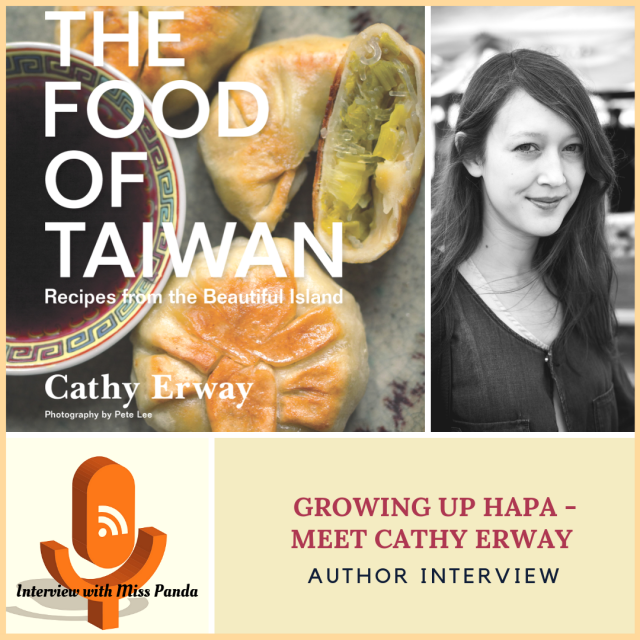
  • The Food of Taiwan Meet Cathy Erway-Author Interview

    Miss Panda Chinese: Mandarin Chinese for Children
    2015-05-16

    Amanda Hsiung Blodget

    Food of Taiwan author interview | misspandachinese.com

    The Food of Taiwan by Cathy Erway guides you to the food, the culture, and the people of Taiwan! Explore more authors in Interview with Miss Panda series.

    Join this delicious Taiwanese cuisine discovery and heritage culture conversation with Cathy Erway, the author of THE FOOD OF TAIWAN: Recipes from the Beautiful Island. Cathy is also the author of The Art of Eating In, the blog Not Eating Out In New York and the host of “Eat Your Words” on Heritage Radio Network. I am delighted to share with you Cathy’s new book, The Food of Taiwan, which is among the very first to celebrate Taiwanese cooking and culture in English.

    The Food of Taiwan! Watch the interview and find out how Cathy embraces her heritage culture through family and a semester of study abroad, why Taiwan is an island obsessed with food (good food!), what makes Taiwanese cooking unique, ingredients needed for making a Taiwanese dish, her hapa/mixed-race experience growing up and much more.

    Read the entire article here.

  • Color, Culture, or Cousin? Multiracial Americans and Framing Boundaries in Interracial Relationships

    Journal of Marriage and Family
    Volume 81, Issue 5 (October 2019)
    pages 1221-1236
    DOI: 10.1111/jomf.12583

    Shantel Gabrieal Buggs, Assistant Professor of Sociology and African American Studies
    Florida State University

    Journal of Marriage and Family banner

    Abstract

    • Objective: This article analyzes how some multiracial people—the “products” of interracial relationships—conceptualize what counts as an interracial relationship and how they discuss the circumstances that influence these definitions.
    • Background: Scholars have argued that the added complexity expanding multiracial populations contribute to dating and marriage‐market conditions requires additional study; this article expands on the limited research regarding how multiracial people perceive interraciality.
    • Method: The article uses in‐depth interviews with self‐identified multiracial women (N = 30) who used online dating platforms to facilitate their dating lives in the following three cities in Texas: Austin, Houston, and San Antonio.
    • Results: In framing their relationships through lenses centered around skin color, cultural difference, and “familiarity” in terms of seeing potential partners as similar to non‐White male family members, multiracial women illustrate varied and overlapping means of describing their intimate relationships, providing additional nuance to sociological understandings of shifts in preferences and norms around partner choice across racial/ethnic lines and opening up opportunities to continue the exploration of the impact of racial inequality on partner choice.
    • Conclusion: Multiracial people internalize racial, gendered, and fetishistic framings about potential partners similarly to monoracial people, demonstrating how racial boundaries and degrees of intimacy are (re)constructed for this growing demographic in the United States.

    Read or purchase the article here.

  • Me, Myself, and My Mixed Identity

    The Bull & Bear: McGill’s Student-Run News Magazine
    Montreal, Quebec
    2019-10-17

    Alia Shaukat


    Photo courtesy of Regina Gonzalez

    Content Warning: This article deals with sensitive topics such as racism, colorism, and sexual abuse.

    I first encountered the world of racial fetishization during my brief stint on Tinder last June. That low-stakes, medium-reward dating app that we all know and love seemed like the perfect place for me to explore the dating scene. It was also, as I soon discovered, the perfect place for many men to explore their potential for racism.

    Each morning, I would wake up to an aggressive amount of inquiring “What’s your race?” texts paired with a wealth of heart-eye emojis. This duality of violation and flattery was extremely confusing. Upon revealing my mixed ethnicity to my Tinder suitors, I would be praised for being “different” or “interesting,” and yet the only thing they knew about me was my mixed race identity. When I was younger, I would’ve found the comments gratifying, simply because they indicated that someone had taken an interest in me. However, now that I am older, I’ve seen that these compliments are the subtle forms in which racial fetishization manifests. It is a form of racism in which hurtful stereotypes camouflage as compliments and praise…

    Read the entire article here.

  • Examining Meghan Markle and Prince Harry: An African Journey

    Psychology Today
    2019-11-18

    Sarah Gaither, Ph.D., Assistant Professor of Psychology and Neuroscience
    Duke University, Durham, North Carolina

    Dr. Jennifer Sims, Assistant Professor of Sociology
    University of Alabama, Huntsville

    ComposedPix_Shutterstock
    Source: ComposedPix_Shutterstock

    “Mixed” reactions highlight mixed-race issues in the US and the UK.

    Even before the full documentary “Harry & Meghan: An African Journey” aired on ABC, social media was abuzz from a teaser clip of Duchess Meghan Markle being interviewed. In the video, an off-screen Tom Bradby is heard asking Markle how she is doing. She thanks him for asking, saying that not many people do, and answers that the media attention has been difficult on top of being a newlywed and a new mom. Here, Meghan noted her struggles not just as a mom, but as a newlywed and a new royal. Her multiple identities—both those that were newly obtained and those she has always had such as being multiracial—were highlighted in this documentary. Thus, this documentary reminded viewers around the world how easy it is to be judged and excluded particularly when you represent multiple groups.

    Many were moved by her words. On Twitter, messages of support, crying GIFs, and jokes of being ready to fight for her were tweeted under the hashtag #HarryAndMeghan. Others, however, were less sympathetic. Talk show host Wendy Williams said that “nobody feels sorry for” Markle and that the Duchess “knew exactly” what she was doing marrying into the British royal family. Jane Ridley of the New York Post noted that “Something’s off when you’re bemoaning your lot as a VIP;” and author Dominic Green called it entitlement to say one is “existing, not living” when that existence is “on millions of pounds of taxpayers money.”

    From a psychology angle, these “mixed” views of Markle (pun intended) correlate with the confusion and varied reactions that mixed-race individuals often face. Past work highlights the constant identity questioning and denial that mixed-race individuals face since they often don’t fit into either of their racial in-groups. In Markle’s case, she not only is mixed-race but also is now bicultural as she balances both U.S. and UK expectations…

    Read the entire article here.

  • Saugus High School shooter who killed two on his 16th birthday named as Nathaniel Berhow

    Metro UK
    2019-11-14

    Jimmy McCloskey, U.S. News Editor
    New York, New York

    A schoolboy who shot two schoolmates dead on his 16th birthday has been named as Nathaniel Berhow.

    Berhow walked into Saugus High School in Santa Clarita, California on Sunday [Thursday] and shot five schoolmates.

    He then turned the semi-automatic pistol on himself in a communal indoor ‘quad’ area inside the building, which sits around 30 miles north of downtown Los Angeles.

    Santa Clarita Valley [Los Angeles County] Sheriff Alex [Villa]Nueva says Berhow is gravely ill in hospital. But police sources have told NBC4 that the shooter is actually brain dead, and only attached to a life support machine while his organs can be harvested for donation.

    Two of his victims – a 16 year-old girl and 14 year-old boy, have since died in hospital…


    Berhow is pictured as a little boy with his father Mark and mother Samantha. The shooter is believed to have been devastated by his dad’s death from a heart attack two years ago (Picture: Dignity Memorial)

    Read the entire article here.