Mixed Race Studies

Scholarly perspectives on the mixed race experience.

    • About This Site
    • Bibliography
    • Contact Information
    • Date and Time Formats
    • Forthcoming… (Updated 2021-09-01)
    • Likely Asked Questions
    • List of Book Publishers
    • List of Definitions and Terms
    • My Favorite Articles and Papers
    • My Favorite Posts
    • My Recent Activities
    • Praise for Mixed Race Studies
    • Tag Listing
      • Tag Listing (Ordered by Count)
    • US Census Race Categories, 1790-2010
    • 1661: The First ‘Mixed-Race’ Milestone
    • 2010 U.S. Census – Some Thoughts

recent posts

  • The Routledge International Handbook of Interracial and Intercultural Relationships and Mental Health
  • Loving Across Racial and Cultural Boundaries: Interracial and Intercultural Relationships and Mental Health Conference
  • Call for Proposals: 2026 Critical Mixed Race Studies Conference at UCLA
  • Participants Needed for a Paid Research Study: Up to $100
  • You were either Black or white. To claim whiteness as a mixed child was to deny and hide Blackness. Our families understood that the world we were growing into would seek to denigrate this part of us and we would need a community that was made up, always and already, of all shades of Blackness.

about

  • Twitter
  • Facebook
  • Instagram
  • After Misty Comes Marie: Breaking Barriers in ‘The Nutcracker’

    2019-12-01

    After Misty Comes Marie: Breaking Barriers in ‘The Nutcracker’

    The New York Times
    2019-11-28

    Gia Kourlas, Dance Critic

    Charlotte Nebres is the first black Marie, the young heroine of “George Balanchine’s The Nutcracker,” at New York City Ballet. 
    Charlotte Nebres is the first black Marie, the young heroine of “George Balanchine’s The Nutcracker,” at New York City Ballet.
    Heather Sten for The New York Times

    This year, for the first time, New York City Ballet’s “Nutcracker” has a black Marie, the young heroine whose life is charged with magic.

    She may not remember it, but during the first summer of her life Charlotte Nebres canvassed for Barack Obama with her mother, Danielle, who carried her in a sling. She attended political rallies. And on a frigid day in January 2009, she accompanied her parents and older sister to his inauguration.

    When Charlotte was 6, Misty Copeland became the first female African-American principal at American Ballet Theater. That, she remembers.

    “I saw her perform and she was just so inspiring and so beautiful,” Charlotte, 11, said. “When I saw someone who looked like me onstage, I thought, that’s amazing. She was representing me and all the people like me.”

    Now Charlotte, a student at the School of American Ballet, is breaking a barrier herself: She is the first black Marie, the young heroine of “George Balanchine’s The Nutcracker,” at New York City Ballet. It’s a milestone for the production, which dates to 1954.

    It isn’t lost on Charlotte that she “got to grow up in a time when it wasn’t just like, oh yeah I can do this, but not do this,” she said. “There was nothing holding you back.”

    But the cultural shift reaches beyond Charlotte, whose mother’s family is from Trinidad (her father’s side is from the Philippines), as her school works to diversify its student body. In addition to Charlotte, the other young leads this season are Tanner Quirk (her Prince), who is half-Chinese; Sophia Thomopoulos (Marie), who is half-Korean, half-Greek; and Kai Misra-Stone (Sophia’s Prince), who is half-South Asian. (The children are always double cast.)…

    Read the entire article here.
  • Bernardine Evaristo: ‘These are unprecedented times for black female writers’

    2019-12-01

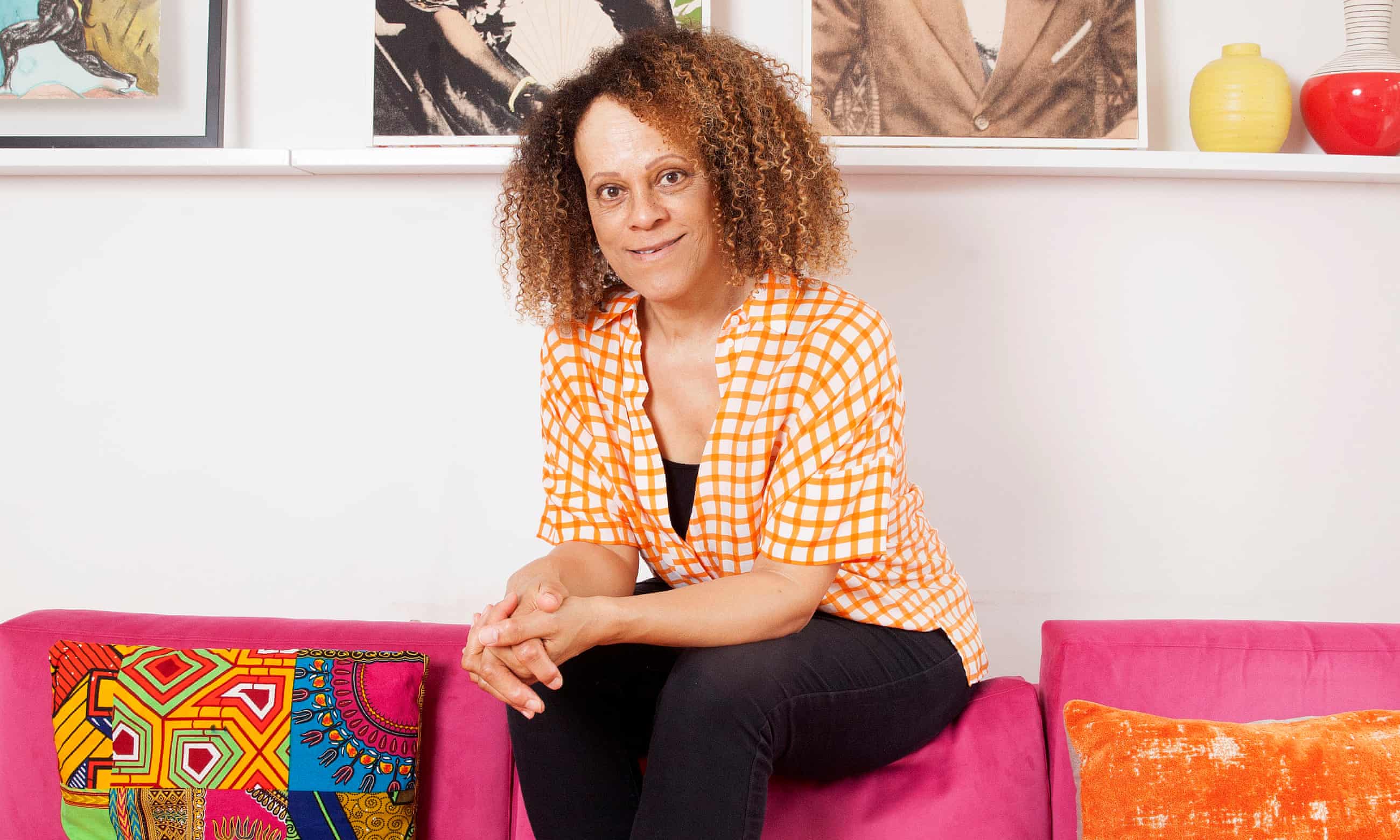
    Bernardine Evaristo: ‘These are unprecedented times for black female writers’

    The Guardian
    2019-10-19

    Bernardine Evaristo


    ‘These times really are extraordinary’ … Bernardine Evaristo. Photograph: Karen Robinson/The Observer

    The first black woman to win the Booker prize argues that a revolution is sweeping through British publishing. But can it lead to lasting change?

    Chidera Eggerue, AKA The Slumflower, is a social media star, south-east London homegirl and feminist. She first came to prominence in 2017 when she created the hashtag #SaggyBoobsMatter on Twitter in order to promote the body-positive message that women’s breasts and bodies are fine just as they are. It’s an important idea and antithetical to a beauty industry that berates us for our imperfections. A year later Eggerue published a self-help motivational book, What a Time to Be Alone: The Slumflower’s Guide to Why You Are Already Enough, which entered the Sunday Times bestseller list the week it was published in 2018, when she was 23. In her very pink, zanily illustrated book, Eggerue, a self-styled “guru, confidante and best friend” to her readers, offers advice on self-worth and self-acceptance. An earlier booklet called Little Black Book: A Toolkit for Working Women, by Otegha Uwagba, became a bestseller in 2016, paving the way for Eggerue. This, in turn, was probably influenced by Chimamanda Ngozi Adichie’s 2014 essay We Should All Be Feminists.

    These are unprecedented times for black female writers, in no small part due to the internet. It has reconfigured how we present ourselves to the world at large, as well as bringing previously marginalised social groups and writing to the fore in ways hitherto unimaginable. As a society we are beginning to recognise and take seriously the ills and pitfalls of social media, but it is still the most exciting channel of mass communication since history began…

    Read the entire article here.

  • Genetic Options: The Impact of Genetic Ancestry Testing on Consumers’ Racial and Ethnic Identities

    2019-12-01

    Genetic Options: The Impact of Genetic Ancestry Testing on Consumers’ Racial and Ethnic Identities

    American Journal of Sociology
    Volume 124, Number 1 (July 2018)
    pages 150-184
    DOI: 10.1086/697487

    Wendy D. Roth, Associate Professor of Sociology
    University of Pennsylvania

    Biorn Ivemark, Postdoctoral Researcher
    School of Humanities, Education and Social Sciences
    Örebro University, Örebro, Sweden

    Publication Cover

    The rapid growth of genetic ancestry testing has brought concerns that these tests will transform consumers’ racial and ethnic identities, producing “geneticized” identities determined by genetic knowledge. Drawing on 100 qualitative interviews with white, black, Hispanic/Latino, Asian, and Native Americans, the authors develop the genetic options theory to account for how genetic ancestry tests influence consumers’ ethnic and racial identities. The theory maintains that consumers do not accept the tests’ results as given but choose selectively from the estimates according to two mechanisms: their identity aspirations and social appraisals. Yet consumers’ prior racialization also influences their identity aspirations; white respondents aspired to new identities more readily and in substantively different ways. The authors’ findings suggest that genetic ancestry testing can reinforce race privilege among those who already experience it.

    Read or purchase the article here.

  • The Rise of Mixed Parentage: A Sociological and Demographic Phenomenon to Be Reckoned With

    2019-12-01

    The Rise of Mixed Parentage: A Sociological and Demographic Phenomenon to Be Reckoned With

    The ANNALS of the American Academy of Political and Social Science
    Volume: 677, Issue: 1, What Census Data Miss about American Diversity, (May 2018)
    Pages 26-38
    DOI: 10.1177/0002716218757656

    Richard Alba, Distinguished Professor of Sociology
    City University of New York

    Brenden Beck, Assistant Professor of Sociology and Criminology
    University of Florida

    Duygu Basaran Sahin
    City University of New York

    Issues

    Ethno-racially mixed parentage is rising in frequency, creating a strong challenge to both census classification schemes and, indeed, to common conceptions of ethnicity and race. Majority (white) and minority (nonwhite or Hispanic) parentage predominates among individuals with mixed-family backgrounds. Yet in public presentations of census data and population projections, individuals with mixed backgrounds are generally classified as nonwhite. We analyze 2013 American Community Survey data and summarize the results of important studies to argue that individuals from mixed majority-minority backgrounds resemble whites more than they do minorities in terms of some key social characteristics and experiences, such as where they grow up and their social affiliations as adults. Those with a black parent are an important exception. An implication of this analysis is that census classification practices for mixed individuals risk distorting conceptions of the current population, especially its youthful portion, and promoting misunderstandings of ethno-racial change.

    Read or purchase the article here.

  • Establishing the Denominator: The Challenges of Measuring Multiracial, Hispanic, and Native American Populations

    2019-12-01

    Establishing the Denominator: The Challenges of Measuring Multiracial, Hispanic, and Native American Populations

    The ANNALS of the American Academy of Political and Social Science
    Volume: 677, Issue: 1, What Census Data Miss about American Diversity, (May 2018)
    Pages 48-56
    DOI: 10.1177/0002716218756818

    Wendy D. Roth, Associate Professor of Sociology
    University of Pennsylvania

    Issues

    For multiracial, Hispanic, and Native Americans, norms for racial and ethnic self-identification are less well established than they are for other population groups. There is considerable variation and fluidity in how multiracial, Hispanic, and Native Americans self-identify, as well as how they are classified by others. This presents challenges to researchers and analysts in terms of consistently and accurately estimating the size and population dynamics of these groups. I argue that for analytic purposes, racial/ethnic self-identification should continue to be treated as a statistical numerator, but that the challenge is for researchers to establish the correct denominator—the population that could identify as members of the group based on their ancestry. Examining how many people who could identify with these groups choose to do so sheds light on assimilation and emerging racial classification processes. Analyses of the larger potential populations further avoid bias stemming from nonrandom patterns of self-identification with the groups.

    Read or purchase the article here.

  • Recruiting Volunteers for a Study on Multiracials

    2019-11-30

    Recruiting Volunteers for a Study on Multiracials

    Haley Pilgrim, Sociology Ph.D. Student
    University of Pennsylvania

    2019-11-26

    Do you have one grandparent that is white and three grandparents that are black or one grandparent that is black and three grandparents that are white?

    If so, you may be eligible to participate in a dissertation study on the experiences of second-generation multiracials.

    Participants will be asked to share their experiences in a 30-60 minute interview.

    Please contact Haley Pilgrim, Ph.D. student at hpilgrim@sas.upenn.edu.

  • Growing up Irish and Black: ‘It was the attention my hair provoked – it wasn’t good attention’

    2019-11-30

    Growing up Irish and Black: ‘It was the attention my hair provoked – it wasn’t good attention’

    TheJournal.ie
    2019-06-09

    Aoife Barry

    image001

    Emma Dabiri speaks to us about her first book, Don’t Touch My Hair.

    “One of the first rhymes I heard was: “Eeny meeeny miny moe. Catch a nigger by da toe.” Who, or what in the hell was “nigger”, I wondered? I soon learned… Irishness is synonymous with whiteness, it seemed. Whiteness is “pure” and doesn’t extend to brown girls, even those who can trace their Irish ancestry back to the 10th century.” —Emma Dabiri

    GROWING UP IN Ireland, Emma Dabiri’s skin and hair were a topic of discussion for strangers. In the mostly white Ireland of the 1980s, a girl like Dabiri (whose father is Nigerian and mother is Irish) with brown skin was a subject of interest – and people didn’t care whether it might bother her to have her appearance so openly scrutinised.

    Dabiri now lives in London, where she is a lecturer in African Studies at SOAS University of London, as well as a PHd student. Inspired by her own changing relationship with her appearance, she has written a book, Don’t Touch My Hair, which interrogates the topic of hair and its relationship with not just the individual, but with society, culture and African history.

    While the book begins with the story of Dabiri’s childhood, it moves into a space where she discusses everything from how people treat the offspring of Kim Kardashian and Beyoncé to the cultural significance of the cornrow. It’s a fascinating must-read that reflects not just the changes that have taken place in Irish society, but the changes that still must take place.

    The book shows that while today’s Ireland may be more multicultural than the Ireland Dabiri grew up in, that does not mean society treats people of different skin colours – or hair textures – the same…

    Read the entire article here.

  • What Racial Discrimination Will Look Like in 2060

    2019-11-30

    What Racial Discrimination Will Look Like in 2060

    Scientific American
    2019-11-29

    Marisa Franco

    What Racial Discrimination Will Look Like in 2060
    Credit: Getty Images

    As biracial people become increasingly common in America, bias based on perceived rather than actual identity will too

    In 2009, Nathaniel Burrage requested a transfer from his job in Youngstown, Ohio, where he worked as a driver for FedEx. He alleged that he was experiencing ongoing racially motivated harassment. According to Burrage, his supervisor, Dennis Jamiot, alternated between referring to him as “Mexican” and “cheap labor,” and shouted “ándale” and “arriba” at him as he walked by. Soon after, he said his other supervisors began to chime in with the same racist insults, and Jamiot began to lob paper clips and chalk at him. One co-worker asked him to weigh in on whether what was etched on a graffiti wall was true: Mexicans are proof that American Indians had sex with buffalos.

    Burrage filed a lawsuit under the Civil Rights Act of 1964. Yet, despite the verbal and physical abuse he alleged he’d experienced, his case was dismissed. The reason? Nathanial Burrage was not actually Mexican, or even Hispanic. Burrage was a black/white biracial man experiencing what I have termed in my research as “identity incongruent discrimination.” Identity incongruent discrimination occurs when someone experiences racial discrimination for a race they are misperceived as.

    As the browning of America continues, identity incongruent discrimination will only continue to rise. It’ll be a pressing problem for the growing multiracial population—a group that is the fastest growing racial group in America and that’s set to triple in size by 2060. Research finds that members of the multiracial group are more likely to be miscategorized than members of any other racial group. Compared to categorizing people into a single-race category, categorizing someone as multiracial is more mentally cumbersome, takes longer and is less likely to occur. And the most common race that black/white biracial people, like Burrage, are categorized as is Hispanic…

    Read the entire article here.

  • “Often race is used as a variable without people really defining it biologically, and that is a very minimum we should expect from a scientific variable that you’ll be able to define it biologically.”

    2019-11-22

    “Often race is used as a variable without people really defining it biologically, and that is a very minimum we should expect from a scientific variable that you’ll be able to define it biologically. They just treat these social categories as though they are biological without really doing the legwork to figure out why that is a valid way to think about these things.” —Angela Saini

    Bob McDonald, “The return of race science — the quest to fortify racism with bad biology,” Quirks & Quarks, CBC Radio, November 15, 2019. https://www.cbc.ca/radio/quirks/nov-16-watching-wildfire-with-radar-the-return-of-race-science-and-more-1.5359599/the-return-of-race-science-the-quest-to-fortify-racism-with-bad-biology-1.5359610.

  • Noel Ignatiev’s Long Fight Against Whiteness

    2019-11-22

    Noel Ignatiev’s Long Fight Against Whiteness

    The New Yorker
    2019-11-15

    Jay Caspian Kang


    Noel Ignatiev, the author of “How the Irish Became White,” believed that whiteness was a fiction, and that true stories could dispel it. Photograph by Pekah Pamella Wallace

    In 1995, Noel Ignatiev, a recent graduate of the doctoral program in history at Harvard, published his dissertation with Routledge, an academic press. Many such books appear, then disappear, subsumed into the endless paper shuffling of the academic credentialling process. But Ignatiev was not a typical graduate student, and his book, “How the Irish Became White,” was not meant to stay within the academy. A fifty-four-year-old Marxist radical, Ignatiev had come to the academy after two decades of work in steel mills and factories. The provocative argument at the center of his book—that whiteness was not a biological fact but rather a social construction with boundaries that shifted over time—had emerged, in large part, out of his observations of how workers from every conceivable background had interacted on the factory floor. Ignatiev wasn’t merely describing these dynamics; he wanted to change them. If whiteness could be created, it could also be destroyed.

    “How the Irish Became White” quickly broke out of the academic-publishing bubble. Writing in the Washington Post, the historian Nell Irvin Painter called it “the most interesting history book of 1995.” Mumia Abu-Jamal, the activist and death-row inmate, provided an enthusiastic back-cover blurb. Today, many of the ideas Ignatiev proposed or refined—about the nature of whiteness, and about the racial dynamics that unfold among immigrant workers—are taken for granted in classrooms; they influence films, literature, and art. But Ignatiev found it hard to accept the academic rewards that came with his book’s success. Committed to radicalism, he spent much of his time in academia doing what he had done on the factory floor: publishing leaflets and zines about the possibilities of revolutionary change…

    Read the entire article here.

Previous Page
1 … 122 123 124 125 126 … 1,428
Next Page

Designed with WordPress