• ASRC 3310 Afro-Asia: Futurism and Feminisms

    Cornell University, Ithaca New York
    Fall 2019

    Tao Goffe, Assistant Professor, Africana Studies, Feminist, Gender, and Sexuality Studies

    Crosslisted as: ASRC 3310, COML 3310, F688 3310 Semester

    This course explores cultural representations of Afro-Asian intimacies and coalition in novels, songs, films, paintings, and poems. What affinities, loves and thefts, and tensions are present in cultural forms such as anime, jazz, kung fu, and K-pop? Students will consider the intersections and overlap between African and Asian diasporic cultures in global cities such as New York, Chicago, Havana, Lahore, Kingston, and Hong Kong to ask the question: when did Africa and Asia first encounter each other? This will be contextualized through a political and historical lens of the formation of a proto-Global South in the early twentieth, Afro-futurism, women of color feminisms, and Third World solidarity and internationalism. Tackling issues of race, gender, sexuality, and resistance, this seminar also reckons with the intertwined legacies of the institutions of African enslavement and Asian indenture by reading the novels of Patricia Powell and the paintings of Kehinde Wiley, for instance. Students will work in groups to produce Afro-Asia DJ visual soundtracks as part of the final project.

  • Adella Hunt Logan

    Harvard Magazine
    September-October 2019

    Adele Logan Alexander, Emeritus Professor of History
    George Washington University, Washington, D.C.


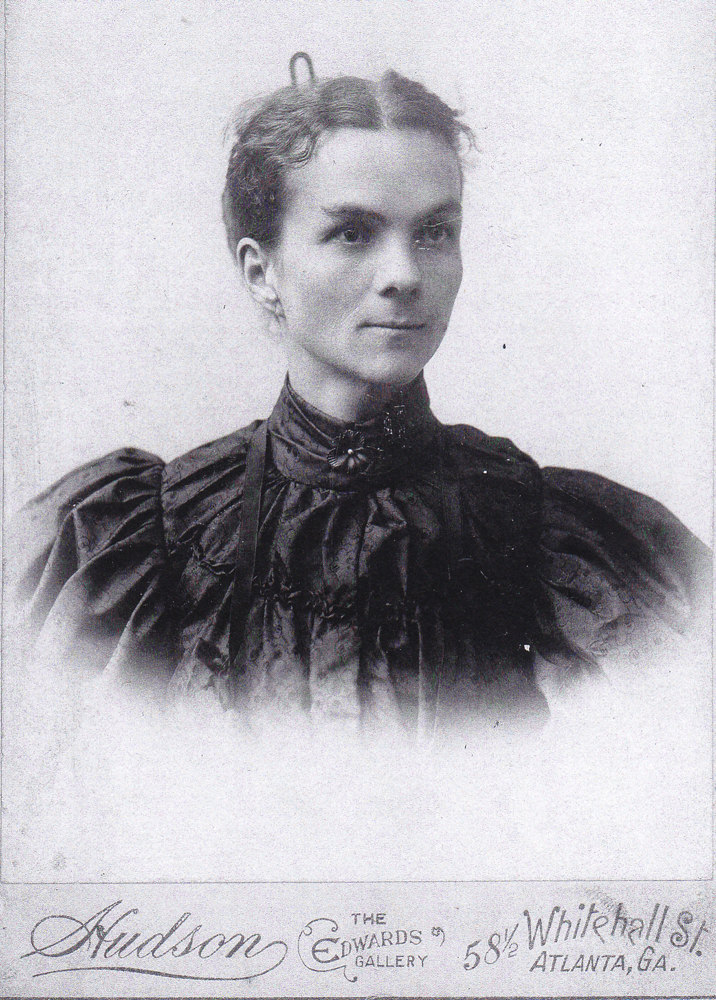
    Hunt Logan in June 1901, after earning her “honorary” master’s degree from Atlanta University
    Collection of the author; reproduction photograph by Mark Gulezian

    Historian Adele Logan Alexander ’59 is Adella Hunt Logan’s only granddaughter. Her family memoir Princess of the Hither Isles: A Black Suffragist’s Story from the Jim Crow South (Yale), appears this month. The portrait of Hunt Logan opposite, by the Parisian-trained, African-American painter William Edouard Scott, was begun in 1915 while he was in residence at Tuskegee and completed at her daughter’s direction in 1918.

    Brief life of a rebellious black suffragist: 1863-1915

    Soon after meeting Susan B. Anthony in 1895 at a convention of the National-American Woman Suffrage Association (N-AWSA) in Atlanta, Adella Hunt Logan wrote to the suffragist leader, “I am working with women who are slow to believe that they will get help from the ballot, but someday I hope to see my daughter vote right here in the South.” She strove to spur often frightened or otherwise reluctant black women to political action through gaining access to the ballot; she lobbied for equal pay as well, and ultimately espoused women’s reproductive rights.

    The letter and Hunt Logan herself were virtually unique, because in her own eyes, and as specified by law, she was “a Negro.” Due to her predominantly Caucasian ancestry, however (both her mother and her black-Cherokee-white maternal grandmother maintained longstanding, consensual relationships with slaveholding white men), Hunt Logan herself looked white. As an adult, she occasionally “passed” to travel on the Jim Crow South’s railways, and to attend segregated political gatherings, such as the N-AWSA’s, from which she brought suffrage tactics and materials back to share with her own people. At the time, she was the N-AWSA’s only African-American lifetime member, and the only such member from ultraconservative Alabama, where she lived with her husband, Warren Logan, and their children, and taught for three decades at Booker T. Washington’s Tuskegee Institute, the agricultural and industrial school for black Southerners that drew such prominent visitors as Frederick Douglass, Presidents William McKinley and Theodore Roosevelt, and philanthropists Andrew Carnegie and Julius Rosenwald….

    Read the entire article here.

  • Changing Race, Changing Sex: The Ethics of Self‐Transformation

    Journal of Social Philosophy
    Volume 37, Issue 2 (Summer 2006)
    pages 266-282
    DOI: 10.1111/j.1467-9833.2006.00332.x

    Cressida J. Heyes, Canada Research Chair in Philosophy of Gender and Sexuality
    University of Alberta, Edmonton

    Cover image

    Every year when I teach an introductory course in feminist philosophy, I see individual women and men drastically rethinking their previous understandings of gender and race, and of their own place in a gendered and racialized world. Often as a part of this rethinking, we struggle over what an ethical life amounts to; ethical, that is, in the sense of being responsive and responsible to one’s relation to others, and to the work one does on oneself.1 To talk in this way of the self as, at least in part, self-making, presumes another set of questions about the very possibility of changing oneself. So, for example, feminists are not only interested in establishing who to count as “women” with regard to some already foundational definition, but also in troubling and transforming the definition itself—in part through changing ourselves.

    To address these simultaneously ontological and ethical questions, we need to ask what makes it possible to change one’s identity—and not just incrementally within a defined category (e.g., as by becoming a more assertive woman through feminist consciousness raising), but also more drastically. Specifically, what are those people who “change sex” undertaking, and what makes sex into the kind of thing that can be changed? How is changing sex different from “passing”—the phenomenon central to the histories of both race and sex, in which one is read as, or actively pretends to be, something that one avowedly is not? It is in light of questions like the above that my interest in identity categories extends to asking: what makes a particular facet of identity into something the individual can transform? And what implications do answers to this question have for all our ethical lives?…

    Read the entire article here.

  • Complexities of Complexion

    Reviews in American History
    Volume 47, Number 3, September 2019
    pages 327-332

    Martha Hodes, Professor of History
    New York University

    Sharon Block. Colonial Complexions: Race and Bodies in Eighteenth-Century America. Philadelphia: University of Pennsylvania Press, 2018. 217 pp. Appendices, notes, and index. $45.00.

    This is a book about the endeavor of racial classification in the service of racism. The word complexion held expansive meaning in the eighteenth century. Rather than simply a sign by which others presumed to determine a person’s racial classification, complexion signified sickness and health, conduct and comportment, emotional disposition and indisposition. In Colonial Complexions: Race and Bodies in Eighteenth-Century America, Sharon Block investigates appearance as a “commonplace tool of race-making” (p. 5) and the ways in which that process both reflected and determined dominant ideas about race in early America. Given the capacious meaning of the word, Colonial Complexions explores far more than skin color—in fact only a single chapter is devoted to that aspect of human bodies.

    Opening with a learned essay on European ideas about human complexion and human bodies, Block enlightens her readers about the contours of early modern humoralism: beliefs about the ways in which appearance reflected a person’s condition and character. From there, Block takes her readers to British North America, on a journey through the meaning and significance of an array of descriptive categories. Her analysis is based on a meticulous and rigorous reading of newspaper advertisements for runaway slaves and servants. These thousands of documents become, as Block writes, “cultural transformations of individual lives into print” (p. 36). Her interpretations of these seemingly mundane, repetitive sources are razor-sharp, often dazzling.

    Block has assembled more than 4000 missing-person advertisements in over two dozen newspapers from eight colonies between 1750 and 1775, a historical moment, she points out, “before skin color became increasingly equivalent to race” (p. 2). Because advertisements for runaway laborers were voluminous and widely consumed by colonists, no other sort of document from colonial America—not legal records, not military records, not prison records—”offers an opportunity to aggregate thousands of parallel descriptions of physical appearance of enslaved and free people” (p. 145). The owners and employers who wrote these advertisements made choices about which descriptive categories to include and which to exclude, and Block treats each choice as significant, as she weighs, compares, and explicates. How much information did the writer believe would be enough for strangers to identify a particular fugitive? What vocabulary should be invoked to best portray not only skin color but also body size, hair texture, clothing, and voice timbre? How best concisely to convey a runaway’s behavior and personality? In selecting the details and composing succinct narratives, owners and employers of slaves and servants participated in “making race in daily life” (p. 141).

    Block’s sample is not random; instead, she sought temporal and geographical variety, and sought in particular to include harder-to-find advertisements for fugitive girls and women. Because colonial advertisements for runaways included only a small number of people of Native American descent, Block turned to travel accounts to find descriptions of Native men and women. Then, to clarify all facets of her analysis with a sharper sense of meanings and usages, Block supplemented her data with many more kinds of documents: dictionaries, almanacs, plantation records, medical treatises, and natural histories, as well as more lyrical sources such as diaries and letters, poetry, sermons, literature, and in one instance a treatise on vampires (in order to make sense of descriptions of ruddiness).

    Block allows many of her questions to arise from the evidence, and findings across categories are consistent. Owners and employers commodified people of African descent by describing them in generalized terms. British colonists described people of European descent, by contrast, far more often as particular individuals. Take the supposedly objective factors of age and height. Whereas advertisers described people of African descent as young or old, short or tall, they more often gave people of European descent specific ages and measurements. When advertisers noted indicators of ill health, they tended to write about the external features of people of African descent (bloodshot eyes, for example, or stooped posture), as compared to identifying “individual underlying causes or experiences…

    Read or purchase the review here.
  • Kamala Harris gets personal

    The Washington Post
    2019-09-23

    Jennifer Rubin, Opinion Writer


    Democratic presidential candidate Kamala D. Harris (D-Calif.) stands ahead of her address to an NAACP banquet on Saturday in Charleston, S.C. (Meg Kinnard/AP)

    Sen. Kamala D. Harris (D-Calif.) has built her career on a model of inclusive, progressive change. She tells voters she became a prosecutor so she could change the system from the inside. However, she has rarely described herself as an insider on behalf of the African American community. But her address at the Charleston, S.C. NAACP Fund Banquet on Saturday shows that’s changing.

    At the onset of her campaign, Harris was criticized as not sharing enough of herself. While she has touted her education at Howard University and raised her experience being bused to school as a young girl, her presidential campaign has stressed universality and inclusion. Her “3 a.m. agenda” has stressed that what keeps us up at night — medical bills, housing, our kids’ education — does not depend on whether one is a Republican or Democrat. She routinely states that “we have so much more in common than what separates us.”

    That reticence, by necessity, has receded. Voters demand a level of candor and intimacy from their presidential candidates. To both define her message and defend her record, she has had to explain her tenure as a prosecutor and rebutted claims that she was a cog in the machine of mass incarceration. She’s been obliged to share stories of her experience as a prosecutor comforting mothers whose children have been shot and killed and in instituting anti-bias training for police officers.

    Read the entire article here.

  • Her [Brittany Howard’s] most striking lyrics come on Goat Head [in her album Jaime], as she discusses growing up as the child of a poor, interracial couple in rural Alabama.

    “When I was born – or rather when my sister was born in 1984 – that was like the first wave of mixed babies, little brown babies,” she says.

    “My mama would go around town, pushing my sister and I in a cart to the grocery store, and people would actually come up to her and lecture her. They would say, ‘Do you know what you’ve done?’”

    In the song, she recalls an incident that happened when she was a baby, but was told about later, where “someone cut off a goat’s head, and they put it in the back of my dad’s car and slashed his tyres, and smeared blood all over his car”.

    “It’s always been a part of me, that story,” says Howard. “Because Athens was a beautiful, peaceful country place, where people are neighbours and we really care about each other. But there’s a racial line, or there was at least, and that’s why I wanted to write that song. Just to explain where I was coming from.”

    Mark Savage, “Brittany Howard finds freedom after Alabama Shakes,” BBC News, September 25, 2019. https://www.bbc.com/news/entertainment-arts-49808839.

  • Book Reviews: Self-Portrait in Black and White

    Tablet
    2019-09-24

    Daniel Oppenheimer

    Curtain Gradient

    The rewards of subordinating racial or ethnic identity, in the new memoiristic essay by the author of ‘Losing My Cool

    Thomas Chatterton Williams’ new book, Self-Portrait in Black and White: Unlearning Race, is a few things. It’a memoiristic follow-up to his first book, Losing My Cool: Love, Literature, and a Black Man’s Escape from the Crowd; a meditation on what it means for a black man to discover that he’s fathered white children; and an impassioned argument for rejecting the whole modern paradigm of black and white.

    It’s also, I think, an effort to answer for himself one of the essential questions that many older liberals, who were formed before the rise of identity politics, simply can’t answer or even adequately ask. What does one get in return for subordinating one’s racial or ethnic identity? Folks like Mark Lilla, Francis Fukuyama, Sam Harris, Laura Kipnis, Andrew Sullivan, Jonathan Chait, and Jonathan Haidt are on the front lines of the present culture war making compelling arguments that our society needs shared values and narratives to sustain itself, that collectively it is in our best interests to privilege our commonalities over our differences. They’re not, however, providing interesting or persuasive psychological answers to why any given individual would be moved to let his or her racial or ethnic identity attenuate when it is actively providing strength and solace. Or why young people, not yet fully formed, would abstain from the identities that are not just au courant but manifestly powerful in their capacity to compel deference or compliance from the establishment. They’re not offering a new synthesis that incorporates some of the insights and aesthetics of identity politics. They’re mostly arguing for a return to the previous liberal synthesis…

    Read the entire review here.

  • Neo-race Realities in the Obama Era

    SUNY Press
    May 2019
    174 pages
    Hardcover ISBN13: 978-1-4384-7415-1

    Edited by:

    Heather E. Harris, Professor of Communication
    Stevenson University, Stevenson, Maryland

    Considers the impact of neo-racism during the Obama presidency.

    Neo-race Realities in the Obama Era expands the discourse about Barack Obama’s two terms as president by reflecting upon the impact of neo-racism during his tenure. Continually in conversation with Étienne Balibar’s conceptualization of neo-racism as being racism without race, the contributors examine how identities become the target of neo-racist discriminatory practices and policies in the United States. Individual chapters explore how President Obama’s multiple and intersecting identities beyond the racial binaries of Black and White were perceived, as well as how his presence impacted certain marginalized groups in our society as a result of his administration’s policies. Evidencing the hegemonic complexity of neo-racism in the United States, the contributors illustrate how the mythic post-race society that many wished for on election night in 2008 was deferred, in order to return to the uncomfortable comfort zone of the way America used to be.

    Table of Contents

    • List of Illustrations
    • Foreword / Amardo Rodríguez
    • Acknowledgments
    • Introduction / Heather E. Harris
    • Part I
      • 1. Obama’s Transformation of American Myths / Zoë Hess Carney
      • 2. Transformational Masculinity and Fathering in the Age of Obama: “Roses and Thorns” / Shanette M. Harris
      • 3. How Obama’s Hybridity Stifled Black Nationalist Rhetorical Identity: An Ideological Analysis on His Two-Term Third-Space Leadership / Omowale T. Elson
    • Part II
      • 4. “Who Gets to Say Hussein? The Impact of Anti-Muslim Sentiment during the Obama Era” / Nura A. Sediqe
      • 5. The End of AIDS? A Critical Analysis of the National HIV/AIDS Strategy / Andrew R. Spieldenner, Tomeka M. Robinson, and Anjuliet G. Woodruffe
      • 6. The President Was Black, Y’all: Presidential Humor, Neo-racism, and the Social Construction of Blackness and Whiteness / Jenny Ungbha Korn
      • 7. L’homme de la créolisation: Obama, Neo-racism, and Cultural and Territorial Creolization / Douglas-Wade Brunton
    • Notes
    • List of Contributors
    • Index
  • “I’m Black, Native, gay, and I’m proud”: Fentress LeBeau shares his story about being a minority among his people

    West River Eagle
    Eagle Butte, South Dakota
    2019-09-25

    Alaina Adakai (Alaina Beautiful Bald Eagle), Managing Editor


    Fentress LeBeau

    Much can be said about Fentress LeBeau — with his energetic wit and bright smile, he can light up any room. Standing 6’ tall, with his hair in long braids, Fentress makes no effort to hide his chin strap beard, even as he wears glittery eyeshadow and vibrant lipstick.

    By just being himself, the 20-year old Eagle Butte resident unintentionally draws attention, which sometimes results in negative and violent responses from others.

    After years of suppressing his feelings and finally being confident with his identity, Fentress said he is ready to bring awareness to the two-spirit community on Cheyenne River, a sensitive topic that is not usually talked about openly; however, it is matter of great cultural significance that must be addressed, said Fentress.

    Childhood memories: always knowing he was different

    Fentress is the son of Amber LeBeau, a Lakota descendant of Chief Swift Bird (Oohenumpa), and an African American father. Fentress said many of his childhood memories were of being bullied for being different, first for his skin color, and then for his sexual orientation.

    “Whenever we were three or four years old, people would bully us because my sister and I were black. At that age, I don’t think people knew I was two-spirited, so the bullying was because of my skin color,” said Fentress…

    Read the entire article here.

  • Brittany Howard finds freedom after Alabama Shakes

    BBC News
    2019-09-25

    Mark Savage, BBC music reporter

    Brittany Howard
    Brittany Howard: “If I was going to make a solo record, I knew it had to be something true.” Brantley Gutierrez

    In the middle of making her new album, Brittany Howard decided to record the air conditioner.

    Holding a microphone to ceiling, she captured the unit’s electromagnetic pulse, turned it into a tape loop, then transposed it onto a keyboard.

    “In the end, I think we were overly ambitious,” she reflects. “Because it turned out to be terrible.”

    The experiment may have been scrapped, but it illustrates the sense of freedom Howard felt as she made her first solo album…

    Read the entire article here.