• They Call Me “Negro”

    Embrace Race: Raising A Brave Generation
    2019-08-18

    Dr. Ruth L. Baskerville

    Picture
    Early family photo in 1951. The author is on the bottom right.

    In 1943 in Manhattan, NY, a 46-year old African- and Native-American man who was a renowned band director and jazz composer marries a 19-year old naive European-American woman of Jewish Ukrainian descent, who wants to sing professionally. I’m the second of five children.

    At age four, I overhear Mommy telling her Mom she won’t leave Daddy and me in order to come back home with my whiter looking brother. Every year of our growing up, Mommy takes the whitest looking child to find new housing, and our unwanted family moves in the middle of the night. We’re in new schools, too.

    There are no “Mulattos” in our neighborhoods, and I’m constantly asked, “Where are you from? I mean, what are you?” The questioners have distorted faces, uncomfortable with their ambivalence about my ethnicity. Even today, they need to fit me into a race category before they can utter their next sentence! “You’re Saudi – Moroccan – Indian – Spanish – Italian – definitely foreign!” I’m from New York!…

    Read the entire article here.

  • Yuli – The Carlos Acosta Story

    Dirty Movies — Your platform for thought-provoking cinema
    2019-04-03

    Redmond Bacon

    Tender portrait of iconic ballet dancer doubles up as an exploration of fatherhood and also of the artist’s home nation Cuba – now available on VoD

    Director – Icíar Bollaín – 2019

    When I was very young, my parents took me to ballet class. I immediately baulked at the idea and sat on the floor until my mother gave up and took me home. At the time I believed that being a ballet dancer was the worst possible thing on earth; now I see it as a massive lost opportunity. Carlos Acosta’s own father, Pedro (Santiago Alfonso), wasn’t as magnanimous as my mother, completely ignoring his son’s wishes in the pursuit of a higher aim.

    His bet paid off, turning Carlos Acosta (nicknamed Yuli) into one of the greatest ballet dancers that ever lived; the first black man to perform at the Royal Ballet in London. Played at three different ages by Edlison Manuel Olbera Núnez, Keyvin Martínez and finally by the man himself, Yuli…

    It starts in the poverty stricken streets of Havana; a place where the best options for young men to make something of themselves is through sport or dance. Carlos’ talent, expressed early on through street dance, gives his father an idea, and soon he is dragged to an audition at the National Ballet School of Cuba. But Carlos doesn’t want to perform ballet and mocks both his future teachers and his parents by putting on a tongue-in-cheek Michael Jackson-homage. He derisively describes ballet as something “for faggots”. Yet it is this very same ebullient spirit that lands him a place. His talent cannot be denied.

    This is played out against a political and ethnic backdrop that acutely portrays the complexity of the Afro-Cuban experience. In one haunting scene, Carlos’ father takes him to his great-grandmother’s plantation, showing him how he is a direct descendent from the slave trade. Meanwhile his white mother escapes with her white relatives to Miami, benefiting from the same privilege that is denied to the young man. Pedro spins this hardship into a positive, telling Carlos that if his descendants could survive slavery, then he can become anything he wants…

    Read the entire review here.

  • In 1870, Henrietta Wood Sued for Reparations—and Won

    Smithsonian Magazine
    September 2019

    W. Caleb McDaniel, Associate Professor of History
    Rice University, Houston, Texas

    Verdict slip collage
    No image of Henrietta Wood survives today, but her story is recorded in court filings, including the verdict slip above. (Illustration by Cliff Alejandro; Source material: W. Caleb McDaniel; New York Public Library (3))

    The $2,500 verdict, the largest ever of its kind, offers evidence of the generational impact such awards can have

    On April 17, 1878, twelve white jurors entered a federal courtroom in Cincinnati, Ohio, to deliver the verdict in a now-forgotten lawsuit about American slavery. The plaintiff was Henrietta Wood, described by a reporter at the time as “a spectacled negro woman, apparently sixty years old.” The defendant was Zebulon Ward, a white man who had enslaved Wood 25 years before. She was suing him for $20,000 in reparations.

    Two days earlier, the jury had watched as Wood took the stand; her son, Arthur, who lived in Chicago, was in the courtroom. Born into bondage in Kentucky, Wood testified, she had been granted her freedom in Cincinnati in 1848, but five years later she was kidnapped by Ward, who sold her, and she ended up enslaved on a Texas plantation until after the Civil War. She finally returned to Cincinnati in 1869, a free woman. She had not forgotten Ward and sued him the following year.

    The trial began only after eight years of litigation, leaving Wood to wonder if she would ever get justice. Now, she watched nervously as the 12 jurors returned to their seats. Finally, they announced a verdict that few expected: “We, the Jury in the above entitled cause, do find for the plaintiff and assess her damages in the premises at Two thousand five hundred dollars.”

    Though a fraction of what Wood had asked for, the amount would be worth nearly $65,000 today. It remains the largest known sum ever granted by a U.S. court in restitution for slavery…

    But Wood’s name never made it into the history books. When she died in 1912, her suit was already forgotten by all except her son. Today, it remains virtually unknown, even as reparations for slavery are once again in the headlines.

    I first learned of Wood from two interviews she gave to reporters in the 1870s. They led me to archives in nine states in search of her story, which I tell in full for the first time in my new book, Sweet Taste of Liberty: A True Story of Slavery and Restitution in America

    Read the entire article here.

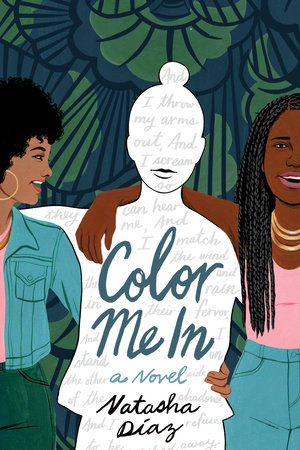
  • Color Me In, A Novel

    Delacorte Press (an imprint of Penguin Random House)
    2019-08-20
    384 pages
    Hardcover ISBN: 9780525578239
    eBook ISBN: 9780525578246
    Audiobook ISBN: 9781984889140

    Natasha Díaz

    Color Me In

    Debut YA author Natasha Díaz pulls from her personal experience to inform this powerful coming-of-age novel about the meaning of friendship, the joyful beginnings of romance, and the racism and religious intolerance that can both strain a family to the breaking point and strengthen its bonds.

    Who is Nevaeh Levitz?

    Growing up in an affluent suburb of New York City, sixteen-year-old Nevaeh Levitz never thought much about her biracial roots. When her Black mom and Jewish dad split up, she relocates to her mom’s family home in Harlem and is forced to confront her identity for the first time.

    Nevaeh wants to get to know her extended family, but one of her cousins can’t stand that Nevaeh, who inadvertently passes as white, is too privileged, pampered, and selfish to relate to the injustices they face on a daily basis as African Americans. In the midst of attempting to blend their families, Nevaeh’s dad decides that she should have a belated bat mitzvah instead of a sweet sixteen, which guarantees social humiliation at her posh private school. Even with the push and pull of her two cultures, Nevaeh does what she’s always done when life gets complicated: she stays silent.

    It’s only when Nevaeh stumbles upon a secret from her mom’s past, finds herself falling in love, and sees firsthand the prejudice her family faces that she begins to realize she has a voice. And she has choices. Will she continue to let circumstances dictate her path? Or will she find power in herself and decide once and for all who and where she is meant to be?

  • Freedom and Frustration: Rachel Dolezal and the Meaning of Race

    Contexts
    Volume: 18 issue: 3
    pages 36-41
    DOI: 10.1177/1536504219864957

    Chinyere Osuji, Assistant Professor of Sociology
    Rutgers, The State University of New Jersey, Camden

    In the United States, people often discuss how the burgeoning multi-racial population and immigrants from Asia and Latin America are forcing us to call into question what we know about racial and ethnic categories. This argument, however, takes for granted that being Black or White, categories at the poles, are unproblematic distinctions. This perspective essentializes Blackness and Whiteness as commonsense phenomena. They are anything but. The meanings of who is White and who is Black in the United States have shifted over centuries, and who gets slotted into what category changes across societies.

    A couple of years ago, the media became fascinated with Rachel Dolezal, a woman born naturally to White parents, who identified as a Black woman. At a time when transgender issues were becoming salient, news media posed what seemed to them an obvious question: is it possible to be born White and become Black the same way it was possible to be born with male sex organs and become female? Although Dolezal never used the term “transracial” to identify herself, she reminded us that race is a social construction, something many people understand as fake and baseless. On these grounds, Dolezal decided that she would wear Black hairstyles, spend time in Black communities, date and marry Black men, lead a chapter of a historically Black organization, and supposedly leave Whiteness behind. This infuriated many people, especially African Americans.

    When Rachel Dolezal made international news, my friends in Brazil did not understand the commotion. “What’s going on? Who is this woman?” they asked.

    I understood some of their confusion…

    Read the entire article in HTML or PDF format.

  • Q&A with Clinician Turned Novelist, John Vercher ’16MFA

    Southern New Hampshire University
    Newsroom
    2019-08-06

    Rebecca LeBoeuf, Staff Writer

    John Vercher and the text John Vercher '16MFA, Mountainview Low-Residency MFA in Fiction.

    John Vercher ’16MFA didn’t think he had what it takes to make a career out of writing, so he went to school to be a clinician instead. After spending more than a decade feeling unhappy in his role, he decided to revisit his passion for writing.

    Since Vercher hadn’t written regularly in a while, he knew going back to school was a smart move. Not only would it immerse him in the discipline and craft again, but it could even result in a publishable book.

    And it did. Three years after Vercher graduated from Southern New Hampshire University’s (SNHU) Mountainview Low-Residency MFA program, he published his thesis and debut novel, “Three-Fifths,” out this September…

    Read the entire interview here.

  • The Gap Toothed Banister: A Tale of Anglo-India

    Niyogi Books
    2013-09-16
    297 pages
    5.5 x 0.6 x 8.5 inches
    Paperback ISBN: 978-9381523711

    Juliette Banerjee

    The Gap-Toothed Banister – A Tale of Anglo-India is a close, compassionate look by Juliette Banerjee, an Anglo-Indian, at her community facing the challenges of change. It portrays with clarity the lives of Anglo-Indians in Calcutta during the 60s and 70s. In a shabby apartment block in Central Calcutta, four families, the Renshaws, the D’Cruzes, the Johnsons and the Vincents live in harmony. This smooth tempo changes forever one humid night when one of the families’ children are singled out, one lauded, the other randomly attacked. Tragedy and horror seem to haunt the apartment block. The next day a resident is raped by a servant. The social fabric has been rent in a way that tilts this world. It brings together all the other families of the ‘mansion’, as this block of flats is wryly nicknamed. The Gap-Toothed Banister is a love story, not in kindergarten hues but with softer colours of hope and faith. It is a story of a people more confused than disloyal, puzzled by a lack of appreciation for their myriad talent and fuelled by an anger at what is perceived as scornful rejection. The Gap-Toothed Banister will be of immense interest to all curious about the mores and magic of Anglo-India.

  • ‘When I Was White’: Sarah Valentine’s memoir considers the meaning of racial identity

    The Chicago Tribune
    2019-08-14

    Julia M. Klein

    'When I Was White’: Sarah Valentine’s memoir considers the meaning of racial identity
    Sarah Valentine’s intriguing memoir, “When I Was White,” considers the meaning of racial identity. (St. Martin’s)

    “For a long time,” Sarah Valentine writes, “I felt like a bundle of fragments, and I wanted to be whole. I wanted to be able to write a family history that answered all my questions and filled in all the blanks, but all I got were different versions of the past and an incomplete, unfulfilling present.”

    This revelatory admission comes near the close of Valentine’s intriguing, if never entirely satisfying, memoir, “When I Was White.” But it could well have served as its opening — a warning to readers that neither a slick solution to the puzzle of racial identity nor a definitive unraveling of the specific mystery of Valentine’s origins would be forthcoming.

    A former visiting assistant professor of creative writing at Northwestern University, Valentine grew up in Pittsburgh’s North Hills suburbs, the bright, athletic, dark-hued child of two white parents. To many observers, she was self-evidently of mixed racial heritage. But her family regarded her as simply their (white) daughter — so much so that when black classmates asked her out, her mother cautioned her against “interracial” dating…

    Read the entire review here.

  • Effa Manley

    Ebbets Field Flannels
    2019

    Joe Swide


    c. 1938. Wonderful image of Effa in a dress and wearing a Newark Eagles ball cap while being instructed on how to hold a bat by one of her players.

    The most powerful woman in baseball

    In the summer of 1947, the most powerful woman in baseball received a call from Bill Veeck, the owner of the Cleveland Indians. Veeck had spent the last five years scouting the Negro Leagues for the right ballplayer to integrate the American League and shortly after the Brooklyn Dodgers of the National League had broken baseball’s color line by acquiring Jackie Robinson from the Kansas City Monarchs, Veeck set his eyes on Larry Doby of the Newark Eagles. However, whereas the Dodgers managed to acquire Robinson without paying a cent to the Monarchs, Veeck found himself in a very different sort of negotiation with the owner of the Eagles, Effa Manley.

    Manley was born into a biracial family in Philadelphia in 1897. Her mother was a white seamstress who was married to a black man but had an affair with her white employer, leading many to believe that he was Manley’s biological father. In any case, Manley was raised in a predominantly black community with a biracial identity like that of her siblings, and her ability to pass as either black or white enabled her to navigate both sides of the country’s racial divide…

    Read the entire article here.

  • Creoles of South Louisiana: Three Centuries Strong

    University of Louisiana at Lafayette Press
    2018-05-08
    342 pages
    Softcover ISBN: 978-1-946160-19-5

    Elista Istre
    Lafayette, Louisiana

    Creoles established themselves in South Louisiana long before Acadian exiles reached the shores of the Bayou State. Boasting a mélange of African, European, and North American roots, Creoles converged on Louisiana’s prairies and created their own distinct cuisine, language, and musical style.

    In Creoles of South Louisiana: Three Centuries Strong, Dr. Elista Istre invites her readers to enter the Creole world—a place where cooks tempt taste buds with gumbo and crawfish, storytellers mesmerize young and old with tales tied to three continents, and musicians and dancers pulsate to the rhythms of accordions and rubboards.

    Despite inside pressure to isolate and outside pressure to assimilate, Creoles from all walks of life continue to forge new identities while preserving and celebrating traditional elements of their rich heritage. They are adaptable. They are resilient. They are strong.