Mixed Race Studies

Scholarly perspectives on the mixed race experience.

    • About This Site
    • Bibliography
    • Contact Information
    • Date and Time Formats
    • Forthcoming… (Updated 2021-09-01)
    • Likely Asked Questions
    • List of Book Publishers
    • List of Definitions and Terms
    • My Favorite Articles and Papers
    • My Favorite Posts
    • My Recent Activities
    • Praise for Mixed Race Studies
    • Tag Listing
      • Tag Listing (Ordered by Count)
    • US Census Race Categories, 1790-2010
    • 1661: The First ‘Mixed-Race’ Milestone
    • 2010 U.S. Census – Some Thoughts

recent posts

  • The Routledge International Handbook of Interracial and Intercultural Relationships and Mental Health
  • Loving Across Racial and Cultural Boundaries: Interracial and Intercultural Relationships and Mental Health Conference
  • Call for Proposals: 2026 Critical Mixed Race Studies Conference at UCLA
  • Participants Needed for a Paid Research Study: Up to $100
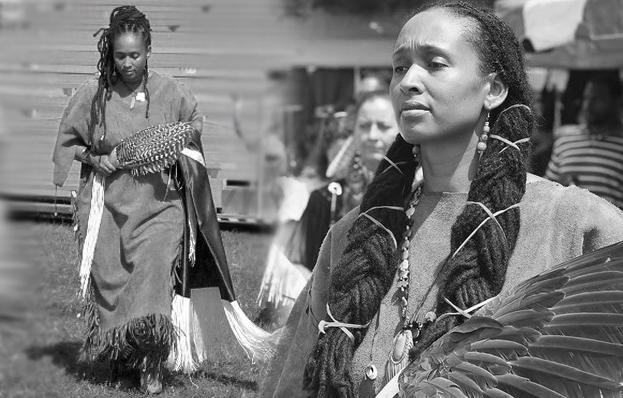
  • You were either Black or white. To claim whiteness as a mixed child was to deny and hide Blackness. Our families understood that the world we were growing into would seek to denigrate this part of us and we would need a community that was made up, always and already, of all shades of Blackness.

about

  • Twitter
  • Facebook
  • Instagram
  • Multiracial Campus Professionals’ Experiences with Racial Authenticity

    2019-08-25

    Multiracial Campus Professionals’ Experiences with Racial Authenticity

    Equity & Excellence in Education
    Published online: 2019-08-02
    DOI: 10.1080/10665684.2019.1631232

    Jessica C. Harris, Assistant Professor of Higher Education and Organizational Change
    University of California, Los Angeles

    Utilizing critical Multiracial theory, this study explores how Multiracial campus professionals’ experiences with racial authenticity influence their work in postsecondary contexts. Three themes were generated from 24 Multiracial campus professionals’ narratives, including encountering racial authenticity tests, navigating the authenticity trap, and Black Lives Matter and professionals’ internalization of racial authenticity tests. This study explores how Multiracial professionals’ experiences with racial authenticity often constrain their ability to foster inclusion and educational equity on campus and mediates their connections with students and colleagues.

    Read or purchase the article here.

  • Alternate lives: Korean orphans’ quests for answers

    2019-08-25

    Alternate lives: Korean orphans’ quests for answersAlternate lives: Korean orphans’ quests for answers

    France 24
    2019-08-23


    Seoul (AFP)

    On a summer’s day in 1985 a seven-year-old boy sat alone at a crowded bus station in Seoul, sobbing as he waited desperately for his mother to return.

    Jo Youn-hwan was wearing a baseball uniform that his mother had bought him a few days before — the only gift she had ever given him.

    She told him to wait for her before leaving him at the terminal. So he did, increasingly terrified as day turned to dusk.

    “I’ll be a really good kid if only she chooses to return,” he promised himself, over and over again. “I’ll be a really, really good kid.”

    She never did…

    …International adoption from South Korea began after the Korean War as a way to remove mixed-race children, born to local mothers and American GI fathers, from a country that emphasized ethnic homogeneity.

    More recently the main driver has been babies born to unmarried women, who still face ostracism in a patriarchal society, and according to historians, are often forced to give up their children.

    Most children remain institutionalised till adulthood as many South Koreans are reluctant to adopt. The country has sent some 180,000 children overseas over the years, mostly to the US…

    Read the entire article here.

  • Jackie Kay on putting her adoption on stage – and getting a pay rise for her successor

    2019-08-25

    Jackie Kay on putting her adoption on stage – and getting a pay rise for her successor

    The Guardian
    2019-08-07

    Peter Ross


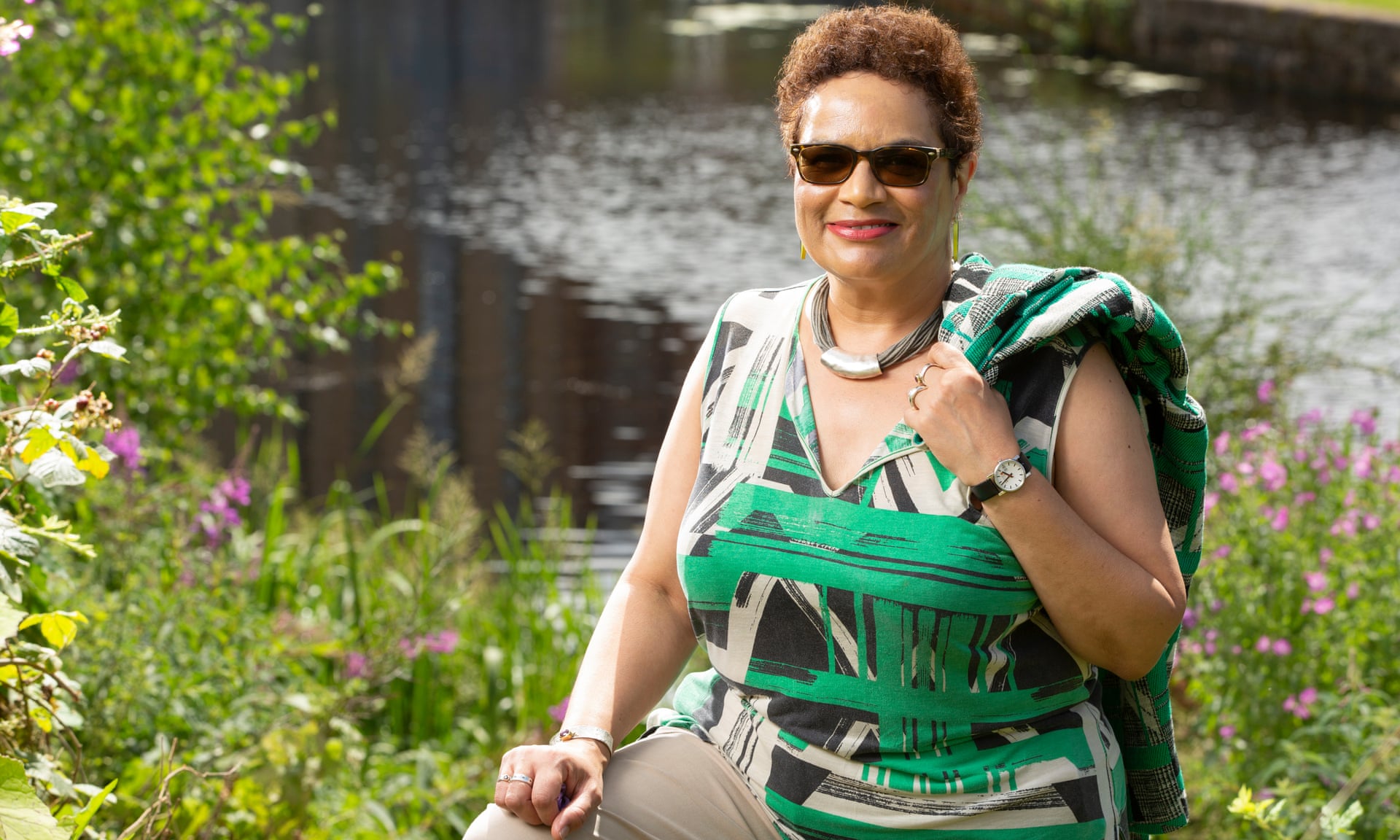
    ‘I think it’s really scandalous to pay your national poet five grand’ … Kay in Glasgow. Photograph: Murdo MacLeod/The Guardian

    When Scotland’s national poet travelled to Nigeria to ask her birth father if he ever thought of her, he said no. Does it hurt to put this on stage? And should the next ‘makar’ be on £30,000?

    Before Jackie Kay was a writer, she was a character. “When you’re adopted,” she explains over lunch in a Glasgow cafe, “you come with a story.” Her adoptive mother Helen – fascinated by her possible origins – encouraged young Kay to speculate about her birth parents. It was known that her father was Nigerian, her mother a white woman from the Scottish Highlands. Were they, perhaps, torn apart by racial prejudice in 1960s Scotland?

    There was tragic romance to that idea, and a fairytale quality in the notion that Kay, offspring of forbidden love, should come to live with John and Helen, two people who had plenty of love – not to mention songs and stories – to share. Little wonder that Kay has come to think of herself as a creature not only of genetics but of the imagination. As Scotland’s national poet writes in her beautiful memoir Red Dust Road, she is “part fable, part porridge”.

    Red Dust Road, adapted for the stage by Tanika Gupta, is to be presented at the Edinburgh international festival. I catch some scenes in a National Theatre of Scotland rehearsal room: Stefan Adegbola and Sasha Frost are running through the moment when Kay, visiting Nigeria, meets her birth father Jonathan. “Did you ever think of me in all those years?” Frost asks. “No, of course not,” Adegbola replies. “Why would I? It was a long time ago.” This exchange feels brutal, but Kay looks on impassive. She lived it…

    Read the entire interview here.

  • Please can we stop talking about ‘mixed-race’ identity (on its own)?

    2019-08-25

    Please can we stop talking about ‘mixed-race’ identity (on its own)?

    Discover Society
    2019-08-23

    Chantelle Lewis, Ph.D. Student
    Sociology Department
    Goldsmiths, University of London

    Please can we stop talking about ‘mixed-race’ identity (on its own)?

    In response to recent mainstream media outlets featuring and celebrating ‘mixed-race’ populations as a symptom of progress in our society, my concern is this simplistic analysis conceals the broader structural implications of mixedness.

    Given the opportunity, we all like talking about how we feel about our identity. If, like me, you belong to a racialised group, we become particularly animated by these opportunities because whiteness permeates so much of public life. We want to think about our varying family histories and how we embody them (or not) within our appearance and how we live our lives.

    More often than not, when there is a public discussion about racialised identities, ‘mixed-race’ people are given too much space to grapple with theirs without critically engaging with their own structural positionalities. My contention is that these discussions will often position identity in abstraction from discussions of place and space, class, gender, and wider structural issues…

    Read the entire article here.

  • Producer Phillip Rodriguez Acquires Rights To ‘The Strange Career of William Ellis’

    2019-08-21

    Producer Phillip Rodriguez Acquires Rights To ‘The Strange Career of William Ellis’

    Deadline: Breaking Hollywood News Since 2006
    2019-08-21

    Dino-Ray Ramos, Associate Editor/Reporter

    EXCLUSIVE: Producer and indie filmmaker Phillip Rodriguez has optioned the film and TV rights to Karl Jacoby’s book The Strange Career of William Ellis: The Texas Slave Who Became a Mexican Millionaire. Rodriguez is set to develop and produce the narrative-based project

    Jacoby’s prize-winning book tells the true story of William Ellis, a larger-than-life figure who was born on the U.S.-Mexico border in the twilight of slavery and inhabited a world divided along ambiguous racial lines. Adopting the name Guillermo Eliseo, he passed as Mexican, transcending racial lines to become fabulously wealthy as a Wall Street banker, diplomat, and owner of scores of mines and haciendas south of the border. In The Strange Career of William Ellis, Columbia University historian Jacoby weaves an astonishing tale of cunning, scandal, self-invention and the abiding riddle of race in America…

    Read the entire article here.

  • The Other Half of Happy

    2019-08-20

    The Other Half of Happy

    Chronicle Books
    2019-08-20
    332 pages
    5 5/8 x 8 1/8 in
    Hardcover ISBN: 9781452169989

    Rebecca Balcárcel

    The Other Half of Happy

    Quijana is a girl in pieces. One-half Guatemalan, one-half American: When Quijana’s Guatemalan cousins move to town, her dad seems ashamed that she doesn’t know more about her family’s heritage. One-half crush, one-half buddy: When Quijana meets Zuri and Jayden, she knows she’s found true friends. But she can’t help the growing feelings she has for Jayden. One-half kid, one-half grown-up: Quijana spends her nights Skyping with her ailing grandma and trying to figure out what’s going on with her increasingly hard-to-reach brother. In the course of this immersive and beautifully written novel, Quijana must figure out which parts of herself are most important, and which pieces come together to make her whole. This lyrical debut from Rebecca Balcárcel is a heartfelt poetic portrayal of a girl growing up, fitting in, and learning what it means to belong.

  • When my siblings and I compare birth certificates for the first time, we discover that four of us have “White” listed under “Race,” and one has “Negro.” We’re all interracial children from the same parents, who died before we could ask them about this enigma.

    2019-08-20

    When my siblings and I compare birth certificates for the first time, we discover that four of us have “White” listed under “Race,” and one has “Negro.” We’re all interracial children from the same parents, who died before we could ask them about this enigma. I proudly accept being “Negro”—African-American—although I embrace my full heritage and keep a healthy sense of humor whenever anyone asks, “What are you?”

    Dr. Ruth L. Baskerville, “They Call Me “Negro”,” Embrace Race: Raising A Brave Generation, August 18, 2019. https://www.embracerace.org/blog/they-call-me-negro.

  • Embodied Resistance: Multiracial Identity, Gender, and the Body

    2019-08-20

    Embodied Resistance: Multiracial Identity, Gender, and the Body

    Social Sciences
    Volume 8, Issue 8 (August 2019)
    Article 221
    16 pages
    DOI: 10.3390/socsci8080221

    Gabrielle G. Gonzales
    Department of Sociology
    University of California Santa Barbara

    socsci-logo

    This article explores the importance of the physical body in the development of gendered racial and ethnic identities through in-depth semi-structured interviews with 11 multiracial/multiethnic women. From a critical mixed race and critical feminist perspective, I argue that the development of an embodied and gendered multiracial and multiethnic identity is a path to questioning and resisting the dominant monoracial order in the United States. Interviews reveal that respondents develop these embodied identities both through understandings of themselves as gendered and raced subjects and through relationships with monoracial individuals. The process by which these women understand their physical bodies as multiracial subjects illustrates a critical embodied component of the social construction of race and ethnicity in the United States.

    Read the entire article in HTML or PDF format.

  • After Years of Searching, I Finally Found My Black Indian Community

    2019-08-20

    After Years of Searching, I Finally Found My Black Indian Community

    Zora
    2019-08-19

    Shonda Buchanan, Literary Editor
    Harriet Tubman Press

    The blood of two peoples runs in us, and we want everyone to know we are still here

    Dropping off a book at the Hampton Public Library, I glance at the counter and see a licorice-red flyer that says, “Come Join the Weyanoke Association: African Americans Honoring Our American Indian Heritage.” I look around. Is someone playing a joke on me?

    In August 2004, my daughter and I moved to Hampton, Virginia, for my job at a Historically Black College. Our first year was hard and lonely, and we desperately missed our communities back in Los Angeles and in the Los Padres National Forest.

    “I hate it here,” Afiya said at least once a week as she tried to make friends in the ninth grade. I tried to placate her with the proverbial “give it time” talks, but I had moved her away from her friends at 14, just as she was about to start high school. We had many “I hate it here” fights, but the truth was I was having a hard time finding my people, too. I missed the African American, African-centered communities, and the American Indian groups that had become my family over the years. This flyer seemed to be a sign: Little did I know I was about to find a space where both sides of my heritage combined…

    Read the entire article here.

  • Breaking the Ocean: A Memoir of Race, Rebellion, and Reconciliation

    2019-08-20

    Breaking the Ocean: A Memoir of Race, Rebellion, and Reconciliation

    House of Anansi Press
    2019-08-20
    280 pages
    8.5 in × 5.5 in
    Paperback ISBN: 9781487006471
    Ebook ISBN: 9781487006488

    Annahid Dashtgard

    Cover of Breaking the Ocean

    Annahid Dashtgard was born into a supportive mixed-race family in 1970s Iran. Then came the 1979 Islamic Revolution, which ushered in a powerful and orthodox religious regime. Her family was forced to flee their homeland, immigrating to a small town in Alberta, Canada. As a young girl, Dashtgard was bullied, shunned, and ostracized by both her peers at school and adults in the community. Home offered little respite as her parents were embroiled in their own struggles, exposing the sharp contrasts between her British mother and Persian father.

    Determined to break free from her past, Dashtgard created a new identity for herself as a driven young woman who found strength through political activism, eventually becoming a leader in the anti–corporate globalization movement of the late 1990s. But her unhealed trauma was re-activated following the 9/11 terrorist attacks. Suffering burnout, Dashtgard checked out of her life and took the first steps towards personal healing, a journey that continues to this day.

    Breaking the Ocean introduces a unique perspective on how racism and systemic discrimination result in emotional scarring and ongoing PTSD. It is a wake-up call to acknowledge our differences, offering new possibilities for healing and understanding through the revolutionary power of resilience. Dashtgard answers the universal questions of what it means to belong, what it takes to become whole, and ultimately what is required to create change in ourselves and in society.

Previous Page
1 … 141 142 143 144 145 … 1,428
Next Page

Designed with WordPress