• Why Young Men of Color Are Joining White-Supremacist Groups

    The Daily Beast
    2018-09-04

    Arun Gupta


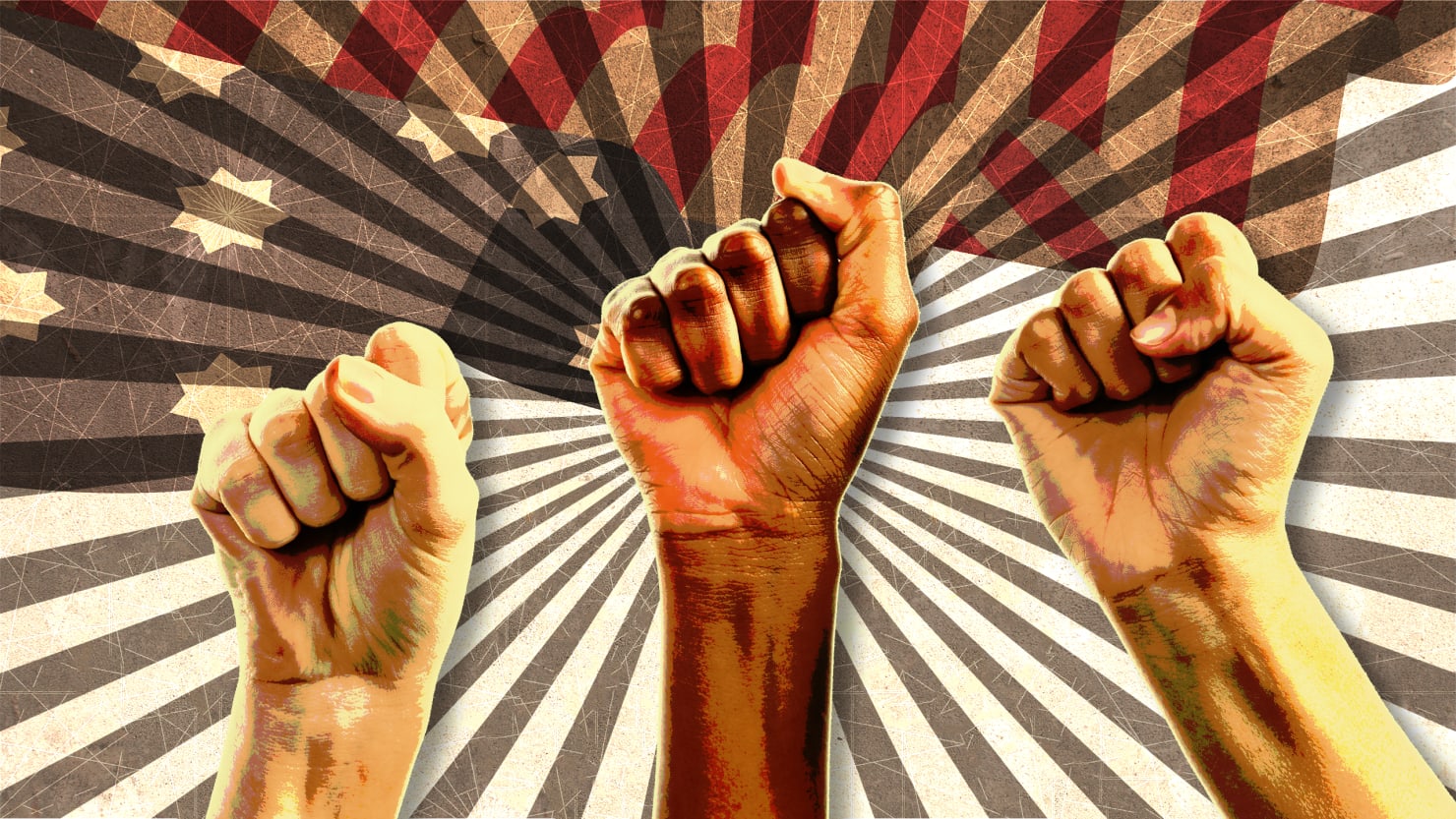
    Photo Illustration by The Daily Beast

    Patriot Prayer’s leader is half-Japanese. Black and brown faces march with the Proud Boys. Is the future of hate multicultural?

    PORTLAND, Oregon—Outfitted in a flak jacket and fighting gloves, Enrique Tarrio was one of dozens of black, Latino, and Asian men who marched alongside white supremacists in Portland on Aug. 4.

    Tarrio, who identifies as Afro-Cuban, is president of the Miami chapter of the Proud Boys, who call themselves “Western chauvinists,” and “regularly spout white-nationalist memes and maintain affiliations with known extremists,” according to the Southern Poverty Law Center. Last month, prior to the Patriot Prayer rally he attended in Portland, Tarrio was pictured with other far-right activists making a hand sign that started as a hoax but has become an in-joke. Last year, Tarrio said traveled to Charlottesville, Virginia, for the Unite the Right rally that ended with a neo-Nazi allegedly killing an anti-fascist protester. (The Proud Boys said any members who went to the event were kicked out.)

    Tarrio and other people of color at the far-right rallies claim institutional racism no longer exists in America. In their view, blacks are to blame for any lingering inequality because they are dependent on welfare, lack strong leadership, and believe Democrats who tell them “You’re always going to be broke. You’re not going to make it in society because of institutional racism,” as one mixed-race man put it…

    Read the entire article here.

  • Was Interracial Love Possible in the Days of Slavery? Descendants of One Couple Think So

    The New York Times
    2018-10-21

    Adeel Hassan


    Paula Wright, a seventh-generation descendant of an interracial couple, has documented over 500 images that chronicle her family’s history.
    Tony Cenicola/The New York Times

    He was buried in a white cemetery. She was buried in a black cemetery. Their marriage was unheard-of at the time.

    Both William Ramey and his wife, Kittie Simkins, were born and raised in Edgefield, S.C., or “Bloody Edgefield,” a town known for its grisly murder rate in the antebellum South. Their relationship defied convention, and yet it survived war and bitter family resentment.

    Mr. Ramey, born in 1840, came from a prominent white family. Ms. Simkins was born a slave in 1845, most likely on a property called Edgewood owned by Francis Pickens, who would become a Confederate governor.

    The love affair could have been lost if not for Paula Wright, a seventh-generation descendant of the couple who inherited vintage photographs documenting eight generations of her family, dating to 1805. Ms. Wright, a New York Times reader, shared her family’s story with Race/Related earlier this year…

    Read the entire article here.

  • Comparative Racial Politics in Latin America (First Edition)

    Routledge
    2018-09-04
    358 pages
    31 B/W Illus.
    Paperback: 9781138485303
    Hardback: 9781138727021
    eBook (VitalSource): 9781315191065

    Edited by:

    Kwame Dixon, Associate Professor of Political Science
    Howard University, Washington, D.C.

    Ollie A. Johnson III, Associate Professor of African American Studies
    Wayne State University, Detroit, Michigan

    Comparative Racial Politics in Latin America: 1st Edition (Paperback) book cover

    Latin America has a rich and complex social history marked by slavery, colonialism, dictatorships, rebellions, social movements and revolutions. Comparative Racial Politics in Latin America explores the dynamic interplay between racial politics and hegemonic power in the region. It investigates the fluid intersection of social power and racial politics and their impact on the region’s histories, politics, identities and cultures.

    Organized thematically with in-depth country case studies and a historical overview of Afro-Latin politics, the volume provides a range of perspectives on Black politics and cutting-edge analyses of Afro-descendant peoples in the region. Regional coverage includes Argentina, Brazil, Colombia, Cuba, the Dominican Republic, Ecuador, Haiti and more. Topics discussed include Afro-Civil Society; antidiscrimination criminal law; legal sanctions; racial identity; racial inequality and labor markets; recent Black electoral participation; Black feminism thought and praxis; comparative Afro-women social movements; the intersection of gender, race and class, immigration and migration; and citizenship and the struggle for human rights. Recognized experts in different disciplinary fields address the depth and complexity of these issues.

    Comparative Racial Politics in Latin America contributes to and builds on the study of Black politics in Latin America.

    Table of Contents

    • Introduction: Comparative Racial Politics in Latin America – Black Politics Matter [Kwame Dixon and Ollie A. Johnson III]
    • Part 1: History
      • 1. Beyond Representation: Rethinking Rights, Alliances and Migrations: Three Historical Themes in Afro-Latin American Political Engagement [Darién J. Davis]
      • 2. Recognition, Reparations, and Political Autonomy of Black and Native Communities in the Americas [Bernd Reiter]
      • 3. Pan-Africanism and Latin America [Elisa Larkin Nascimento]
    • Part 2: The Caribbean
      • 4. Black Activism and the State in Cuba [Danielle Pilar Clealand]
      • 5. Correcting Intellectual Malpractice: Haiti and Latin America [Jean-Germain Gros]
      • 6. Black Feminist Formations in the Dominican Republic since La Sentencia [April J. Mayes]
    • Part 3: South America
      • 7. Afro-Ecuadorian Politics [Carlos de la Torre and Jhon Antón Sánchez]
      • 8. In The Branch of Paradise: Geographies of Privilege and Black Social Suffering in Cali, Colombia [Jaime Amparo Alves and Aurora Vergara-Figueroa]
      • 9. The Impossible Black Argentine Political Subject [Judith M. Anderson]
      • 10. Current Representations of “Black” Citizens: Contentious Visibility within the Multicultural Nation [Laura de la Rosa Solano]
    • Part 4: Comparative Perspectives
      • 11. The Contours and Contexts of Afro-Latin American Women’s Activism [Kia Lilly Caldwell]
      • 12. Race and the Law in Latin America [Tanya Katerí Hernández]
      • 13. The Labyrinth of Ethnic-Racial Inequality: a Picture of Latin America according to the recent Census Rounds [Marcelo Paixão and Irene Rossetto]
      • 14. The Millennium/Sustainable Development Goals and Afro-descendants in the Americas: An (Un)intended Trap [Paula Lezama]
    • Conclusion [Kwame Dixon and Ollie A. Johnson III]
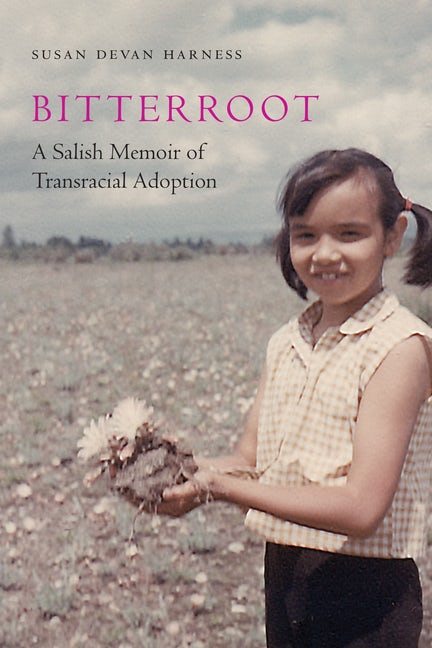
  • Bitterroot: A Salish Memoir of Transracial Adoption

    University of Nebraska Press
    October 2018
    352 pages
    12 photographs
    Hardcover ISBN: 978-1-4962-0746-3
    eBook (PDF) ISBN: 978-1-4962-1088-3
    eBook (EPUB) ISBN: 978-1-4962-1086-9

    Susan Devan Harness, Member
    Confederated Salish and Kootenai Tribes

    Bitterroot

    In Bitterroot Susan Devan Harness traces her journey to understand the complexities and struggles of being an American Indian child adopted by a white couple and living in the rural American West. When Harness was fifteen years old, she questioned her adoptive father about her “real” parents. He replied that they had died in a car accident not long after she was born—except they hadn’t, as Harness would learn in a conversation with a social worker a few years later.

    Harness’s search for answers revolved around her need to ascertain why she was the target of racist remarks and why she seemed always to be on the outside looking in. New questions followed her through college and into her twenties when she started her own family. Meeting her biological family in her early thirties generated even more questions. In her forties Harness decided to get serious about finding answers when, conducting oral histories, she talked with other transracial adoptees. In her fifties she realized that the concept of “home” she had attributed to the reservation existed only in her imagination.

    Making sense of her family, the American Indian history of assimilation, and the very real—but culturally constructed—concept of race helped Harness answer the often puzzling questions of stereotypes, a sense of nonbelonging, the meaning of family, and the importance of forgiveness and self-acceptance. In the process Bitterroot also provides a deep and rich context in which to experience life.

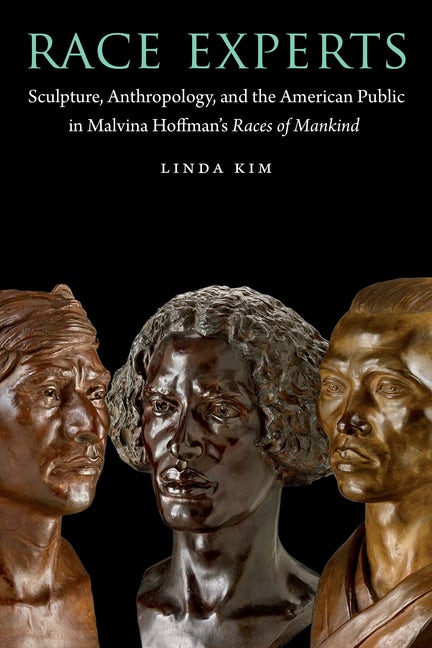
  • Race Experts: Sculpture, Anthropology, and the American Public in Malvina Hoffman’s Races of Mankind

    University of Nebraska Press
    August 2018
    420 pages
    86 illustrations
    Hardcover ISBN: 978-1-4962-0185-0
    eBook (PDF) ISBN: 978-1-4962-0805-7
    eBook (EPUB) ISBN: 978-1-4962-0803-3

    Linda Kim, Associate Professor of American and Modern Art History
    Westphal College of Media Arts & Design
    Drexel University, Philadelphia, Pennsylvania

    Race Experts

    In Race Experts Linda Kim examines the complicated and ambivalent role played by sculptor Malvina Hoffman in T​he Races of Mankind series created for the Chicago Field Museum in 1930. Although Hoffman had training in fine arts and was a protégé of Auguste Rodin and Ivan Meštrović, she had no background in anthropology or museum exhibits. She was nonetheless commissioned by the Field Museum to make a series of life-size sculptures for the museum’s new racial exhibition, which became the largest exhibit on race ever installed in a museum and one of the largest sculptural commissions ever undertaken by a single artist.

    Hoffman’s Races of Mankind exhibit was realized as a series of 104 bronzes of racial types from around the world, a unique visual mediation between anthropological expertise and everyday ideas about race in interwar America. Kim explores how the artist brought scientific understandings of race and the everyday racial attitudes of museum visitors together in powerful and productive friction. The exhibition compelled the artist to incorporate not only the expertise of racial science and her own artistic training but also the popular ideas about race that ordinary Americans brought to the museum. Kim situates the Races of Mankind exhibit at the juncture of these different forms of racial expertise and examines how the sculptures represented the messy resolutions between them.

    Race Experts is a compelling story of ideological contradiction and accommodation within the racial practices of American museums, artists, and audiences.

  • Complex look at Frederick Douglass with a lesson for Trump era

    The Boston Globe
    2018-10-12

    Eddie S. Glaude Jr., James S. McDonnell Distinguished University Professor; William S. Tod Professor of Religion and African-American Studies
    Princeton University


    Enrique Moreiro for The Boston Globe

    David W. Blight, Frederick Douglass: Prophet of Freedom (New York: Simon & Schuster, 2018)

    David Blight has written the definitive biography of Frederick Douglass. With extraordinary detail he illuminates the complexities of Douglass’s life and career and paints a powerful portrait of one of the most important American voices of the 19th century. One would expect nothing less. Blight, considered a leading authority on the slavery period, has been thinking about Douglass for over 35 years. The Yale historian wrote his dissertation on him. And now with unprecedented access to a trove of material gathered by African-American art collector Walter O. Evans, Blight sheds light on the final 30 years of Douglass’s life in ways we have never seen. The resulting chronicle enriches our understanding of Douglass and the challenges he faced and offers a lesson for our own troubled times.

    What surfaces is a powerful and flawed human being. We see him struggling to create himself under the conditions of slavery, waging war against the peculiar institution with words and action, raging against “the infinite manifestations of racism” (what Douglass called our “national faith”), and remaining a loyal partisan of the Republican Party until the day his heart gave out in 1895 at age 77. His is a journey from radical outsider to political insider, a prophet whose fires cooled as he aged, gained famed, and acquired access to the corridors of power.

    But we also get a glimpse of the intimate spaces of Douglass’s private life that are haunted by the specter of his slave experience. Blight reminds us that slavery stole from Douglass “all filial affection . . . [H]e never found it easy to love, while always seeking love as much as anything else in life.” Perhaps this gaping absence or, better, need, along with his hatred of slavery and American racism, kept him on the road, even in old age. Douglass maintained a back-breaking speaking schedule. Constantly traveling, he left his family in the hands of his unshakable wife, Anna Murray, an illiterate, free-born woman who grew up on the east bank of the Tuckahoe River in Maryland. It was she who bore the burden of raising their family, managing the household (often under financial duress), and helping to navigate the life of the most famous black man in the world…

    Read the entire review here.

  • As a mixed child of a Latin American couple, I could be seen as socially undetermined — part of a mestizo/mulato muddle, yet embraced as part of a Puerto Rican national identity. But in the United States, my fate has been to be inexorably drawn to the identity of my darker parent. Like Pedro Pietri penning the obituary of the passive Puerto Rican, I accept and cherish that embrace, but hope to end the silence of the dear negro in me. It’s time to let go, and embrace the blackness at the core of my being that I’ve always known.

    Ed Morales, “‘Mi negro’: Embracing my blackness as a Puerto Rican man,” The Washington Post, September 14, 2018. https://www.washingtonpost.com/news/post-nation/wp/2018/09/14/mi-negro-embracing-my-blackness-as-a-puerto-rican-man.

  • When White Nationalists Get DNA Tests That Reveal African Ancestry

    The Atlantic
    2017-08-17

    Sarah Zhang, Staff Writer

    An analysis of Stormfront forums shows a sometimes sophisticated understanding of the limits of ancestry tests.

    The white-nationalist forum Stormfront hosts discussions on a wide range of topics, from politics to guns to The Lord of the Rings. And of particular and enduring interest: genetic ancestry tests. For white nationalists, DNA tests are a way to prove their racial purity. Of course, their results don’t always come back that way. And how white nationalists try to explain away non-European ancestry is rather illuminating of their beliefs.

    Two years ago—before Donald Trump was elected president, before white nationalism had become central to the political conversation—Aaron Panofsky and Joan Donovan, sociologists then at the University of California, Los Angeles, set out to study Stormfront forum posts about genetic ancestry tests. They presented their study at the American Sociological Association meeting this Monday. (A preprint of the paper is now online.) After the events in Charlottesville this week, their research struck a particular chord with the audience.

    “For academics, there was some uneasiness around hearing that science is being used in this way and that some of the critiques that white nationalists are making of genetics are the same critiques social scientists make of genetics,” says Donovan, who recently took up a position at the Data and Society Research Institute. On Stormfront, the researchers did encounter conspiracy theories and racist rants, but some white-nationalist interpretations of genetic ancestry tests were in fact quite sophisticated—and their views cannot all be easily dismissed as ignorance.

    “If we believe their politics comes from lack of sophistication because they’re unintelligent or uneducated,” says Panofsky, “I think we’re liable to make a lot of mistakes in how we cope with them.”…

    Read the entire article here.

  • I’d thought I was alone, or just unlucky, but as I spoke to other women — 13 for this piece — I realized it wasn’t just me. Targeted harassment from Asian-American men toward Asian-American women over choosing a non-Asian partner or having multiracial children, I discovered, is widespread, vicious, and devastating. We tell kids, “Ignore bullies and they’ll go away,” but the thing about ignoring bullies is that even if they leave you alone, they find other targets.

    Celeste Ng, “When Asian Women Are Harassed for Marrying Non-Asian Men,” The Cut. October 12, 2018. https://www.thecut.com/2018/10/when-asian-women-are-harassed-for-marrying-non-asian-men.html.

  • Brown Beauty: Color, Sex, and Race from the Harlem Renaissance to World War II

    New York University Press
    September, 2018
    368 pages
    27 illustrations
    Cloth ISBN: 9781479875108
    Paper ISBN: ISBN: 9781479802081

    Laila Haidarali, Assistant Professor of Gender Studies
    Queens University, Kingston, Ontario, Canada

    Examines how the media influenced ideas of race and beauty among African American women from the Harlem Renaissance to World War II.

    Between the Harlem Renaissance and the end of World War II, a complicated discourse emerged surrounding considerations of appearance of African American women and expressions of race, class, and status. Brown Beauty considers how the media created a beauty ideal for these women, emphasizing different representations and expressions of brown skin.

    Haidarali contends that the idea of brown as a “respectable shade” was carefully constructed through print and visual media in the interwar era. Throughout this period, brownness of skin came to be idealized as the real, representational, and respectable complexion of African American middle class women. Shades of brown became channels that facilitated discussions of race, class, and gender in a way that would develop lasting cultural effects for an ever-modernizing world.

    Building on an impressive range of visual and media sources—from newspapers, journals, magazines, and newsletters to commercial advertising—Haidarali locates a complex, and sometimes contradictory, set of cultural values at the core of representations of women, envisioned as “brown-skin.” She explores how brownness affected socially-mobile New Negro women in the urban environment during the interwar years, showing how the majority of messages on brownness were directed at an aspirant middle-class. By tracing brown’s changing meanings across this period, and showing how a visual language of brown grew into a dynamic racial shorthand used to denote modern African American womanhood, Brown Beauty demonstrates the myriad values and judgments, compromises and contradictions involved in the social evaluation of women. This book is an eye-opening account of the intense dynamics between racial identity and the influence mass media has on what, and who we consider beautiful.