• The black Americans suing to reclaim their Native American identity

    The Guardian
    2018-10-02

    Caleb Gayle


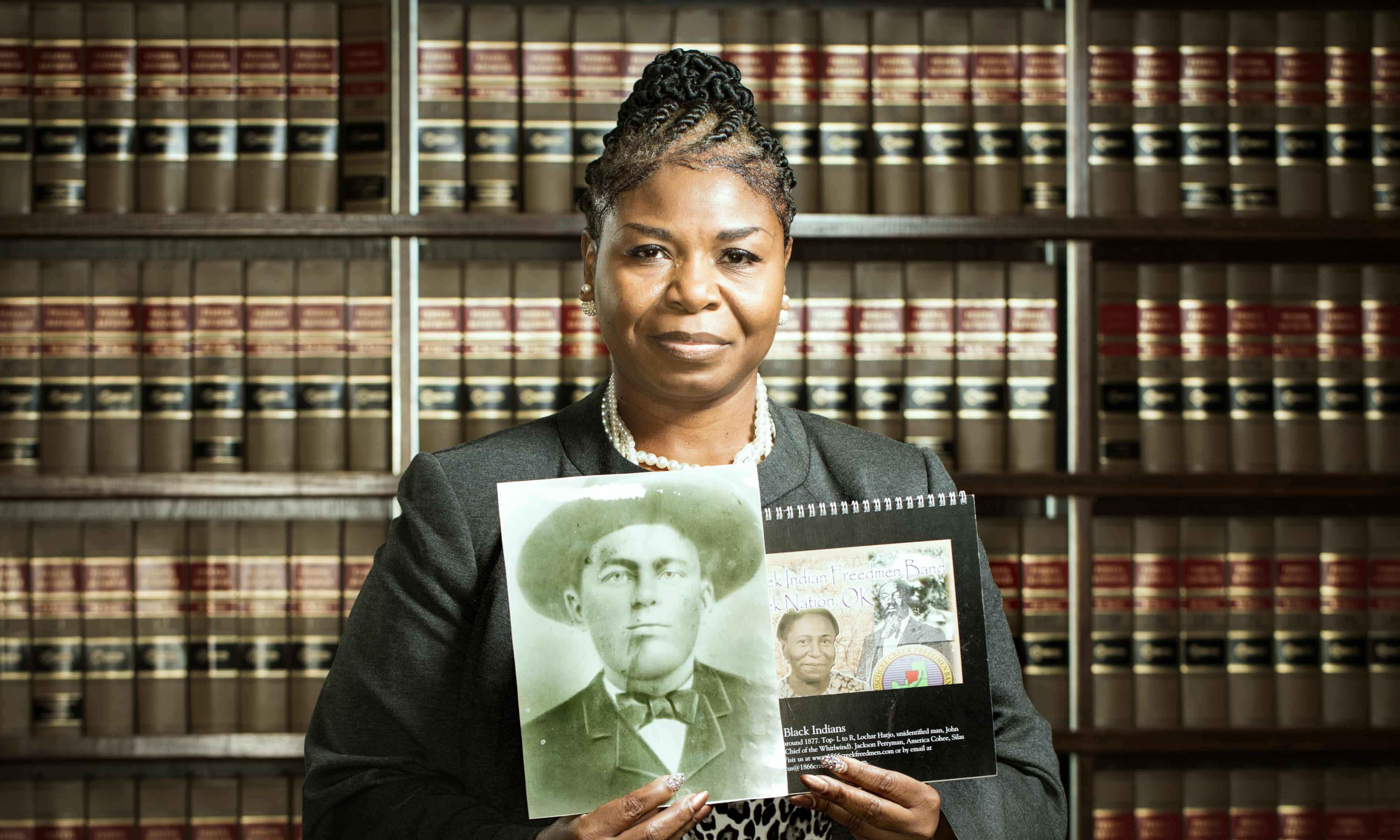
    Rhonda Grayson, with an image of her great-great grandfather Willie Cohee. Photograph: Brett Deering for the Guardian

    Their ancestors were black slaves owned by Native Americans. Now they’re suing the Creek nation to fully restore their citizenship

    Johnnie Mae Austin and her grandson, Damario Solomon-Simmons, can tell you everything about their ancestry. They can go back as far as 1810, the year Solomon-Simmons’ great-great-great-great-grandfather, Cow Tom, was born. With undeniable pride, they recount the man’s feats of bravery during the civil war, and his leadership within Oklahoma’s Creek population.

    In fact, they are so determined to let the world know exactly who Cow Tom was that they’re suing the Creek nation to make sure his descendants aren’t forgotten.

    Solomon-Simmons and his grandmother are black, but they argue they’re also Creek, and they’re fighting to reclaim their identity…

    Red the entire article here.

  • Race In/For Cyberspace: Identity Tourism and Racial Passing on the Internet

    Works and Days
    Volume 13, Numbers 1 & 2 (1995)
    pages 181-193

    Lisa Nakamura, Gwendolyn Calvert Baker Collegiate Professor; Coordinator and Undergraduate Advisor for the Digital Studies Minor
    University of Michigan

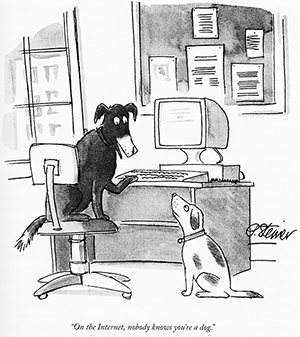
    A cute cartoon dog sits in front of a computer, gazing at the monitor and typing away busily. The cartoon’s caption jubilantly proclaims, “On the Internet, nobody knows you’re a dog!” This image resonates with particular intensity for those members of a rapidly expanding subculture which congregates within the consensual hallucination defined as cyberspace. Users define their presence within this textual and graphical space through a variety of different activities‹commercial interaction, academic research, netsurfing, real time interaction and chatting with interlocutors who are similarly “connected”‹but all can see the humor in this image because it illustrates so graphically a common condition of being and self definition within this space. Users of the Internet represent themselves within it solely through the medium of keystrokes and mouse-clicks, and through this medium they can describe themselves and their physical bodies any way they like; they perform their bodies as text. On the Internet, nobody knows that you’re a dog; it is possible to “computer crossdress” (Stone 84) and represent yourself as a different gender, age, race, etc. The technology of the Internet offers its participants unprecedented possibilities for communicating with each other in real time, and for controlling the conditions of their own self-representations in ways impossible in face to face interaction. The cartoon seems to celebrate access to the Internet as a social leveler which permits even dogs to express freely themselves in discourse to their masters, who are deceived into thinking that they are their peers, rather than their property. The element of difference, in this cartoon the difference between species, is comically subverted in this image; in the medium of cyberspace, distinctions and imbalances in power between beings who perform themselves solely through writing seem to have deferred, if not effaced…

    Read the entire article here or here.

  • Racial Passing and Its Transatlantic Contexts

    5 University Gardens
    Room 101
    University of Glasgow
    Glasgow, United Kingdom
    Tuesday, 2018-11-20, 17:15Z

    Janine Bradbury, Senior Lecturer in Literature
    York St John University York, United Kingdom

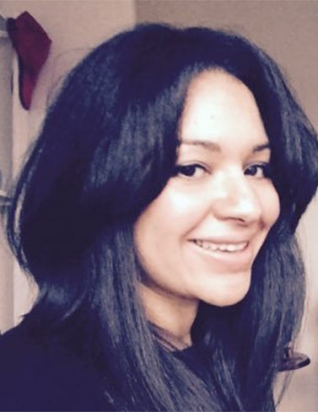
    JBradbury170802-Staff-Profile.jpg

    The Transatlantic Literary Women are excited to be welcoming Dr. Janine Bradbury to Glasgow to give a paper titled: “Racial Passing and Its Transatlantic Contexts”. The talk takes place in room 101, 5 University Gardens at 5.15pm on Tuesday 20th November with drinks and refreshments available from 5. This is a social, friendly gathering. As always, everyone is welcome. Hope to see you there!

    During the late nineteenth and early twentieth centuries, an entire literary genre emerged in the United States that revolved around light skinned, mixed race African Americans who ‘fraudulently’ pretended to be or passed for white in order to ‘evade’ racism, prejudice, and segregation. Films like Imitation of Life brought the topic to a national audience and writers as diverse as William Faulkner, Mark Twain, and Langston Hughes featured passing in their works.

    Given that the United States has a distinct history of race relations, how do stories about passing ‘work’ beyond these regional and national contexts? And do American stories about passing inspire and hold relevance for writers across the black Atlantic? How is gender and nationhood represented in these works? And what role do women writers play in the history of the passing genre?

    This talk explores the phenomenon of ‘passing-for-white’ as represented in the work of transatlantic literary women ranging from Harlem Renaissance writer Nella Larsen to contemporary British writer Helen Oyeyemi and asks why passing continues to inspire women writers across the West.

    For more information, click here.

  • Deconstructing the Truism of Race as a Social Construct

    Hammer Museum
    University of California, Los Angeles
    10899 Wilshire Boulevard
    Los Angeles, California 90024
    2018-11-03

    Naomi Zack, Professor of Philosophy
    University of Oregon

    Rebecca Tuvel, Assistant Professor of Philosophy
    Rhodes College, Memphis, Tennessee

    Diarmuid Costello, Associate Professor of Philosophy
    University of Warwick

    Philosophers Naomi Zack of the University of Oregon, Rebecca Tuvel of Rhodes College, and Diarmuid Costello of the University of Warwick discuss the ways in which Adrian Piper’s art interrogates racial identity, focusing on specific works as well as Piper’s own writings about race, “Passing for White, Passing for Black” and Escape to Berlin: A Travel Memoir.


    Adrian Piper, Self-Portrait Exaggerating My Negroid Features, 1981
    Pencil on paper. 10 × 8 in. (25.4 × 20.3 cm). The Eileen Harris Norton Collection © Adrian Piper Research Archive Foundation Berlin.

    View the discussion (03:04:11) here.

  • Misty Copeland: the trailblazing ballerina loved by Prince, Obama and Disney

    The Guardian
    2018-11-07

    Lyndsey Winship, Dance Critic

    ‘I had this awakening’ … Misty Copeland.
    ‘I had this awakening’ … Misty Copeland. Photograph: Danielle Levitt for the Observer

    She thinks ballet’s broken – and has a plan to fix it. The star of Disney’s Nutcracker reboot talks about racism, nude shoes and growing up bendy

    Ballet was definitely my escape,” says Misty Copeland. “It was the first thing I’d ever experienced in my life that was mine – only mine, not my five other siblings’. It gave me a voice, made me feel powerful.”

    When Copeland discovered ballet she was 13, living with her mother and siblings in a motel in California. She was a shy, slight child who rarely spoke and tried not to be noticed. Twenty-three years later, hers is the kind of transformation story even ballet might think far-fetched. In 2015, she became the first black female principal dancer at American Ballet Theatre – and with that a spokesperson, poster girl, and bona fide star. Barack Obama sought her out as an adviser, Prince invited her on tour, Spike Lee wants her in his films, and people queue up to meet her at the stage door of the Metropolitan Opera House in New York.

    And now the latest chapter in her real-life fairytale has begun to unfold. Copeland is dancing in Disney’s The Nutcracker and the Four Realms, a cinema revamp of the Christmas favourite starring Keira Knightley, Helen Mirren and Morgan Freeman

    Read the entire article here.

  • Race and Cultural Practice in Popular Culture

    Rutgers University Press
    2018-10-17
    296 pages
    6 x 9
    Paperback ISBN: 978-1-9788-0130-1
    Cloth ISBN: 978-1-9788-0131-8
    PDF ISBN: 978-1-9788-0134-9
    EPUB ISBN: 978-1-9788-0132-5
    MobiPocket ISBN: 978-1-9788-0133-2

    Edited by:

    Domino Perez, Associate Professor of English
    University of Texas, Austin

    Rachel González-Martin, Assistant Professor of Mexican American and Latina/o Studies
    University of Texas, Austin

    Race and Cultural Practice in Popular Culture

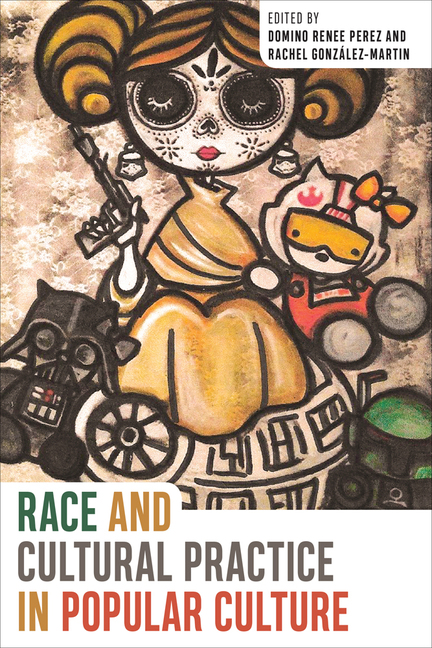
    Race and Cultural Practice in Popular Culture is an innovative work that freshly approaches the concept of race as a social factor made concrete in popular forms, such as film, television, and music. The essays collectively push past the reaffirmation of static conceptions of identity, authenticity, or conventional interpretations of stereotypes and bridge the intertextual gap between theories of community enactment and cultural representation. The book also draws together and melds otherwise isolated academic theories and methodologies in order to focus on race as an ideological reality and a process that continues to impact lives despite allegations that we live in a post-racial America. The collection is separated into three parts: Visualizing Race (Representational Media), Sounding Race (Soundscape), and Racialization in Place (Theory), each of which considers visual, audio, and geographic sites of racial representations respectively.

    Table of Contents

    • List of Illustrations
    • “Assembling an Intersectional Pop Cultura Analytical Lens: A Foreword”
    • Introduction: Re-imagining Critical Approaches to Folklore and Popular Culture / Domino Renee Perez and Rachel González-Martin
    • Part I: Visualizing Race
      • “A Thousand ‘Lines of Flight’: Collective Individuation and Racial Identity in Netflix’s Orange Is the New Black and Sense8” / Ruth Y. Hsu
      • “Performing Cherokee Masculinity in The Doe Boy” / Channette Romero
      • “Truth, Justice, and the Mexican Way: Lucha Libre, Film, and Nationalism in Mexico” / James Wilkey
      • “Native American Irony: Survivance and the Subversion of Ethnography” / Gerald Vizenor
    • Part II: Sounding Race
      • “(Re)imagining Indigenous Popular Culture” / Mintzi Auanda Martínez-Rivera
      • “My Tongue is Divided into Two” / Olivia Cadaval
      • “Performing Nation Diva Style in Lila Downs and Astrid Hadad’s La Tequilera” / K. Angelique Dwyer
      • “(Dis)identifying with Shakira’s ‘Global Body’: A Path Towards Rhythmic Affiliations Beyond the Dichotomous Nation/Diaspora” / Daniela Gutiérrez López
      • “Voicing the Occult in Chicana/o Culture and Hybridity: Prayers and the Cholo-Goth Aesthetic” / José G. Anguiano
    • Part III: Racialization in Place
      • “Ugly Brown Bodies: Queering Desire in Machete” / Nicole Guidotti-Hernández
      • “Bitch, how’d you make it this far?”: Strategic Enactments of White Femininity in The Walking Dead” / Jaime Guzmán and Raisa Alvarado Uchima
      • “Bridge and Tunnel: Transcultural Border Crossings in The Bridge and Sicario” / Marcel Brousseau
      • “Red Land, White Power, Blue Sky: Settler Colonialism and Indigeneity in Breaking Bad” / James H. Cox
    • Acknowledgments
    • Notes on Contributors
    • Index
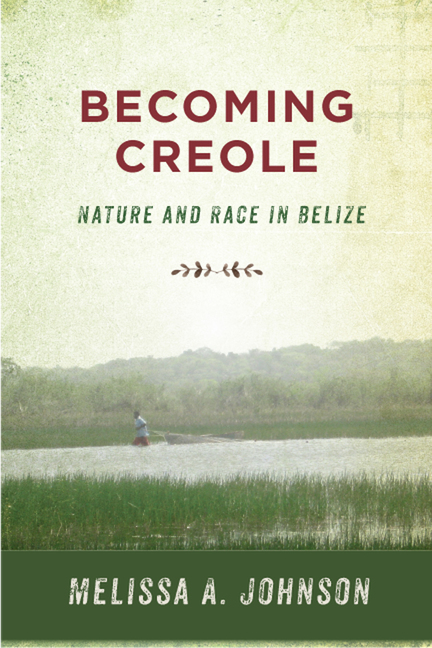
  • Becoming Creole: Nature and Race in Belize

    Rutgers University Press
    2018-11-01
    226 pages
    24 b&w images
    6 x 9
    Paperback ISBN: 978-0-8135-9698-3
    Cloth ISBN: 978-0-8135-9699-0
    EPUB ISBN: 978-0-8135-9700-3
    MobiPocket ISBN: 978-0-8135-9701-0
    PDF ISBN: 978-0-8135-9702-7

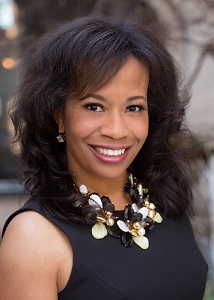
    Melissa A. Johnson, Professor of Anthropology
    Southwestern University, Georgetown, Texas

    Becoming Creole

    Becoming Creole explores how people become who they are through their relationships with the natural world, and it shows how those relationships are also always embedded in processes of racialization that create blackness, brownness, and whiteness. Taking the reader into the lived experience of Afro-Caribbean people who call the watery lowlands of Belize home, Melissa A. Johnson traces Belizean Creole peoples’ relationships with the plants, animals, water, and soils around them, and analyzes how these relationships intersect with transnational racial assemblages. She provides a sustained analysis of how processes of racialization are always present in the entanglements between people and the non-human worlds in which they live.

    Table of Contents

    • Contents
    • List of Illustrations
    • Acknowledgements
    • 1. Introduction: Becoming Creole
    • 2. Hewers of Wood: Histories of Nature, Race and Becoming
    • 3. Bush: Racing the More than Human
    • 4. Living in a Powerful World
    • 5. Entangling the More than Human: Becoming Creole
    • 6. Wildlife Conservation, Nature Tourism and Creole Becomings
    • 7. Transnational Becomings: From Deer Sausage to Tilapia
    • 8. Conclusion: Livity and (Human) Being
    • Appendix/Glossary: Belizean Kriol Words and the More than Human??
    • Bibliography
    • Index
    • About the Author
  • Family Storytellers Inspired Professor-Historian

    Diverse Issues in Higher Education
    2018-10-30

    LaMont Jones, Senior Staff Writer


    Dr. Allyson Hobbs

    Dr. Allyson Hobbs comes from a family of storytellers, perhaps chief among them her Aunt Shirley.

    It was Shirley Kitching’s fascinating stories shared during holiday and summer visits to Chicago – particularly one about an ancestor who was sent to the West Coast to live her life as a White woman by “passing” – that influenced Hobbs’ decision to become a historian and author.

    Now Hobbs, an associate professor of American history and director of African and African-American Studies at Stanford University, spends a lot of time researching historical people, places and phenomena and bringing those stories to life for the public – the same way Kitching and other relatives did for her…

    …“You have to understand Chicago to understand African-American history,” Hobbs contends, noting its longtime centrality to Black culture.

    And that, along with one of Aunt Shirley’s stories, is what led to research and ultimately an award-winning book about the racial phenomenon of passing – when very light-skinned and European-featured Black Americans secretly pass themselves off as White people. Published in 2014, A Chosen Exile: A History of Racial Passing in American Life explored the history of passing in the United States from the 1700’s to current times…

    Read the entire article here.

  • Review: Sharon Block, Colonial Complexions

    The Junto: A Group Blog on Early American History
    2018-06-02

    Vanessa Holden, Assistant Professor of History and African American and Africana Studies
    University of Kentucky

    Sharon Block, Colonial Complexions: Race and Bodies in Eighteenth-Century America (Philadelphia: University of Pennsylvania Press, 2018).

    At the opening of Colonial Complexions: Race and Bodies in Eighteenth-Century America, Sharon Block poses two provocative questions: “What were the meanings of black, white, and red in the colonial eighteenth century; and how did Anglo-American colonists describe people’s appearance?” (1) To answer these queries Block presents a cultural history race in Britain’s 18th century American colonies. She makes a careful study of the descriptors advertisers and editors used in missing colonial persons adds for runaway African descent and their European and Native American servants.

    Block argues that the terms “black”; “white”; “red”; and “yellow” did not have static meanings that neatly corresponded to racial identities for 18th-century Anglo-colonists. Those terms evolved into markers of racial difference right alongside American constructions of race that would not become commonplace until the 19th century. Block challenges readers to understand how humoral theory influenced European colonists’ ideas about physical appearance and how the form of the missing person ad reflected and shaped the meanings of signifiers like age, height, and health for colonial subjects.

    Block engages thirty-nine colonial newspapers from all over the across colonial America for her study, drawing from them both quantitative and qualitative data to support her arguments. From their pages, she gleans categories and descriptors used by 18th-century subjects to describe other 18th century subjects. “Through a range of descriptive choices,” she writes, “advertisers communicated the features they deemed significant for readers to know and revealed shared assumptions about bodily norms.”(5) Block remains very critical of her sources throughout and highlights both the form and the content of the ads she analyzes. She is well aware that the ads are part of an archive of mastery and makes sure to note this throughout. Block remains clear that the norms she excavates from these advertisements are norms for Anglo-colonizers and takes care to acknowledge African and Native American understandings of physiology. That the descriptors and signifiers she analyzes allow Anglo-colonists to flatten individual human experiences and bolster colonial systems of power is precisely her point.

    Read the entire review here.

  • Making Race in British Colonial North America

    Black Perspectives
    2018-11-08

    Elise A. Mitchell, Ph.D. Candidate in Atlantic World History and Caribbean and Latin American History
    Department of History
    New York University


    Uncle Sam challenging the interference of John Bull, the personification of Great Britain, in the Civil War, 1861 (Photo: Library of Congress).

    When confronted with three eighteenth-century newspaper advertisements seeking a missing man from Connecticut named Ishmael Mux of “a white Complexion,” a missing Pennsylvanian named John Daily who had a “black Complexion, bushy Hair,” and a man who went missing on his way to North Carolina named Andrew Vaughan with a “red” complexion, most readers would presume that their complexions, “white,” “black,” and “red,” indicated their race. However, as Sharon Block shows in her latest book, Colonial Complexions: Race and Bodies in Eighteenth-Century America, to eighteenth-century readers:

    White, black, and red complexion did not automatically parallel European, African, and Native American heritages, respectively. In fact, Ishmael was described as mulatto; John as Irish; and Andrew was listed as an infantryman in the British 40th regiment, was born in Philadelphia, with no nationality or ethnicity specified. Skin and hair appearance were features related to, but not constitutive of, ethnic or national background (60-61).

    This is but one of many examples Sharon Block uses to illustrate how the relationships between bodily descriptions, ethnicities, and racial meaning are not transhistorical, but developed through contextually specific discourses that have changed over time (83). Block, a digital humanist and historian of race, gender, rape, sexuality, and the body, examined thirty-nine British North American colonial newspapers published between 1750 and 1775 and analyzed over 4000 advertisements for missing enslaved and free people. Her ambitious study of these advertisements reveals how British North American colonists constructed race through quotidian discourses. Colonial Complexions is a crucial contribution to the history of race and a noteworthy model for digital age historical methodology…

    Read the entire review here.