• The Legacy of Monticello’s Black First Family

    The New York Times
    2018-07-04

    Brent Staples
    Photographs by Damon Winter


    A view of Thomas Jefferson’s home from the main avenue where enslaved people were quartered at Monticello.

    A recently opened exhibit at Thomas Jefferson’s Virginia estate gives new recognition to Sally Hemings and the role of slavery in the home — and in his family.

    Plantation wives in the slave-era South resorted to willful blindness when their husbands conscripted black women as sexual servants and filled the household with mixed-race children who inevitably resembled the master. Thomas Jefferson’s wife, Martha, was several years dead when he set off on this path, fathering at least six children with Martha’s enslaved black half sister, Sally Hemings. The task of dissembling fell to the remaining white Jeffersons, who aided in a cover-up that held sway for two centuries and feigned ignorance of a relationship between Jefferson and Hemings that lasted nearly four decades.

    The foundation that owns Monticello, Jefferson’s mountaintop home near Charlottesville, Va., broke with this long-running deception last month when it unveiled several new exhibits that underscore the centrality of slavery on the founder’s estate. The most important — in the South Wing, where Sally Hemings once lived — explores the legacy of the enslaved woman whom some historians view as the president’s second wife and who skillfully prevailed on him to free from slavery the four Jefferson-Hemings children who lived into adulthood.

    The exhibit underscores the fact that the Jefferson estate was an epicenter of racial mixing in early Virginia, making it impossible to draw clear lines between black and white. It reminds contemporary Americans that slave owners like the Jeffersons often held their own black children, aunts, uncles and cousins in bondage. And it illustrates how enslaved near-white relations used proximity to privilege to demystify whiteness while taking critical measure of the relatives who owned them…

    Read the entire article here.
  • My return to GW [George Washington University] helped me find myself ways I never thought possible. I’m on my way to forming a sense of self on my own terms and my life is fuller as a result. I think of myself as a traveler, a foodie, a passionate student, a news and media junkie, a social justice enthusiast and more. My life means much more than just my ethnicity. I now understand that I have the agency and self-determination to decide who I want to be.

    Mailinh McNicholas, “What It’s Like Being an “Other”,” College Magazine, June 19, 2018. https://www.collegemagazine.com/what-its-like-being-an-other.

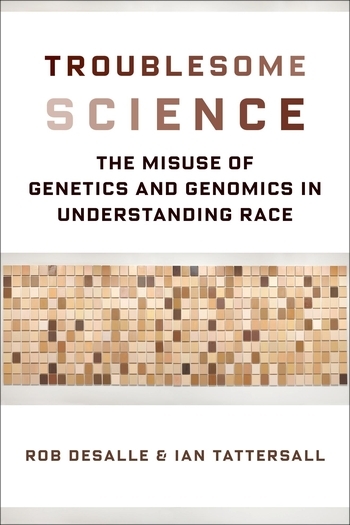
  • Troublesome Science: The Misuse of Genetics and Genomics in Understanding Race

    Columbia University Press
    June 2018
    216 pages
    Hardcover ISBN: 9780231185721
    E-book ISBN: 9780231546300

    Rob DeSalle, Curator/Sackler Institute for Comparative Genomics and Professor
    Richard Gilder Graduate School
    American Museum of Natural History, New York, New York

    Ian Tattersall, Curator Emeritus in the Division of Anthropology
    American Museum of Natural History, New York, New York

    Troublesome Science

    It is well established that all humans today, wherever they live, belong to one single species. Yet even many people who claim to abhor racism take for granted that human “races” have a biological reality. In Troublesome Science, Rob DeSalle and Ian Tattersall provide a lucid and forceful critique of how scientific tools have been misused to uphold misguided racial categorizations.

    DeSalle and Tattersall argue that taxonomy, the scientific classification of organisms, provides an antidote to the myth of race’s biological basis. They explain how taxonomists do their science—how to identify a species and to understand the relationships among different species and the variants within them. DeSalle and Tattersall also detail the use of genetic data to trace human origins and look at how scientists have attempted to recognize discrete populations within Homo sapiens. Troublesome Science demonstrates conclusively that modern genetic tools, when applied correctly to the study of human variety, fail to find genuine differences. While the diversity that exists within our species is a real phenomenon, it nevertheless defeats any systematic attempt to recognize discrete units within it. The stark lines that humans insist on drawing between their own groups and others are nothing but a mixture of imagination and ideology. Troublesome Science is an important call for researchers, journalists, and citizens to cast aside the belief that race has a biological meaning, for the sake of social justice and sound science alike.

    Contents

    • Preface
    • Acknowledgments
    • 1. Evolutionary Lessons
    • 2. Species and How to Recognize Them
    • 3. Phylogenetic Trees
    • 4. The Name Game: Modern Zoological Nomenclature and the Rules of Naming Things
    • 5. DNA Fingerprinting and Barcoding
    • 6. Early Biological Notions of Human Divergence
    • 7. Mitochondrial Eve and Y-Chromosome Adam
    • 8. The Other 99 Percent of the Genome
    • 9. ABBA/BABA and the Genomes of Our Ancient Relatives
    • 10. Human Migration and Neolithic Genomes
    • 11. Gene Genealogies and Species Trees
    • 12. Clustering Humans?
    • 13. STRUCTUREing Humans?
    • 14. Mr. Murray Loses His Bet
    • Epilogue: Race and Society
    • Notes and Bibliography
    • Index
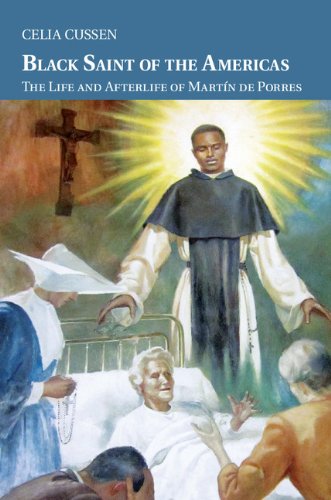
  • Black Saint of the Americas: The Life and Afterlife of Martín de Porres

    Cambridge University Press
    2014-10-13
    311 pages
    16 b/w illus.
    229 x 152 x 18 mm
    Hardcover ISBN: 978-1107034372
    Paperback ISBN: 9781108404174
    Online ISBN: 9781139540599

    Celia Cussen, Associate Professor of History
    Universidad de Chile

    In May 1962, as the struggle for civil rights heated up in the United States and leaders of the Catholic Church prepared to meet for Vatican Council II, Pope John XXIII named the first black saint of the Americas, the Peruvian Martín de Porres (1579–1639), and designated him the patron of racial justice. The son of a Spanish father and a former slavewoman from Panamá, Martín served a lifetime as the barber and nurse at the great Dominican monastery in Lima. This book draws on visual representations of Martín and the testimony of his contemporaries to produce the first biography of this pious and industrious black man from the cosmopolitan capital of the Viceroyalty of Peru. The book vividly chronicles the evolving interpretations of his legend and his miracles, and traces the centuries-long campaign to formally proclaim Martín de Porres a hero of universal Catholicism.

    • The first full-length work dedicated to Martín de Porres from a scholarly viewpoint
    • An analysis of witness testimonies and images that portrayed the virtues and miracles of Martín
    • A readable discussion of how the cult of the first black saint of the Americas evolved along with the needs and attitudes of Catholics in Peru and elsewhere

    Table of Contents

    • Introduction
    • Part I. The Life:
      • 1. Race and family
      • 2. The convent and the colonial world
      • 3. Healing and faith
      • 4. Death and the heavenly transit
    • Part II. The Afterlife:
      • 5. Creating a Vida from a life
      • 6. The miracles
      • 7. Images in black and white
      • 8. Sainthood
    • Conclusion
    • Appendixes
    • Bibliography
    • Endnotes
  • ‘My Racial Identity’ explores feelings about race

    Montclair Local
    Montclair, New Jersey
    2018-06-08

    Gwen Orel, Features Editor

    racial
    Charles Williams of Montclair, 19, a Parsons School of Design rising sophomore, is creating a photography portfolio of mixed race friends, “My Racial Identity, Part 1,” and intends to dive deeper in Part 2.
    ADAM ANIK/FOR MONTCLAIR LOCAL

    Montclair artist’s photo project delves into discussion

    Growing up in Montclair, Charles Williams sometimes said his dad was Cuban.

    That’s not really true.

    “When I was younger, I looked a little bit towards Asian, then black, Hispanic. Growing up, we really didn’t talk about race in my household, so I didn’t really feel it was an issue. Until my friends, they would ask me, what are you?” Williams said. “Your mom’s not black. You have a white name.”

    His mom is black. She’s from D.C., and his father is a white man from Florida, with some Cuban in him.

    “‘My dad does look Cuban,” Williams said. So saying his father was Cuban was a way of ending the questions of what are you? and where are you from? “You kind of get sick of it, so you say something to let it go.”

    Today, people talk about race. Williams is exploring it in his new photography project, “My Racial Identity,” that he started during his first year at Parsons School of Design. Williams’ photography can be seen at charleswilliams.work

    Read the entire article here.

  • Why Barack is black and Megan is biracial

    Media Diversified
    2018-06-28

    Olivia Woldemikael, Ph.D. Candidate in Political Science
    Harvard University

    Olivia Woldemikael discusses the differences in how Megan Markle and Barack Obama present themselves racially and asks what it means for blackness as an identity

    The exclusivity and purity of the racial categories, black and white, is a myth, and a destructive one. Yet, it is continuously perpetuated in national discourse and family conversations. As the personalities of celebrities and politicians continue to be venerated in America, the racial identity of public figures such as Barack Obama and Meghan Markle are important sites for changing our ideas about race.

    It’s no surprise to me that Barack Obama was considered America’s first black president and Meghan Markle is considered the biracial princess of England. The two are similarly “light-skinned” in racial parlance. Yet, the manner in which each of them has constructed signifiers of their race explains the difference in public perception. While perception alone does not diminish either’s proximity to whiteness and privilege, which may help explain their success. It does, however, draw attention to the way individuals are able to exercise agency in determining their racial identity, undermining the monolithic American racial ideology. The divergent public personas that Obama and Markle have cultivated demonstrate the fragility of racial categories and hierarchies, as well as highlight the need for a paradigmatic shift in the way we discuss and represent race in the media…

    Read the entire article here.

  • [Paulo César] Lima’s words point to a painful and somewhat paradoxical consequence of Brazil’s racial fluidity. America’s politics of racial purity, which culminated in the notion that even one-drop of African blood made a person legally black, fostered solidarity among those targeted by discriminatory laws. In Brazil, however, the often admirable blurring of racial boundaries is a modern reality that — rather than stemming from colorblindness — is tainted with the sinister origins of state-sanctioned attempts to dilute, even dissolve, blackness.

    Cleuci de Oliveira, “Is Neymar Black? Brazil and the Painful Relativity of Race,” The New York Times, June 30, 2018. https://www.nytimes.com/2018/06/30/opinion/is-neymar-black-brazil-and-the-painful-relativity-of-race.html.

  • Is Neymar Black? Brazil and the Painful Relativity of Race

    The New York Times
    2018-06-30

    Cleuci de Oliveira, Brasília-based reporter


    Neymar da Silva Santos Júnior, center, celebrating a goal with his teammates during Brazil’s World Cup match against Serbia on Wednesday. Michael Steele/Getty Images

    Ever since his “It’s not like I’m black, you know?” comment, Neymar has served as a focal point in the country’s cultural reckoning with racism, whitening, identity and public policy.

    Years before he became the most expensive player in the world; before his Olympic gold medal; before the Eiffel Tower lit up with his name to greet his professional move from Barcelona to Paris, Neymar da Silva Santos Júnior, the Brazilian forward known to the world simply as Neymar, faced his first public relations controversy.

    The year was 2010, and Neymar, then 18, had shot to fame in Brazil after a sensational breakout season. During an interview for the newspaper O Estado de S. Paulo, in between a conversation about Disneyland and sports cars, he was asked if he had ever experienced racism. “Never. Not in the field, nor outside of it,” he replied.

    “It’s not like I’m black, you know?”

    His answer was heard like a record-scratch across the country. Was this young man in denial about his racial identity? Particularly when in the same interview he outlined his meticulous hair care regime, which involved getting his locks chemically straightened every few weeks, then bleached blonde.

    Or was there a less alarming explanation behind his comment? Could Neymar merely be pointing out that, as the son of a black father and a white mother, his lighter skin tone shielded him from the racist abuse directed at other players? Had he, at least in his context, reached whiteness? Whatever the interpretation, Neymar’s words revealed the tricky, often contradictory ways that many Brazilians talk, and fail to talk, about race in a country with the largest population of black descendants outside of Africa

    Read the entire article here.

  • For anyone who is doubtful of the sheer absurdity of racial categorization and the porousness of our supposed boundaries, the Piper family history can be instructive. Adrian Margaret Smith Piper was born in 1948 in Washington Heights, and raised there and on Riverside Drive. On her paternal side, she is the product of a long line of whites and extremely light-skinned, straight-haired black property owners and, on her mother Olive’s side, mixed-race, planter-class Jamaican immigrants. Her father, Daniel, received two separate and contradictory birth certificates. The first one labeled him as “white,” while the second, which his mother demanded as a corrective, put him down as “octoroon.” (At MoMA, they are hung on the wall, as part of the installation of “Cornered.”) Piper’s paternal grandfather, also Daniel, went the opposite route after the birth of his second, slightly darker son, Billy, abandoning his wife and children and moving out West to start a new “white” family in Washington State. Daniel Sr.’s brother, Piper’s great-uncle, William, lived his life as a Caucasian man of distinction, founding the Piper Aircraft Corporation and making his name as “the Henry Ford of Aviation.” He ended up with his face on a postage stamp and a fortune big enough to endow a building at his alma mater, Harvard.

    Thomas Chatterton Williams, “Adrian Piper’s Show at MoMA is the Largest Ever for a Living Artist. Why Hasn’t She Seen It?The New York Times Magazine, June 27, 2018. https://www.nytimes.com/2018/06/27/magazine/adrian-pipers-self-imposed-exile-from-america-and-from-race-itself.html.

  • Legacies of Postwar Japan’s “War Bride” Era

    Japanese American National Museum
    100 North Central Avenue
    Los Angeles, California 90012
    Telephone: (213) 625-0414
    2018-06-30, 09:00-17:30 PDT (Local Time)

    Presented in partnership with the Hapa Japan Project at USC Shinso Ito Center for Japanese Religions and Culture.

    During and shortly after the US-Allied Occupation of Japan, the Japanese women who fraternized with soldiers often met opposition from their families and were shunned by other Japanese. Many mixed-raced children faced severe prejudice for being “impure” and born from the former enemy.

    This symposium brings together various stakeholders to tell the stories of the war brides and their children. By focusing on the memories, realities, and legacies of this community, this groundbreaking gathering will create opportunities for listening, discussing, healing, and empowering attendees.

    Symposium Schedule

    9:00am – 9:30am Welcome and Opening Remarks

    • Duncan Williams (USC Shinso Ito Center and Hapa Japan Project)
    • Fredrick Cloyd (author of Dream of the Water Children)

    9:30am – 10:40am Session 1 – Occupation/Migration: Women, Children and the U.S. Military Presence

    • Etsuko Crissey (author of Okinawa’s GI Brides: Their Lives in America)
    • Mire Koikari (University of Hawai‘i; author of Cold War Encounters in US-Occupied Okinawa: Women, Militarized Domesticity, and Transnationalism in East Asia)
    • Elena Tajima Creef (Wellesley College; author of Imaging Japanese America: The Visual Construction of Citizenship, Nation, and the Body and Following Her Own Road: The Life and Art of Mine Okubo)

    10:40am – 11:50am Session 2 – Difference and Other: War-Bride and Mixed-race Children’s Representations

    • Margo Okazawa-Rey (Fielding Graduate University; Professor Emeritus, San Francisco State University)
    • Sonia Gomez (University of Chicago; Visiting Scholar, MIT; author of From Picture Brides to War Brides: Race, Gender, and Belonging in the Making of Japanese America)

    11:50am – 1:15pm LUNCH BREAK

    1:15pm – 2:45pm Session 3 — Book Launch of “Dream of the Water Children: Memory & Mourning in the Black Pacific”

    • Fredrick D. Kakinami Cloyd (author of Dream of the Water Children)
    • Curtiss Takada Rooks (Loyola Marymount University)
    • Angela Tudico (Archives Specialist, National Archives at New York City)

    2 :45pm – 3 :00pm COFFEE/TEA BREAK

    3 :00pm – 5 :30pm Session 4 – Film and Discussion of “Giving Voice, The Japanese War Brides”

    • Miki Crawford (Producer/author of Giving Voice, The Japanese War Brides)
    • Kathryn Tolbert (Washington Post; Producer/Director of Seven Times Down, Eight Times Up: The Japanese War Brides)

    5:30pm Closing Remarks: Fredrick Cloyd

    For more information and to RSVP, click here.