• Interracial marriage and Latino/a racial identity changing USA demographics

    LatinasInBusiness.us
    2017-06-06

    Tanya K. Hernández, Guest Contributor and Professor of Law
    Fordham University School of Law

    A Pew Research Center report states that the largest amount of interracial marriage between opposite sex couples is that between what it terms “Whites and Hispanics.” Pew discovered that since 1967 intermarriage amongst newlyweds has increased fivefold from 3% to 17%.

    The Pew Research Center released a report announcing the dramatic increase of intermarriage in the United States. Looking at data since the United States Supreme Court struck down interracial marriage bans with its 1967 Loving v. Virginia decision, Pew discovered that since 1967 intermarriage amongst newlyweds has increased fivefold from 3% to 17%. Examined in isolation the data point that one in six U.S. newlyweds are now married to someone of a different race, appears quite astounding. However the role of Latino/a racial identity is a missing piece of the picture that serves to question the real rate of intermarriage.

    The largest driving factor in the apparent increase in U.S. intermarriage rates is the pattern of intermarriage between Latinos/as and White Anglos. Pew reports that the largest amount of intermarriage between opposite sex couples is that between what it terms “Whites and Hispanics.” The White/Hispanic combination represents 42% of intermarriage, while in comparison the White/Asian combination represents only 15%, the White/Black combination 11% , the Hispanic/Black combination 5%, and the Hispanic/Asian combination 3%. Notably, the Pew report neglects to discuss the role of “Hispanic” racial appearance and identity…

    Read the entire article here.

  • Tiger Woods says he’s ‘Cablinasian,’ but the police only saw black

    The Undefeated
    2017-05-30

    Michael A. Fletcher

    The golfer’s DUI arrest highlights the country’s ‘one-drop’ rule and his complex relationship with black America

    Tiger Woods, once the fresh-faced future of golf, stared into the police camera with a forlorn look and hooded eyes. A 41-year-old man who has famously insisted on his mixed racial heritage was identified in the arrest report with one word: black.

    The former No. 1 golfer in the world was sleeping at the wheel of his Mercedes-Benz early Monday when Jupiter, Florida, police said they spotted his car stopped in the road, its blinker flashing and engine running. He was charged with driving under the influence of drugs or alcohol and is scheduled for a court appearance on July 5. Woods, who is recovering from back surgery, apologized for the incident, saying in a statement that it resulted from “an unexpected reaction to prescribed medications.”…

    Read the entire article here.

  • A Family Comes Out of the (Racial) Closet

    The Takeaway
    WNYC
    2017-06-13


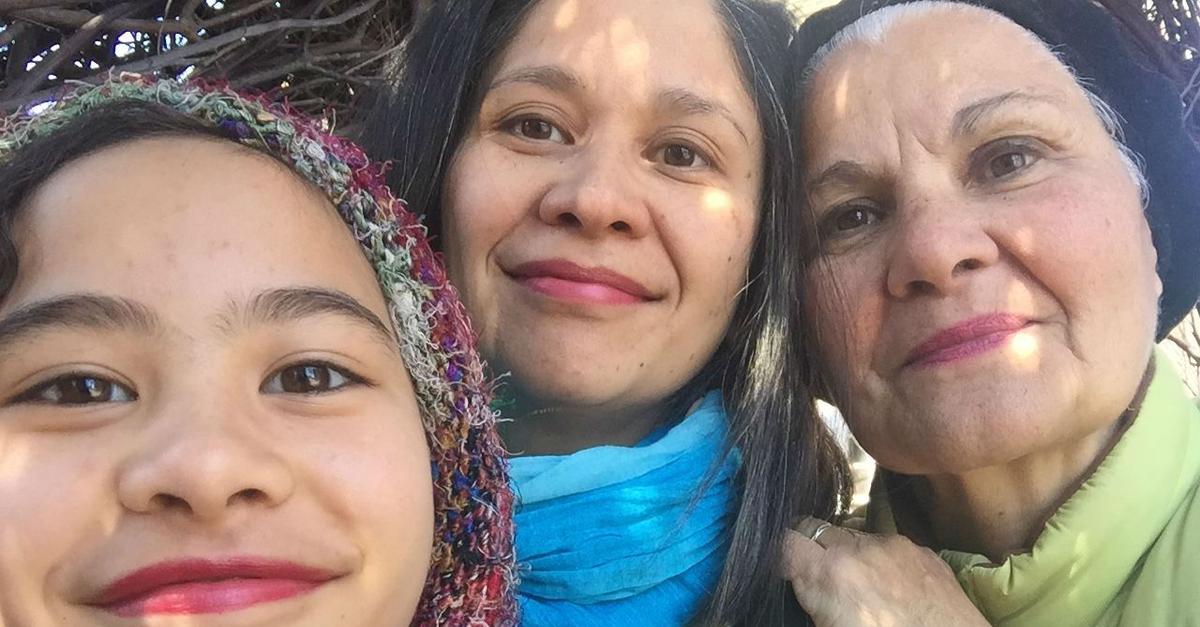
    Alison Fornés with her daughter Amiya Fornés-Sicam (left) and mother Julia Fornés (right). (Alison Fornes)

    Alison Fornés, an education consultant based in Salem, Massachusetts, wrote to us wanting to speak with her mother, Julia, as part our “Uncomfortable Truths” series.

    Talking to your mom about identity may not seem like a conversation most people would classify as “uncomfortable,” but Julia largely kept the story of her upbringing from her daughter. In 1956, at just six years old, Julia was sent from Puerto Rico to an orphanage in Connecticut. Because of racial tensions in the area in 1956, Julia was discouraged from carrying on her traditions from back home in order to be viewed as a more desirable adoptee for a family. She spent much of her life trying to pass as anything but Puerto Rican.

    As Alison got older, she started to wonder why she didn’t know more about her mother’s childhood traditions back in the Caribbean. So she sat down to ask Julia about why she felt compelled to hide her Puerto Rican identity, and how she eventually came to embrace it.

    Listen to the story here.

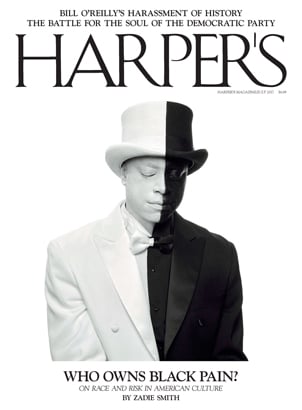
  • We have been warned not to get under one another’s skin, to keep our distance. But Jordan Peele’s horror-fantasy—in which we are inside one another’s skin and intimately involved in one another’s suffering—is neither a horror nor a fantasy. It is a fact of our experience. The real fantasy is that we can get out of one another’s way, make a clean cut between black and white, a final cathartic separation between us and them. For the many of us in loving, mixed families, this is the true impossibility. There are people online who seem astounded that Get Out was written and directed by a man with a white wife and a white mother, a man who may soon have—depending on how the unpredictable phenotype lottery goes—a white-appearing child. But this is the history of race in America. Families can become black, then white, then black again within a few generations. And even when Americans are not genetically mixed, they live in a mixed society at the national level if no other. There is no getting out of our intertwined history.

    Zadie Smith, “Getting In and Out,” Harper’s Magazine, July 2017. https://harpers.org/archive/2017/07/getting-in-and-out/.

  • French Fathers and Their “Indigenous Children”: Interracial Families in Colonial Senegal, 1900–1915

    Journal of Family History
    Volume 42, Issue 3, July 2017
    pages 308–325
    DOI: 10.1177/0363199017711212

    Kelly Duke Bryant, Associate Professor of History
    Rowan University, Glassboro, New Jersey

    This article focuses on interracial families in early twentieth-century Senegal, exploring how relationships between French fathers and their racially mixed children simultaneously challenged and reflected colonial racism. Relying on applications for scholarships and related correspondence, it offers detailed case studies of two such families and a discussion of wider trends. The article argues that despite the duty and love that they felt toward their mixed-race children, French fathers continued to see themselves as colonists and to accept some of the ideas about race and power that this entailed.

    Read or purchase the article here.

  • Biracial Group Membership Scale

    Journal of Black Psychology
    Volume 43, Issue 5 (2017-07-01)
    pages 435-450
    DOI: 10.1177/0095798416657260

    Marisa G. Franco
    Department of Psychology
    University of Maryland, College Park

    Olivia L. Holmes
    Department of Psychology
    University of Illinois, Chicago

    With individuals of mixed African heritage increasingly identifying as Biracial, it is important to determine whether Black people continue to perceive Biracial people as members of their community. The status of Biracial individuals within the Black community has implications for the political power of the Black community and also for Biracial individuals’ racial identity development and well-being. Thus, the purpose of this study was to create a psychometrically sound measure to assess the degree to which Black people accept Biracial people as members of the Black community: the Biracial Group Membership Scale. Factor analyses were conducted with 328 Black adults. Exploratory factor analysis revealed two factors: Rejection of Biracial People and Forced Black Identity. A confirmatory factor analysis provided support for the initial factor structure. The scale related to the Attitudes Toward Multiracial Children Scale, essentialism, and items assessing interactions with Biracial individuals. Limitations, suggestions for future research, and implications are discussed.

    Read or purchase the article here.

  • What the “Loving Day” 50th Anniversary Celebrations of the Loving v. Virginia Court Decision Really Need – A Challenge to Ongoing White Supremacy

    The Huffington Post
    2017-06-11

    Tanya K. Hernández, Professor of Law
    Fordham University School of Law

    Monday, June 12, 2017 marks the 50th anniversary of the Loving v. Virginia, the Supreme Court decision which invalidated interracial marriage bans in the United States. Recently, the Pew Research Center reported that since the 1967 Loving decision the rate of intermarriage has increased more than five fold, from 3% of newlyweds who were intermarried to 17% in 2015. In recognition of this increase, “Loving Dayannual events celebrate the court decision. Primarily organized by multiracial persons as social events, communities across the nation gather on Loving Day to celebrate the existence of multiracial families. The celebrations are part of a larger campaign to have the federal government create an official Loving Day federal holiday.

    No other Supreme Court case, let alone a civil rights case, has its own designated federal holiday. However entire multiracial community websites are dedicated to lobbying the government for a Loving Day holiday. This is because much more is at stake for these activists than commemorating a legal case. Validating mixed-race families and in particular multiracial persons, is the fundamental aim of the Loving Day federal holiday campaign. However, the rhetoric of mixed-race racial distinctiveness used by the campaign has begun to be drawn into judicial questioning of racial integration policies in ways that counter Loving Day celebrations of diversity…

    Read the entire article here.

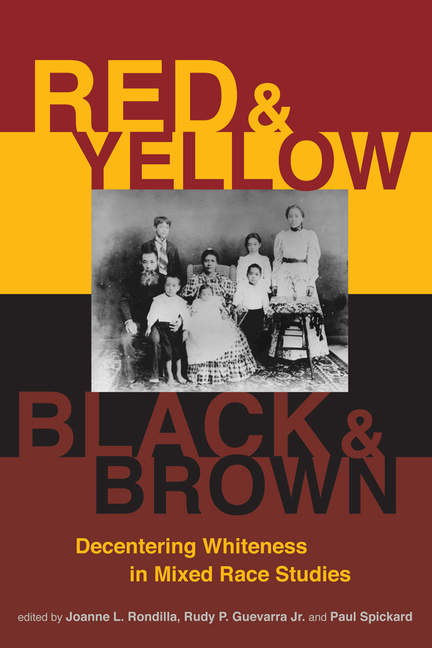
  • Red and Yellow, Black and Brown: Decentering Whiteness in Mixed Race Studies

    Rutgers University Press
    278 pages
    2017-06-26
    12 photographs, 4 tables
    152.4 x 228.6cm
    Paper ISBN: 978-0-8135-8730-1
    Cloth ISBN: 978-0-8135-8731-8

    Edited by:

    Joanne L. Rondilla, Program lecturer in Asian Pacific American Studies
    School of Social Transformation
    Arizona State University, Tempe

    Rudy P. Guevarra, Jr., Associate Professor of Asian American Studies
    Arizona State University

    Paul Spickard, Professor of History; Professor of Asian American Studies
    University of California, Santa Barbara

    Red and Yellow, Black and Brown gathers together life stories and analysis by twelve contributors who express and seek to understand the often very different dynamics that exist for mixed race people who are not part white. The chapters focus on the social, psychological, and political situations of mixed race people who have links to two or more peoples of color— Chinese and Mexican, Asian and Black, Native American and African American, South Asian and Filipino, Black and Latino/a and so on. Red and Yellow, Black and Brown addresses questions surrounding the meanings and communication of racial identities in dual or multiple minority situations and the editors highlight the theoretical implications of this fresh approach to racial studies.

    Table of Contents

    • Acknowledgments
    • Chapter 1. Introduction: About Mixed Race, Not About Whiteness / Paul Spickard, Rudy P. Guevarra Jr., Joanne L. Rondilla
    • Part I. Identity Journeys
      • Chapter 2. Rising Sun, Rising Soul: On Mixed Race Asian Identity That Includes Blackness / Velina Hasu Houston
      • Chapter 3. Blackapina / Janet C. Mendoza Stickmon
    • Part II. Multiple Minority Marriage and Parenting
      • Chapter 4. Intermarriage and the Making of a Multicultural Society in the Baja California Borderlands / Verónica Castillo-Muñoz
      • Chapter 5. Cross-Racial Minority Intermarriage: Mutual Marginalization and Critique / Jessica Vasquez-Tokos
      • Chapter 6. Parental Racial Socialization: A Glimpse into the Racial Socialization Process as It Occurs in a Dual-Minority Multiracial Family / Cristina M. Ortiz
    • Part III. Mixed Identity and Monoracial Belonging
      • Chapter 7. Being Mixed Race in the Makah Nation: Redeeming the Existence of African-Native Americans / Ingrid Dineen-Wimberly
      • Chapter 8. “You’re Not Black or Mexican Enough!” Policing Racial/Ethnic Authenticity among Blaxicans in the US / Rebecca Romo
    • Part IV. Asian Connections
      • Chapter 9 Bumbay in the Bay: The Struggle for Indipino Identity in San Francisco / Maharaj Raju Desai
      • Chapter 10. Hyper-visibility and Invisibility of Female Haafu Models in Japanese Beauty Culture / Kaori Mori Want
      • Chapter 11. Checking “Other” Twice: Transnational Dual Minorities / Lily Anne Y. Welty Tamai
    • Part V. Reflections
      • Chapter 12. Neanderthal-Human Hybridity and the Frontier of Critical Mixed Race Studies / Terence Keel
      • Chapter 13. Epilogue: Expanding the Terrain of Mixed Race Studies: What We Learn from the Study of NonWhite Multiracials / Nitasha Tamar Sharma
    • Bibliography
    • Notes on Contributors
    • Index
  • Psychophysiological Responses to Racial Passing Behavior

    2017 Rogers Science Research Brown Bag Presentations
    Olin 301
    Lewis & Clark College
    0615 S.W. Palatine Hill Road
    Portland, Oregon 97219 USA
    Telephone: 503-768-7000
    Tuesday, 2017-06-27, 12:00-13:15 PDT (Local Time)

    Student presenters: Madison Kleiner and Mikayla Parsons
    Faculty collaborator: Diana Leonard, Assistant Professor of Psychology


    Brown Bags
    Students discuss their research projects during a series of brown-bag talks on Tuesdays in June and July. Each presentation is 15 minutes; there are generally 3-4 talks per session. For more information about projects see project descriptions.

    • Tuesdays 12:00-13:15, in Olin 301 unless otherwise noted
    • Presentations are free and open to the public
    • Dessert provided

    Racial passing–presenting oneself as a race other than one’s own–is often viewed negatively (Dawkins, 2012), but the reason is unclear. Thus far, our lab has shown that passing as a member of a lower status racial group (i.e., as Black) is more morally condemned than the reverse (i.e., passing as White). We have also demonstrated that people who endorse Colorblind ideology judge racial passing more harshly, perhaps because it threatens their core beliefs. In our next step, we will measure stress and cognitive depletion to examine why people find racial passing to be morally condemnable under these circumstances.

    For more information, click here.

  • Getting In and Out

    Harper’s Magazine
    July 2017

    Zadie Smith

    Who owns black pain?

    Discussed in this essay:

    Get Out, directed by Jordan Peele. Blumhouse Productions, QC Entertainment, and Monkeypaw Productions, 2017. 104 minutes.

    Open Casket, by Dana Schutz. 2017 Whitney Biennial, Whitney Museum of American Art, New York. March 17–June 11, 2017.

    You are white—
    yet a part of me, as I am a part of you.
    That’s American.
    Sometimes perhaps you don’t want to be a part of me.
    Nor do I often want to be a part of you.
    But we are, that’s true!
    As I learn from you,
    I guess you learn from me—
    although you’re older—and white—
    and somewhat more free.
    Langston Hughes

    Early on, as the opening credits roll, a woodland scene. We’re upstate, viewing the forest from a passing car. Trees upon trees, lovely, dark and deep. There are no people to be seen in this wood—but you get the feeling that somebody’s in there somewhere. Now we switch to a different world. Still photographs, taken in the shadow of public housing: the basketball court, the abandoned lot, the street corner. Here black folk hang out on sun-warmed concrete, laughing, crying, living, surviving. The shots of the woods and those of the city both have their natural audience, people for whom such images are familiar and benign. There are those who think of Fros­tian woods as the pastoral, as America the Beautiful, and others who see summer in the city as, likewise, beautiful and American. One of the marvelous tricks of Jordan Peele’s debut feature, Get Out, is to reverse these constituencies, revealing two separate planets of American fear—separate but not equal. One side can claim a long, distinguished cinematic history: Why should I fear the black man in the city? The second, though not entirely unknown (Deliverance, The Wicker Man), is certainly more obscure: Why should I fear the white man in the woods?…

    …We have been warned not to get under one another’s skin, to keep our distance. But Jordan Peele’s horror-fantasy—in which we are inside one another’s skin and intimately involved in one another’s suffering—is neither a horror nor a fantasy. It is a fact of our experience. The real fantasy is that we can get out of one another’s way, make a clean cut between black and white, a final cathartic separation between us and them. For the many of us in loving, mixed families, this is the true impossibility. There are people online who seem astounded that Get Out was written and directed by a man with a white wife and a white mother, a man who may soon have—depending on how the unpredictable phenotype lottery goes—a white-appearing child. But this is the history of race in America. Families can become black, then white, then black again within a few generations. And even when Americans are not genetically mixed, they live in a mixed society at the national level if no other. There is no getting out of our intertwined history…

    Read the entire review here.