Mixed Race Studies

Scholarly perspectives on the mixed race experience.

    • About This Site
    • Bibliography
    • Contact Information
    • Date and Time Formats
    • Forthcoming… (Updated 2021-09-01)
    • Likely Asked Questions
    • List of Book Publishers
    • List of Definitions and Terms
    • My Favorite Articles and Papers
    • My Favorite Posts
    • My Recent Activities
    • Praise for Mixed Race Studies
    • Tag Listing
      • Tag Listing (Ordered by Count)
    • US Census Race Categories, 1790-2010
    • 1661: The First ‘Mixed-Race’ Milestone
    • 2010 U.S. Census – Some Thoughts

recent posts

  • The Routledge International Handbook of Interracial and Intercultural Relationships and Mental Health
  • Loving Across Racial and Cultural Boundaries: Interracial and Intercultural Relationships and Mental Health Conference
  • Call for Proposals: 2026 Critical Mixed Race Studies Conference at UCLA
  • Participants Needed for a Paid Research Study: Up to $100
  • You were either Black or white. To claim whiteness as a mixed child was to deny and hide Blackness. Our families understood that the world we were growing into would seek to denigrate this part of us and we would need a community that was made up, always and already, of all shades of Blackness.

about

  • Twitter
  • Facebook
  • Instagram
  • She’s Biracial, but She’s Still Black: Reflections from Monoracial African American Parents Raising Biracial Children

    2022-03-11

    She’s Biracial, but She’s Still Black: Reflections from Monoracial African American Parents Raising Biracial Children

    Journal of Child and Family Studies
    Volume 31, Issue 3 (March 2022) (Special Issue on Multiracial Families)
    Published online 2022-02-22
    pages 675–684
    DOI: 10.1007/s10826-022-02263-8

    Yolanda T. Mitchell, Assistant Professor of Human Development and Family Science
    University of North Texas, Denton, Texas

    In this commentary, a scholar of Black families blends observations that emanate from her research with those arising within personal experiences. Applying a multicrit lens, she seeks to reflect on the experiences of monoracial parents in joint biological stepfamilies, raising biracial children. Her work draws upon heuristic analysis of African American parents raising biracial children in concert with monoracial Black children. Multicrit tenets of experiential knowledge, challenge to dominant ideology, racism, monoracism, and colorism, a monoracial paradigm of race, and intersections of multiple racial identities are applied to contextual environmental factors of socialization including racial profiling, parents’ perception of their mixed-race child’s personality and skin tone, and parental orientations toward mixed-race versus monoracial children. This study highlights relevant aspects in the development of mixed-race children including how they are perceived and how they encounter the world around them in an effort to help monoracial parents limit racial polarization and increase an understanding of multiple intersectional identities.

    Highlights

    • Monoracial Black parents engage racial socialization as a protective factor in the development of their children.
    • Racial identity development is a central component of healthy identity development in biracial children.
    • Biracial identity development is influenced by contextual environmental factors such as family structure and parent racial socialization practices of monoracial parents.
    • Multicrit highlights the unique needs of multiracial individuals regarding experiences of race-ethnicity in the United States.
    • Biracial identity development techniques can be used to reduce racial polarization and inform a sense of shared racial identity.

    Read the entire article here.

  • Now, when I look at the words “Pick One” with a pen in my hand, I feel like the Other. I feel alienated and ostracized, thrust into a dilemma that I have no solution for.

    2022-03-11

    Ever since I started living in the U.S., I’ve felt a constant underlying pressure to choose a side. To be white or to be Black. On every form I’ve ever filled out in Canada, I’ve always had the chance to pick All That Apply — Black, White, etc., when asked about my race. On the first form I filled out for my student visa application, they asked me to Pick One — Black, White, or Other. Though I didn’t give it much thought at the time, the very use of the word “Other” demonstrates how the multiracial experience is far more marginalized in the United States than in Canada. Now, when I look at the words “Pick One” with a pen in my hand, I feel like the Other. I feel alienated and ostracized, thrust into a dilemma that I have no solution for.

    Zach Bayfield, “A Canadian’s Perspective On The American Multiracial Experience,” The Oberlin Review, March 4, 2022. https://oberlinreview.org/26143/opinions/a-canadians-perspective-on-the-american-multiracial-experience/.

  • Your Attention Please: Initiative 29 – Tao Leigh Goffe • Hulu

    2022-03-11

    Your Attention Please: Initiative 29 – Tao Leigh Goffe • Hulu

    Hulu
    2021-05-29

    Tao Leigh Goffe, Assistant Professor of Literary Theory and Cultural History
    Cornell University, Ithaca, New York

    Journey through time with professor and DJ Tao Leigh Goffe as she uncovers her story at the intersection of Black and Chinese culture in this month’s #Initiative29 episode.

  • A Canadian’s Perspective On The American Multiracial Experience

    2022-03-11

    A Canadian’s Perspective On The American Multiracial Experience

    The Oberlin Review
    Oberlin, Ohio
    2022-03-04

    Zach Bayfield

    Before coming to Oberlin [College], my racial identity was something I rarely reflected on. My mother is a fifth-generation Canadian with entirely European ancestry. My father was born in Jamaica to an English father and a Jamaican mother. The Afro-Caribbean side of my ancestry was discussed comfortably in my family, and I felt no pressure to identify with one race over the other. Regardless of who I surrounded myself with or what activities I was engaging in, I felt like my identity was understood.

    When I first came to Oberlin, my identity suddenly became more contentious. I remember my freshman year, I was eating lunch in Stevenson Dining Hall when one of my Black teammates asked me, “What are you?” I explained my genealogy in an abbreviated version of the previous paragraph, and his response was, “So you’re Black, right?” I was confused and taken aback by this statement. How could I identify as Black when I’ve never experienced racism directly? Why do I have to identify as a particular race? Why can’t I just be me?…

    Read the entire article here.

  • “Mom, You Don’t Get It”: A Critical Examination of Multiracial Emerging Adults’ Perceptions of Parental Support

    2022-03-11

    “Mom, You Don’t Get It”: A Critical Examination of Multiracial Emerging Adults’ Perceptions of Parental Support

    Emerging Adulthood
    Volume: 9 Issue: 4
    pages 305-319
    Article first published online: 2020-03-25; Issue published: 2021-08-01
    DOI: 10.1177/2167696820914091

    Annabelle L. Atkin, Ph.D., Postdoctoral Scholar
    T. Denny Sanford School of Social and Family Dynamics
    Arizona State University

    Kelly F. Jackson, Associate Professor of Social Work
    Arizona State University

    Multiracial families are becoming increasingly common in the United States, yet there is a dearth of research examining how parents of Multiracial youth provide support for navigating challenges associated with being mixed race in a monocentric society. The purpose of this study was to gain a deeper understanding of the parental support strategies that Multiracial emerging adults perceived to be helpful in their own development. Twenty Multiracial emerging adults (50% female, mean age = 20.55) with diverse Multiracial heritages were interviewed about conversations they had with their parents regarding their racial experiences throughout their childhood. Critical supplementary analysis using constructivist grounded theory identified three themes of parental support (i.e., connection support, discrimination support, and Multiracial identity expression support) and informed a conceptual model demonstrating relationships between environmental context, parent characteristics, family dynamics, risks, and identity development. Findings are discussed in terms of implications for researchers and practitioners serving Multiracial families.

    Read or purchase the article here.
  • The 2020 census had big undercounts of Black people, Latinos and Native Americans

    2022-03-11

    The 2020 census had big undercounts of Black people, Latinos and Native Americans

    National Public Radio
    2022-03-10

    Hansi Lo Wang

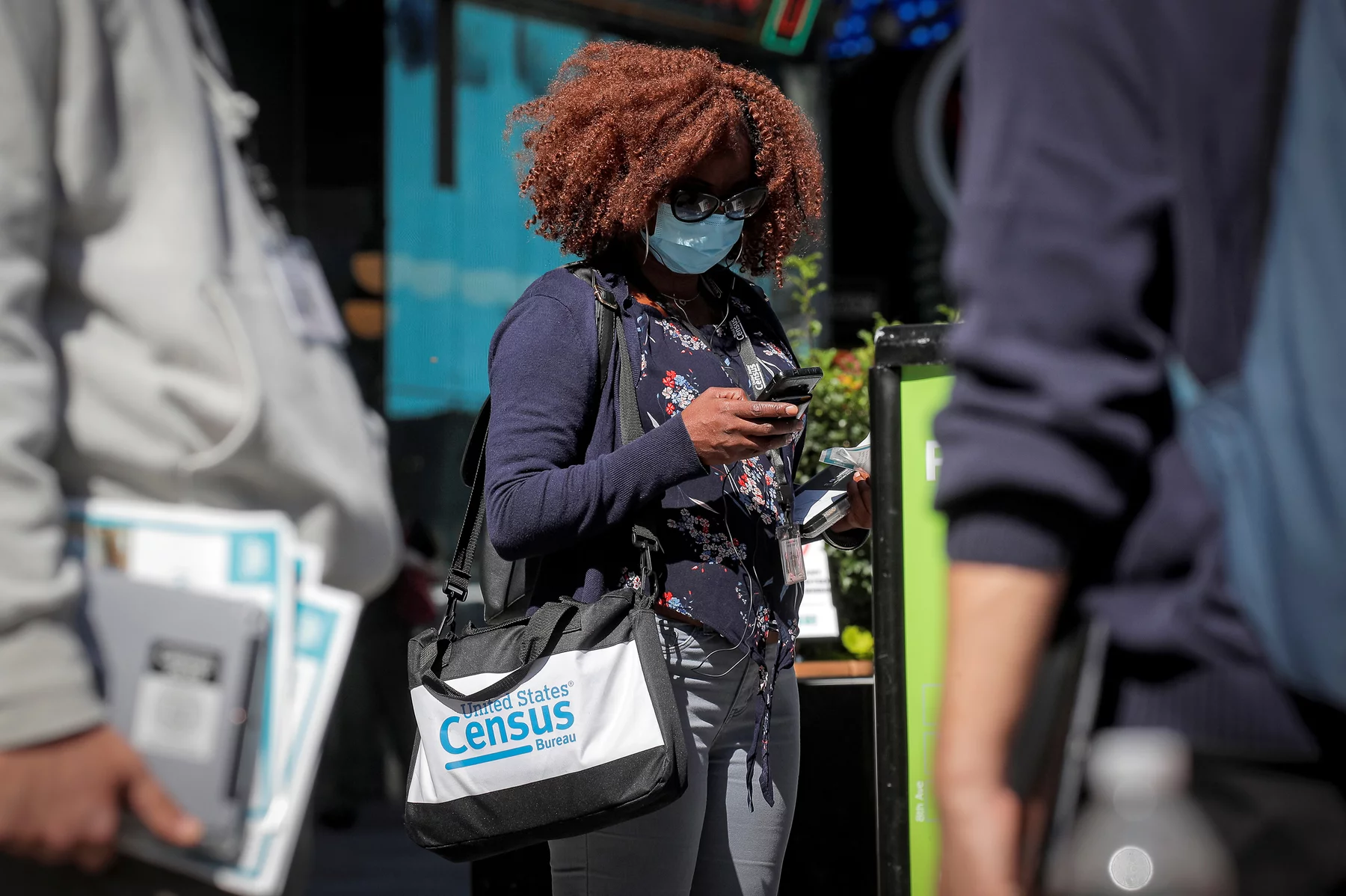
    A Census Bureau worker waits to gather information from people during a 2020 census promotional event in New York City.
    Brendan McDermid/Reuters

    The 2020 census continued a longstanding trend of undercounting Black people, Latinos and Native Americans, while overcounting people who identified as white and not Latino, according to estimates from a report the U.S. Census Bureau released Thursday.

    Latinos were left out of the 2020 census at more than three times the rate of a decade earlier.

    Among Native Americans living on reservations and Black people, the net undercount rates were numerically higher but not statistically different from the 2010 rates.

    People who identified as white and not Latino were overcounted at almost double the rate in 2010. Asian Americans were also overcounted. The bureau said based on its estimates, it’s unclear how well the 2020 tally counted Pacific Islanders…

    Read or listen to the story here.

  • Charles calls for a rejection of previous scholarly treatments of passing that foreground experiences of loss among those who pass and instead argues for a focus on the opportunities that performing race offered to certain mixed-race African American citizens.

    2022-03-09

    The past decade has seen a tremendous growth in scholarly inquiry around the subject of racial passing. The context of the current historical moment coupled with viral discussions of cultural appropriation and “blackfishing” brings a sense of urgency to understanding the long history of passing and its function in the U.S. context. Julia S. Charles’s That Middle World: Race, Performance, and the Politics of Passing offers a perspective on this phenomenon that places performance at the heart of the racial passing experience. Charles calls for a rejection of previous scholarly treatments of passing that foreground experiences of loss among those who pass and instead argues for a focus on the opportunities that performing race offered to certain mixed-race African American citizens. Charles presents a book of theory and philosophy on racial passing meant to inform the ways scholars of African American literature and media studies can make sense of mixed-race and passing characters throughout nineteenth- and twentieth-century literature.

    Tyler Sperrazza, “That Middle World: Race, Performance, and the Politics of Passing by Julia S. Charles (review),” Journal of Southern History, Volume 88, Number 1, February 2022, 164. https://dx.doi.org/10.1353/soh.2022.0019.

  • Clinical Implications for Multi-Racial Individuals

    2022-03-09

    Clinical Implications for Multi-Racial Individuals

    The American Journal of Family Therapy
    Volume 48, 2020 – Issue 3
    pages 271-282
    DOI: 10.1080/01926187.2019.1709581

    Natasha Finney, School of Counseling
    The University of Akron, Akron, Ohio

    Eman Tadros, Assistant Professor
    Governors State University, University Park, Illinois

    Samantha Pfeiffer, School of Counseling
    The University of Akron, Akron, Ohio

    Delila Owens, Professor, School of Counseling
    The University of Akron, Akron, Ohio

    Multi-racial individuals experience distinctive struggles and challenges that can impact their mental health. However, despite the growing population and unique presenting issues there remains a scarcity of literature to effectively support them. In addition, there is a lack of research exploring the unique experience of the multiple heritage population. The article offers implications for effectively working with individuals of multi-racial decent as well as a call to action for MFTs to develop multicultural competencies for the profession.

    Read or purchase the article here.

  • Artist Thenjiwe Niki Nkosi reveals—and defies—the white supremacist underpinnings of elite gymnastics

    2022-03-09

    Artist Thenjiwe Niki Nkosi reveals—and defies—the white supremacist underpinnings of elite gymnastics

    Document Journal
    2019-11-07

    Miss Rosen

    As Simone Biles becomes the most decorated athlete in sports, Nkosi tells Document about the implications of Black girls’ success in elite gymnastics, which has historically been used as a tool of oppression.

    When Simone Biles made history at the 2019 World Championships by becoming the most decorated gymnast of any gender, she single-handedly redefined one of the world’s most elite sports. As a Black woman in a traditionally white space, she surpassed all expectations, becoming an icon in the process.

    For Johannesburg-based multimedia artist Thenjiwe Niki Nkosi, Biles’ success is a testament to Black power in the face of an establishment determined to undermine it. Earlier this summer Biles invented new skills and the Federation Internationale de Gymnastique (FIG), the sport’s governing body, penalized her for the groundbreaking performance. The FIG reduced the degree of Biles’ signature ‘double double’ dismount (two twists, two flips) from the beam—out of concern, they claimed, about the safety of lesser gymnasts who might harm themselves while attempting it…

    …Born in New York to a South African father in exile and a Greek-American mother, Nkosi’s family moved to Harare, Zimbabwe, in 1989 when she just was eight years old. “I get this rush of emotion when I think of the day we were watching Nelson Mandela being released from prison in 1990 on TV,” Nkosi says. “My parents were looking at each other like, ‘This is it, we are going to go.’…

    Read the entire article here.

  • Historicizing Race

    2022-03-09

    Historicizing Race

    Bloomsbury Academic (an imprint of Bloomsbury Publishing)
    2018-02-22
    200 pages
    9 x 6 inches
    Hardback ISBN: 9781441184245
    Paperback ISBN: 9781441143679
    Ebook (Epub & Mobi) ISBN: 9781441158246
    Ebook (PDF) ISBN: 9781441180162

    Marius Turda, Professor in 20th Century Central and Eastern European Biomedicine
    Oxford Brookes University, Oxford, United Kingdom

    Maria Sophia Quine, Senior Research Fellows
    Oxford Brookes University, Oxford, United Kingdom

    The idea of race may be outdated, as many commentators and scholars, working in a broad range of different fields in the sciences and humanities, have argued over many years. Nevertheless, it remains one of the most persistent forms of human classification. Theories of race primitivism (the idea that there is a ‘natural’ racial hierarchy and ranking order of ‘inferior’ and ‘superior’ races), race biologism (the belief that people can be classified by genetic features which are shared by members of racial groups), and race essentialism (the notion that races can be defined by scientifically identifiable and verifiable cultural and physical characteristics) are deeply embedded in modern history, culture and politics.

    Historicizing Race offers a new understanding of this reality by exploring the interconnectedness of scientific, cultural and political strands of racial thought in Europe and elsewhere. It re-conceptualises the idea of race by unearthing various historical traditions that continue to inform not only current debates about individual and collective identities, but also national and international politics. In a concise format, accessible to students and scholars alike, the authors draw out some of the reasons why race-centred thinking has, in recent years, re-emerged in such shocking and explicit form in current populist, xenophobic, and anti-immigration movements.

    Table of Contents

    • Introduction
    • 1. History
    • 2. Culture
    • 3. Nation
    • 4. Genealogy
    • 5. Science
    • Conclusion
    • Notes
    • Bibliography
    • Index
Previous Page
1 … 27 28 29 30 31 … 1,428
Next Page

Designed with WordPress