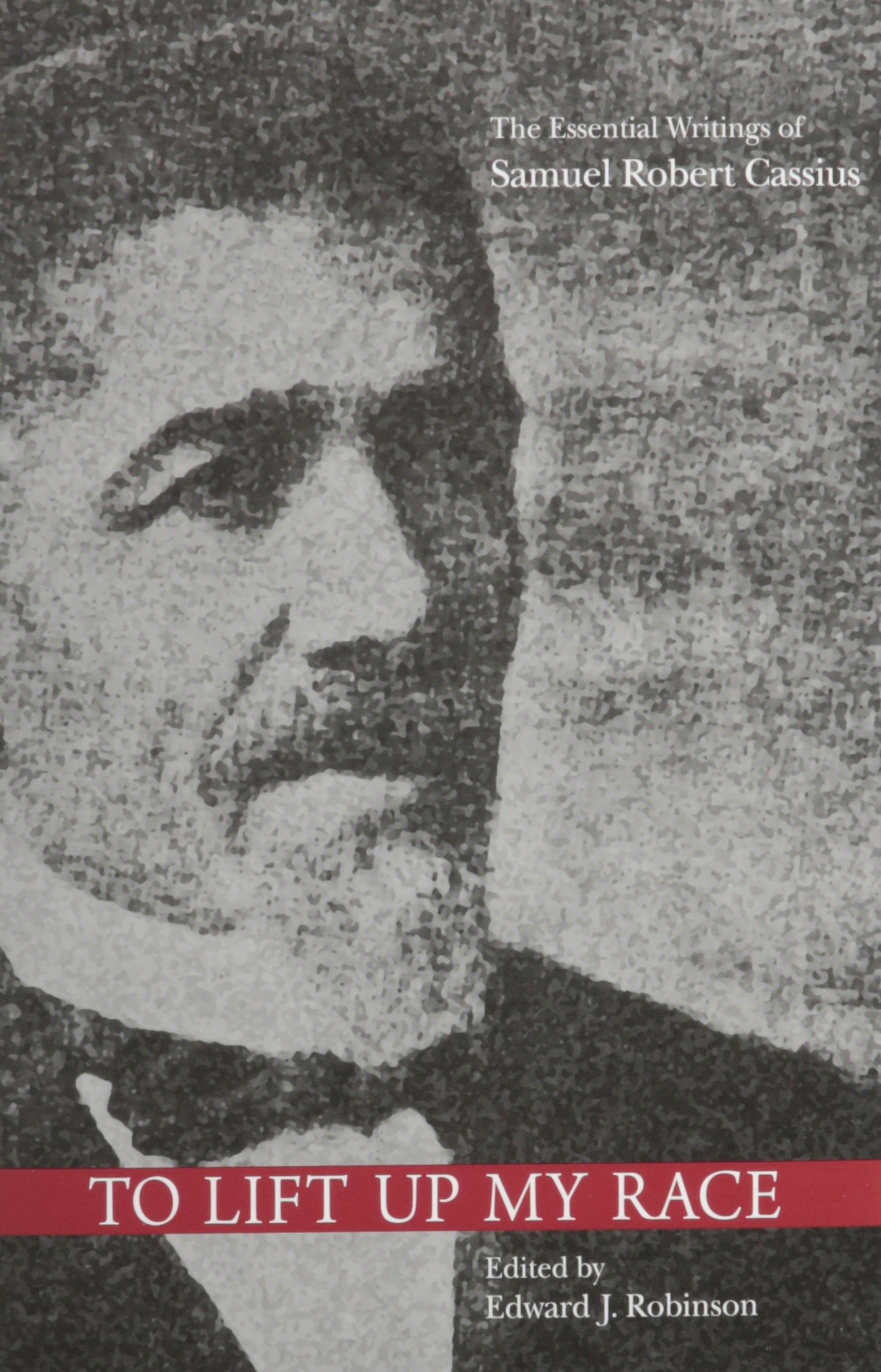
• To Lift Up My Race: The Essential Writings of Samuel Robert Cassius

    University of Tennessee Press
    2008-12-30
    215 pages
    6.27 x 0.85 x 9.11 inches
    Hardcover ISBN-13: 978-1572336186

    Samuel Robert Cassius (1853-1931)

    Edited by:

    Edward J. Robinson, Assistant Professor of History and Biblical Studies
    Abilene Christian University, Abilene, Texas

    Born into slavery in 1853, taught to read by his half-white, half-black mother, and attending school in Washington, D.C., during Reconstruction, Samuel Robert Cassius is a fascinating and instructive example of the first generation of freed slaves in the United States. To Lift Up My Race, a collection of writings by Cassius, gives us the man–evangelist, educator, farmer, entrepreneur, postmaster, politician, and father of twenty-three–in a significant moment in the emergence of black culture and society between Reconstruction and the Great Depression.

    Chronologically and thematically organized, this book contains nearly all of the extant-and all of the crucial-writings of Cassius. Consequently, we see firsthand an ex-slave from Virginia who joins the Stone-Campbell movement (Churches of Christ) in 1883 and emerges as the most influential African American leader and evangelist in that movement. He traveled throughout the United States and Canada, “planting” congregations and propagating what he called the “pure Gospel of Jesus Christ.” Cassius was also a remarkably successful fundraiser, often using humor in the articles he wrote for several publications, including the Christian Leader. In addition, Cassius was the author of such pamphlets as “Negro Evangelization and the Tohee Industrial School” (one of the “workingmen’s schools” he helped to found) and “The Letter and the Spirit of the Race Problem.” In 1920, he published his most important literary work, The Third Birth of a Nation, a response to D. W. Griffith’s film The Birth of a Nation.

    The volume offers readers the vision and the voice of a black preacher and writer who endeavored to correct the racism of white America while simultaneously altering the religious beliefs and values of black America, often clashing with and sometimes alienating both.

  • Joseph Jenkins Roberts: A Love for Liberia

    StMU Research Scholars: Featuring Scholarly Research, Writing, and Media at St. Mary’s University
    St. Mary’s University, San Antonio, Texas
    2020-02-17

    Antonio Holverstott

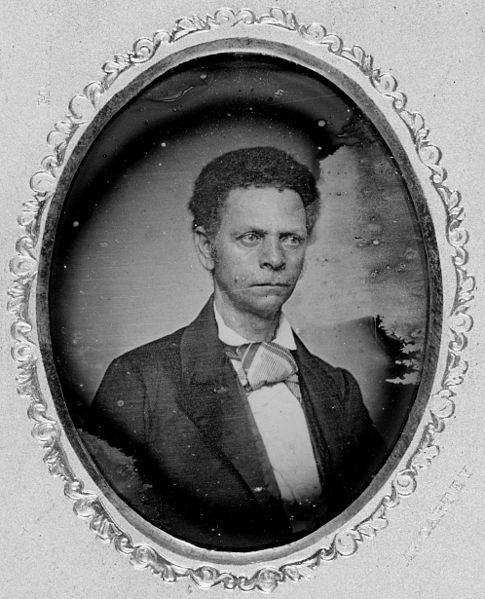
    Portrait of Joseph Jenkins Roberts taken by Augustus McCarthy circa 1840-1860 | Courtesy of Wikimedia Commons.

    In 1846, the governor of the African colony of Liberia, Joseph Jenkins Roberts, called for a referendum to determine Liberia’s path towards independence. Eager colonists in the settlements of Monrovia, Bassa, Greenville, and Maryland affirmed their desire to have an independent Liberia.1 However, the legislature was designated as the final judge to determine the fate of the colony’s future. During this historic moment, Roberts was seeing his vision of independence take shape in reality. The story of Joseph Jenkins Roberts and Liberia’s autonomy was unique among stories of national independence, similar to the United States’ exit from the British Empire in the middle of the 1770s and similar to the Haitian Revolution where slaves revolted against the unfair treatment of the French government.

    The story of Roberts’ stride towards obtaining independence for Liberia began when he became the colonial sheriff in 1833.2 One year after he took office, the colony’s main financial supporter and sponsor, the American Colonization Society (ACS), started to experience financial insolvency due to their failure of not being able to secure sufficient funds from the United States federal government and state legislatures. The questionable origins of the ACS and prejudiced motives of a percentage of its members made the organization look unappealing in the eyes of the government. In 1816, the ACS was founded as a product of a growing post-Revolutionary War movement advocating for the emigration of African Americans back to Africa.3 The end result of this emigration was the formation of a new sovereign state.4

    Read the entire article here.

  • The Afro Latino who redefined how Black history is remembered

    NBC News
    2022-02-24

    Nicole Acevedo, Reporter

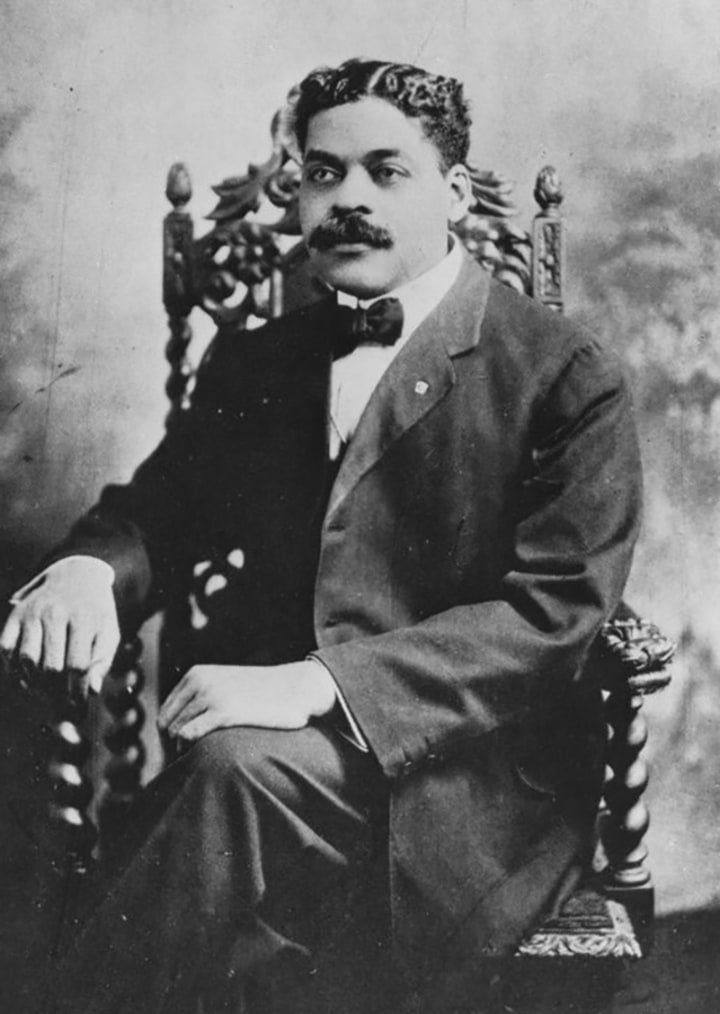
    Arturo Alfonso Schomburg
    Schomburg Center for Research in Black Culture / NYPL

    Arturo Schomburg’s experiences as an Afro Puerto Rican at the turn of the century influenced his approach to rescuing and preserving Black history.

    Arturo Alfonso Schomburg is regarded as one of the foundational figures of Black history in the United States, with one of the nation’s most important research and cultural institutions named after him.

    Yet his legacy goes beyond the work he did as a historian, writer and collector of global Black art and historical materials.

    By identifying as a Black and Puerto Rican, Schomburg’s acknowledgment of his diverse heritage helped him earn a global understanding of Black identity — a view he implemented in his approach to rescuing and preserving Black history — while he recognized the way Blackness had been erased, including in the Caribbean and Latin America

    Read the entire article here.

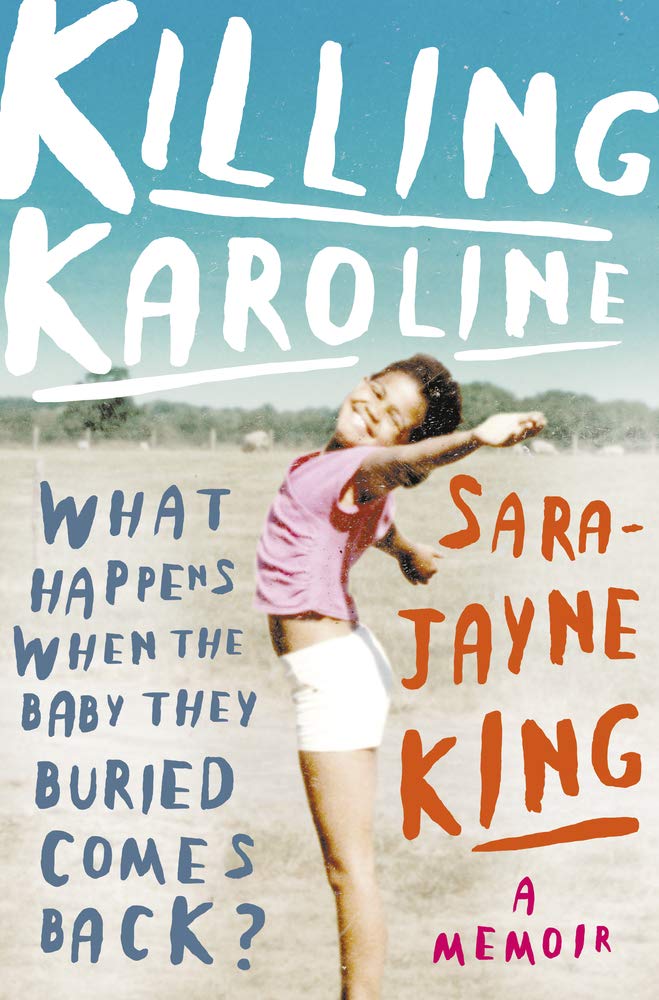
  • Killing Karoline

    Jacana Media
    2018-07-02
    208 pages
    6.25 x 0.7 x 9.5 inches
    Paperback ISBN: 978-1920601959

    Sara-Jayne King

    What happens when the baby they buried comes back?

    Born Karoline King in 1980 in Johannesburg South Africa, Sara-Jayne (as she will later be called by her adoptive parents) is the result of an affair, illegal under apartheid’s Immorality Act, between a white British woman and a black South African man. Her story reveals the shocking lie created to cover up the forbidden relationship and the hurried overseas adoption of the illegitimate baby, born during one of history’s most inhumane and destructive regimes. Killing Karoline follows the journey of the baby girl who is raised in a leafy, middle-class corner of the South of England by a white couple. Plagued by questions surrounding her own identity and unable to ‘fit in’ Sara-Jayne begins to turn on herself. She eventually returns to South Africa, after 26 years, to face her demons. There she is forced to face issues of identity, race, rejection and belonging beyond that which she could ever have imagined. She must also face her birth family, who in turn must confront what happens when the baby you kill off at a mere six weeks old returns from the dead.

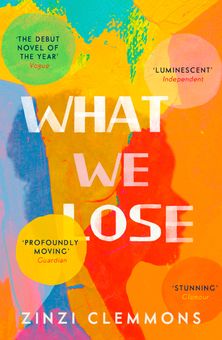
  • What We Lose

    4th Estate
    2017-07-11
    224 pages
    5 x 0.6 x 7.5 inches
    Hardcover ISBN: 978-0735221710
    Paperback ISBN: 978-0735221734

    Zinzi Clemmons

    A short, intense and profoundly moving debut novel about race, identity, sex and death – from one of the National Book Foundation’s 5 Under 35

    Thandi is a black woman, but often mistaken for Hispanic or Asian.

    She is American, but doesn’t feel as American as some of her friends.

    She is South African, but doesn’t belong in South Africa either.

    Her mother is dying.

  • The Book Keeper: A Memoir of Race, Love, and Legacy

    Swallow Press (an imprint of Ohio University Press)
    January 2020
    256 pages
    5½ × 8½ in.
    Hardcover ISBN: 978-0-8040-1221-8
    eBook ISBN: 978-0-8040-4106-5

    Julia McKenzie Munemo

    In a memoir that’s equal parts love story, investigation, and racial reckoning, Munemo unravels and interrogates her whiteness, a shocking secret, and her family’s history.

    When interracial romance novels written by her long-dead father landed on Julia McKenzie Munemo’s kitchen table, she—a white woman—had been married to a black man for six years and their first son was a toddler. Out of shame about her father’s secret career as a writer of “slavery porn,” she hid the books from herself, and from her growing mixed-race family, for more than a decade. But then, with police shootings of African American men more and more in the public eye, she realized that understanding her own legacy was the only way to begin to understand her country.

  • Mixed-Race Superheroes

    Rutgers University Press
    2022-04-16
    288 pages
    24 color images
    6 x 9
    Paperback ISBN: 9781978814592
    Cloth ISBN: 9781978814608
    EPUB ISBN: 9781978814615
    PDF ISBN: 9781978814639
    Kindle ISBN: 9781978814622

    Edited by:

    Sika A. Dagbovie-Mullins, Associate Professor of English
    Florida Atlantic University, Boca Raton

    Eric L. Berlatsky, Associate Professor of English
    Florida Atlantic University, Boca Raton
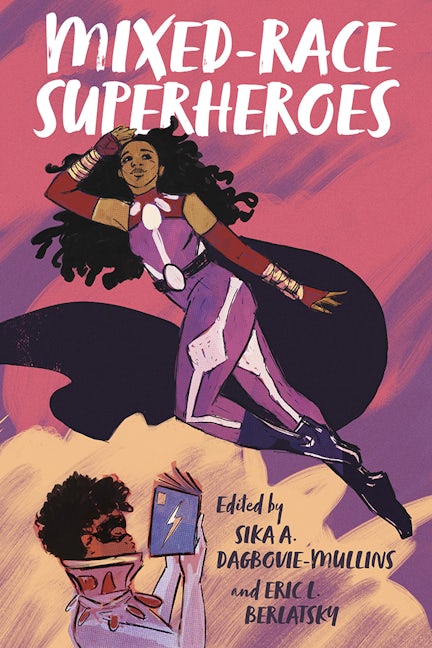
    American culture has long represented mixed-race identity in paradoxical terms. On the one hand, it has been associated with weakness, abnormality, impurity, transgression, shame, and various pathologies; however, it can also connote genetic superiority, exceptional beauty, and special potentiality. This ambivalence has found its way into superhero media, which runs the gamut from Ant-Man and the Wasp’s tragic mulatta villain Ghost to the cinematic depiction of Aquaman as a heroic “half-breed.”

    The essays in this collection contend with the multitude of ways that racial mixedness has been presented in superhero comics, films, television, and literature. They explore how superhero media positions mixed-race characters within a genre that has historically privileged racial purity and propagated images of white supremacy. The book considers such iconic heroes as Superman, Spider-Man, and The Hulk, alongside such lesser-studied characters as Valkyrie, Dr. Fate, and Steven Universe. Examining both literal and symbolic representations of racial mixing, this study interrogates how we might challenge and rewrite stereotypical narratives about mixed-race identity, both in superhero media and beyond.

    Table of Contents

    • Introduction by Sika A. Dagbovie-Mullins and Eric L. Berlatsky
    • Part I Superheroes in Black and White
      • 1. Guess Who’s Coming Home? Mixed Metaphors of Home in Spider-Man’s Comic and Cinematic Homecomings by Sika A. Dagbovie-Mullins
      • 2. The Ride of the Valkyrie Against White Supremacy: Tessa Thompson’s Casting in Thor: Ragnarok by Jasmine Mitchell
      • 3. “Which World Would You Rather Live In?” The Anti-utopian Superheroes of Gary Jackson’s Poetry by Chris Gavaler
      • 4. Flash of Two Races: Incest, Miscegenation, and the Mixed-Race Superhero in The Flash Comics and Television Show by Eric L. Berlatsky
    • Part II Metaphors of/and Mixedness
      • 5. “Let Yourself Just Be Whoever You Are!” Decolonial Hybridity and the Queer Cosmic Future in Steven Universe by Corrine E. Collins
      • 6. The Hulk and Venom: Warring Blood Superheroes by Gregory T. Carter
      • 7. Monsters, Mutants, and Mongrels: The Mixed-Race Hero in Monstress by Chris Koenig-Woodyard
      • 8. Examining Otherness and the Marginal Man in DC’s Superman through Mixed-Race Studies by Kwasu David Tembo
    • Part III Multiethnic Mixedness (or Mixed-Race Intersections)
      • 9. Talented Tensions and Revisions: The Narrative Double Consciousness of Miles Morales by Jorge J. Santos Jr.
      • 10. “They’re Two People in One Body”: Nested Sovereignties and Mixed-Race Mutations in FX’s Legion by Nicholas E. Miller
      • 11. Into to the Spider-Verse and the Commodified (Re)imagining of Afro-Rican Visibility by Isabel Molina-Guzmán
      • 12. Truth, Justice, and the (Ancient) Egyptian Way: DC’s Doctor Fate and the Arab Spring by Adrienne Resha
    • Acknowledgments
    • Notes on Contributors
    • Index
  • For Mike, the revelation left him with a sense of confusion. “I had literally no idea of my own racial background,” he says. “I obviously had some questions. I occasionally met relatives. But a large part of the passing meant that we did not see relatives very often. So, I really grew up in a white community acting as white with these kinds of questions. … I spent a couple of years in Chicago sort of running after every Black person I could find saying, ‘Hey, me too, me too,’ and they would look at my perfectly white skin, blondish hair, and light brown eyes and say, ‘Yeah right, not in this lifetime.’”

    Harvey Long and Ethelene Whitmire, “Running from Race,” On Wisconsin, March 1, 2021. https://onwisconsin.uwalumni.com/features/running-from-race/.

  • Mestizo Modernity: Race, Technology, and the Body in the Postrevolutionary Mexico

    University Press of Florida
    2018-08-28
    250 pages
    6×9
    Hardcover ISBN 13: 9781683400394
    Paper ISBN 13: 9781683403104

    David S. Dalton, Assistant Professor of Spanish
    University of North Carolina, Charlotte

    After the end of the Mexican Revolution in 1917, postrevolutionary leaders hoped to assimilate the country’s racially diverse population into one official mixed-race identity—the mestizo. This book shows that as part of this vision, the Mexican government believed it could modernize “primitive” Indigenous peoples through technology in the form of education, modern medicine, industrial agriculture, and factory work. David Dalton takes a close look at how authors, artists, and thinkers—some state-funded, some independent—engaged with official views of Mexican racial identity from the 1920s to the 1970s.

    Dalton surveys essays, plays, novels, murals, and films that portray indigenous bodies being fused, or hybridized, with technology. He examines José Vasconcelos’s essay “The Cosmic Race” and the influence of its ideologies on mural artists such as Diego Rivera and José Clemente Orozco. He discusses the theme of introducing Amerindians to medical hygiene and immunizations in the films of Emilio “El Indio” Fernández. He analyzes the portrayal of indigenous monsters in the films of El Santo, as well as Carlos Olvera’s critique of postrevolutionary worldviews in the novel Mejicanos en el espacio.

    Incorporating the perspectives of posthumanism and cyborg studies, Dalton shows that technology played a key role in race formation in Mexico throughout the twentieth century. This cutting-edge study offers fascinating new insights into the culture of mestizaje, illuminating the attitudes that inform Mexican race relations in the present day.

  • Betty Reid Soskin shares forgotten histories as a national park ranger

    The San Francisco Chronicle
    2021-06-02

    Brittany Bracy
    Las Positas College, Livermore, California

    Yalonda M. James / The Chronicle

    The nation’s oldest ranger is hopeful for tomorrow: ‘I get a feeling that change is going to come’

    At age 85, Betty Reid Soskin started a new career. She took a job as a park ranger at Rosie the Riveter WWII Home Front National Historical Park in Richmond, sharing her story and the story of Black women’s and men’s efforts during World War II with visitors who are often familiar with the white “We Can Do It!” propaganda figure — and little else.

    Soskin grew up in Oakland in the 1920s and ’30s, and well before she became the country’s oldest park ranger, she found ways to contribute to her community. She has been a record store owner, a fundraiser for the Black Panthers and a political aide during her “ordinary extraordinary” life.

    Now 99, Soskin has used her platform with the National Park Service to educate the public about crucial moments in history and highlight the sacrifices of those whose names are often left out of the retellings. As she approaches her 100th birthday this year, Soskin’s wisdom and courage continues to have a positive impact on California residents and institutions.

    This interview is part of Lift Every Voice, a series that connects young Black journalists with Black elders in our communities to celebrate and learn from their life experiences. The San Francisco Chronicle has joined Hearst newspapers, magazines and television stations to publish dozens of profiles as part of the project…

    Read the entire interview here.