• Hapa Japan: History (Volume 1)

    Kaya Press
    2017-02-28
    500 pages
    Paperback ISBN: 9781885030535

    Edited by:

    Duncan Ryūken Williams, Associate Professor of Religion and East Asian Languages and Cultures
    University of Southern California

    The history and experiences of mixed-race Japan have long remained almost invisible in a country that believes in its own myths of homogeneity, despite a history that extends backwards to the 8th-century emperor Kammu Tenno (who was part Korean) through to Japan’s first female physician (part German) during the 19th century, and forward to the present day, when 1 of every 30 Japanese babies are born to families with one non-Japanese parent. Hapa Japan: History (Volume 1) is the first substantial collection of essays to survey the history of global mixed-race identities of persons of Japanese descent. Edited by Duncan Ryuken Williams, the founder of the Hapa Japan Database Project, this groundbreaking work unsettles binary and simplistic notions of race by making visible the complex lives of individuals often written out of history.

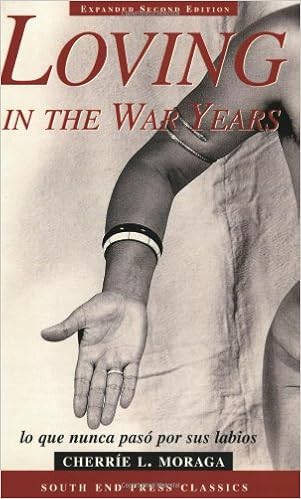
  • Loving in the War Years: Lo Que Nunca Paso por Sus Labios (South End Press Classics Series) (English and Spanish Edition) 2nd, expanded Edition

    South End Press
    2000
    234 pages
    5.3 x 0.5 x 8.3 inches
    Paperback ISBN: 978-0896086265

    Cherríe L. Moraga, Artist-in-residence
    Stanford University

    Weaving together poetry and prose, Spanish and English, family history and political theory, Loving in the War Years has been a classic in the feminist and Chicano canon since its 1983 release. This new edition—including a new introduction and three new essays—remains a testament of Moraga’s coming-of-age as a Chicana and a lesbian at a time when the political merging of those two identities was severely censured.

    Drawing on the Mexican legacy of Malinche, the symbolic mother of the first mestizo peoples, Moraga examines the collective sexual and cultural wounding suffered by women since the Conquest. Moraga examines her own mestiza parentage and the seemingly inescapable choice of assimilation into a passionless whiteness or uncritical acquiescence to the patriarchal Chicano culture she was raised to reproduce. By finding Chicana feminism and honoring her own sexuality and loyalty to other women of color, Moraga finds a way to claim both her family and her freedom.

    Moraga’s new essays, written with a voice nearly a generation older, continue the project of “loving in the war years,” but Moraga’s posture is now closer to that of a zen warrior than a street-fighter. In these essays, loving is an extended prayer, where the poet-politica reflects on the relationship between our small individual deaths and the dyings of nations of people (pueblos). Loving is an angry response to the “cultural tyranny” of the mainstream art world and a celebration of the strategic use of “cultural memory” in the creation of an art of resistance.

  • Student reflects on mixed-race background

    The Times-Delphic
    Des Moines, Iowa
    2017-02-22

    Jessica Spangler, Opinions Editor

    As someone who comes from a blend of different cultures, it can sometimes seem like there isn’t really anywhere I belong. There are no neat boxes that I fit into.

    I love that I am able to have a unique perspective and have the opportunity to grow up knowing different cultures. I’m proud of who I am and where my family is from. I am Cuban, Mexican and white and I will always consider myself lucky that I am able to have the experiences I do.

    But there is also a lot of frustration that comes along with being mixed race.

    People have dismissed my Latina side completely (“Please, you’re just white.”) and people have called me racial slurs or have said racist jokes to me (“Want to mow my lawn?”)…

    Read the entire article here.

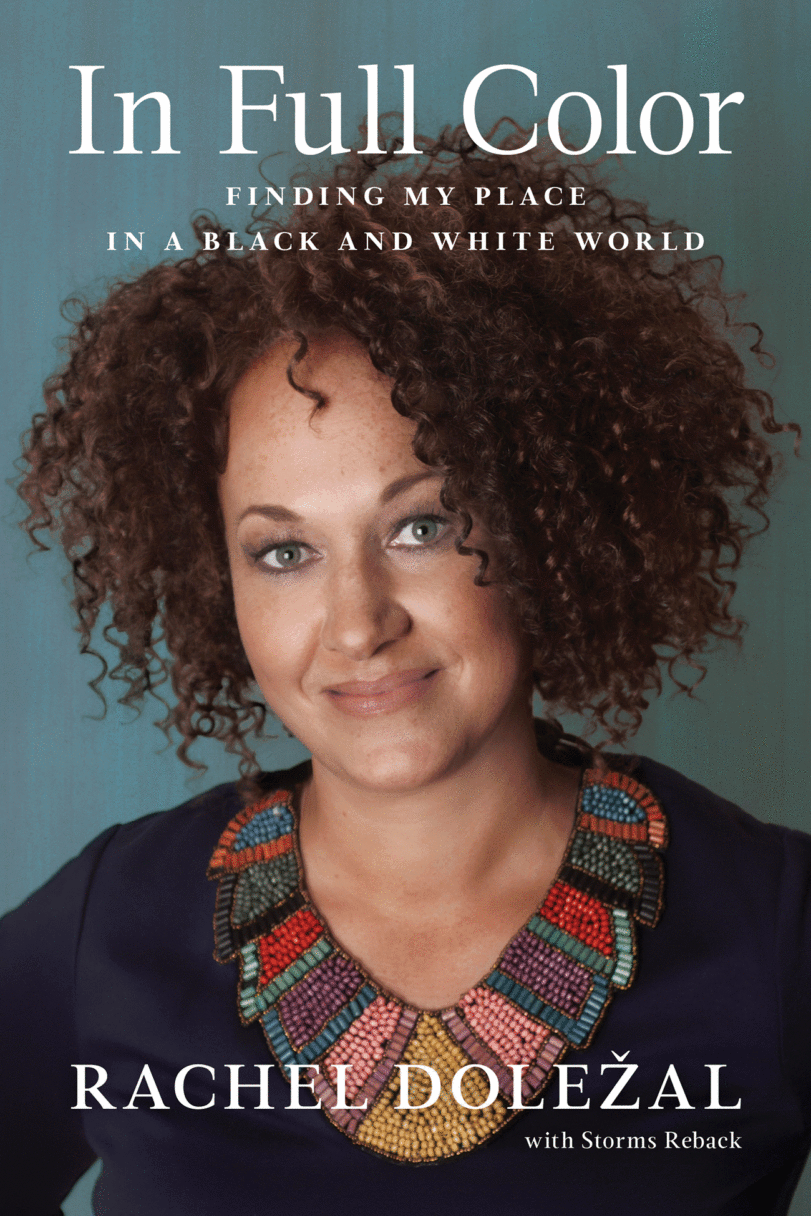
  • In Full Color: Finding My Place in a Black and White World

    BenBella Books
    2017-03-28
    256 pages
    Hardcover ISBN: 978-1944648169

    Rachel Doležal (with Storms Reback)

    A lot of people think they know what Rachel Doležal is.

    Race faker. Liar. Opportunist. Crazy bitch.

    But they don’t get to decide who Rachel Doležal is.

    What determines your race? Is it your DNA? The community in which you were raised? The way others see you, or the way you see yourself?

    On June 11, 2015, the media “outed” Rachel Doležal as a white woman who had knowingly been “passing” as black. When asked if she were African American during an interview about the hate crimes directed at her and her family, she hesitated before ending the interview and walking away. Some interpreted her reluctance to respond and hasty departure as dishonesty, while others assumed she lacked a reasonable explanation for the almost unprecedented way she identified herself.

    With In Full Color, Rachael Doležal describes the path that led her from being a child of white evangelical parents to an NAACP chapter president and respected educator and activist who identified as black. Along the way, she’ll discuss the deep emotional bond she formed with her four adopted black siblings, the sense of belonging she felt while living in black communities in Jackson, Mississippi and Washington, D.C., and the discrimination she’s suffered while living as a black woman.

    Her story is nuanced and complex, and in the process of telling it, she forces us to consider race in an entirely new light—not as a biological imperative, but as a function of the experiences we have, the culture we embrace, and, ultimately, the identity we choose.

  • Rosa Clemente: How I Came to Know and Appreciate My Blackness As An Afro-Latina

    Atlanta Black Star
    2017-02-23

    Rosa Clemente


    Rosa Alicia Clemente

    In 1993, I was a student at the State University of New York-Albany when Dr. Marta Moreno Vega came to speak on our campus. Until that evening, I had never heard the term Afro-Latina. In fact, I had just learned what it meant when someone said “African descendant.” See, even though I had grown up in NYC and Westchester County, respectively, and completely embraced and understood that I was Puerto Rican, it was not until I went to college that I began to get to know who I truly was.

    The year before, I had joined the Albany State University Black Alliance and, through my involvement with peers who were racially and politically conscious, I was exposed to the true history of mi gente (my people). This awakening of my racial consciousness would lead me to become an Africana Studies major and, to this day, I have been a scholar-activist in the field of Black studies. For me, it became clear that I was an African descendant, so I began to devour anything and everything I could, not only to learn the truth of who I was but also to confront the lies I had been told by my teachers, family and TV…

    Read the entire article here.

  • A few minutes with … Adebe DeRango-Adem

    Open Book
    2017-02-21

    Throughout my month here at open-book.ca I’ve been sharing my conversations with various members of the literary community. Our last conversation is with noted poet, Adebe DeRango-Adem. To learn more about her current collection, Terra Incognita please visit here or her Facebook page.

    DS:
    In the description for Terra Incognita, I noticed the phrase, “geography is fate.” Since I’ve moved to Canada, artists, authors, musicians and academics I’ve known from the black community have migrated to the US. As a person who has lived on both sides of the border, what is the fate of the black Canadian intellectual in the United States? What are the opportunities that can only be found there?

    ADA:
    I’m still busy building my audience/readership in United States, since most of my affinities/ties in the literary world have tended to be in Canada, more specifically in Toronto. The last few years have seen my life become a moment where art imitates life (imitates art). The publication of Terra Incognita coincided with a turn of events that left me in a relative state of exilic questioning, both in terms of my geographic displacement (being between cities, namely New York, Philadelphia, and Toronto), but moreover the turn of events that offered an unknown territory through which I had to find new ways to resolve to keep going. The one thing I will give credit to the United States for, in the literary sense, is the palpable & intimidating feeling you get from practically everyone you meet – a drive towards success. A lot of people want to be successful in United States & the states has a lot of successful people; as such, the hunter kind mentality rubs off even on the most humble of poets. I do see certain opportunities in the US coming my way, namely through the poets who I have either worked with – Ameri Baraka, Ann Waldman, Sonia Sanchez, Charles Bernstein, and the estate of Langston Hughes (The first poem I ever read on American soil was at the house, actually the living room, of Hughes’s home in Harlem) – or who I would like to work with at length – Claudia Rankine, Terrence Hayes, & about twenty talented writers of color. The way things are going these days for arts funding in the US is a bit precarious, so the word opportunity is largely a big question mark. However the general feeling of desire, and the willingness coupled with the ability to network and get out there, puts a lot of American poets at an advantage. It’s a mentality, modality of being/way of thinking, that can be used to walk through the fire & surge ahead with ones literary dreams…

    Read the inter interview here.

  • Ireland’s forgotten mixed-race child abuse victims – video

    The Guardian
    2017-02-24

    Hen Norton, Dan Dennison, Mary Carson, Laurence Topham, Dan Susman and Mustafa Khalili

    Rosemary Adaser was one of many mixed-race children considered illegitimate who was brought up in institutions run by the Catholic church in Ireland between the 1950s and 1970s. She tells of the abuse and racist treatment she suffered, and returns to her school in Kilkenny for the first time in 40 years and attempts to answer questions about her past

    Watch the video here.

  • A Chosen Exile: A History of Racial Passing in American Life by Allyson Hobbs (review)

    Journal of Southern History
    Volume 82, Number 2, May 2016
    pages 465-466
    DOI: 10.1353/soh.2016.0107

    Wilma King, Professor Emerita of History
    University of Missouri

    A Chosen Exile: A History of Racial Passing in American Life. By Allyson Hobbs. (Cambridge, Mass., and London: Harvard University Press, 2014. Pp. [xii], 382. $29.95, ISBN 978-0-674-36810-1.)

    An insightful introduction prepares readers for five deeply researched chapters and an epilogue constituting what Allyson Hobbs describes as a history of racial passing in American life. Two well-developed themes in the text add to its significance. First, Hobbs argues that the perceived need for racial passing changed over time. Before the Civil War, slaves passed to escape bondage, not blackness. Later, the promises of Reconstruction encouraged blacks to believe treatment equal to that enjoyed by whites was imminent. Instead, political disenfranchisement, social intimidation, and economic deprivation followed. Racial passing was a viable option to escape those circumstances. However, during the 1920s the Harlem Renaissance expanded conceptions of racial identity and offered alternatives to passing. The elimination of some racial barriers after World War II rendered racial passing passé. Second, the author calls attention to both the intended and unintended consequences of blacks passing as whites. On one hand, passing offered opportunities for economic gains, but on the other hand, there were social losses associated with leaving families and friends behind. “Once one circumvented the law, fooled coworkers, deceived neighbors, tricked friends, and sometimes even duped children and spouses,” writes Hobbs, “there were enormous costs to pay” (p. 5).

    The author contends “the core issue of passing is not becoming what you pass for, but losing what you pass away from” (p. 18). Passing, a performative, subversive, and tactical exercise, required constant vigilance to protect a newly crafted identity from exposure. Eventually, those who passed, temporarily or permanently, faced questions about gains and losses. A variety of historical and literary sources, supplemented by materials from popular and mixed media, make A Chosen Exile: A History of Racial Passing in American Life come to life as readers are introduced to racially ambiguous women and men, including Ellen Craft, Henry Bibb, John H. Rapier, and descendants of Sally Hemings and Sarah Martha Sanders, all of whom were interested in acquiring equal opportunities, suffrage, and citizenship, more so than in actually becoming white…

    Read the entire review here.
  • The fourth Critical Mixed Race Studies Conference celebrates the 50th anniversary of Loving v. Virginia

    Critical Mixed Race Studies Association
    2016-12-08

    Laura Kina
    Telephone: 773-325-4048; E-Mail: cmrsmixedrace@gmail.com

    LOS ANGELES, CA – The fourth Critical Mixed Race Studies Conference, “Explorations in Trans (gender, gressions, migrations, racial) Fifty Years After Loving v. Virginia,” will bring together academics, activists, and artists from across the US and abroad to explore the latest developments in critical mixed race studies. The Conference will be held at The University of Southern California from February 24-26, 2017 at the USC Ronald Tutor Campus Center, 3607 Trousdale Parkway, Los Angeles, CA 90089 and is hosted by the Shinso Ito Center for Japanese Religions and Culture.

    The conference will include over 50 panels, roundtables, and caucus sessions organized by the Critical Mixed Race Studies Association as well as feature film screenings and live performances organized by the non-profit Mixed Roots Stories. The conference is pleased to run concurrently with the Hapa Japan Festival February 22- 26, 2017.

    The year 2017 marks the 50th anniversary of the 1967 Supreme Court decision in Loving v. Virginia, which declared interracial marriage legal. With a focus on the root word “Trans” this conference explores interracial encounters such as transpacific Asian migration, transnational migration from Latin America, transracial adoption, transracial/ethnic identity, the intersections of trans (gendered) and mixed race identity, and mixed race transgressions of race, citizenship, and nation…

    Read the entire press release here. View the program guide here.

  • James Baldwin and the Meaning of Whiteness

    Common Dreams: Breaking News & Views for the Progressive Community
    2017-02-20

    Chris Hedges


    The work of James Baldwin, pictured here in 1969, is as relevant today as in his time. The essayist, novelist, poet and social critic died in 1987. (Photo: Allan Warren / Wikimedia Commons)

    Raoul Peck’sI Am Not Your Negro” is one of the finest documentaries I have ever seen—I would have stayed in the theater in New York to see the film again if the next showing had not been sold out. The newly released film powerfully illustrates, through James Baldwin’s prophetic work, that the insanity now gripping the United States is an inevitable consequence of white Americans’ steadfast failure to confront where they came from, who they are and the lies and myths they use to mask past and present crimes. Baldwin’s only equal as a 20th century essayist is George Orwell. If you have not read Baldwin you probably do not fully understand America. Especially now.

    History “is not the past,” the film quotes Baldwin as saying. “History is the present. We carry our history with us. To think otherwise is criminal.”

    The script is taken from Baldwin’s notes, essays, interviews and letters, with some of the words delivered in Baldwin’s voice from audio recordings and televised footage, some of them in readings by actor Samuel L. Jackson. But it is not, finally, the poetry and lyricism of Baldwin that make the film so moving. It is Peck’s understanding of the core of Baldwin’s message to the white race, a message that is vital to grasp as we struggle with an overt racist as president, mass incarceration, poverty gripping half the country and militarized police murdering unarmed black men and women in the streets of our cities.

    Whiteness is a dangerous concept. It is not about skin color. It is not even about race. It is about the willful blindness used to justify white supremacy. It is about using moral rhetoric to defend exploitation, racism, mass murder, reigns of terror and the crimes of empire…

    …Nearly all African-Americans carry within them white blood, usually the result of white rape. White slaveholders routinely sold mixed-race children—their own children—into slavery. Baldwin knew the failure to acknowledge the melding of the black and white races that can be seen in nearly every African-American face, a melding that makes African-Americans literally the brothers and sisters of whites. African-Americans, Baldwin wrote, are the “bastard” children of white America. They constitute a peculiarly and uniquely American race.

    “The truth is this country does not know what to do with its black population,” he said. “Americans can’t face the fact that I am flesh of their flesh.”…

    Read the entire article here.