Mixed Race Studies

Scholarly perspectives on the mixed race experience.

    • About This Site
    • Bibliography
    • Contact Information
    • Date and Time Formats
    • Forthcoming… (Updated 2021-09-01)
    • Likely Asked Questions
    • List of Book Publishers
    • List of Definitions and Terms
    • My Favorite Articles and Papers
    • My Favorite Posts
    • My Recent Activities
    • Praise for Mixed Race Studies
    • Tag Listing
      • Tag Listing (Ordered by Count)
    • US Census Race Categories, 1790-2010
    • 1661: The First ‘Mixed-Race’ Milestone
    • 2010 U.S. Census – Some Thoughts

recent posts

  • The Routledge International Handbook of Interracial and Intercultural Relationships and Mental Health
  • Loving Across Racial and Cultural Boundaries: Interracial and Intercultural Relationships and Mental Health Conference
  • Call for Proposals: 2026 Critical Mixed Race Studies Conference at UCLA
  • Participants Needed for a Paid Research Study: Up to $100
  • You were either Black or white. To claim whiteness as a mixed child was to deny and hide Blackness. Our families understood that the world we were growing into would seek to denigrate this part of us and we would need a community that was made up, always and already, of all shades of Blackness.

about

  • Twitter
  • Facebook
  • Instagram
  • How Jews Became White Folks — and May Become Nonwhite Under Trump

    2016-12-08

    How Jews Became White Folks — and May Become Nonwhite Under Trump

    Forward
    2016-12-06

    Karen Brodkin, Professor Emeritus of Anthropology
    University of California, Los Angeles

    Decades before I wrote the book “How Jews Became White Folks and What That Says About Race in America,” I had an eye-opening conversation with my parents. I asked them if they were white. They looked flummoxed and said, “We’re Jewish.”

    “But are you white?”

    “Well, I guess we’re white; but we’re Jewish.” Then they wanted to know what I thought I was.

    I’m white and Jewish…

    Read the entire article here.

  • “Us versus Them” – A Thought on the Complexities of Multiracial Passing

    2016-12-08

    “Us versus Them” – A Thought on the Complexities of Multiracial Passing

    Multiracial Media: Voice of the Multiracial Community
    2016-12-08

    Joanna L. Thompson, Ph.D. Candidate
    Department of Criminology, Law, and Justice
    University of Illinois, Chicago


    Is this an example of “Multiracial Passing?” Photo credit: YouTube

    Recently, a post on TheRoot.com discussed the challenges Sofia Richie, daughter of iconic singer Lionel Richie, faces in the fashion industry. As a mixed-race, half Black/half White individual, Richie presents more White than Black. Because Richie presents more White than Black due to her light-skinned complexion, she mentioned in the interview that many White people who work around her feel comfortable saying racist things because ultimately, they forget or do not even know she is also Black. In a world that is growing more multiracial each day, the topic of passing is more prevalent than ever. The topic also raises questions which have yet to be answered. How do light-skinned multiracial individuals handle the racism that exists around them, whether it is directly or indirectly intended at them? And how can people who are not mixed-race do better at not only decreasing their racist remarks, but respecting spaces where the presence of light-skinned multiracial individuals are high?…

    Read the entire article here.

  • Hawkins told Smith that he has three sisters married to white men who do not suspect their wives of having negro blood.

    2016-12-07

    Hawkins told Smith that he has three sisters married to white men who do not suspect their wives of having negro blood.

    “Would-Be Bridegroom Takes Oath He Is Negro,” The San Francisco Call, Volume 104, Number 70 (August 9, 1908). page 31, column 4. https://cdnc.ucr.edu/cgi-bin/cdnc?a=d&d=SFC19080809.2.99.

  • ‘Born a Crime,’ Trevor Noah’s Raw Account of Life Under Apartheid

    2016-12-07

    ‘Born a Crime,’ Trevor Noah’s Raw Account of Life Under Apartheid

    The New York Times
    2016-11-28

    Michiko Kakutani, Chief Book Critic


    Trevor Noah, host of “The Daily Show,” in 2015. His memoir provides a harrowing look at life in South Africa under apartheid and then after that era.
    Credit Chad Batka for The New York Times

    As host of “The Daily Show,” Trevor Noah comes across as a wry, startled and sometimes outraged outsider, commenting on the absurdities of American life. During the presidential campaign, the South African-born comic remarked that Donald J. Trump reminded him of an African dictator, mused over the mystifying complexities of the Electoral College system and pointed out the weirdness of states voting on recreational marijuana.

    In the countdown to and aftermath of the election, Mr. Noah has grown more comfortable at moving back and forth between jokes and earnest insights, between humor and serious asides — the way he’s done in his stand-up act, and now, in his compelling new memoir, “Born a Crime: Stories From a South African Childhood.”…

    Read the entire review here.

  • “I’m very light, so some people don’t really know that I’m black. I’ve been in situations where people will say something kind of racist and I’ll step in and they’ll be like, ‘Oh, well, you’re light’…

    2016-12-07

    “I’m very light, so some people don’t really know that I’m black. I’ve been in situations where people will say something kind of racist and I’ll step in and they’ll be like, ‘Oh, well, you’re light,’” she says, her eyes flashing. “That still doesn’t cut it, buddy. It’s 2016—you better get your shit together before you get slapped out here.” —Sofia Ritchie

    Rebecca Haithcoat, “Family Business,” Complex, December 2016/January 2017. http://www.complex.com/pop-culture/sofia-richie-interview-2016-cover-story.

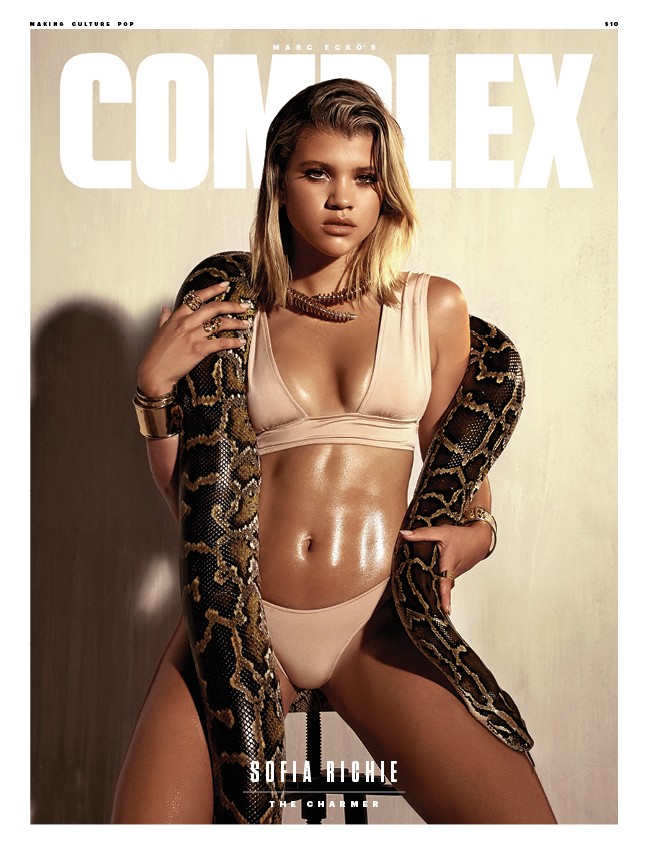
  • Family Business

    2016-12-07

    Family Business

    Complex
    December 2016/January 2017

    Written by Rebecca Haithcoat
    Photography by Sasha Samsonova


    Sofia Ritchie

    Sofia Richie has been known to the world as Lionel Richie’s daughter, Nicole Richie’s half-sister, and Justin Bieber’s BAE. Now, the aspiring model is ready to make her solo debut—Without Losing her Privacy.

    Sorry—Sofia Richie does not want to talk about Justin Bieber.

    Sitting in an outdoor booth at the Beverly Hills Hotel’s luxurious Polo Lounge, Richie’s manager, Alex Avant, is setting the terms of her impending interview. Hollywood handlers are typically overprotective, but his chaperoning will prove to be extra oppressive: He’s a longtime family friend and has been personally tasked by Richie’s father, Lionel, to take care of his baby.

    Whatever Richie wants, she gets. And what she wants is no Bieber questions.

    “There are just so many rumors and lies,” Avant says. He waves at Russell Simmons across the room.

    Avant is told this interview is a great way to clear up those rumors and lies.

    He shakes his head.

    So, Sofia and Justin, are they still…?

    He nods, then shakes his head, somehow confirming and denying at the same time. “Just no questions,” he says finally.

    This is unfortunate, because at the present time, Sofia Richie, 18, is known for three things: her famous family (singer and father Lionel and former reality star/current fashion-plate sister Nicole), walking in Kanye West’s most recent Yeezy Season fashion show (the one whose casting call was for “multiracial women only”), and, yes, dating Bieber…

    Read the entire interview here.

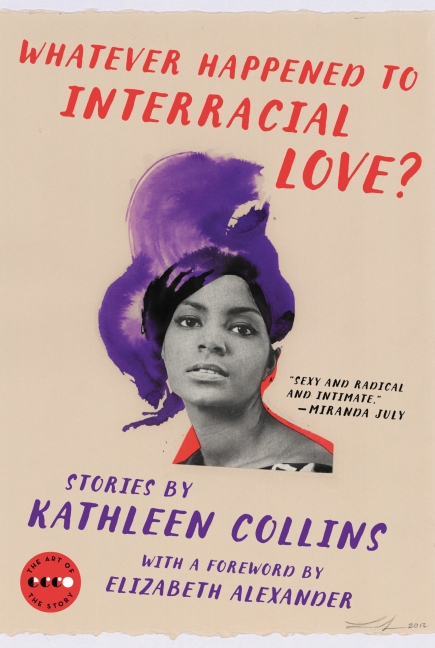
  • Whatever Happened to Interracial Love?

    2016-12-07

    Whatever Happened to Interracial Love?

    Ecco (an imprint of HarperCollins)
    2016-12-06
    192 pages
    5.313 in (w) x 8 in (h) x 0.432 in (d)
    Paperback ISBN: 9780062484154
    E-book ISBN: 9780062484161

    Kathleen Collins (1942-1988)

    Foreword by: Elizabeth Alexander
    Named one of Publishers Weekly’s Best Books of the Year, and named one of the most anticipated books of the fall by the Huffington Post, New York, The Boston Globe, Lit Hub, The Millions, and Nylon.com.

    Now available in Ecco’s Art of the Story series: a never-before-published collection of stories from a brilliant yet little known African American artist and filmmaker—a contemporary of revered writers including Toni Cade Bambara, Laurie Colwin, Ann Beattie, Amy Hempel, and Grace Paley—whose prescient work has recently resurfaced to wide acclaim.

    Humorous, poignant, perceptive, and full of grace, Kathleen Collins’s stories masterfully blend the quotidian and the profound in a personal, intimate way, exploring deep, far-reaching issues—race, gender, family, and sexuality—that shape the ordinary moments in our lives.

    In “The Uncle,” a young girl who idolizes her handsome uncle and his beautiful wife makes a haunting discovery about their lives. In “Only Once,” a woman reminisces about her charming daredevil of a lover and his ultimate—and final—act of foolishness. Collins’s work seamlessly integrates the African-American experience in her characters’ lives, creating rich, devastatingly familiar, full-bodied men, women, and children who transcend the symbolic, penetrating both the reader’s head and heart.

    Both contemporary and timeless, Whatever Happened to Interracial Love? is a major addition to the literary canon, and is sure to earn Kathleen Collins the widespread recognition she is long overdue.

  • Lionel Richie’s Daughter Sofia Says People Say Racist Stuff Around Her Not Knowing She’s Black

    2016-12-07

    Lionel Richie’s Daughter Sofia Says People Say Racist Stuff Around Her Not Knowing She’s Black

    The Root
    2016-12-06

    Yesha Callahan, Senior Editor


    Sofia Richie during New York Fashion Week on Feb. 11, 2016
    Gustavo Caballero/Getty Images

    The model spoke about the racism she’s subjected to because people don’t see her as a black woman.

    Lionel Richie’s daughter Sofia has made a name for herself in the fashion industry, but that doesn’t mean she isn’t subjected to everyday racism. Especially when people forget that she’s actually black.

    “I’m very light, so some people don’t really know that I’m black,” Sofia Richie, 18, said in an interview with Complex. “I’ve been in situations where people will say something kind of racist, and I’ll step in and they’ll be like, ‘Oh, well, you’re light.’”

    And it’s those statements that might cause her to go off…

    Read the entire article here.

  • For Sephardic and Mizrahi Jews, Whiteness Was a Fragile Identity Long Before Trump

    2016-12-07

    For Sephardic and Mizrahi Jews, Whiteness Was a Fragile Identity Long Before Trump

    Forward
    2016-12-06

    Sigal Samuel, Opinion Editor


    Nikki Casey

    I have lived for 26 years under the illusion that I am unconditionally white…. Recently I have started looking at my face and going, ‘Oh man, do I look too Jewish?’” Sydney Brownstone, the reporter who voiced this question in a recent Blabbermouth podcast, is not alone in wondering this. Many Ashkenazi Jews who have always assumed that they’re white are noticing that they’re not white enough for Donald Trump’s white supremacists. Suddenly, they’re asking themselves: Wait, how white am I, exactly?

    To tackle this question, try a little visualization. Picture all American Jews arranged along a spectrum. On one end are the Ashkenazi Jews who identify as white and get coded as white by society. On the other end are the Jews of color who can never pass as white: black Jews, Chinese Jews and others who get read as non-white on the street. In the middle of the spectrum are Sephardic and Mizrahi Jews, who sometimes pass as white and sometimes don’t.

    As a Mizrahi Jew — my ancestors come from India, Iraq and Morocco — I inhabit that ambiguous middle space. For a long time, it’s been a lonely place to be, since Ashkenazi is Judaism’s default setting in America. It’s also been massively confusing, since I often reap the privileges of being white-passing, even as I get selected for “random additional screenings” by the TSA or for “Where are you really from?” queries from strangers on the street…

    Read the entire article here.

  • Lucy Parsons: An American Revolutionary

    2016-12-07

    Lucy Parsons: An American Revolutionary

    Haymarket Books
    February 2013
    282 pages
    Paperback ISBN: 9781608462131

    Carolyn Ashbaugh

    The life and times of Lucy Parsons, early American radical and labor organizer, told definitively here.

    Lucy Parsons’ life energy was directed toward freeing the working class from capitalism. She attributed the inferior position of women and minority racial groups in American society to class inequalities and argued, as Eugene Debs later did, that blacks were oppressed because they were poor, not because they were black. Lucy favored the availability of birth control information and contraceptive devices. She believed that under socialism women would have the right to divorce and remarry without economic, political and religious constraints; that women would have the right to limit the number of children they would have; and that women would have the right to prevent “legalized” rape in marriage.

    “Lucy Parsons’ life expressed the anger of the unemployed workers, women, and minorities against oppression and is exemplary of radicals’ efforts to organize the working class for social change.” —From the preface

    Lucy Parsons, who the Chicago police considered “more dangerous than a thousand rioters,” was an early American radical who defied all the conventions of her turbulent era as an outspoken woman of color, writer, and labor organizer. Parsons’ life as activist spanned the era of the Robber Barons through the Great Depression, during which she actively campaigned and organized for the emancipation of the working class from wage slavery. Parsons courageously led the defense campaign for the “Haymarket martyrs,” including her husband Albert Parsons. Ashbaugh’s biography takes a giant leap toward reinterpreting the role of women in American history.

Previous Page
1 … 340 341 342 343 344 … 1,428
Next Page

Designed with WordPress