• Finding my roots

    Eve’s Perspective: Sharing views one post at a time
    2016-02-03

    Ashley R. Alexander


    Born in 1872 in Maysville, Alabama. Jordan-Woodard is my 3rd great-grandmother.

    I couldn’t stop staring at the picture of this young lady. This young mulatto girl from the 19th century, who appears to look white and though there is no expression on her face, I am sure she had a lot of joy and heart aches during that timepoint in her life.

    In the quest to find my roots this picture was sent to me. That young lady is my 3rd paternal great grandmother. Jeanette Eugenia Jordan was her name. She was born in 1872 just 7 years after the abolition of slavery…

    Read the entire article here.

  • The Racial Reality of Being Mixed Race

    91.3 KBCS Radio
    Bellevue, Washington
    2016-03-04

    Sonya Green, News & Public Affairs Director

    What does it mean to mixed race? It’s a term recognized but rarely considered in conversations about race and racial identity. However, it should be since according to reports, multiracial individuals are the fastest growing youth group. Seattle-based author activist, Sharon H. Chang debuts her first book Raising Mixed Race: Multiracial Asian Children In a Post-Racial World. Sonya Green interviewed Sharon. She started by defining what race means.

    Listen to the interview (00:17:02) here.

  • Racialization, between power and knowledge: a postcolonial reading of public health as a discursive practice

    Journal of Critical Race Inquiry
    Volume 1, Number 2 (2011)

    Patrick Cloos
    University of Montréal

    This paper presents and discusses the interdisciplinary theoretical perspective that has been built from a doctoral research on contemporary notions of ̒ race ̓ in the field of public health in the United States. In this context, ̒ race ̓ was seen as an object that emerged from the discourse, lying between power and knowledge as suggested by Foucault, while public health is an apparatus that put the discourse and the formation of the object into operation. Some authors in the field of postcolonial studies emphasize the representational power associated with the discourse that corresponds to a system of opposition and difference creating a dichotomy and ensuring the domination of some over others. This article argues that ̒ race ̓, as an idea of difference, will persist as long as historical conditions and people allow it.

    Read the entire article here.

  • Beyoncé, Creoles, and Modern Blackness

    University of California Press Blog
    2016-02-29

    Tyina Steptoe, Assistant Professor of History
    University of Arizona

    Tyina Steptoe is the author of Houston Bound: Culture and Color in a Jim Crow City (2015).

    Beyoncé is a black woman. This isn’t exactly earth-shattering news; after all, the 34-year-old, Houston-born entertainer has one of the most recognizable faces in the world. Yet, since the release of the video for her song “Formation” on February 6, an avalanche of tweets and think pieces have heralded the arrival of an unapologetically black Beyoncé.

    Set in New Orleans, the “Formation” video features a platinum braid wearing, hot sauce-loving black woman who adores afros and her “Negro nose.” Helmed by award-winning director Melina Masoukas, the clip also prominently features images associated with the Black Live Matter movement. In one scene, a group of militarized police officers stand in front of a dancing, unarmed black boy. Another shot shows a wall tagged with the words “Stop shooting us.” These are not words or images typically associated with Queen Bey.

    One day later, Beyoncé’s Super Bowl halftime performance featured a bevy of black female back-up dancers dressed like Black Panthers in berets and afros. Some of the women later posed with a sign that read “Justice 4 Mario Woods.” Woods was a young African American man slain by police officers in San Francisco on December 2, so the display indelibly links Beyoncé to recent protests against police killings. Some white fans reacted angrily. By Monday morning, the hashtag #BoycottBeyonce circulated on social media, and one group of detractors planned a boycott (though that didn’t quite pan out in the way they’d hoped.) “Saturday Night Live” spoofed negative white reaction with a video called “The Day Beyoncé Turned Black.” To her fans and critics, it was clear that Beyoncé has made her racial identity and modern racial politics central to her public image in 2016…

    Read the entire article here.

  • Hollywood’s Obsession With the Bottom Line Is Just Discrimination in Disguise

    Cosmopolitan
    2016-02-25

    Stephanie Allain

    Stephanie Allain has worked in Hollywood for more than 30 years, both in and out of the studio system. She’s produced award-winning films including Hustle & Flow, Peeples, Beyond the Lights, and Dear White People. Her next projects include Underground, a film about frat hazing at historically black colleges, for Netflix, and Crushed, a half-hour comedy for Lionsgate/Hulu inspired by the only black-owned family vineyard in Napa. She is also director of the L.A. Film Festival.

    In 1990, I interviewed a young man to replace me as a script reader in the story department of Columbia Pictures. That man was 22-year-old John Singleton, and he couldn’t care less about the reader job. Instead, he pitched me his script about three young kids in South Central called Boyz N the Hood. When I got it from his agent, I closed the door to my tiny office and read it cover-to-cover. Up until then, I had been imitating my white mentors, Amy Pascal and Dawn Steel, culling the town for “commercial” scripts. Reading Boyz N the Hood reconnected me to my roots; it blew my mind wide open. There was an entire world of stories that had yet to be told, and as one of the few black women in Hollywood, I was determined to find them.

    I was born in New Orleans in 1959 to Creole parents. Racism was insidious at that time in the South, so my father, a biochemist, and my mom, an educator, packed up our Impala in June 1965 and drove my sister and me to Los Angeles. We settled into a modest home near Wilshire Boulevard in the artistic community known as Miracle Mile, near the famous LACMA (Los Angeles County Museum of Art). I think my father hoped we could escape racism by moving us out West and putting us in predominantly white schools, but that was a misguided wish: We reached L.A. just as the Watts rebellion broke out, exposing deep racial tensions in the city…

    My colorblind bubble burst in fifth grade when the cute white boy who sat near me leaned across the aisle during a conversation about the Black Power movement and asked if I was a Negro. Somehow, I’d buried my shameful childhood memories of using a clothespin to narrow my nostrils. I’d forgotten how my cousins and I would compare skin color, the lighter ones wondering if we could “pass” like our grandmother was forced to do in her youth for survival…

    Read the entire article here.

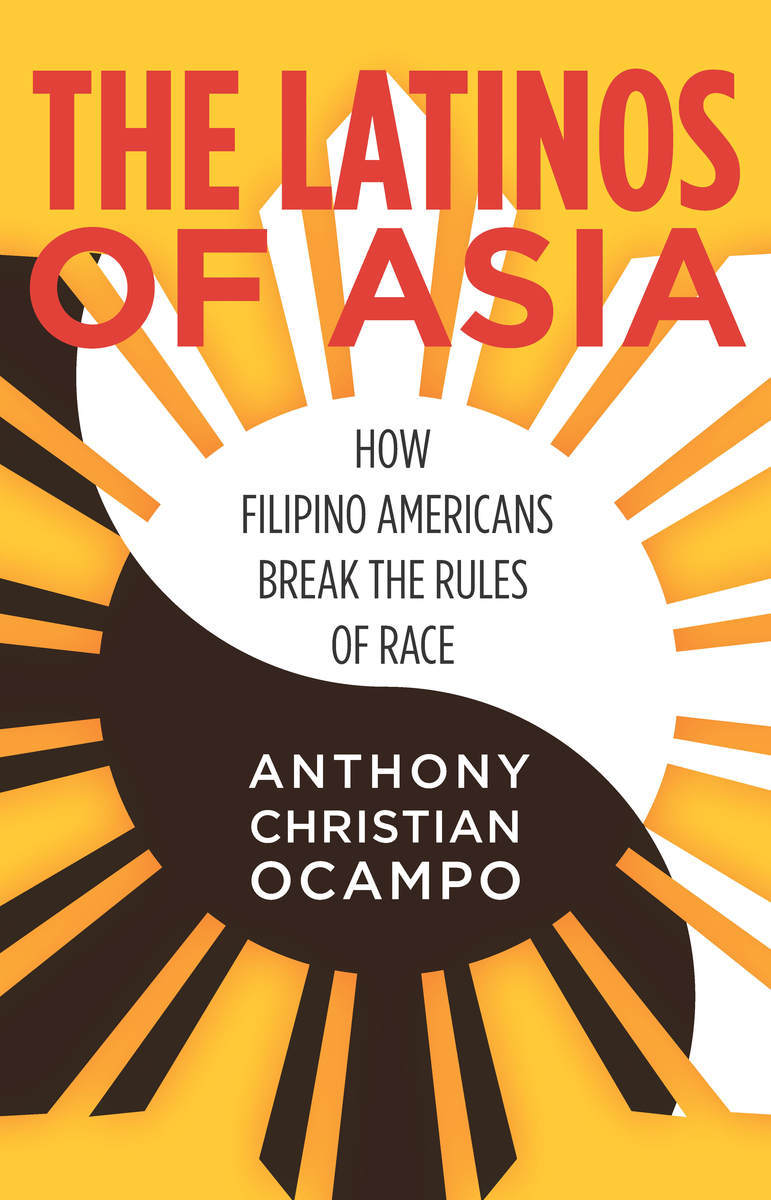
  • The Latinos of Asia: How Filipino Americans Break the Rules of Race

    Stanford University Press
    March 2016
    227 pages
    Cloth ISBN: 9780804793940
    Paper ISBN: 9780804797542
    Digital ISBN: 9780804797573

    Anthony Christian Ocampo, Associate Professor of Sociology
    California State Polytechnic University, Pomona

    Is race only about the color of your skin? In The Latinos of Asia, Anthony Christian Ocampo shows that what “color” you are depends largely on your social context. Filipino Americans, for example, helped establish the Asian American movement and are classified by the U.S. Census as Asian. But the legacy of Spanish colonialism in the Philippines means that they share many cultural characteristics with Latinos, such as last names, religion, and language. Thus, Filipinos’ “color”—their sense of connection with other racial groups—changes depending on their social context.

    The Filipino story demonstrates how immigration is changing the way people negotiate race, particularly in cities like Los Angeles where Latinos and Asians now constitute a collective majority. Amplifying their voices, Ocampo illustrates how second-generation Filipino Americans’ racial identities change depending on the communities they grow up in, the schools they attend, and the people they befriend. Ultimately, The Latinos of Asia offers a window into both the racial consciousness of everyday people and the changing racial landscape of American society.

  • Afro-Latin America: Black Lives, 1600–2000

    Harvard University Press
    March 2016
    136 pages
    6-1/8 x 9-1/4 inches
    2 maps, 2 graphs, 4 tables
    Hardcover ISBN: 9780674737594

    George Reid Andrews, Distinguished Professor of History
    University of Pittsburgh

    Of the almost 11 million Africans who came to the Americas between 1500 and 1870, two-thirds came to Spanish America and Brazil. Over four centuries, Africans and their descendants—both free and enslaved—participated in the political, social, and cultural movements that indelibly shaped their countries’ colonial and post-independence pasts. Yet until very recently Afro-Latin Americans were conspicuously excluded from narratives of their hemisphere’s history.

    George Reid Andrews seeks to redress this damaging omission by making visible the past and present lives and labors of black Latin Americans in their New World home. He cogently reconstructs the Afro-Latin heritage from the paper trail of slavery and freedom, from the testimonies of individual black men and women, from the writings of visiting African-Americans, and from the efforts of activists and scholars of the twentieth century to bring the Afro-Latin heritage fully into public view.

    While most Latin American countries have acknowledged the legacy of slavery, the story still told throughout the region is one of “racial democracy”—the supposedly successful integration and acceptance of African descendants into society. From the 1970s to today, black civil rights movements have challenged that narrative and demanded that its promises of racial equality be made real. They have also called for fuller acknowledgment of Afro-Latin Americans’ centrality in their countries’ national histories. Afro-Latin America brings that story up to the present, examining debates currently taking place throughout the region on how best to achieve genuine racial equality.

    Table of Contents

    • 1. On Seeing and Not Seeing
    • 2. On Counting and Not Counting
    • 3. Afro-Latin American Voices
    • 4. Transnational Voices
    • 5. On Acting and Not Acting
    • Notes
    • Acknowledgments
    • Index
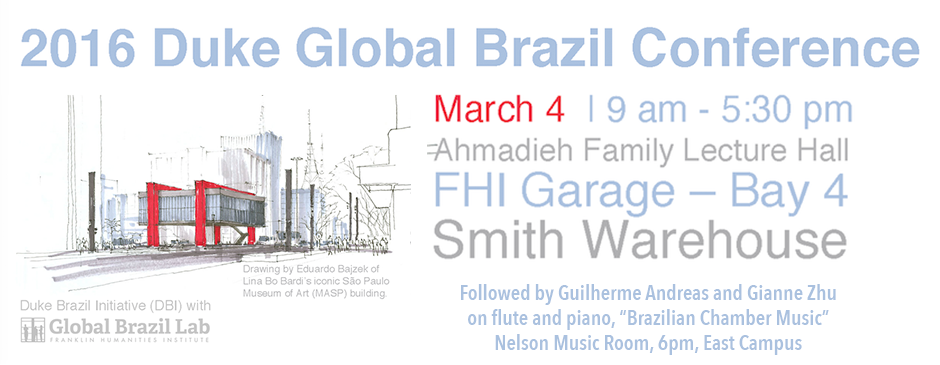
  • 2016 Duke Global Brazil Conference

    Duke University
    Ahmadieh Family Lecture Hall (FHI Garage)
    C105, Bay 4, Smith Warehouse
    Durham, North Carolina
    2016-03-04, 09:00-17:30 EST (Local Time)

    Co-sponsored by FHI Global Brazil Lab and the Duke Brazil Initiative

    Invited guests include:

    • Keynote: Dr. Elizabeth Hordge-Freeman (USF) – The Color of Love in Bahia
    • Dr. John Collins (CUNY) – Race, Violence, and the State in Bahia
    • Dr. William Pan (Duke) – Environment and Health in the Amazon
    • Dr. Bryan Pitts (U.Ga) – Sound and Politics
    • Guilherme Andreas (JMU) – Flute recital with piano by Gianne Ge Zhu

    For more information, click here.

  • ‘Pinky’ and the Origins of Interracial Oscar-Bait

    Bitch Flicks
    2016-02-26

    Hannah Graves
    Department of History
    University of Warwick, Coventry, United Kingdom

    This guest post by Hannah Graves appears as part of our theme week on Interracial Relationships.

    Twentieth Century-Fox’s Pinky is far from the first Hollywood feature film that depicts an interracial relationship. Despite the evolution of various censorship codes that forbid depicting “miscegenation,” Hollywood has a rich history of mining the salacious or elicit potential from interracial pairing on screen, from Broken Blossoms to Duel in the Sun, Showboat to Imitation of Life. Yet, Pinky was quite distinct in tone from the films that came before it.

    Produced by Fox’s studio chief Darryl F. Zanuck, Pinky was part of a spate of post-war social problem films that earnestly sought to address topical issues. Studios promoted these films as evidence that their medium was maturing, littering their advertising with exaggerated claims about the power of their pictures. As one of Pinky’s screenwriters, Phil Dunne, wrote in a New York Times article, “What we say and do on the screen in productions of this sort can affect the happiness, the living conditions, even the physical safety of millions of our fellow citizens.” Pinky is best understood at the starting point for a new Hollywood trajectory for interracial relationships onscreen: the worthy Oscar-bait drama that claims to enlighten as it entertains and serves as a conduit for fostering tolerance in the presumed white audience. It is a tradition that informs films from A Patch of Blue and Guess Who’s Coming to Dinner to Monster’s Ball and the forthcoming Loving

    Read the entire article here.

  • Why I Created #ObamaAndKids

    Medium
    2016-02-21

    Michael Skolnik


    (Pete Souza/White House)

    THURSDAY, February 18, 2016. The White House. Washington, DC. President Barack Obama was about to enter the room, when I noticed a young boy standing next to me, dressed in a jacket and tie, looking to get to the front of the crowd. This would be the last Black History Month celebration at The White House during the presidency of the first African-American in the history of The United States to hold the highest office in the land. When I asked the young boy if he needed help, he turned to me, and with a smile, he kept it moving, with his mother behind him, he led her around the various adults in his way, ultimately disappearing into the crowd in front.

    Historical, this event would become. Not because of any major announcement the President or The First Lady would make from the podium, but because of a photo of that young boy, dressed in a jacket and tie, that would capture the attention of the world. They ultimately got to the front, standing against the rope that separated, by only a few feet, the audience from Barack and Michelle.

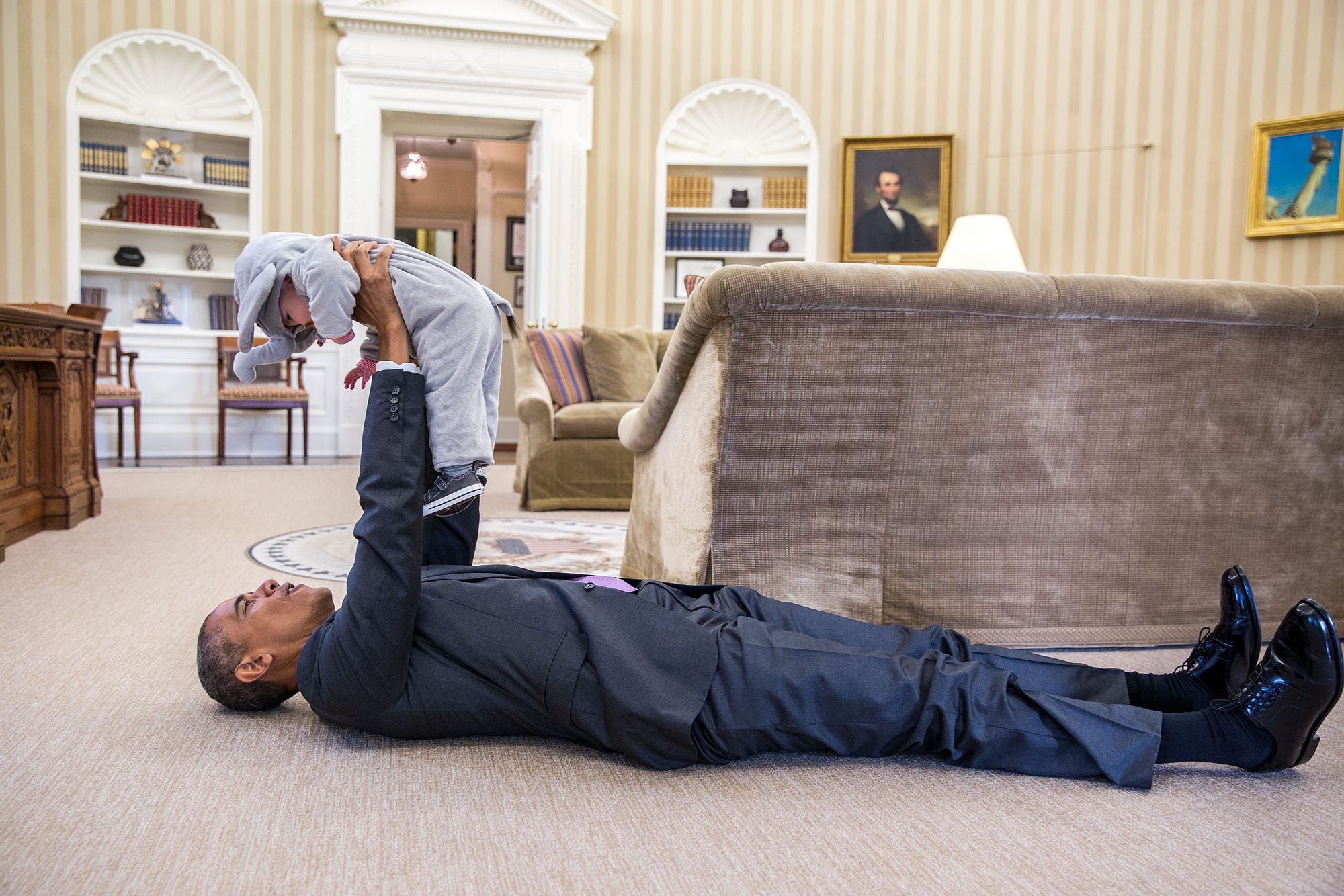
    When the President finished his speech, he came down to the rope-line to greet the invited guests, and eventually arrived at the feet of the young boy. The President reached out to touch the boy’s face, and the remarkable White House photographer Pete Souza, did what he does best; snapped another iconic photograph of President Obama and a child who innocently knows nothing of the importance of that moment…

    Read the entire article here.