• The Ins and Outs of Diversity in the Dominican Republic

    Latina
    2015-02-26

    Cindy Rodriguez

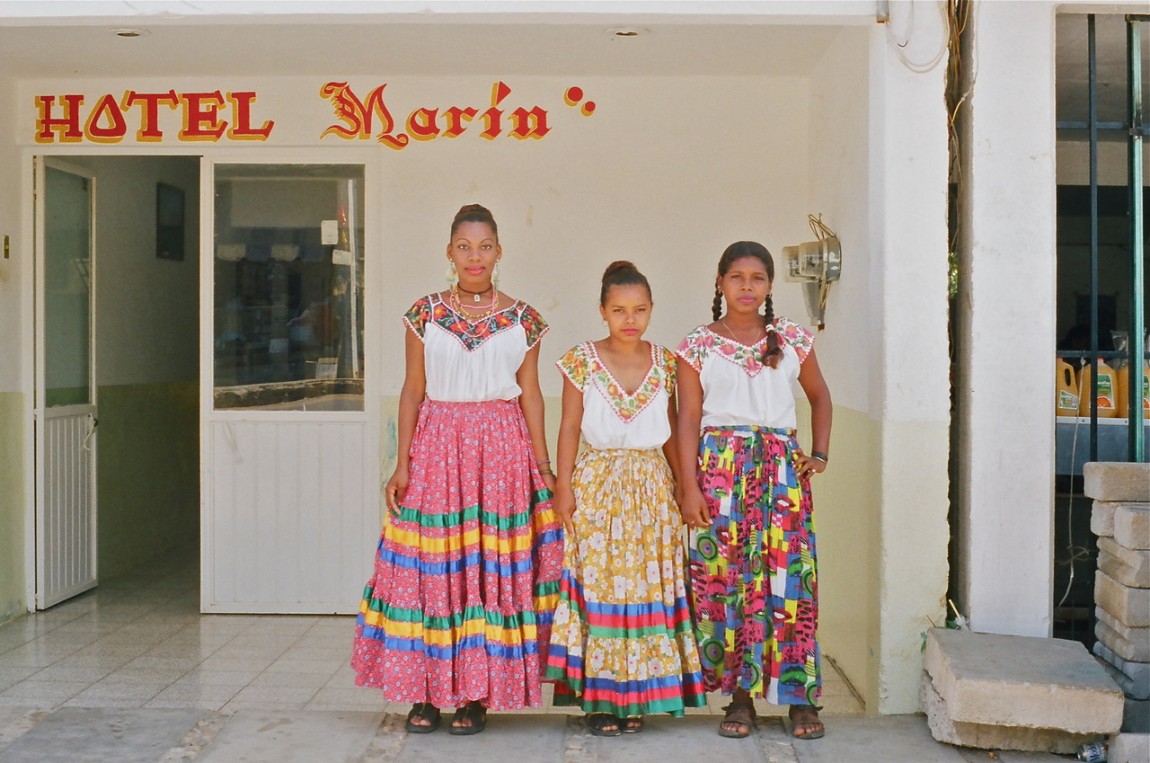
    In an attempt to debunk the stereotypes on what exactly a “Dominican looks like,” Twitter user UsDominicans809 posted a photo of a group of beautiful women (er, possibly models?) who are all super diverse in physical identity along with a sassy tweet.

    “They’re all dominican; so next time somebody says “you don’t look dominican” tell that dumbass, we’re all unique,” as written by user UsDominicans809.

    This comment accurately encompasses the identity struggle Latinos in the U.S. go through day in and day out which is why pieces like “Things You Shouldn’t Say To Latinos,” or Afro-Latinos and the often overlooked pale Latinas do so well. They reflect all the misconceptions that go with the Latino identity.

    First, Latinos are not a race, it’s an ethnicity; but you knew that already. Latin America’s diverse racial demographics are the result of a mixed-race background from European, African and indigenous cultures.

    But if you didn’t already know… race in the Dominican Republic is way more complicated than in the United States.

    Here, you either fall under a handful of categories: Asian, Black, White, India, and so forth but, according to Public Radio International, Dominicans use an array of words to self-identify their degree of “blackness”, for lack of a better term, like: moreno, trigueno, and blanco-oscuro.

    Which is odd because “more than 90 percent of Dominicans possess some degree of African descent — and that the very first rebellion of black slaves occurred here in 1522,” according to The Root. But, in the their federal census, most recently, 82 percent designated their race as “indio”, while only 4.13 percent designate themselves as black…

    Read the entire article here.

  • A Student Traveling Through Costa Chica Picked Up A Camera to Let Afro-Mexicans Tell Their Story

    Remezcla
    2015-02-25

    Andrew S. Vargas

    It’s Black History Month once again, and while it seems like every other day of the calendar year has been dedicated to some cause or another, the concept of Black history is particularly relevant to us as Latinos. With historically documented African populations from Buenos Aires up to Veracruz, including just about every country along the way, a new generation is starting to realize that our African heritage has been systematically erased from our national narratives over the centuries…

    …One young filmmaker and anthropology student of Afro-Salvadoran descent, feeling sympathy for the plight of invisible Afro-Mexicans, took it upon himself to make a very independent documentary exploring Afro-Mexican identity in the coastal communities of La Costa Chica — a region spanning the states of Guerrero and Oaxaca that has the highest concentration of Afro-descendants in Mexico. Titled Así Somos: Afro Identities in the Coast, the short doc admittedly features an extremely raw and unpolished style, but director Andy Amaya does a fairly good job of letting his subjects speak for themselves as they reflect on experiences with discrimination, their Afro-linguistic heritage and labels like ‘negro’ vs. ‘afromexicano’…

    Read the entire article here.

  • Zélie Asava: mixed-race identities and representation in Irish, U.S. and French cinemas

    African Women in Cinema Blog
    2015-02-28

    Beti Ellerson, Director
    Centre for the Study and Research of African Women in Cinema

    Interview with Zélie Asava by Beti Ellerson, February 2015.

    Zélie Asava of Irish-Kenyan parentage with English citizenship, is a lecturer in film and media theory and national cinemas at Dundalk IT and University College Dublin. She explores mixed-raced identities and its representation in Irish, U.S. and French cinemas.

    Zélie could you talk a bit about yourself?

    I was born in Dublin to Irish and Kenyan parents. Having lived in London previously, they decided to raise me there. As an adult I moved back to Ireland, to go home and develop my career in academia. While, Dublin is a fascinating city with a great cultural scene, I found the experience much more troubling than anticipated due to the growth in racism during the economic boom of the late ‘90s/early 2000s (see my piece for The Evening Herald newspaper).

    As an undergraduate, I became involved in student anti-racism movements at University College Dublin and Trinity College Dublin, and worked with community groups. During my MA at the University of Sussex and PhD at University College Dublin I studied the representations of black and mixed-race characters in French and American cinema, while pursuing work as an actress and journalist. In my professional life I have also worked in politics and equal opportunities consultancy, and lived in Canada and France, before becoming a lecturer.

    How has your identity influenced your interest in racial representations?

    This personal and academic experience prompted me to explore what it meant to be black and Irish from a theoretical and social perspective. I studied the history of black and mixed-race people in Ireland and their representation onscreen, and began to develop research papers on the subject which finally became the book, The Black Irish Onscreen: Representing Black and Mixed-Race Identities on Irish Film and Television (Peter Lang, 2013).

    Due to the cinematic context of my research, the mixed characters I analyse are mostly of African/European heritage, mostly female and mostly heterosexual (following dominant representations). By uncovering, deconstructing and critiquing these representations my work contributes to opening up spaces for new filmmakers, new screen visualizations of raced characters and new understandings of race and racism…

    Read the entire interview here.

  • Census categories for mixed race and mixed ethnicity: impacts on data collection and analysis in the US, UK and NZ

    Public Health
    Published online: 2015-02-25
    DOI: 10.1016/j.puhe.2014.12.017

    S. A. Valles, Assistant Professor
    Lyman Briggs College and Department of Philosophy
    Michigan State University

    R. S. Bhopal, Bruce and John Usher Professor of Public Health;Honorary Consultant in Public Health Medicine
    University of Edinburgh, Edinburgh, United Kingdom

    P. J. Aspinall, Emeritus Reader in Public Health
    Centre for Health Services Studies (CHSS)
    University of Kent, United Kingdom

    Highlights

    • The census mixed race/ethnicity classification systems in the US, UK and NZ are reviewed.
    • These systems have limited success for monitoring mixed populations’ health.
    • Obstacles to successful use are data input problems and data output problems.
    • Data input problems include recording practices and fluidity of self-identification.
    • Data output problems include data ‘prioritization’ and non-publication of data.

    Read or purchase the article here.

  • ‘I Didn’t Want to Be a Black Man’

    Ebony
    2014-08-27

    Ben O’Keefe

    A biracial man on why he came to accept his Black identity

    My name is Ben O’Keefe and I am a “Halfrican American.” It’s a term that one of my fellow mixed-race friends, Adriana, and I have affectionately come to define ourselves by. It seems like such a fitting proclamation. It serves as an ode to both “halves” of my racial identity. But, that identify is one that has been a hard fought battle to discover.

    Growing up I didn’t think about being Black—I didn’t think about being White either. Coming from a bi-racial family, I was simply raised to see an absence of color. My White mother taught me that “we are all just people” and refused to allow us to identify as “Black.” To my mother we were “chocolate.” My Black father was not around to raise me with any sense of our shared racial identity. In our predominately White community, I had very little exposure to my Black heritage, or the culture that one half of my body belonged to. Or did it belong to it? And more importantly: Did I want to belong to it?

    As much as my mother longed for me to live in a world free of the barriers of race, a colorblind world was not the reality. We in fact live in a society in which race very much still fuels the subconscious bigotry of many. A country in which our Black President inspires some, but terrifies others. But still in my naivety, I continued to live my life undefined by the racial descriptions of our society.

    My innocence was lost the first time that I noticed that I was being followed through a store…

    Read the entire article here.

  • Mestizaje and Public Opinion in Latin America

    Latin American Research Review
    Volume 48, Number 3 (2013)
    pages 130-152
    DOI: 10.1353/lar.2013.0045

    Edward Telles, Professor of Sociology
    Princeton University

    Denia Garcia
    Department of Sociology
    Princeton University

    Latin American elites authored and disseminated ideologies of mestizaje or race mixture, but does the general population value them today? Using the 2010 Americas Barometer, we examined public opinion about mestizaje in Bolivia, Brazil, Colombia, Dominican Republic, Ecuador, Guatemala, Mexico and Peru using survey questions that modeled mestizaje both as a principle of national development and as tolerance for intermarriage with black or indigenous people. We found that most Latin Americans support mestizaje, although support varies by country and ethnicity. Across countries, we find partial evidence that the strength of earlier nation-making mestizaje ideas is related to support for mestizaje today, and that strong multicultural policies may have actually strengthened such support. Ethnoracial minorities showed particular support for the national principle of mestizaje. Finally, we discovered that the national principle of mestizaje is associated with more tolerant attitudes about intermarriage, especially in countries with large Afro-descendant populations.

    Ideas of mestizaje, or race mixture, are central to the formation of many Latin American nations and are assumed to predominate in much of the region today (Hale 2006; Holt 2003; Telles 2004; Wade 1993). Concepts of mestizaje stress racial fusion and the inclusion of diverse racial elements as essential to the nation; hence mestizos, or mixed-race people, are considered the prototypical citizens. Although racial hierarchies characterize Latin American socioeconomic structures (Telles, Flores, and Urrea-Giraldo 2010), ideas of mestizaje have stood in contrast to ideas of white racial purity and anti-miscegenation historically held in the United States (Bost 2003; Holt 2003; Sollors 2000). While ideas of mestizaje emerged as Latin American state projects in the early twentieth century, they are often hailed as widely shared ideologies that are central to Latin Americans’ understanding of race and race relations (Knight 1990; Mallon 1996; Whitten 2003).

    Despite Latin America’s diverse racial composition and the fact that an estimated 133 million Afro-descendant and 34 million indigenous people reside there, according to recent data—numbers far higher than in the United States (Telles, forthcoming)—racial attitudes in Latin America have, surprisingly, been understudied. Despite clues from ethnographic research, we lack nationally representative evidence on the general population’s feelings about mestizaje. In this article, we examine support for mestizaje and its variations across nation and ethnicity in eight Latin American countries with large nonwhite populations: Bolivia, Brazil, Colombia, the Dominican Republic, Ecuador, Guatemala, Mexico, and Peru. These countries represent more than 70 percent of Latin America’s population and are home to the vast majority of both Afro-descendants and indigenous people in the region. We focused on two dimensions of the mestizaje ideology: as a national development principle and an individual intermarriage principle. The first, which is closely related to the national narratives developed by elites during nation making, maintains that race mixture is good for the nation. The second addresses tolerance for intermarriage in one’s family—often considered the ultimate marker of racial and ethnic integration (Alba and Nee 2003; Gordon 1964).

    Our examination of eight Latin American countries provides new contexts for thinking about racial attitudes, beyond the large literature that is dominated by the case of the United States. Since racial meanings are context dependent, the study of Latin America may complicate social science understandings of racial attitudes more generally. As Krysan (2000, 161) wrote, “This complexity forces those who have developed their theories in an American context to take care not to rely too heavily on uniquely American values, principles, politics, and racial histories.” Latin America differs from the United States in that nothing like mestizaje ideology exists in the United States. Moreover, understanding racial attitudes is important because they may guide behaviors, even though attitudes are often more liberal than actual behaviors (Schuman et al. 1997). In particular, the degree to which the public embraces mestizaje may be important for understanding whether the ideology has implications for racial and national identity and democratic politics in Latin America, including whether the population would support or resist measures to combat racial discrimination and inequality…

    Read the entire article here.

  • 50 Shades of Beige…

    londonboyupnorth
    2015-02-27

    Bilal Harry Khan

    #ITooAmMixed.

    Been a good while since I put pen to paper. Wait this is awkward, fingers to keyboard rather, 2015 and all that. In any case, I’ve been thinking for a while about something of paramount importance. Me. (Vote Bilal..) or rather, people like me. By this I mean mixed-race people. But this is where I may lose my fellow beige skinned people who got excited that I have some enlightening news from Mixed-Daily. Actually, maybe I’m not talking about you. I’m talking about the people who are mixed ‘unconventionally’ you know – those of us who, God forbid, are mixed with two or more ethnic minorities. Madness. Those people exist?

    You probably wouldn’t think so would you.. I mean as much as things have progressed and we now have our beloved beige beacons, Jess Ennis, Lewis Hamilton, etc. – where are the people like me? The 50 shades of beige people? Actually now let me ‘throw some of those shades’. Don’t be alarmed, I’m not trying to scare you into giving me a voice, I mean according to certain Arquette’s, it’s probably time we take a break in the ‘march (at the speed of a granny on a Zimmer-frame) of progress’ and start paying homage to those I can only think of as the resemblance of every FOX news Anchorwoman… *insert Virtual DJ siren noise, wheel it back up again*. However I AM saying that there is an unmistakeable gap in the representation of the experience of another type of mixed-race voice. So often the voices of those who are mixed ethnic minorities are left out of a discussion of what it means to be mixed-race. So how do we identify? Where do we fit in?…

    Read the entire article here.

  • One Drop of Love at Iowa State University

    Great Hall, Memorial Union
    Iowa State University
    Ames, Iowa
    2015-03-01, 19:00 CST (Local Time), Doors open at 18:30

    One Drop of Love produced by Ben Affleck and Matt Damon, performed by Fanshen Cox Digiovanni is a multimedia solo show that tells the story of how the notion of ‘race’ came to be in the United States. In addition, Fanshen whom is of mixed race shares personal accounts of how it affected the relationship with her father.

    Admission is free.

    For more information, click here.

  • I Became So Exhausted With Proving My South Asian Identity That I Started to Ignore It

    xoJane
    2015-02-24

    Anjali Patel

    The rules of miscegenation were set long before I came along, and my self-determination to “be myself” was not going to change it.

    A couple of years ago, I was at a rooftop party in New York with some of my cousins. I was too young to drink and too shy to mingle, so I hung around awkwardly while they chatted with an attractive blond man who appeared to be in his late 20s. They tag teamed as he pried them with exoticizing questions about their “home country,” flashing his white teeth in jovial approval when they played along with his racist quips. They seemed to be having a good time amusing one another, so I was shocked when pointed his glass in my direction to acknowledge me.

    “And what about you?” he said. “You don’t even look Indian.”

    Before I could open my mouth, one of my cousins chimed in, “Oh, she’s not. She’s half black.”

    “Oh,” he said. They resumed their conversation and I resumed trying to look like I was having a good time.

    This happens when I am with my cousins. I was at a St. Patty’s party with one of them about a year ago when I heard someone whisper into her ear, “Is your cousin black?” A few months later I was out to dinner with their group of friends when someone asked me, “Are you guys actually related? You look like you’re from Eritrea or Ethiopia or something.”

    “I’m from Pennsylvania, and we’re first cousins. Believe it or not you don’t actually have to look alike to be related,” is what I would have liked to have said. But I was tipsy and there were too many people around, so I said something along the lines of “Yeah, we get that a lot.”

    My mother tried to explain to me when I was younger that I was black, and only black, because that is how the world would see me. I resented that. In my eyes, I had an African American mother and a Gujarati father, and that is how the world would see me, because that’s what I was…

    Read the entire article here.

  • Don’t Ask “What” My Child Is

    DAME
    2015-02-11

    Elizabeth Dougherty

    The writer is White. Her husband is Black. And there are many people who feel entitled to accost the couple with unsolicited opinions about their biracial son.

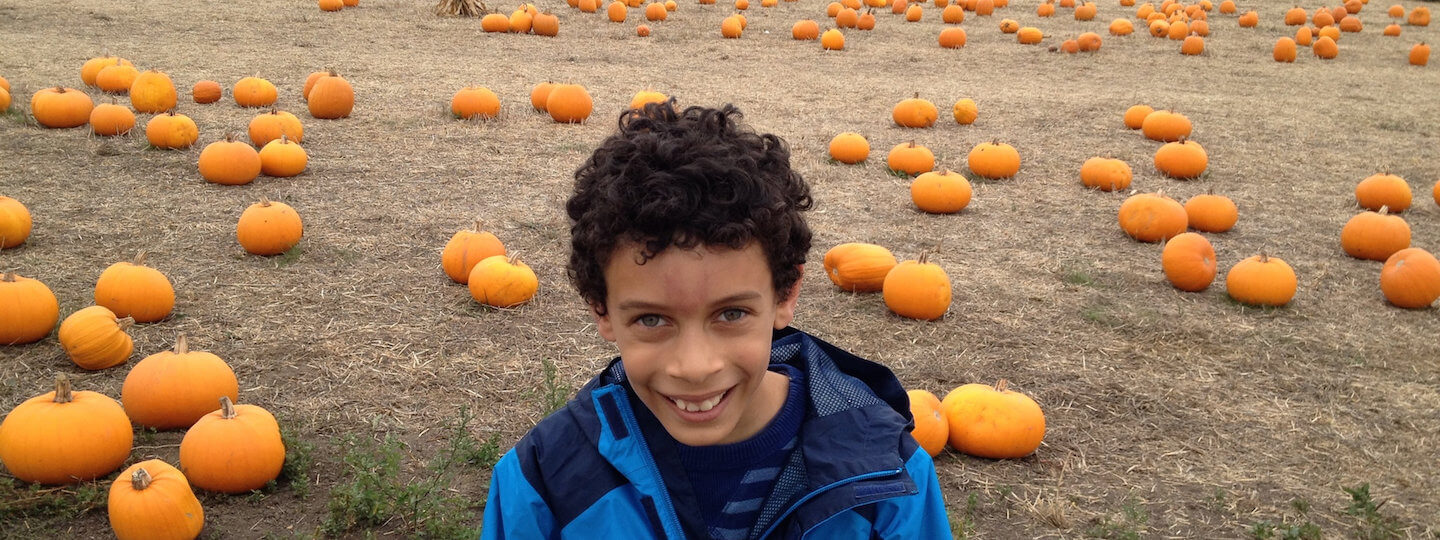
    “Mommy, I’m almond, you’re white chocolate, and Daddy’s dark chocolate.” Talking about sunblock with my 6-year-old son, Carter, had turned into a discussion about skin color, and I guessed correctly that his kindergarten class was talking about it, too.

    I’m White, and by husband is African American. Before Carter was even conceived, I started reading books about raising biracial children I fully expected a child of ours would look more like Jeff. I braced myself for people mistaking me for an adoptive mom or a nanny.

    Then I had a nearly ten-pound baby boy with pale skin, a head full of silky black curls, and my dark-blue eyes down to the same golden streak in the left one. It had never occurred to me that the opposite would happen: People would mistake Jeff’s White friend as Carter’s dad.

    Carter’s striking eyes and soft curls get lots of random attention. Without asking, strangers often touch his hair. (As a toddler, one day, he got so tired of saying “Thank-you” to people who complimented his curls, he simply said, “I know.”)…

    Read the entire article here.