• The Secret Toll of Racial Ambiguity

    The New York Times Magazine
    2021-10-20

    Alexandra Kleeman, Assistant Professor of Writing
    The New School, New York, New York

    Rebecca Hall Carly Zavala for The New York Times

    Rebecca Hall’s new film adaptation of the 1929 novel “Passing” has cracked open a public conversation about colorism and privilege.

    When Rebecca Hall read Nella Larsen’s groundbreaking 1929 novel, “Passing,” over a decade ago, she felt an intense, immediate attachment to it. The story seemed to clarify so much that was mysterious about her own identity — the unnameable gaps in her family history that shaped her life in their very absence, the way a sinkhole in the road distorts the path of traffic blocks away.

    The novel follows Irene Redfield and Clare Kendry, two light-skinned Black women who grew up in the same Chicago neighborhood and shared a friendship complicated by differences in class and social status. When Clare’s father died, she was sent off to live with white relatives, while Irene went on to become firmly ensconced in the vibrant Black artistic and cultural community of 1920s Harlem, wife to a Black doctor and mother to two dark-skinned young boys. One day, while passing for convenience on the rooftop restaurant of a whites-only hotel, Irene is recognized by a beautiful blond woman, who turns out to be Clare — who now not only lives her life as a white woman but is also mother to a white-passing daughter and married to a bigoted man who has no clue about her mixed-race heritage. The friends’ reunion crackles with tension, charged with curiosity, envy and longing.

    When Clare asks Irene if she has ever thought about passing in a more permanent way herself, Irene responds disdainfully: “No. Why should I?” She adds, “You see, Clare, I’ve everything I want.” And maybe it’s true that the respectable, high-status life Irene has built in Harlem encompasses everything a serious woman, committed to lifting up her race, should want. But Clare’s sudden presence begins to raise a sense of dangerous possibility within Irene — one of unacknowledged desires and dissatisfactions. When she sees the ease with which Clare re-enters and ingratiates herself within Black society, it threatens Irene’s feeling of real, authentic belonging.

    Raised in England within the elite circles of classical theater, Hall, who is 39, had her first introduction to the concept of racial “passing” in the pages of Larsen’s novel. “I was spending time in America, and I knew that there had been vague, but I mean really vague, talk about my mother’s ethnicity,” Hall explained over the phone this spring. Her voice is calm and poised, with a warm polish to it, and she tends to speak in composed paragraphs. Over the year that we had corresponded, Hall hadn’t been acting much and had instead spent time writing screenplays from the Hudson Valley home that she shares with her daughter and her husband, the actor Morgan Spector. “Sometimes she would intimate that maybe there was African American ancestry, or sometimes she would intimate that there was Indigenous ancestry. But she didn’t really know; it wasn’t available to her.”…

    Read the entire article here.
  • The Problem of the Prism: Racial Passing, Colorism, and the Politics of Racial Visibility

    University of Maryland
    2020
    DOI: 10.13016/kkbp-vio4

    DeLisa Hawkes

    In The Problem of the Prism, I argue that activist writers challenged the normalizing of white supremacy and imagined black futurity within the intersections of racial visibility, nation, and culture by transforming and repurposing racist and colorist ideologies. Through a wide range of cultural materials, I recuperate overlooked discourses on race and color by broadening the parameters through which we understand the black-white color line.

    Focusing on neglected texts by understudied authors allows for a deeper consideration of how assumed ancestry and legal segregation impact America’s construction of citizenship and social hierarchies. For this reason, I consider how critical attention to skin complexion and visible ancestry illuminates institutionalized feelings of inferiority. I call these the politics of racial visibility. In the first chapter, I consider Albion Tourgée’s 1890 novel Pactolus Prime and the ways in which it offers readers an examination of how the black-white color line fosters notions of inferiority within both races.

    In chapter two, I argue that Sutton Griggs inspires the “New Mulatta,” a revision of the “tragic mulatta” trope, that inspires race pride throughout the Black Diaspora by rejecting colorist ideologies. In chapter three, I recover the works of Olivia Ward Bush-Banks and Sylvester “Chief Buffalo Child” Long Lance as critical lenses through which to deconstruct black separatism by considering African-Native American identities within New Negro philosophy. I argue that their works reconceptualize the “tragic mulatta/o” outside of the confines of the black-white binary while acknowledging the fraught relationship between African Americans and Native Americans. Thus, their works reveal a black-red color line that disables anti-racist and anti-colonialist collaboration. In the final chapter, I argue that 1940s and 1950s Ebony magazine articles shift readers’ attention to racial anxieties within the “white” appearing spectrum of the black-white color line to critique internalized racism. By addressing social implications anticipated within racial ambiguity in the space of the home, this commercial magazine allows readers from all socioeconomic backgrounds to engage with pressing concerns over racial visibility. Ultimately, Ebony magazine’s persistent focus on colorism and racial passing brings the efforts of nineteenth and early-twentieth-century authors full circle.

    Login to read the dissertation here.

  • A qualitative examination of familial racial-ethnic socialization experiences among multiracial American emerging adults.

    Journal of Family Psychology
    Volume 35, Issue 7 (Oct. 2021)
    DOI: 10.1037/fam0000918

    Annabelle L. Atkin, Ph.D., Postdoctoral Scholar
    T. Denny Sanford School of Social and Family Dynamics
    Arizona State University

    Kelly F. Jackson, Associate Professor of Social Work
    Arizona State University

    Rebecca M. B. White, Associate Professor of Family and Human Development
    Sanford School of Social and Family Dynamics
    Arizona State University

    Alisia G. T. T. Tran, Assistant Professor in the Counseling and Counseling Psychology Program
    Arizona State University

    This qualitative interview study investigated the types of parental racial-ethnic socialization messages received by Multiracial American youth over the course of their development. The Multiracial population in America is the largest demographic group among individuals under the age of 18 (Saulny, 2011), but there is a dearth of research about the development of this rapidly growing population. Multiracial youth are members of multiple racial-ethnic groups. Thus, racial-ethnic socialization is particularly complex for Multiracial families because parents typically have different racial backgrounds and experiences compared to their children. Interviews were conducted with 20 Multiracial emerging adult college students (Mage = 20.55; 10 male, 10 female) of diverse racial backgrounds to identify the types of parental racial-ethnic socialization messages they received growing up. Using thematic analysis (Braun & Clarke, 2006), nine themes of racial-ethnic socialization content emerged: Cultural socialization, racial identity socialization, preparation for bias socialization, colorblind socialization, race-conscious socialization, diversity appreciation socialization, negative socialization, exposure to diversity socialization, and silent socialization. This research advances the literature by (a) identifying domains of racial-ethnic socialization messages for Multiracial American families, (b) examining a diverse sample of male and female Multiracial youth, (c) differentiating monoracial versus Multiracial socialization messages, and (d) distinguishing the unique connotations of egalitarian socialization messages (e.g., colorblind, race-conscious, diversity appreciation). The findings have important implications for understanding the development of Multiracial American individuals and families.

    Read or purchase the article here.

  • Can Skeletons Have a Racial Identity?

    The New York Times
    2021-10-19

    Sabrina Imbler

    Forensic anthropologists have relied on features of face and skull bones, known as morphoscopic traits, such as the post-bregmatic depression — a dip on the top of the skull — to estimate ancestry. John M. Daugherty/Science Source

    A growing number of forensic researchers are questioning how the field interprets the geographic ancestry of human remains.

    Racial reckonings were happening everywhere in the summer of 2020, after George Floyd was killed in Minneapolis by the police. The time felt right, two forensic anthropologists reasoned, to reignite a conversation about the role of race in their own field, where specialists help solve crimes by analyzing skeletons to determine who those people were and how they died.

    Dr. Elizabeth DiGangi of Binghamton University and Jonathan Bethard of the University of South Florida published a letter in The Journal of Forensic Science that questioned the longstanding practice of estimating ancestry, or a person’s geographic origin, as a proxy for estimating race. Ancestry, along with height, age at death and assigned sex, is one of the key details that many forensic anthropologists try to determine.

    That fall, they published a longer paper with a more ambitious call to action: “We urge all forensic anthropologists to abolish the practice of ancestry estimation.”

    In recent years, a growing number of forensic anthropologists have grown critical of ancestry estimation and want to replace it with something more nuanced…

    Read the entire article here.

  • What is at the Root of White Anxiety?

    Three-Fifths: Voice of Clarity
    2021-10-08

    Frank Robinson
    Austin, Texas

    The most recent US Census reports a significant decline in the white population, while non-white and mixed-race categories notably increased. Researchers anticipate a reduction of white wealth and power. They expect this to trigger gerrymandering efforts while giving white extremists, oblivious to massive disparities non-whites experience daily, new opportunities to exploit. White fragility? Say hello to white anxiety.

    There are layers of this for white people, especially those insulated in homogeneous communities, and whose worship of God, instead of being focused on unselfishly loving and elevating one’s neighbor, including strangers, has instead conserved their own power and dominance. Every undeserved, misinformed sense of superiority is at risk of exposure. But there’s a more visceral dread.

    There’s a deep sense of apprehension that something’s wrong, it’s coming, and we deserve it. For, if there is a God anywhere, if Justice exists in this universe, evil is stalking us. Sooner or later, it’ll find us. It must. And we brought it on ourselves…

    Read the entire article here.

  • Coast Guard: Wreck found in Atlantic is storied cutter Bear

    The Washington Post
    2021-10-14

    Mark Pratt, Reporter/Editor
    The Associated Press

    In this July 1908 photograph provided by the U.S. Coast Guard Historian’s Office, the U.S. Revenue Cutter Bear sits at anchor while on Bering Sea Patrol off Alaska. The wreckage of the storied vessel, that served in two World Wars and patrolled frigid Arctic waters for decades, has been found, the Coast Guard said Tuesday, Oct. 12, 2021. (U.S. Coast Guard Historian’s Office via AP) (Uncredited/U.S. Coast Guard Historian’s Office)

    BOSTON — The wreck of a storied military ship that served in two World Wars, performed patrols in waters off Alaska for decades, and at one point was captained by the first Black man to command a U.S. government vessel has been found, the Coast Guard said Thursday.

    A wreck thought to be the U.S. Revenue Cutter Bear, which sank in 1963 about 260 miles east of Boston as it was being towed to Philadelphia, where it was going to be converted into a floating restaurant, was located in 2019.

    But it was only in August that a team of experts looking at the evidence came to the conclusion that they are “reasonably certain” that the wreck is indeed the Bear, officials of the Coast Guard and National Oceanic and Atmospheric Administration said at a waterfront news conference in Boston.

    “At the time of the loss of Bear, it was already recognized as a historic ship,” said Joe Hoyt, of the Office of National Marine Sanctuaries

    …Thursday’s announcement coincided with the arrival in Boston of the U.S. Coast Guard Cutter Healy, named after the Bear’s captain from 1886 until 1895, Michael “Hell Roaring Mike” Healy.

    The Healy, an icebreaker commissioned in 1999, recently completed a transit of the Arctic Northwest Passage.

    Healy, born in 1839, was the son of a Georgia plantation owner and a slave. Healy’s father sent him to Massachusetts to escape enslavement, [William] Thiesen said.

    He likened the Healy — commissioned by Abraham Lincoln a month before the president’s assassination — to an Old West sheriff, whose jurisdiction was an area the size of the lower 48 states.

    “While he never, during his lifetime, self-identified as African American, perhaps to avoid the prejudice he would likely have encountered in his personal life and career, he was in reality the first person of African American descent to command a ship of the U.S. Government,” a NOAA news release said…

    Read the entire article here.

  • ‘People Assume I’m White. This is The Racism I See’

    Newsweek
    2021-10-14

    Nikki Barthelmess

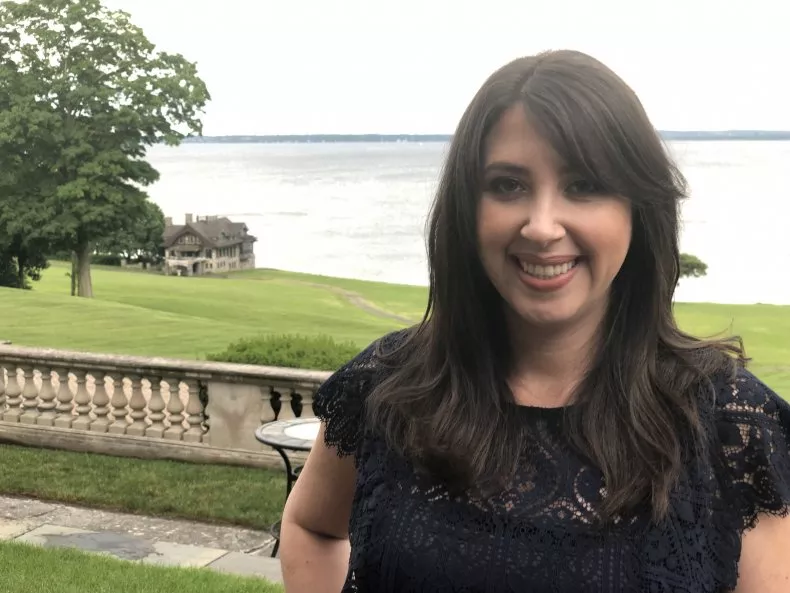
    Nikki Barthelmess’ parents were Mexican American and Jewish, but people often assume she is white, not Mexican American. Nikki Barthelmess

    A few months ago, I answered a knock at my door. My neighbor, James*, launched into a complaint. “That silver Honda is parked in front, and we have a friend coming over who wants to park there,” he said. He was referencing the car belonging to Ana*, a family friend who I hired days before to help with childcare for my toddler.

    Ana appeared behind me to see what was going on. James looked at Ana and then at me, and despite Ana being only a few feet away, he nodded at Ana and spoke as if she wasn’t there. “Cleaning crew?” he asked me. My head snapped back in shock.

    My eyes darted to Ana to see if she’d heard, and somehow it seemed she hadn’t. I stammered, unsure of what to say. She was wearing jeans and a T-shirt. She wasn’t holding a mop or dusting rag or anything that would indicate she was cleaning. After a moment of gaping, I closed the distance between Ana and me and put my arm around her. “James,” I said, looking at Ana, rather than at him, “this is Ana. She just started coming to the house to babysit Hadley while I write.” I squeezed Ana’s shoulder. “Ana is a long time family friend. She used to be my husband’s grandparents’ caregiver years ago before they died, and we’ve stayed in touch,” I said.

    Read the entire article here.

  • Race and Racism: When Racial Passing Becomes Racial Fraud

    Virtual event on Zoom
    Rotman Institute of Philosophy, Western University
    London, Ontario, Canada
    Thursday, 2021-10-14, 19:00-20:30 EDT (2021-10-14, 23:00-00:30Z)

    Meena Krishnamurthy, Assistant Professor
    Department of Philosophy
    Queen’s University, Kingston, Ontario, Canada

    In the past year and a half, race and racism have been at the forefront of many people’s minds because of widespread Black Lives Matter protests and the disproportionately negative impact that the COVID-19 pandemic has had on certain racialized communities. But the underlying phenomenon is not only recent. For centuries, racialized communities across North America have faced social and environmental injustices. This series of public lectures examines the topics of race, racism, and environmental justice. It will include philosophical discussions about what race is, of how to and how not to respond to racism (e.g., through practices of “racial fraud” or racial passing), of racism as a source of vaccine hesitancy, and of environmental injustices that afflict Indigenous communities in Canada.

    The 2021 philosophy lecture series, Race and Racism, is prepared in partnership with the Rotman Institute of Philosophy, the Department of Philosophy at Western University, and the London Public Library. Additional support for the talk by Deborah McGregor has been generously provided by the Faculty of Law at Western University.

    Each talk will begin with a presentation by the speaker, lasting approximately 60 minutes. Rotman Institute Associate Director, Eric Desjardins, will act as host and ask the speaker a number of follow-up discussion questions. Registered attendees will have the option to ask additional questions live via Zoom, or to submit questions in advance via email. We look forward to having an engaging discussion with everyone in attendance in this online setting!

    • I. Scenes of Racial Passing
      1. Brit Bennett’s Vanishing Half – Stella
      2. HBO’s “Lovecraft Country” – Ruby
      3. Rev. Jesse Routte
      4. Walter White
      5. Ellen Craft
      6. John Redd/Korla Pandit
    • II. Ethics of Racial Passing
      1. Fooling as a skill
      2. = politically virtuous
        • a. Why? Challenges racial oppression
    • III. Ethics of Racial Fraud
      1. Jessica Krug
        • a. Not skilled
        • b. Not for a just cause
        • c. Politically vicious
        • d. Why? Entrenches racial oppression
      2. Counter examples?
        • a. John Howard Griffin, Black Like Me
        • b. Grace Halsell, Soul Sista
    • IV. Murky Waters
      1. Stella revisited

    For more information, click here.

  • Jeremiah Paprocki becomes Cubs’ first African American public-address announcer

    The Chicago Sun-Times
    2021-05-17

    Russell Dorsey


    Jeremiah Paprocki is the Cubs’ first Black PA announcer and at the age of 21 also becomes one of the youngest in baseball. Photo courtesy of the Chicago Cubs

    Many fans dream of having their voices echo around historic Wrigley Field while reading the names of Cy Young Award winners, MVPs and future Hall of Famers.

    One lifelong Cubs fan is getting a chance to do just that.

    There’s a booming new voice in Wrigleyville, and it belongs to 21-year-old Jeremiah Paprocki. The Cubs hired Paprocki to be their new public-address announcer, making him the first African American in team history to hold the position. He also is thought to be the youngest P.A. announcer in Major League Baseball

    Read the entire article here.

  • Beyond being either-or: identification of multiracial and multiethnic Japanese

    Journal of Ethnic and Migration Studies
    Volume 47, 2021 – Issue 4: Special Issue: Re-constructing Ways of Belonging: Cross-country Experiences of Multiethnic and Multiracial People
    pages 802-820
    DOI: 10.1080/1369183X.2019.1654155

    Sayaka Osanami Törngren
    Malmö Institute for Studies of Migration, Diversity and Welfare
    Malmö University, Malmö, Sweden

    Yuna Satob
    Graduate School of Human Relations
    Keio University, Tokyo, Japan

    Although the number of multiracial and multiethnic Japanese who are socially recognised and identified as haafu (mixed) has increased due to a rise in intermarriages, the identities and experiences of mixed persons in Japan are seldom critically analysed. Based on interviews with 29 multiracial and multiethnic individuals residing in Japan, this article explores not only how multiracial and multiethnic Japanese identify themselves but also how they feel they are identified by others in society. The analysis shows that multiracial and multiethnic persons self-identify in a way that goes beyond either-or categories and the binary notions of Japanese/foreigner. It also reveals how both multiracial and multiethnic persons face a gap between self-identity and ascribed identity and that they negotiate this gap in various ways. However, the gap and the negotiation process that multiracial persons face differ to those of multiethnic persons. Multiracial persons whose mixedness is phenotypically visible experience more constraints in their ethnic options and have more difficulty in passing as Japanese, whereas multiethnic persons whose mixedness is invisible can pass as Japanese more easily but face constraints in their ethnic option to be identified as mixed and in claiming their multiethnic background.

    Read the entire article in HTML or PDF format.