• Elliot Rodger’s half-white male privilege

    Salon
    Thusday, 2014-05-29

    Joan Walsh, Editor at Large

    The killer’s Asian heritage matters. So does his ugly class entitlement. Misogyny crosses lines of race and culture

    The widespread recognition that Elliot Rodger’s killing spree was the tragic result of misogyny and male entitlement has been a little bit surprising, and encouraging. Why, then, has it been so hard to get his race right?

    From the left, headlines (including on Salon) have labeled him “white,” though most stories at least nodded to his Asian heritage (his mother was ethnic Chinese Malaysian). Chauncey DeVega’s fascinating piece on Rodger’s crime as evidence of “aggrieved white male entitlement syndrome,” a malady that includes other white male mass killers from Columbine’s Eric Klebold to Newtown’s Adam Lanza, didn’t mention his status as half-Asian.

    When commentators noted the omission, DeVega (whose work I admire) doubled down in a follow-up piece,“Yes, Elliot Rodger is white!” He argued that Rodger “constructed an identity for himself as ‘Eurasian’ and proceeded to internalize American society’s cues and lessons about power, privilege, race, and gender. He then lived out his own particular understanding of what it means to be white and male in the United States.”

    Not that I have a lot of sympathy for Rodger, but it twists his already twisted story to label him simply white…

    …“The media, as usual, has oversimplified his identity and experience of race in typically binary terms, which miss the complex nuances and grey areas of that identity and experience,” University of California, Santa Barbara, sociology professor G. Reginald Daniel told me via email. (Daniel is also the editor in chief of the Journal of Critical Mixed Race Studies.) “My feeling is that some of his many issues are related in part to his struggles with or questions about how ‘white’ he was or was not allowed or perceived to be.”…

    Read the entire article here.
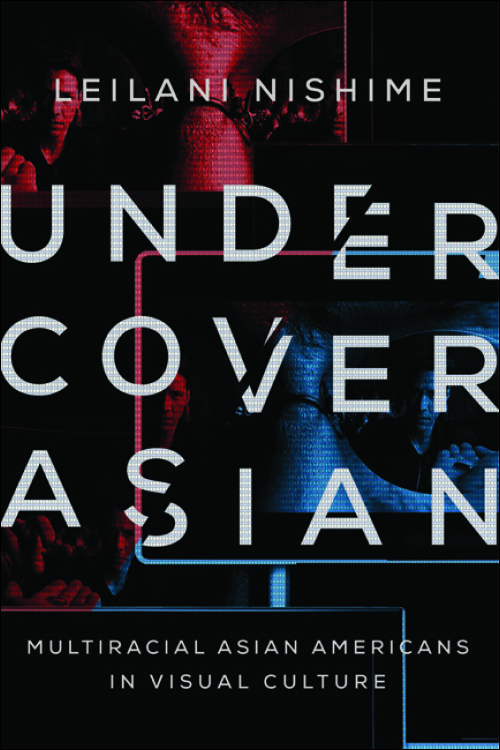
  • Undercover Asian: Multiracial Asian Americans in Visual Culture

    University of Illinois Press
    January 2014
    264 pages
    6 x 9 in.
    15 black & white photographs
    Cloth ISBN: 978-0-252-03807-5
    Paper ISBN: 978-0-252-07956-6

    Leilani Nishime, Assistant Professor of Communication
    University of Washington, Seattle

    Representations of mixed race Asian Americans in popular culture

    In this first book-length study of media images of multiracial Asian Americans, Leilani Nishime traces the codes that alternatively enable and prevent audiences from recognizing the multiracial status of Asian Americans. Nishime’s perceptive readings of popular media–movies, television shows, magazine articles, and artwork–indicate how and why the viewing public often fails to identify multiracial Asian Americans. Using actor Keanu Reeves, golfer Tiger Woods, and the television show Battlestar Galactica as examples, Nishime suggests that this failure is tied to gender, sexuality, and post-racial politics. In contrast to these representations, Nishime provides a set of alternative moments when audiences can view multiracial Asians as multiracial. Through a consideration of the Matrix trilogy, reality TV star Kimora Lee Simmons, and the artwork of Kip Fulbeck, these examples highlight both the perils and benefits of racial visibility, uncovering our society’s ways of constructing racial categories. Throughout this incisive study, Nishime offers nuanced interpretations that open the door to a new and productive understanding of race in America.

  • ‘Mixed Blood’

    Ecns.cn: The Official English-language website of China News Service
    2014-06-05

    To many, the US is no doubt a cultural melting pot as over the years people from various ethnic backgrounds have inhabited the land and collectively created an all new culture. Yet, all the way on the other side of the Earth, a similar situation seems to be emerging in China. Through images seen at the exhibition for Mixed Blood at the Today Art Museum in Beijing, visitors will have the chance to glimpse these changes for themselves.

    Cosponsored by the US Embassy in Beijing and the Today Art Museum, the Beijing exhibition for Mixed Blood features photographs and documents created by artist CYJO from 2010 to 2013 documenting 19 families of mixed ethnicities, races and cultures living in Beijing and New York.

    In the photographs, family members stand in their own homes in a line with arms at their sides, while next to the photographs are introductions explaining the background of each family member and the story of their family.

    Standing in the exhibition hall, these photographs don’t just provide a clear image of the life of “mixed families” commonly seen in big cities, but also raise the question: “How far has our society progressed when it comes to ethnicity and race?”…

    Read the entire article here.

  • Self-reported pigmentary phenotypes and race are significant but incomplete predictors of Fitzpatrick skin phototype in an ethnically diverse population

    Journal of the American Academy of Dermatology
    Available online: 2014-06-11
    DOI: 10.1016/j.jaad.2014.05.023

    Steven Y. He, BS
    Department of Dermatology
    University of California, San Francisco

    Charles E. McCulloch, PhD
    Department of Epidemiology and Biostatistics
    University of California, San Francisco

    W. John Boscardin, PhD
    Department of Epidemiology and Biostatistics; Department of Medicine
    University of California, San Francisco

    Mary-Margaret Chren, MD
    Department of Dermatology
    University of California, San Francisco

    Eleni Linos, MD, MPH, DrPH
    Department of Dermatology
    University of California, San Francisco

    Sarah T. Arron, MD, PhD
    Department of Dermatology
    University of California, San Francisco

    Background

    Fitzpatrick skin phototype (FSPT) is the most common method used to assess sunburn risk and is an independent predictor of skin cancer risk. Because of a conventional assumption that FSPT is predictable based on pigmentary phenotypes, physicians frequently estimate FSPT based on patient appearance.

    Objective

    We sought to determine the degree to which self-reported race and pigmentary phenotypes are predictive of FSPT in a large, ethnically diverse population.

    Methods

    A cross-sectional survey collected responses from 3386 individuals regarding self-reported FSPT, pigmentary phenotypes, race, age, and sex. Univariate and multivariate logistic regression analyses were performed to determine variables that significantly predict FSPT.

    Results

    Race, sex, skin color, eye color, and hair color are significant but weak independent predictors of FSPT (P < .0001). A multivariate model constructed using all independent predictors of FSPT only accurately predicted FSPT to within 1 point on the Fitzpatrick scale with 92% accuracy (weighted kappa statistic 0.53).

    Limitations

    Our study enriched for responses from ethnic minorities and does not fully represent the demographics of the US population.

    Conclusions

    Patient self-reported race and pigmentary phenotypes are inaccurate predictors of sun sensitivity as defined by FSPT. There are limitations to using patient-reported race and appearance in predicting individual sunburn risk.

    Read or purchase the article here.

  • Still Jewish: A History of Women and Intermarriage in America

    New York University Press
    February 2009
    325 pages
    Cloth ISBN: 9780814757307
    Paper ISBN: 9780814764343

    Keren R. McGinity, Author-Educator
    Love & Tradition: intermarriage insights for a Jewish future

    Over the last century, American Jews married outside their religion at increasing rates. By closely examining the intersection of intermarriage and gender across the twentieth century, Keren R. McGinity describes the lives of Jewish women who intermarried while placing their decisions in historical context. The first comprehensive history of these intermarried women, Still Jewish is a multigenerational study combining in-depth personal interviews and an astute analysis of how interfaith relationships and intermarriage were portrayed in the mass media, advice manuals, and religious community-generated literature.

    Still Jewish dismantles assumptions that once a Jew intermarries, she becomes fully assimilated into the majority Christian population, religion, and culture. Rather than becoming “lost” to the Jewish community, women who intermarried later in the century were more likely to raise their children with strong ties to Judaism than women who intermarried earlier in the century. Bringing perennially controversial questions of Jewish identity, continuity, and survival to the forefront of the discussion, Still Jewish addresses topics of great resonance in a diverse America.

  • Meeting with Dagmar Schultz and Ria Cheatom

    FemGeniuses: Where feminism meets genius!
    2014-05-29

    Kaimara Herron

    It is only the first week of our stay in Berlin, but it feels like an eternity since my plane took-off from O’Hare. But this is certainly not a complaint. We have had the opportunity to do such amazing things in only a few short days, and we have so much more to do.

    This morning, we started the day in the classroom at Frauenkreise to talk with Dagmar Schultz and Ria Cheatom about their film Audre Lorde: The Berlin Years, 1984 to 1992, which documents their lives as activists and their work in the Afro-German feminist movement. Melissa began our discussion by asking about Audre Lorde’s experiences living with cancer while continuing to work in Berlin. More specifically, Melissa was interested in Lorde’s use of holistic treatments in Berlin instead of conventional methods to treat her cancer. Dagmar’s response was that Lorde never wanted to stop working because it was, and continues to be, a necessary movement. Dagmar believes Berlin had become Lorde’s replacement for New York City, as her work in Berlin became central in her life…

    …As the conversation moved along, we started talking about the first few meetings between Afro-German women and Audre Lorde. Ria offered an anecdote about how she had trouble accepting some of the women who attended these meetings as “real” Afro-Germans because of their really light skin and strong European facial features. The topic of color and skin tone was first brought to my attention while reading a section of May Ayim’s Blues in Black and White: A Collection of Essays, Poetry, and Conversations. In “White Stress/Black Nerves,” she briefly mentions how the benefits of privilege become more complicated when examining the experiences of Black and immigrant women based on skin tone…

    Read the entire article here.

  • “He [Herb Jeffries] told me he had to make this decision about whether he should try to pass as white,” the jazz critic Gary Giddins recalled in an interview for this obituary. “He said: ‘I just knew that my life would be more interesting as a black guy. If I’d chosen to live my life passing as white, I’d have never been able to sing with Duke Ellington.’”

    William Yardley, “Herb Jeffries, a.k.a. ‘Bronze Buckaroo’ of Song and Screen, Dies at 100 (or So),” The New York Times, May 26, 2014. http://www.nytimes.com/2014/05/27/arts/music/herb-jeffries-singing-star-of-black-cowboy-films-dies-at-100.html.

  • Thanks, Belle, it’s nice to see a face like mine on screen

    The Guardian (The Observer)
    2014-06-07

    Ashley Clark

    In giving top billing to Gugu Mbatha-Raw, the film Belle makes a real contribution to raising awareness of the mixed-race experience

    My heart leaps whenever I see the poster for Amma Asante’s new film, Belle, high up on billboards around town. The poised, sincere face of its lead actress, Gugu Mbatha-Raw (a Brit of black South African and white English extraction), towers above an otherwise white cast including Tom Wilkinson, Miranda Richardson, and ex-Harry Potter villain Tom Felton.

    Why? As a mixed-race Brit myself – white and black Caribbean, as I’ve been checking in the relevant boxes for some years now – it’s always been significant to me to see someone who looks like they could be a close relative in the foreground rather than the background. The film’s protagonist, Dido Elizabeth Belle, as you might now know, is based on an actual 18th-century mixed-race woman of white British and black African heritage who was raised as an aristocrat…

    …The sociologist Emma Dabiri convincingly argues that “black-mixed people can be racialised as black, whereas non-black-mixed people are able to inhabit a more ambiguous exotic space”. This, says Dabiri, puts paid to the myth that all mixed-race groups can be packaged together – as the media often attempt to do – as one separate, monolithic community: a tidy narrative of progress…

    Read the entire article here.

  • Black In The Dominican Republic: Denying Blackness

    HuffPost Live
    The Huffington Post
    2014-06-10

    Marc Lamont Hill, Host

    In Latin America and Caribbean countries like the Dominican Republic many deny being of African decent, despite 90 percent of the population possessing black ancestry. Where has the blackness gone in the region?

    Guests:

    • Biany Perez (Philadelphia, Pennsylvania) Graduate Student at Bryn Mawr College
    • Christopher Pimentel (New York , New York) Finance Student at Baruch College
    • Robin Derby (Los Angeles, California) Associate Professor of History, University of California, Los Angeles
    • Kimberly Eison Simmons (Columbia, South Carolina) Associate Professor, Anthropology and African American Studies, University of South Carolina
    • Silvio Torres-Saillant (Syracuse, New York) Professor of English, Syracuse University


  • One Drop of Love – a performance by Fanshen Cox DiGiovanni at the Brooklyn Historical Society

    Brooklyn Historical Society
    Crossing Borders, Bridging Generations
    2014-06-12, 19:00 EDT (Local Time)

    Crossing Borders, Bridging Generations and the Brooklyn Historical Society is delighted to host One Drop of Love, a multimedia solo performance by Fanshen Cox DiGiovanni that incorporates performance, film, photographs, and animation to tell the story of how the notion of ‘race’ came to be in the U.S.

    One Drop of Love asks audiences to consider: how does our belief in ‘race’ affect our most intimate relationships? The show travels near and far, in the past and present to explore family, race, love and pain – and a path towards reconciliation. Audiences go on a journey from the 1700s to the present, to cities all over the U.S and to West and East Africa, where both the narrator and her father spent time in search of their racial roots.

    One Drop of Love is produced by Fanshen Cox DiGiovanni, Ben Affleck, Chay Carter and Matt Damon. For more information, visit: www.onedropoflove.org.

    This event is co-sponsored by LovingDay.org, MixedRootStories.org and MixedRaceStudies.org.

    For more information, click here.