• China in Africa

    The Leonard Lopate Show
    WNYC 93.9 FM New York
    2014-06-04

    Leonard Lopate, Host

    China’s presence in Africa has been growing and it is shaping, and reshaping, the future of millions of people. Howard French, prizewinning foreign correspondent and former New York Times bureau chief in Shanghai and in West and Central Africa, talks about China’s economic, political, and human presence across the African continent. In China’s Second Continent, French crafts a layered investigation, looking at policy-shaping moguls and diplomats and the ordinary men and women navigating the street-level realities of cooperation, prejudice, corruption, and opportunity in Africa.

    Listen to the interview here. Download the interview here.

  • Divided Loyalties

    BBC Radio 1Xtra’s Stories
    BBC
    2014-05-04 (Available until 2014-05-09)
    Duration: 1 hour

    DJ Semtex, Host

    DJ Semtex has a black mother and a white father and, as a mixed race kid, had both negative and positive experiences.

    The latest national census showed that the mixed race population is the fastest growing in Britain, so what does that mean in 2014? Semtex talks to young people from a range of backgrounds and across the UK, including Jordan from Rizzle Kicks, model Rob Evans, comedian Michelle De Swarte and playwright Sarah Lee.

    Are loyalties divided or is society beyond categorising by skin colour?

    Listen to the program (until 2014-05-09) here.

  • The Chosen Exile of Racial “Passing:” Allyson Hobbs at TEDxStanford

    TEDx Talks
    2014-05-30

    Allyson Hobbs, PhD 2009, speaks about the history of racial passing for TEDx Talks. Using the Emersonian idea of “coming up with the emphatic facts of history in our private experience,” Hobbs tells the story of a cousin who passed for white, and how this story set her research in motion.

    From the eighteenth to the mid-twentieth centuries in America, some light-skinned black people passed for white in the hopes of gaining economic and social privilege—the writer and critic Anatole Broyard being a recent example. In her research, Hobbs found that the losses of passing far outweighed the gains. Like Broyard, those who passed became exiled from family, past, and home. This tragic loss of identity became the key for Hobbs to explore the construction of racial identity in the United States.

    Allyson Hobbs is an assistant professor of American history at Stanford University. A Chosen Exile: A History of Racial Passing in American Life (Harvard, 2014) is an expansion of her University of Chicago dissertation, directed by Thomas Holt, George Chauncey, and Jacqueline Stewart.

  • The “Passing” of Elsie Roxborough

    Michigan Quarterly Review
    Volume 23, Issue 2 (Spring 1984)
    pages 155-170
    ISSN 0026-2420 (Print)
    ISSN 1558-7266 (Online)

    Kathleen A. Hauke (1935-2004)


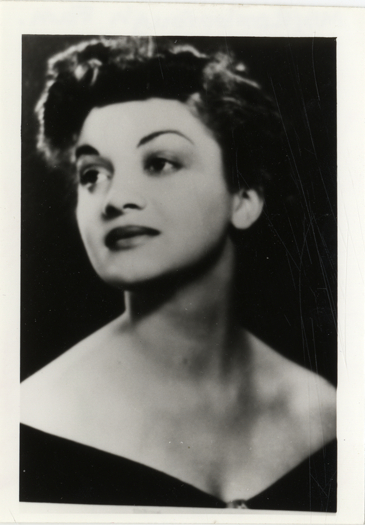
    Elsie Roxborough (Photograph from the University of Michigan Archive)

    Driving her fashionable Ford roadster from Detroit to Ann Arbor, Elsie Roxborough arrived at the University of Michigan as a freshman fifty years ago last fall. She was the first Negro student to live in a University dormitory. Her classmate Arthur Miller, an aspiring playwright and fellow reporter on the campus newspaper, called her “a beauty, the most striking girl in Ann Arbor. She was light-skinned and very classy. To a kid like me, she seemed svelte, knowing, witty, sexy.” With her own group in Detroit, the Roxane Players, she produced Langston Hughes’s play Drums of Haiti, and charmed Hughes as she had charmed boxer Joe Louis some years earlier. Elsie Roxborough was “the girl I was in love with” in 1937, Hughes wrote in his autobiography. Upon graduation, Roxborough “passed” into the white world. The next time most of her friends heard of her was in 1949 when an eight-column headline in the black newspaper Michigan Chronicle announced her death from an overdose of sleeping pills. Hughes kept her photograph over his writing table for the rest of his life.

    Who was Elsie Roxborough? What became of her, and what did she represent? A piecing together of her life suggests that her fate was to dramatize the truth of Hughes’s poem “House in the World”:

    I’m looking for a house
    In the world
    Where the white shadows
    Will not fall.

    There is no house,
    Dark brother,
    No such house
    At all.

    Elsie Roxborough started out to shake the stigma of color; when that proved impossible, she joined step with the oppressor. Her life as a disguised alien in the middle reaches of the white social register did not satisfy her ambition or her pride. Perhaps no happy ending awaited her. The welcome thawings of racial prejudice after the war, and the first signs of a civil rights movement, would only have mocked and embittered her in the years of her deception. A happy child become desperate, she is a case study of the “dark sister” excluded by the American Dream…

    Read the entire article here.

  • Possessions of Whiteness: Settler Colonialism and Anti-Blackness in the Pacific

    Decolonization: Indigeneity, Education & Society
    June 2014 (2014-06-02)

    Maile Arvin, Assistant Professor of Ethnic Studies
    University of California, Riverside

    I confess: I avoided watching the 2011 Oscar award-winning movie The Descendants (directed by the acclaimed Alexander Payne of Sideways and Nebraska, starring George Clooney) for a long time. I had read the book of the same name, by Kaui Hart Hemmings, on which the movie is based. I have complicated feelings about the book—a witty and often wrenching portrayal of a rich Native Hawaiian family that doesn’t seem to feel, look, or know much about being Native Hawaiian. Though I recognize such struggles, about feeling or being disconnected from your own culture and nation, as a very Native story (or perhaps, more precisely, as the story of settler colonialism), I don’t recognize the ending of Hemmings’ story. After much turmoil, the protagonist of her novel decides not to sell the land he has inherited from his family. It is hard to connect with the rich protagonists of Hemmings’ novel because I don’t know any Native Hawaiians who have land to be inherited. I don’t know any Native Hawaiians who frequent yacht clubs. And I don’t know any Native Hawaiians who seem so completely unaware of the truly amazing achievements of recent cultural revitalization efforts in the Native Hawaiian community—from language revitalization to traditional seafaring (our beloved Hōkūleʻa has set sail on a round-the-world voyage this past week). But, to each her own, I thought.

    When I did finally watch the movie, despite the fact that I knew the story, despite the fact that I spend most of my time writing, researching and thinking about whiteness and settler colonialism in the Pacific, and despite the fact that I attended (for a time) the very same, very white-dominated private high school in Honolulu that Hemmings (and, incidentally, President Obama) attended, I was stunned. In the film, the residents of Hawaiʻi are shown to be, almost entirely, white people…

    …Another way that settler colonialism and white supremacy buttress each other, but are not exactly the same, is that “racial mixture” is encouraged under settler colonialism, in order to make Indigenous peoples, and their particular claims to land, less distinct from settlers. Any kind of “mixture” allows Indigenous peoples to be seen as less “authentic,” as “dying out.” However, the goal of settler colonialism is to mix the population in such a way that it is closer in proximity to whiteness. These ideologies filter down into Indigenous communities in subtle and sometimes surprising ways. For example, many Native Hawaiians are multiracial, and are widely accepted within Native Hawaiian communities if their “racial mix” includes white or Asian. Being Native Hawaiian and black, however, is often less embraced, less recognizable, and less valorized…

    Read the entire article here.
  • Was the Cat in the Hat Black?: Exploring Dr. Seuss’s Racial Imagination

    Children’s Literature
    Volume 42, 2014
    pages 71-98
    DOI: 10.1353/chl.2014.0019

    Philip Nel, Distinguished Professor of English
    Kansas State University

    In 1955, Dr. Seuss and William Spaulding—director of Houghton Mifflin’s educational division—stepped into the publisher’s elevator at 2 Park Street in Boston. As Seuss’s biographers tell us, the elevator operator was an elegant, petite woman who wore white gloves and a secret smile (Morgan and Morgan 154). They don’t mention that she was Annie Williams, nor do they say that she was African American (Silvey). Seuss was on that elevator because Spaulding thought he could solve the Why Johnny Can’t Read crisis by writing a better reading primer. When Seuss sketched this book’s feline protagonist, he gave him Mrs. Williams’s white gloves, her sly smile, and her color. However, she is but one African American influence on Seuss’s most famous character. One source for that red bow tie is Krazy Kat, the black, ambiguously gendered creation of biracial cartoonist George Herriman (Cohen 325). Seuss, who admired what he called “the beautifully insane sanities” of Krazy Kat (qtd. in Nel, Dr. Seuss 70), also draws upon the traditions of minstrelsy—an influence that emerges first in a minstrel show he wrote for his high school. The Cat in the Hat is racially complicated, inspired by blackface performance, racist images in popular culture, and actual African Americans. The Cat’s influences help us to track the evolution of the African American cultural imaginary in Seuss’s work, but also, more importantly, to exemplify how children’s literature conceals its own racialized origins. Considering the Cat’s racial complexity both serves as an act of desegregation, acknowledging the “mixed bloodlines” (to borrow Shelley Fisher Fishkin’s phrase) of canonical children’s literature, and highlights how during the 1950s—a turning point for African Americans in children’s literature—picture books were a site where race, representation, and power were actively being contested.

    Decades before the birth of his Cat in the Hat, racial caricature was an accepted part of Theodor Seuss Geisel’s childhood. D. W. Griffith’s acclaimed Birth of a Nation (1915), released the month Geisel turned eleven, offered a popular and racist depiction of the Civil War and Reconstruction. The Jazz Singer (1927), the first feature-length “talking picture,” starred Al Jolson in blackface. One of Geisel’s favorite childhood books, Peter Newell’s The Hole Book (1908), follows a bullet’s comically disruptive journey through its pages, including one where a black mammy points to the hole in the watermelon, and addresses, in dialect, a group of wide-eyed black children: “‘Who plugged dat melon?’ mammy cried, / As through the door she came. / ‘I’d spank de chile dat done dat trick / Ef I could learn his name’” (fig. 1). Seuss remembered this book so well that sixty years after reading it, he could still quote its opening verse by heart (Nel, Dr. Seuss 18). If, as Tony Watkins has argued, “books tells stories that contribute to children’s unconscious sense of the ‘homeland’” (193), then these stories may have embedded racist caricature in Geisel’s unconscious, as an ordinary part of his visual imagination…

  • New Man in the Tropics: The Nietzschean Roots of Gilberto Freyre’s Multiracial Identity Concept

    Luso-Brazilian Review
    Volume 51, Number 1, 2014
    pages 93-111
    DOI: 10.1353/lbr.2014.0005

    Jeroen Dewulf, Associate Professor of German
    University of California, Berkeley

    Casa-grande & Senzala (1933), a obra secular de Gilberto Freyre, foi traditionalmente interpretado de um ponto de vista sociólogo e histórico. Esta interpretação deixou duas questões essenciais em aberto: 1) Como se pode explicar que Freyre interpretou a noção de miscegenação de uma forma (muito) mais positiva do que sociólogos anteriores e 2) Como se pode explicar as tendências elitistas e aristocráticas na sua obra? Este artigo explore estas duas perguntas analisando a influência em Freyre da filosofia de Friedrich Nietzsche através da interpretação de Henry L. Mencken. Argumenta que a influência de Mencken foi maior do que tradicionalmente tem sido admitido e que na obra de Mencken sobre Nietzsche se pode encontrar a mesma interpretação de miscigenação que Freyre mais tarde explorou em Casa-grande & Senzala. Argumenta também que Mencken profundamente influenciou Freyre com as suas ideias aristocráticas e elitistas.

    The Masters & Slaves (1933), the secular work of Gilberto Freyre, has been traditionally interpreted from the point of view of history and sociologist. This interpretation left two key questions unanswered: 1) How can one explain that Freyre interpreted the notion of miscegenation in a way (much) more positive than previous sociologists and 2) How was the elitist and aristocratic tendencies in his work? This article explores these questions by analyzing the influence Freyre in the philosophy of Friedrich Nietzsche by interpreting Henry L. Mencken. I Argue that the influence of Mencken was greater than has traditionally been accepted and that the work of Mencken on Nietzsche can find the same interpretation of miscegenation that Freyre later explored in The Masters & Slaves. Mencken also argues that profoundly influenced Freyre with their aristocratic and elitist ideas.

  • Seeking Roots in Shifting Ground–Dr. Laura Tugman’s topic for 18th Union, June 28

    Melungeon Heritage Association: One People, All Colors
    2014-05-20

    18th Melungeon Union
    Vardy, Tennessee and Big Stone Gap, Virginia
    2014-06-27 through 2014-06-28

    Dr. Laura Tugman will discuss her doctoral dissertation, entitled Seeking Roots in Shifting Ground: Ethnic Identity Development and the Melungeons of Southern Appalachia. Her research examined the experience of Melungeon ethnic identity development through ethnographic interviews with Melungeon individuals in Southern Appalachia. Her study concluded that the identity development process and group dynamics occurring within the Melungeons present challenges to the current multicultural psychology literature regarding ethnic identity development. As recently as the early 1990s, many believed that the Melungeons would soon be completely assimilated into mainstream white America. More recently, the formation of the Melungeon Heritage Association has renewed ethnic pride for many Melungeons who have either previously concealed their heritage—or were not even aware of it—due to a long-standing generational practice of concealing Melungeon heritage. Dr. Tugman examined the ethnic identity development process and life experiences of Melungeons, particularly the impact of social dynamics, both within and outside the group, on self-identification.

    For more information, click here.

  • Skin Tone Stratification among Black Americans, 2001–2003

    Social Forces
    Volume 92, Number 4, June 2014
    pages 1313-1337

    Ellis P. Monk Jr., Provost’s Postdoctoral Scholar in Sociology
    University of Chicago

    In the past few decades, a dedicated collection of scholars have examined the matter of skin tone stratification within the black American population and found that complexion has significant net effects on a variety of stratification outcomes. These analyses relied heavily on data collected between 1950 and 1980. In particular, many scholars have utilized the National Survey of Black Americans (1979–1980). This leaves the question of whether or not the effect of skin tone on stratification outcomes remains decades later. Newly available data from the National Survey of American Life (2001–2003) are used to examine this question. I find that skin tone is significantly associated with black Americans’ educational attainment, household income, occupational status, and even the skin tone and educational attainment of their spouses. Consequently, this study demonstrates that skin tone stratification among black Americans persists into the 21st century. I conclude by discussing the implications of these findings for the study of ethnoracial inequality in the United States and beyond.

  • ‘Belle’: Romance, Race And Slavery With Jane Austen Style

    National Public Radio
    Tell Me More
    2014-05-29

    Michel Martin, Host

    British actress Gugu Mbatha-Raw was brought up on Jane Austen adaptations. “You know, the Pride and Prejudice with Colin Firth and Jennifer Ehle was something I watched on a weekly basis with my mum at home in Oxfordshire,” she tells NPR’s Michel Martin.

    But as the biracial actress completed her training at Britain’s Royal Academy of Dramatic Arts, she watched her peers win roles in “the Downton Abbeys of this world” and realized those period dramas weren’t calling her. It made Mbatha-Raw ask: “Why can’t I be in something like this?”

    Now she is. Mbatha-Raw plays the title character in Belle, a film based on the true story of Dido Elizabeth Belle, the illegitimate daughter of a captain in the Royal Navy and an enslaved African woman. When she is a child, Dido’s father entrusts her to his uncle, one of the most powerful men in the country.

    “She goes on this massive journey to become a woman who has the courage to stand up for who she is and what she believes in,” Mbatha-Raw says…

    Read the entire article here. Listen to the interview here (00:12:53). Read the transcript here. Download the audio here.