Mixed Race Studies

Scholarly perspectives on the mixed race experience.

    • About This Site
    • Bibliography
    • Contact Information
    • Date and Time Formats
    • Forthcoming… (Updated 2021-09-01)
    • Likely Asked Questions
    • List of Book Publishers
    • List of Definitions and Terms
    • My Favorite Articles and Papers
    • My Favorite Posts
    • My Recent Activities
    • Praise for Mixed Race Studies
    • Tag Listing
      • Tag Listing (Ordered by Count)
    • US Census Race Categories, 1790-2010
    • 1661: The First ‘Mixed-Race’ Milestone
    • 2010 U.S. Census – Some Thoughts

recent posts

  • The Routledge International Handbook of Interracial and Intercultural Relationships and Mental Health
  • Loving Across Racial and Cultural Boundaries: Interracial and Intercultural Relationships and Mental Health Conference
  • Call for Proposals: 2026 Critical Mixed Race Studies Conference at UCLA
  • Participants Needed for a Paid Research Study: Up to $100
  • You were either Black or white. To claim whiteness as a mixed child was to deny and hide Blackness. Our families understood that the world we were growing into would seek to denigrate this part of us and we would need a community that was made up, always and already, of all shades of Blackness.

about

  • Twitter
  • Facebook
  • Instagram
  • Being La Dominicana: Race and Identity in the Visual Culture of Santo Domingo

    2021-09-06

    Being La Dominicana: Race and Identity in the Visual Culture of Santo Domingo

    University of Illinois Press
    August 2021
    264 pages
    6 x 9 in.
    13 black & white photographs
    Cloth ISBN: 978-0-252-04381-9
    Paper ISBN: 978-0-252-08580-2
    Ebook ISBN: 978-0-252-05271-2

    Rachel Afi Quinn, Associate Professor of Comparative Cultural Studies and Women’s, Gender & Sexuality Studies
    University of Houston, Houston, Texas
    Dominican women being seen—and seeing themselves—in popular culture

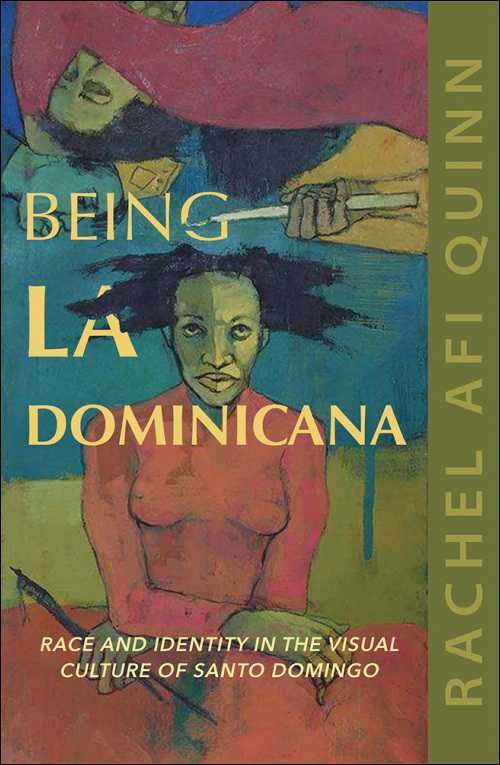
    Rachel Afi Quinn investigates the ways Dominican visual culture portrays Dominican women and how women represent themselves in their own creative endeavors in response to existing stereotypes. Delving into the dynamic realities and uniquely racialized gendered experiences of women in Santo Domingo, Quinn reveals how racial ambiguity and color hierarchy work to shape experiences of identity and subjectivity in the Dominican Republic. She merges analyses of context and interviews with young Dominican women to offer rare insights into a Caribbean society in which the tourist industry and popular media reward, and rely upon, the ability of Dominican women to transform themselves to perform gender, race, and class.

    Engaging and astute, Being La Dominicana reveals the little-studied world of today’s young Dominican women and what their personal stories and transnational experiences can tell us about the larger neoliberal world.
  • White supremacy, with a tan

    2021-09-06

    White supremacy, with a tan

    CNN (Cable News Network)
    2021-09-04

    John Blake, Enterprise writer/producer

    (CNN) Cutting taxes for the rich helps the poor. There is no such thing as a Republican or a Democratic judge. Climate change is a hoax.

    Some political myths refuse to die despite all evidence the contrary. Here’s another:

    When White people are no longer a majority, racism will fade and the US “will never be a White country again.”

    This myth was reinforced recently when the US Census’ 2020 report revealed that people who identify as White alone declined for the first time since the Census began in 1790. The majority of Americans under 18 are now people of color, and people who identity as multiracial increased by 276% over the last decade.

    These Census figures seemed to validate a common assumption: The US is barreling toward becoming a rainbow nation around 2045, when White people are projected to become a minority.

    That year has been depicted as “a countdown to the White apocalypse,” and “dreadful” news for White supremacists.” Two commentators even predicted the US “White majority will soon disappear forever.” It’s now taken as a given that the “Browning of America” will lead to the erosion of White supremacy.

    I used to believe those predictions. Now I have a different conclusion:

    Don’t ever underestimate White supremacy’s ability to adapt.

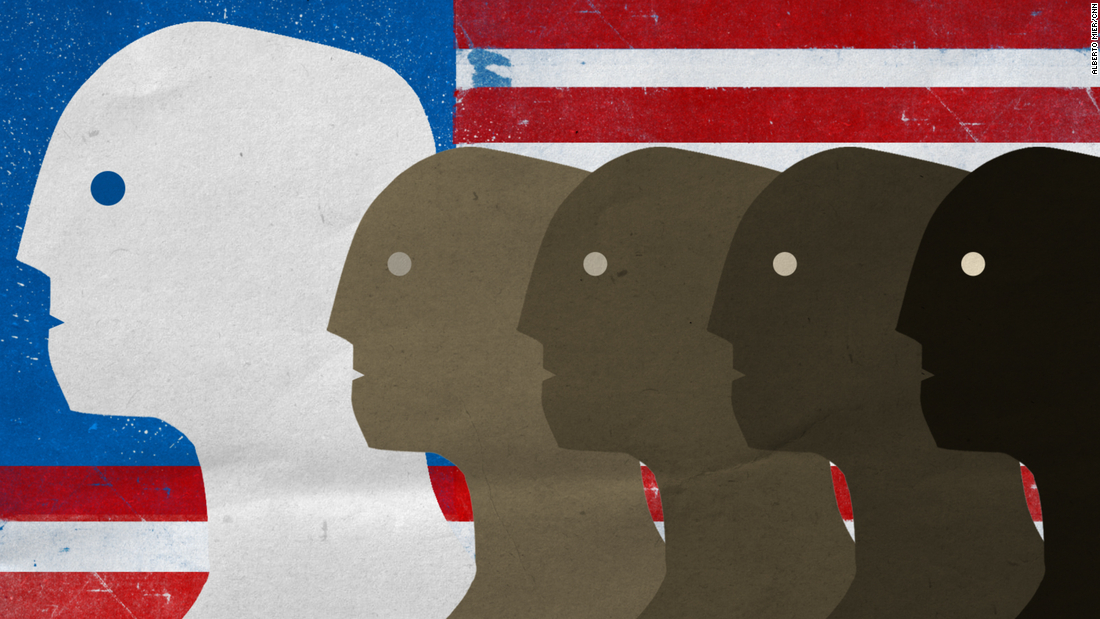
    The assumption that more racial diversity equals more racial equality is a dangerous myth. Racial diversity can function as a cloaking device, concealing the most powerful forms of White supremacy while giving the appearance of racial progress.

    Racism will likely be just as entrenched in a browner America as it is now. It will still be White supremacy, with a tan…

    Read the entire article here.

  • AMST 3407 – Racial Borders and American Cinema

    2021-09-04

    AMST 3407 – Racial Borders and American Cinema

    University of Virginia
    Department of American Studies
    Fall 2021

    This class explores how re-occurring images of racial and ethnic minorities such as African Americans, Jews, Asians, Native Americans and Latino/as are represented in film and shows visual images of racial interactions and boundaries of human relations that tackle topics such as immigration, inter-racial relationships and racial passing.

    For more information, click here.

  • Glen Ford, Black Journalist Who Lashed the Mainstream, Dies at 71

    2021-09-04

    Glen Ford, Black Journalist Who Lashed the Mainstream, Dies at 71

    The New York Times
    2021-08-18

    Clay Risen, Reporter and Editor


    Glen Ford in the 1970s. As a journalist, he took aim at the intersection of corporate interests and what he called the Black “misleadership” class.
    via Tonya Rutherford

    Fiercely progressive and independent, he was a persistent critic of the liberal establishment, especially Black leaders like Barack Obama.

    Glen Ford, who over a 50-year career was a leading voice among progressive Black journalists and a constant scourge of the liberal establishment, especially Black politicians like Barack Obama, died on July 28 in Manhattan. He was 71.

    His daughter, Tonya Rutherford, said the cause was cancer.

    Originally as a radio news reporter in Augusta, Ga., and later as a television and online correspondent, Mr. Ford offered his audience a progressive perspective across a wide array of issues, including welfare rights, foreign policy and police misconduct.

    Read the entire obituary here.

  • Black in Ballet: Coming Together After Trying to ‘Blend Into the Corps’

    2021-09-01

    Black in Ballet: Coming Together After Trying to ‘Blend Into the Corps’

    The New York Times
    2021-08-17

    Brian Seibert


    The cast of “Stare Decisis,” from left: Kouadio Davis, India Bradley, Rachel Hutsell, Robert Garland, Misty Copeland, Erica Lall, Kennard Henson and Alexandra Hutchinson. Malin Fezehai for The New York Times

    A rare gathering of Black dancers from different companies meet to discuss a new production on Little Island, curated by Misty Copeland and Robert Garland.

    Last year, in the wake of the killing of George Floyd and Breonna Taylor and the protests that followed, American ballet companies started talking a lot more about race. About the issues of diversity, equity and inclusion that organizations of all kinds were addressing, but also aesthetic assumptions, implicit biases and longstanding practices particular to ballet and its history.

    “There were innumerable panel discussions,” said Robert Garland, the resident choreographer of Dance Theater of Harlem. “But I felt that for the younger Black dancers, it was a heavy burden to be responsible for all of that.”

    Garland wanted to help them, and in the way that he knows best: by making a dance for them. That work, “Stare Decisis (To Stand by Things Decided),” has its debut on Wednesday as part of “NYC Free,” a monthlong festival at Little Island, the new public park on the Hudson River.

    The most significant feature of “Stare Decisis” is its eight-member cast: an extraordinarily rare gathering of Black dancers from New York City Ballet, American Ballet Theater and Dance Theater of Harlem. Misty Copeland — Ballet Theater’s first Black female principal dancer and one of the most famous ballerinas in the United States — is among them. (Little Island asked her to present a program.)…

    Read the entire article here.

  • Thomas Collins, Lost Melungeon Roots

    2021-09-01

    Thomas Collins, Lost Melungeon Roots

    Alicia M. Prater, Ph.D.
    2020-09-03


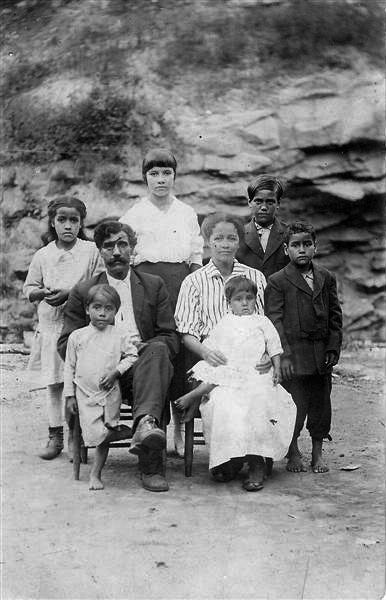
    The Goins’, a Melungeon family in Graysville, Tennessee, in the 1920s. Source

    Thomas Collins was born about 1785, presumably in Ashe, North Carolina. He was a Melungeon and noted as “Free Colored Person” (FCP) on the 1820 and 1830 U.S. censuses. Thomas married Nancy Williams, who was also denoted as a FCP, around 1800. They moved with their grown children to Perry Co., Kentucky, from Ashe, North Carolina, about 1835. Thomas was then denoted as “Free White Person” on the 1840 census, and the family has been White ever since.

    Melungeons: The “free colored people” of Appalachia

    The word “Melungeon” started as a racial slur but came to denote the insular communities of darker skinned Baptists, Portuguese, African, Native American, and possibly Romani or Jewish settlers in the Appalachian Mountains of Tennessee, Virginia, and North Carolina before the Revolutionary War. Today, it is considered to refer to a tri-racial isolate from the Southeastern United States…

    Read the entire article here.

  • What The New Census Data Shows About Race Depends On How You Look At It

    2021-09-01

    What The New Census Data Shows About Race Depends On How You Look At It

    National Public Radio
    2021-08-13

    Connie Hanzhang Jin

    Ruth Talbot

    Hansi Lo Wang, Correspondent, National Desk

    Over the past decade, the United States continued to grow more racially and ethnically diverse, according to the results of last year’s national head count that the U.S. Census Bureau released this week.

    There are many ways to slice the data and change how the demographic snapshot looks.

    Since the 2000 count, participants have been able to check off more than one box when answering the race question on census forms. But breakdowns of the country’s racial and ethnic makeup often don’t reflect a multiracial population that has increased by 276% since the 2010 census. They focus instead on racial groups that are made up of people who marked only one box, with multiracial people sometimes lumped together in a catchall group.

    Using the new 2020 census results, here’s what a breakdown with a catchall group for multiracial people looks like:

    The 2020 U.S. Racial And Ethnic Makeup By Residents With One Race Reported

    This breakdown puts residents who said they identified with two or more racial categories into an independent group. It also groups together people who identified as Hispanic or Latino, which federal standards do not consider a racial category. How that group should be represented is a subject of much debate.

    One ▢ = 150,000 people

    …

    Read the entire article here.

  • Fuse

    2021-08-31

    Fuse

    Guernica Editions (MiroLand)
    Spring 2021
    200 pages
    Paperback ISBN: 9781771835923
    ePub (eBook) ISBN: 9781771835930
    Kindle (eBook) ISBN: 9781771835947

    Hollay Ghadery

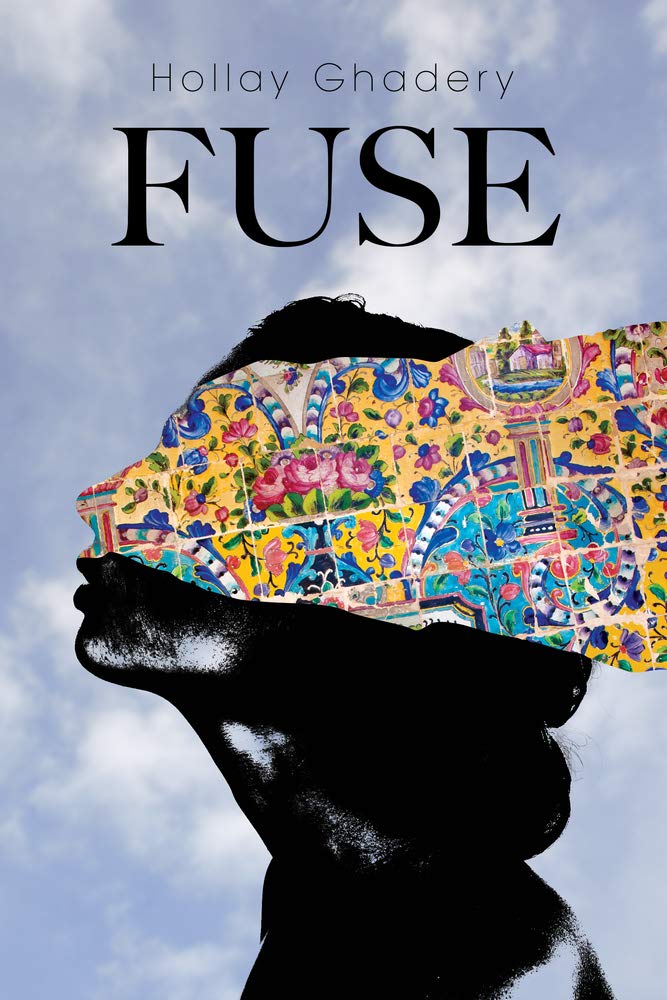
    Drawing on her own experiences as a woman of Iranian and British Isle descent, writer Hollay Ghadery dives into conflicts and uncertainty surrounding the bi-racial female body and identity, especially as it butts up against the disparate expectations of each culture. Painfully and at times, reluctantly, Fuse probes and explores the documented prevalence of mental health issues in bi-racial women.

  • On rare occasions, when my skin contrasts with a white shirt, or the humidity enhances the curliness of my hair, people might recognize me as the Black man that I am.

    2021-08-31

    I am a descendant of slaves and slave owners. My mixed heritage extends back as far as I can trace my ancestry. I have light beige skin, loosely curly brown hair, an angular nose, a small mouth, and brown almond-shaped eyes. I never know how others read my racially ambiguous appearance. On rare occasions, when my skin contrasts with a white shirt, or the humidity enhances the curliness of my hair, people might recognize me as the Black man that I am. Most of the time, they accept me as an ethnic variant of a broadly conceived whiteness. People are occasionally curious, and they try to press me for details.

    Herb Harris, “I Was Expecting a Black Guy by Herb Harris,” Hippocampus Magazine, January 8, 2021. https://hippocampusmagazine.com/2021/01/i-was-expecting-a-black-guy-by-herb-harris/.

  • A birth certificate masked my multiracial truth. For me and 33 million others, the 2020 Census asserts it.

    2021-08-31

    A birth certificate masked my multiracial truth. For me and 33 million others, the 2020 Census asserts it.

    The Washington Post
    2021-08-31

    Steve Majors


    More than 33 million people in the United States identify as being of two or more races, according to the 2020 Census, a 276 percent jump from the 2010 head count. (Paul Sancya/AP)

    My face burned — whether with anger or shame, I wasn’t sure. In 1994, I stood outside human resources at the CBS offices in the Los Angeles neighborhood of Studio City and listened to my future boss over the phone. You want the job? You need to complete the paperwork and check just one box, he insisted. Hours earlier, my pencil had marked X’s in two boxes on the application form. One designated my race as White, the other Black. The HR representative had called him to intervene, and now she waited inside her office for my decision. In a split second, I decided. I wanted the job at CBS’s flagship TV station in Los Angeles; it would be career-changing. So, though no one had told me which box to check, I had a feeling what the HR rep wanted. The recruiter who had first connected me with the opportunity had explicitly told me CBS was looking to increase diversity among its producer ranks. So I grabbed the pencil and erased the mark that declared me half-White. After all, I thought, no one — not even my own family — had officially told me I was of mixed race. The only evidence I had otherwise was written all over my face.

    Decades later, when the “23andMe” response jumped into my email inbox at work, I stopped talking to colleagues mid-meeting to read the results. After years of looking at my pale reflection in the mirror and questioning my identity, I already knew the truth. When I walked out into the world, people looked at my fair skin and perceived and treated me as White. I sensed that the birth certificate that claimed I had the same father as my all-Black siblings was a lie, as was the story of my birth that my mother held on to until her death. Even my family’s nickname for me, “High Yella,” has been a signal to me that I was different from them. Now the results I read confirmed it: 56 percent European, 42 percent sub-Saharan African, with a fraction of East Asian and Indigenous American and other thrown in. I felt a sense of recognition. Science had validated who I was.

    This month, I felt a similar sense of validation. After filling out the 2020 Census and checking the box to declare myself as two or more races, I saw the final results. My multiracial identity counts, and I’m far from being alone. According to the data, I’m among 33.8 million people who identify as multiracial, a whopping 276 percent increase since the 2010 Census. It’s proof that the United States is truly a racial melting pot, with the most diverse population in its history…

    Read the entire article here.

Previous Page
1 … 72 73 74 75 76 … 1,428
Next Page

Designed with WordPress