• Lewis Hamilton bought a Met Gala table for emerging Black fashion designers

    Road Show
    2021-09-13

    Daniel Golson, Social Media Editor


    Lewis Hamilton’s influence extends far beyond F1.
    Theo Wargo/Getty Images

    Tables run upwards of $275,000 and can be exclusionary to young, diverse talent, so the seven-time F1 world champion hosted his own.

    If you needed any more proof that Lewis Hamilton is an incredible force in the racing world and beyond, not even two days after a near-death Formula 1 crash in Italy he stepped onto the Met Gala red carpet in New York on Monday to promote emerging Black fashion designers.

    The theme of this year’s Met Gala was “In America: A Lexicon of Fashion,” centered on American style and independence. Individual tickets to the Met run upwards of $30,000 while full tables are over $275,000 and typically major designers or fashion houses will buy them and invite the celebrities they’re dressing for the night, making it difficult for up-and-coming designers and stars to make an impact at the event, which is referred to as “fashion’s biggest night.” That makes what Hamilton did especially powerful: The seven-time world champion bought his own table and invited four young Black designers as his guests…

    Read the entire article here.
  • Making Mixed Race Matter

    People In Harmony
    2021-08-31

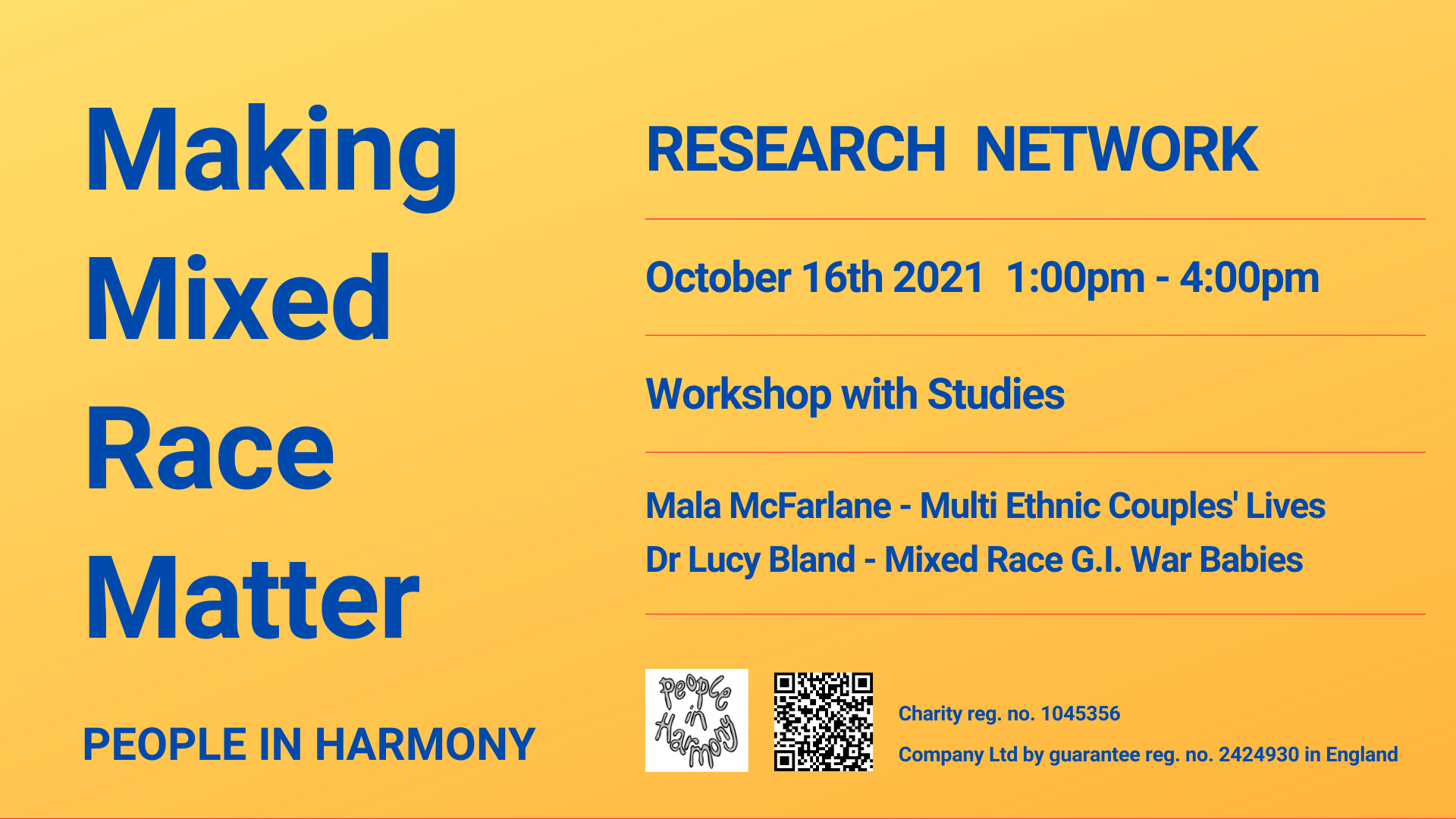
    People in Harmony, PIH, is hosting the first event of the Mixed Race Research Network via Zoom with a workshop and studies.
    With an increasing interest and the need for Research of Mixed Race Experiences PIH is establishing a network of researchers to share information and findings.

    The first event is online at 1:00pm – 4:00pm (12:00-15:00Z, 13:00-16:00 BST, 08:00-11:00 EDT) Saturday 16th October 2021 with –

    • An exploration of Black and Minority Ethnic Inter Racial Couples experiences of Race and Ethnicity constructs: their lived experiences as a Multi Ethnic Family by Mala McFarlane.
    • The mixed race war babies of black GIs and British women by Dr Lucy Bland, Professor of Cultural History at Anglia Ruskin University.
    • Opportunities to share, hear and discuss your experiences and data, of studying our field of work…

    For more information, click here.

  • Multiracial identities and resilience to racism: The role of families

    Medical News Today
    2021-09-14

    Annabelle Atkin, Assistant Professor
    Department of Human Development and Family Studies
    Purdue University, West Lafayette, Indiana


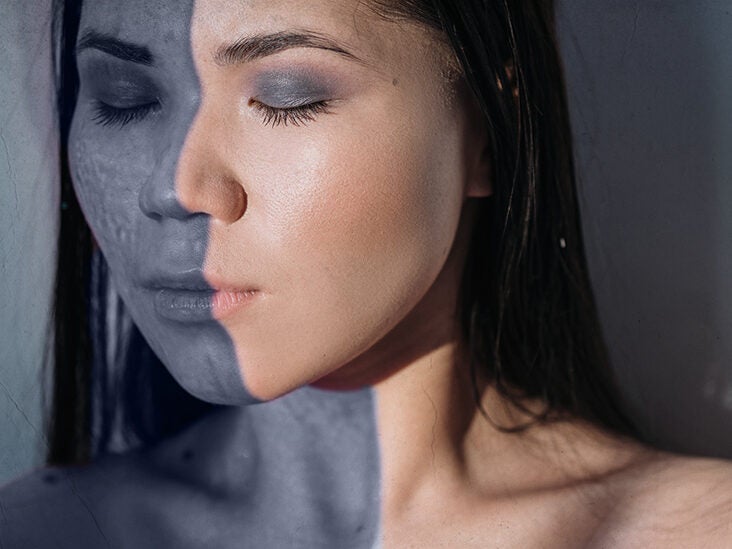
    What challenges do Multiracial people face, and how do these challenges affect their well-being? Dr. Annabelle Atkin explains in this feature. Liliya Rodnikova/Stocksy

    In this opinion feature, Dr. Annabelle Atkin — an assistant professor in the Department of Human Development and Family Studies at Purdue University in West Lafayette, IN — explores the unique challenges that Multiracial people face in attaining and maintaining well-being and offers suggestions on how to mitigate those challenges.

    “I thought you were full Asian,” a professor of color once told me. “I didn’t know you were Asian!” a native Korean friend had told me a couple of years before.

    Being Multiracial is often complicated for people to understand. This is especially the case in the context of the United States, where the dominant White group has fought to establish and maintain a clear color line throughout history to justify the oppression of People of Color.

    The racial groups we know today are not biological. They were created, or socially constructed. And they are always changing. Just take a look at how the U.S. Census categories have shifted across the decades.

    To protect the racial power structure in the U.S., Multiracial people have been erased throughout its history. One of the most well-known examples of this is the one-drop rule, which was created to ensure that anyone with a single drop of “Black blood” be considered Black to justify enslavement and, later, Jim Crow segregation.

    As a result, our Multiraciality is often overlooked, and many people still struggle with accepting and acknowledging Multiracial individuals because to do so challenges their Monoracial understanding of the world…

    Read the entire article here.
  • Plessy v. Ferguson: An Excerpt from Firsthand Louisiana

    University of Louisiana at Lafayette Press
    2020-08-13

    Devon Lord, Editor In Chief

    Discover the history of the Pelican State through the eyes of the people who lived it and shaped its course. In Firsthand Louisiana: Primary Sources in the History of the State, historians Janet Allured, John Keeling, and Michael Martin have compiled dozens of important, interesting, devastating, and even entertaining firsthand accounts cover Louisiana’s history along with questions for further analysis and discussion. Below is an excerpt concerning the Plessy v. Ferguson Supreme Court decision and its impact on Louisiana and the nation as a whole.

    1896:PLESSY V. FERGUSON

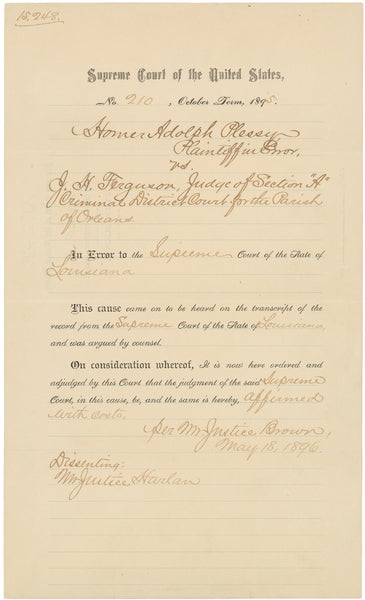
    The most important United States Supreme Court case to originate in Louisiana is Plessy v. Ferguson, which in 1896 affirmed the constitutionality of southern segregation laws. In 1890 the Louisiana legislature passed the state’s first segregation bill, the Separate Car Act, which required that railroads provide separate cars for white and black passengers. As a state senator from St. John the Baptist Parish, Henry Demas was one of four remaining African American Republicans in that chamber. In response to the act, leading members of the Afro-Creole community in New Orleans formed the Comité des Citoyens (Citizens Committee) to challenge the legality of the act. On June 7, 1892, Homer Plessy bought a first-class train ticket from New Orleans to Covington and boarded the white passenger car. A private detective hired by the committee ensured that the conductor had him arrested for violating the Separate Car Act, and the test case began. After losing both in a local court and the Louisiana Supreme Court, the case was appealed to the US Supreme Court. In a 7–1 decision, the Court upheld the constitutionality of the Separate Car Act, asserting, among other points, that it was a reasonable exercise of the state’s police power to maintain the health, safety, and morals of its citizens. Associate Justice John Marshall Harlan, however, saw through the reasoning behind the law and the majority opinion, and declared in the most famous dissenting opinion in the history of the Court that the decision established second-class citizenship for African Americans in the South. Through the “separate but equal” rule, that accommodations for each race had to be roughly the same in quality, Jim Crow laws came to dominate southern race relations until overturned fifty-eight years later by Brown v. Board of Education

    Read the entire article here.

  • U.S. Approval of Interracial Marriage at New High of 94%

    Gallup
    2021-09-10

    Justin McCarthy

    Story Highlights

    • Approval was at just 4% in 1958, when Gallup first polled on the question
    • The racial gap in approval of interracial marriage has nearly closed
    • Age and regional gaps in approval have also shrunk

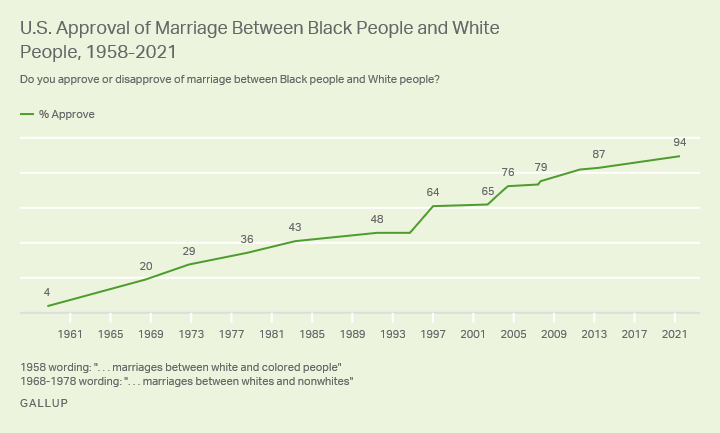
    WASHINGTON, D.C. — Ninety-four percent of U.S. adults now approve of marriages between Black people and White people, up from 87% in the prior reading from 2013. The current figure marks a new high in Gallup’s trend, which spans more than six decades. Just 4% approved when Gallup first asked the question in 1958.

    The latest figure is from a Gallup poll conducted July 6-21. Shifts in the 63-year-old trend represent one of the largest transformations in public opinion in Gallup’s history — beginning at a time when interracial marriage was nearly universally opposed and continuing to its nearly universal approval today.

    The U.S. Supreme Court legalized interracial marriage nationwide in the 1967 Loving v. Virginia case. A year after that decision, Gallup found support for the practice increasing, but still only a small minority of 20% approved.

    Approval of interracial marriage continued to grow in the U.S. in periodic readings Gallup took over the following decades, finally reaching majority level in 1997, when support jumped from 48% to 64%. Support has increased in subsequent measures, surpassing 70% in 2003, 80% in 2011 and 90% in the current reading…

    Read the entire article here.

  • Recalling and Reimagining Vietnam: A Conversation with Genaro Kỳ Lý Smith

    World Literature Today
    2019-08-12

    Mary E. Adams, Associate Professor of English
    University of Louisiana, Monroe

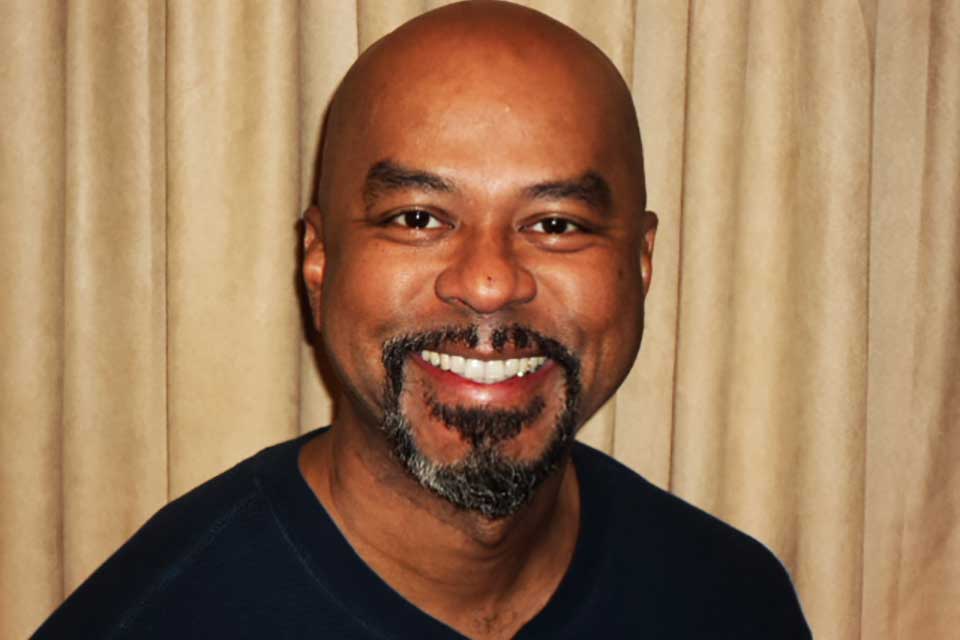
    Genaro Kỳ Lý Smith was born in Nha Trang, Vietnam, and raised in California. His first book, The Land Baron’s Sun: The Story of Lý Loc and His Seven Wives, won the 2015 Indie Book Award for best poetry collection. His other works include The Land South of the Clouds and The Beautiful Ones Are Not Yet Born. He earned an MFA from McNeese State University and has taught creative writing at Louisiana Tech University since 1999.

    Mary E. Adams: Your first book, The Land Baron’s Sun: The Story of Lý Loc and His Seven Wives, focuses on your grandfather’s life, loves, and, ultimately, his years of hard labor in a reeducation camp. Why did you need to tell his story?

    Genaro Kỳ Lý Smith: I learned by the age of thirty just how much of his life was kept from me, the hardships he had to go through. Lý Loc was once rich, powerful, and all of that was gone after the fall of Saigon. You’re looking at a man who owned so much land, who had seven houses, seven wives, twenty-seven children, who was a major commander for the South Vietnamese army. To have to write a letter to my mom in America begging for money is a lowly place to be. All of the sudden, out of your twenty-seven children, you have one in America who works at a sweatshop making dresses, blouses, and slacks for fifty cents per item stitched, and you’re asking her for money in order to eat, in order to be clothed. That’s the thing I had to deal with growing up, knowing he lived the rest of his life as a poor person…

    Read the entire interview here.

  • The Story Of J.P. Morgan’s ‘Personal Librarian’ — And Why She Chose To Pass As White

    Code Switch
    National Public Radio
    2021-08-31

    Karen Grigsby Bates, Senior Correspondent


    Marie Benedict (left) and Victoria Christopher Murray
    Phil Atkins

    This summer on Code Switch, we’re talking to some of our favorite authors about books that taught us about the different dimensions of freedom. In our last installment, we talked to author Julia Alvarez about her poetry collection The Woman I Kept to Myself and how difficult it can be to share your many selves with the world. Next up, a conversation with authors Marie Benedict and Victoria Christopher Murray on their book The Personal Librarian.

    At the turn of the 20th century, financier J.P. Morgan amassed a rich collection of antique objects related to the power of the written word: manuscripts, books, artwork. He did it all with the idea of enjoying his collection privately. But shortly after his death, Morgan’s personal librarian, a woman named Belle da Costa Greene, convinced J.P. Morgan’s son, Jack Morgan, to make the library a gift to New York City.

    The Morgan, as it is now known, welcomes thousands of visitors each year — scholars, researchers, tourists and art lovers — to enjoy the collection. What most don’t know is this: For more than four decades, the library’s collections were acquired and curated by a Black woman. Belle da Costa Greene was quietly passing as white in order to work for one of the most powerful men in the United States

    Read the story here.

  • Defying Categories: An Interview with Hollay Ghadery

    White Wall Review
    Toronto, Ontario, Canada
    2021-09-13

    Rosabel Smegal and Isobel Carnegie, Managing Editors

    “A lot of people are saying I’m brave for writing this,” Hollay Ghadery tells us, grinning through the screen. “But I wish it wasn’t seen as so brave. I wish it was the way everyone was, or felt comfortable being.”

    Brave is just one of the words that Ghadery’s memoir Fuse has been called since its publication by Guernica Editions in May 2021. Other words include: edgy, powerful, raw, and profoundly honest. Written in short, thematic vignettes, Fuse follows the experiences of a young woman of Iranian and British Isle descent growing up in a biracial and bicultural household in small-town Ontario. Ghadery is as honest as her prose is lyrical, unpacking her mental health journey and lifelong struggles with substance abuse, eating disorders, and anxiety. The memoir jumps back and forth through time as Ghadery tells powerful stories from her first (and only) night in a brothel to being unable to fluently communicate with her Farsi-speaking aunts and living with OCD. Meditating on the complexities of the biracial female body, Ghadery challenges traditional, clear-cut ideas about identity, motherhood, and family.

    Ghadery studied English Literature and holds a Master’s of Fine Arts in Creative Writing from the University of Guelph. For several years, she worked in freelance and corporate writing but now, as a mother of four, she devotes her time to writing creatively. Her poetry, short stories, and non-fiction have been published in various literary journals including The Malahat Review, Grain, Understorey, The Antigonish Review, The Fiddlehead, and Room. She has also written for White Wall Review, publishing a review of Anna Van Valkenber’s Queen and Carcass in April 2021 that you can read here.

    We were fortunate enough to sit down with Ghadery over Zoom this summer and chat about writing authentically, navigating Biracial Identity Disorder, and defying categories. Much like her memoir, she was open and honest and so willing to share…

    Read the entire interview here.

  • Finding Afro-Mexico: Race and Nation after the Revolution

    Cambridge University Press
    June 2020
    348 pages
    Hardback ISBN: 9781108493017
    Paperback ISBN: 9781108730310
    eBook ISBN: 9781108639521

    Theodore W. Cohen, Associate Professor of Africana Studies and History
    Southern Illinois University, Carbondale, Illinois

    Highlights

    • Bridges the rich historical literature on slavery and race in the colonial period with scholarship on the contemporary politics of Blackness
    • Traces the long history of African-American intellectual engagements with Mexico
    • Contributes to the expanding literature on the politics of racial comparison and connection along sub-national, national, and transnational lines

    In 2015, the Mexican state counted how many of its citizens identified as Afro-Mexican for the first time since independence. Finding Afro-Mexico reveals the transnational interdisciplinary histories that led to this celebrated reformulation of Mexican national identity. It traces the Mexican, African American, and Cuban writers, poets, anthropologists, artists, composers, historians, and archaeologists who integrated Mexican history, culture, and society into the African Diaspora after the Revolution of 1910. Theodore W. Cohen persuasively shows how these intellectuals rejected the nineteenth-century racial paradigms that heralded black disappearance when they made blackness visible first in Mexican culture and then in post-revolutionary society. Drawing from more than twenty different archives across the Americas, this cultural and intellectual history of black visibility, invisibility, and community-formation questions the racial, cultural, and political dimensions of Mexican history and Afro-diasporic thought.

    Awards

    • Co-winner, 2021 Howard F. Cline Book Prize in Mexican History, Latin American Studies Association
    • Honorable Mention, 2021 Best Book Award in the Social Sciences, Mexico Section, Latin American Studies Association

    Table of Contents

    • List of Figures and Maps
    • Acknowledgements
    • List of Abbreviations
    • Part I. Making Blackness Mexican, 1810-1940s
      • Introduction
      • 1. Black Disappearance
      • 2. Marxism and Colonial Blackness
      • 3. Making Blackness Transational
    • Part II. Finding Afro-Mexico, 1940s-2015
      • 4. Looking Back to Africa
      • 5. Africanizing “La bamba”
      • 6. Caribbean Blackness
      • 7. The Black Body in Mexico
    • Conclusion
    • Bibliography
    • Index
  • Black Identity and the Power of Self-Naming

    Black Perspectives
    2021-09-10

    M. Keith Claybrook, Jr., Assistant Professor of Africana Studies
    California State University, Long Beach


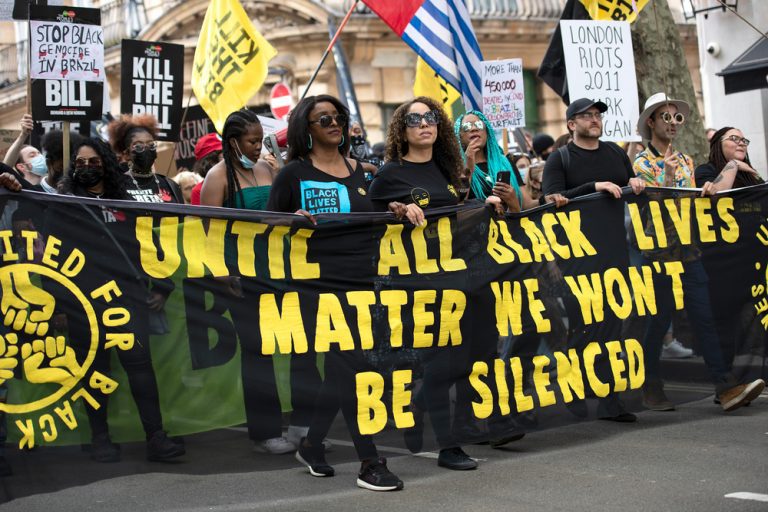
    Kill the Bill IV Protest in London, England, UK on May 29, 2021 (Loredana Sangiuliano, Shutterstock)

    Black identity is the most political social identity used to identify people of African descent in the United States. The 1960s constitute a linchpin moment that recreated what it meant to be Black in the United States, tethering pre-1960s derogatory perceptions of blackness as an adjective and post-1960s use of Black to denote peoplehood, pride, and power. Black activists in the 1960s and 70s redefined and recreated what it meant to be Black in the United States. Their efforts demanded dignity and human respect for people of African descent. Being Black was about the right to be self-naming, self-defining, self-determining, and exercising individual and collective agency. This is consistent with current uses of Black in organizations such as in Black Lives Matter, Black Youth Project 100, Afrikan Black Coalition, Black Alliance for Just Immigration, and Institute of the Black World 21st Century to name a few. And yet, many still use a lowercase “b” when referring to Black people.

    Being Black is more than a descriptor which is denoted with the lowercase “b.” A Black identity is a self and collectively conscious effort for people of African descent to be self-naming and self-defining in route to increasing the human respect and dignity of African people and their descendants. The racialized identifier has its origins in the scientific racism of the 18th and 19th centuries, but the ever-changing socio-historical and political context of the 60s redefined and recreated what it meant to be Black in America. Ultimately, when referring to people of African descent as a collective racialized cultural group, like other proper nouns, give them their respect and dignity by capitalizing the “B”…

    …Contemporary scholars and writers have continued to engage the question of identity and terminology. Yaba Blay’s, (1)ne Drop: Shifting the Lens on Race, continues this discourse when she states that, “capitalization is a matter of reality and respect – respect not only for other people but for myself.”…

    Read the entire article here.