• Melissa Harris-Perry: LGBT Advocates Need Public Progressive Faith

    Religion Dispatches
    Sexuality/Gender
    University of Southern California

    2011-05-31

    Peter Montgomery, Associate Editor

    Political scientist Melissa Harris-Perry has developed a devoted following with her appearances on Bill Moyers Journal and Rachel Maddow’s MSNBC show, and her insightful commentaries on race, history, politics and culture in The Nation and elsewhere. Less well known among progressive activists may be that the self-described social-scientific data geek also makes a compelling case for a more powerful progressive religious voice in the public arena.

    On May 23 (in the midst of a very public debate with her former Princeton colleague Cornel West) Harris-Perry gave the keynote address at the Human Rights Campaign’s Clergy Call, which drew hundreds of LGBT-equality-supporting clergy to Washington, D.C. for inspiration, mutual support, training, and lobbying visits on Capitol Hill.

    The Civil Rights Agenda of Our Time

    “My work is based in the empirical, not in the spiritual… I like data points. I like survey analysis. So what in the world am I doing here, an empirical social scientist straight girl at a clergy call around LGBT issues?” she asked. Her answer: “I believe that the struggle for equal human and civil rights for lesbian, gay, transgender, bisexual, same-sex-loving, gender-nonconforming and queer persons is the civil rights agenda of our time.” And, she said, “faith must be part of the work we’re doing.”   

    The religious history of Harris-Perry’s own family has the sweep of an American saga. Her mother, whose Mormon ancestors pushed handcarts across the country to their promised land in Utah, graduated from Brigham Young University in 1964, having spent most of her time there, Harris-Perry says, writing articles about Mormon womanhood. Meanwhile, her father, whose great-great-grandmother was sold as a slave on a street corner in Richmond, Virginia, attended Howard University where he was “converted to Black nationalism” and shared a room with Stokely Carmichael. By the time her mother and father met in Seattle in the early 1970s, each had become a parent and had been divorced. After they had Melissa, they moved their blended family and children—white, black, and mixed-race—to Virginia in the immediate aftermath of the civil rights movement. “In that context you had to be Unitarian Universalist,” she said to knowing laughter…

    Read the entire article here.

  • “Global Mixed Race,” the 3rd biennial Critical Mixed Race Studies Conference, will be held at DePaul University in Chicago November 13-15, 2014.

    Critical Mixed Race Studies
    2013-09-16

    Conference Description: Global Mixed Race, the third biennial Critical Mixed Race Studies Conference, will be hosted at DePaul University in Chicago, November 13th-15th, 2014. It will bring together scholars from a variety of disciplines around the world to facilitate a global conversation about the transnational, transdisciplinary, and transracial field of Critical Mixed Race Studies.

    Registration: Conference registration is free, compliments of DePaul University, however, registration is still required. You are highly encouraged to register early, but “day-of,” or “walk-in,” registration will also be permitted. Confirmed presenters must register by October 1, 2014, in order to be recognized in the printed program.” Register here: http://condor.depaul.edu/dpulas/cmrs/2014/

    Proposals: We invite panels, roundtables, and papers that address the conference theme, although participants are also welcome to submit proposals that speak to their own specialized research, pedagogical, or community-based interests. The primary criterion for selection will be the quality of the proposal, not its connection to the conference theme. Proposals might consider the ways different disciplines approach or provide methodologies for critical analyses of mixed race issues. Proposals might also consider the following ideas as related to this year’s themes:

    • tracing the history and historiography of mixed race in academic, popular, and legal discourses in a global context;
    • identifying and measuring the impact of global migration, settlement, and sociocultural encounter and interaction on these mixed-race histories and historiographies;
    • encouraging broad, interdisciplinary debate connecting different historical periods and seemingly disparate or far-flung regions of the world, such as comparative racial ideology in Europe, Africa, Latin America, and Asia or the study of comparative anti-miscegenation laws.

    Panels, papers, and roundtable proposal submission deadline: January 15th, 2014
    Completed applications should be e-mailed back to cmrs@depaul.edu with the subject line appropriate to the type of submission (e.g., CMRS 2014 Panel Application).

    Information Fair Exhibitor Application deadline: August 28, 2014

    CMRS 2014 Exhibitor Application

    Mixed Roots Stories

    Mixed Roots Stories is partnering with Critical Mixed Race Studies in bringing arts and cultural programming to the 2014 conference. We are seeking submissions from performing artists and filmmakers whose work explores stories of racial and cultural mixing as a central theme. The overall theme for the 2014 conference is “Global Mixed Race,” and submissions that reflect this will be given special consideration.

    We will be screening short films on Thursday evening, November 13, 2014, and holding a live performance showcase on Friday evening, November 14, 2014.

    Films: We are looking for short films under 15 minutes. Your submission should include an online link to your film (private link is fine), a press kit, and a short statement (50 words or less) on how the film addresses the mixed experience and fits the theme “Global Mixed Race” (trailers for feature films will be accepted).

    Live performance showcase: We are looking for stand-up comedy, spoken word, dance, short scenes, monologues, vocalists, musicians – or other forms of live performance. Your piece for the showcase should not be longer than 8 minutes. Your submission should include an online link with no less than a 2 minute preview of exactly what you will present, and a short statement (50 words or less) on how the piece addresses the mixed experience and fits the theme “Global Mixed Race.”

    Mixed Roots Stories submission deadline: January 15th, 2014
    Please e-mail Mixed Roots Stories submission materials to: cmrs@depaul.edu with the subject line:CMRS 2014 Mixed Roots Stories Application.

    Contacts

    CMRS Conference organizer:

    Camilla Fojas, Professor Latin American and Latino Studies and Vincent de Paul Professor
    e-mail: mailto:cfojas@depaul.edu
    phone: (773) 325-4994

    Mixed Roots Stories and arts programming contact:

    Laura Kina, Associate Professor Art, Media, & Design and Vincent de Paul Professor
    e-mail: lkinaaro@depaul.edu
    phone: (773) 325-4048

  • Whiter Shades of Pale: “Coloring In” Machado de Assis and Race in Contemporary Brazil

    Latin American Research Review
    Volume 48, Number 3 (2013)
    pages 3-24
    DOI: 10.1353/lar.2013.0046

    Alex Flynn, Lecturer in Anthropology
    Durham University, Durham, United Kingdom

    Elena Calvo-González, Professor of Anthropology
    Universidade Federal da Bahia, Brazil

    Marcelo Mendes de Souza
    Department of Comparative Literature
    University of Auckland

    Debates surrounding race in Brazil have become increasingly fraught in recent years as the once hegemonic concept of racial democracy (democracia racial) continues to be subject to an ever more agnostic scrutiny. Parallel to these debates, and yet ultimately inseparable from them, is the question of what it is to be “white.” In this interdisciplinary paper, we argue that whiteness has become increasingly established in Brazilian public discourse as a naturalized category. Seeking a fresh perspective on what we perceive to have become a sterile debate, we examine Machado de Assis and his work to illustrate how assumptions surrounding his short story “Pai contra mãe,” and indeed comments on the author’s very body, reveal the extent to which whiteness has come to be seen as nonnegotiable and fixed. Placing a close reading of Machado’s text at the heart of the article, we explain its implications for the scholarly debates now unfolding in Brazil concerning the construction of whiteness. The article then develops an anthropological reading of whiteness by pointing to the inherent differences between perspectives of race as a process and perspectives of race as a fixed and naturalized given.

    Debates surrounding race in Brazil have become increasingly fraught in recent years as the once hegemonic concept of racial democracy (democracia racial) is subjected to an ever more agnostic scrutiny. In a public sphere where certain ‘“types of mixture’ are clearly preferred to the detriment of others” (Pinho 2009), what can be understood as whiteness has an obvious and tangible importance, with various signifiers having varying levels of meaning. The texture of hair, the shape of facial features, even certain embodied notions of interaction can connote discrete positions on a racialized hierarchy. As Pinho (2009, 40) states, following the tradition of 1950s anthropologists such as Oracy Nogueira (1998) or Donald Pierson (1971), skin color is perhaps only the beginning of someone’s subjective judgment: “One’s ‘measure of whiteness,’ therefore, is not defined only by skin color; it requires a much wider economy of signs where, together with other bodily features, hair texture is almost as important as epidermal tone. In any given context, the definition of whiteness is also, necessarily, shaped by the contours of gender and class affiliation.”

    These judgments take place within a wider historical discourse that has promoted the “whitening” of Brazil as a country and race. Dávila (2003) describes how from the turn of the nineteenth century, state actors in Brazil implemented policies that had at their heart a belief in whiteness as a naturalized state identified with strength, health, and virtue. This racial category was gradually shaped in opposition to “blackness,” a status that carried an explicit cargo of laziness, primitive and childlike nature, and an inherently antimodern gaze to the past. Dávila outlines how state actors believed that the nation could be “whitened” by educating people out of a black identity and leading them toward a white set of behaviors and morals. In this way, race was not a biological fact, it was rather a metaphor for the imagining of Brazil’s modernist trajectory; race was a malleable tool with which to better the future. Thus, the racial mixing of Brazilian society was a deterministic process toward securing a brighter, “whiter” future, one where blackness and its degeneracy could be cast aside and social ascension would guarantee a more productive population. Dávila (2003, 6) states that in the 1930s, “white Brazilians could safely celebrate race mixture because they saw it as an inevitable step in the nation’s evolution.” But it is important to note here that the supposedly realizable goal at the end of this process was essentially being cast as a naturalized category. There were no searching questions as to exactly what whiteness represented on this hierarchical trajectory; the definition was based upon a certain Europeanness and was whatever blackness or  indigenousness was not. As Dávila (2003, 7) states, “whiteness” was defined through both “positive and negative affirmation,” becoming a sedimented and fixed category without any internalized processes of self-reflection.

    Despite this historical lack of analysis, recent state interventions have prompted a more quotidian interest into questions of whiteness in Brazil. Carlos Hasenbalg and Nelson do Vale Silva’s groundbreaking research in the 1970s had already demonstrated the disparities linked to race in socioeconomic indicators between self=-classified “whites” and “browns/blacks,” with the latter grouped together due to the similarity of results when compared to the “white” group. Such work helped to destabilize the myth of racial democracy, as well as the “mulatto escape hatch” thesis, the idea that the space ceded to people of mixed race in Brazil allowed some to escape the “disabilities of blackness” (Degler 1971, 178). However, the recent introduction of racial quotas at federal and state universities has brought into sharp relief how binary manners of self-identification can have a profound influence on one’s social trajectory, or as Vron Ware (2004, 38) describes it, “the relationship between social and symbolic power.” With an expanding middle class and growing competition for places, university places reserved for those who do not identify as white has brought into the open questions and prejudices that many people might have perhaps preferred to remain opaque. The debates around the implementation of affirmative action policies have brought into sharp focus the serious issues that a bureaucratic reconfiguration of racial categories implies, given that the category “black” subsumed those that self-declared as mixed race. At the center of these debates is the question of what it is to be black and, discussed much less, what it is to be white, a subject that has acquired all the more significance with the recent publication of census data demonstrating that for the first time since records began, those that self-identify as white are in a minority (47.7 percent) in Brazil (Phillips 2011). In this article we will build upon recent literature on whiteness as well as more classical work on race and race relations to reinforce the idea that, rather than being a fixed category, whiteness is in fact a volatile and nuanced construction continually subject to social reinterpretations as well as state-determined reconfiguration…

    Read the entire article here.

  • De Blasio Sworn In as New York Mayor

    The New York Times
    2014-01-01

    Michael M. Grynbaum

    Bill de Blasio was sworn in as the 109th mayor of New York City early Wednesday, at two minutes past the stroke of midnight.

    The oath of office was administered by Eric T. Schneiderman, the attorney general of New York, in a brief ceremony inside the front yard of the mayor’s rowhouse in Park Slope, Brooklyn, where Mr. de Blasio stood with his family behind a chain-link fence and beside a bare-limbed tree.

    “I want to say to all of you how grateful we are,” Mr. de Blasio, who wore a black topcoat and cobalt blue tie, told a crowd of journalists and well-wishers, including the actor Steve Buscemi and Howard Dean, the former governor of Vermont.

    “From the beginning,” the mayor continued, “this has been our family together, reaching out to the people of this city to make a change that we all needed.” He added: “This is a beginning of a road we will travel together.”

    The ceremony, which precedes a formal inauguration to take place at noon on the City Hall steps, was the culmination of a campaign in which Mr. de Blasio carefully calibrated his image as a fiery populist, intent on easing the disparities of a gilded city, and a proud husband and father, whose biracial family seemed a paragon of multi-cultural New York…

    Read the entire article here.

  • Racial Democracy and Nationalism in Panama

    Ethnology
    Volume 45, Number 3 (Summer, 2006)
    pages 209-228
    DOI: 10.2307/20456595

    Carla Guerrón-Montero, Assistant Professor of Anthropology, Latin American Studies, Black American Studies, and Women’s Studies
    University of Delaware

    In spite of having more fluid and flexible racial boundaries than other regions of the world, Latin America continues to have racially hegemonic practices. Panama has a myth of racial egalitarianism, yet an inability to perceive that racial inequality is pervasive. This is illustrated with the paradox of race relations between Afro-Antilleans and the indigenous peoples in the Archipelago of Bocas del Toro. Intermarriage in the region and the notion that there is no racial inequality contrasts with the constant recognition of differences. Race relations and ethnic identity in this region have their origins in the competition between British, North American, and Central American interests, and have been shaped in relation to Panamanian nationalism.

  • Am I supposed to be more Brazilian than black?

    Africa is a Country
    2013-12-20

    Daniel Barbosa

    We’re always told (by our media, politicians, commentators, etcetera) that Brazil is the most multicultural and multiracial country in the world. That Brazilian miscegenation gave birth to a unique kind of beauty and that the Brazilian mixture of races and cultures provided us with a complex of interracial relations that has, in some way, harmonized racism, in the name of some greater interracial identity. Now, “there are no races, but the Brazilian beautiful race,” the Brazilian beauty of the “Brazilian race.”

    The documentary film, “Raça,” explores whether nationality should be considered a race (the “Brazilian race”) and whether black Brazilians should abandon once and for all their racial identity for the sake of some Brazilian unity. The filmmakers also ask whether this question itself isn’t already a consequence of institutional racism. Am I supposed to be more Brazilian than black?…

    Raça Trailer HD English from Principe Productions on Vimeo.

    Read the entire article here.

  • Jolene Ivey on The Rock Newman Show

    The Rock Newman Show
    Busboys and Poets
    Washington, D.C.
    2013-10-19

    Rock Newman, Host

    Jolene Ivey, Representative, 47th District, Maryland House of Delegates
    Also candidate for Maryland Lieutenant Governor

    Maryland’s House of Delegates member and 2014 Maryland gubernatorial Running Mate, Jolene Ivey visits The Rock Newman Show. Delegate Jolene Ivey talks about growing up in Maryland, her family, issues in the state of Maryland and her political career. Including the campaign that could make her the first female African American lieutenant governor in Maryland’s history.

    Partial transcription by Steven F. Riley

    00:09:48 Rock Newman:  In the spirit of my audience, understanding who you are. Let’s go back. Let’s go all the way back. I’d like to know where you where born, where you grew up, where you went to elementary school. Let’s start with those three things. Let’s go all the way back.

    Jolene Ivey: Oh boy. My dad was in the military, actually he was a Buffalo Soldier.

    RN: Okay.

    JI: So he was in World War II and the Korean War, so 20 years. Then he became a public school teacher in Prince George’s County public schools for the next 20 years.

    RN: Oh wow. Where did he teach?

    JI: He taught at Douglas in south county and then he taught at High Point, which was my alma mater in Beltsville.

    RN: Okay.

    JI: So he taught at Douglas when we had segregation, of course all the black kids, all the black teachers were there.

    RN: Sure.

    JI: And then when they desegregated, they sent a few black teachers to other schools. That’s when he got moved to High Point.

    RN: Okay.

    JI: Yeah. But in any event, he and my mom were married in the fifties. Now, my mom is white..

    RN: Uh uh.

    JI: …and my dad’s black.

    RN: Right.

    JI: And it was illegal at that time for them to be married in Maryland… or Virginia. So in this area, they had to live in D.C. [Be]cause D.C. was the one place they could be legally wed. So we lived in Northeast D.C., lived on…

    RN: Let me just stop you there. [Be]cause you know, I try to take those moments for my audience. You know, that stuff doesn’t just float by. It’s like, wow, wait a minute. There’re certain posts we can latch on to. Did you hear what she said? In the fifties, as early back as the fifties!

    JI: In fact it was the sixties and it was still illegal.

    RN: Still illegal..

    JI: I think it was… [19]66 before the law changed.

    RN: Maryland and Virginia, so they actually,… for them to be married and to reside in Maryland and Virginia your mom and dad. Dad who’s black and the mother’s who’s white, they had to live in the District of Columbia.

    JI: They didn’t have any choice. Because you know, the Lovings, the couple that changed the law the whole country, they were in Virginia…

    RN: Right.

    JI: …when they got married. And they got in a whole heap of trouble.

    RN: Right.

    JI: And it ended up being a Supreme Court case.

    RN: Yes.

    JI: Fortunately we won the case. The right side won.

    RN: Right.

    JI: But, my parents and us, lived in Northeast D.C. in Riggs Park.

    RN: Okay.

    JI: My mom left when I was three. And my dad raised us. He told her you can do whatever you want, but the kids stay with me. So dad was just an outstanding father. And he raised me and my brother. Um, my stepmother joined us when I was about seven. And you know.

    RN: Where did you go to elementary school?

    JI: I went to LaSalle Elementary right there in Riggs Park and it was kind of tough on me then boy… middle school, Bertie Backus Middle School. I loved the school, but I had some bad memories from part of it.

    RN: And what are the bad memories?

    JI: Well, you know what it’s like Rock. You grow up in an all-black neighborhood and especially back then as light I am. I was getting my butt whipped! I mean, and I was real skinny too.

    RN: A little tiny thing.

    JI: A little tiny thing! Getting picked on. But anyway, it made me tough. And by the time I went to high school, I ended going to high school the same school my dad taught at. So year—which is High Point High School—the first year we still lived in D.C., so we had to pay for me to go the first year, [be]cause it was out of the region. But after that we moved to Prince George’s county and I was able to just continue to go to High Point…

    …00:21:36

    Rock Newman: Jolene, before we went to break, we got a little biographical information about you. And we left off where obviously there was the incredible strong influence of your father, your grandmother you said was an influence also and you said she brought some joy in your life.

    What I was wondering, did you have a particular idol outside of your father and grandmother, a teacher, a public figure, whatever, that might have been… who had an impact on your life early on?

    Jolene Ivey: You know, it’s gonna sound corny, okay, but it was Martin Luther King. And…

    RN: That doesn’t sound corny at all… [Be]cause we all have a dream.

    JI: Right, Right. And you know, he was such a point of discussion in my family. And when he was killed, there was a television, a local television [that] came to our school to interview kids about how they felt..

    RN: This was now maybe when you were in Junior High?

    JI: No, No.

    RN: Elementary.

    JI: At the time it happened, I was just a little kid and I remember this local television came out to interview kids about what was his impact on our lives. And I know that when they saw me sitting in that class, they were like, “what the heck is this little ‘white-looking’ girl doing in this class,” but they interviewed me and I came home and I told my parents, told my family, “I’m going to be on television tonight.” And they were like, “Yeah, you don’t know what you’re talking about!” And so, when it was time for it to come on, I went and turned on the TV and they were like “What’s she watching?” And they came, and sure enough, there I was. And they asked me what his impact had been on me and I said, “he got us a seat on the bus.”

    RN: Go on now!…

  • Fathers, Farmers, Fighters Leaders: The Robbins Family at War (Civil War Roundtable of the Rock Creek Nature Center)

    U.S. Park Service
    Rock Creek Nature Center
    5200 Glover Road, NW
    Washington, D.C.
    2014-01-04, 09:30 EST (Local Time)

    Marvin Jones, Executive Director
    Chowan Discovery Group

    The Robbinses lived across racial lines and along the borders of slavery. What did six members of this free mixed-race family do when the Civil War came their way? And what was their fate? I get to present their remarkable story, bolstered by research from the National Archives.

  • Racial identity development of mixed race college students

    Clemson University
    2012
    216 pages

    Helen Diamond Steele

    The purpose of this study was to identify the factors that influence mixed race college students’ choice of racial identity. This study also explored whether or not there are any differences among each of the racial identity groups’ perceptions of institutional support for mixed race college students. The theoretical framework of this study was formed by Chickering’s Theory of Psychosocial Identity Development, Wijeyesinghe’s Factor Model of Multiracial Identity, and Renn’s Patterns of Multiracial Identity. The eight research questions that guided this study addressed hypothesized factors that may have a relationship with a mixed race student’s racial identity and students’ perceptions of institutional support for mixed race students. The sample included traditional age college students (18-24 at the time of the survey) who are mixed race (which is defined as having biological parents belonging to different racial groups) and enrolled as full-time students (registered for twelve or more credits) at an institution that was a member of the University System of Georgia. This study employed a survey instrument that included 63 multiple-choice and Likert scale questions and was divided into six sections: (a) racial ancestry, (b) racial identity, (c) physical appearance, (d) cultural attachment, (e) other social identities, and (f) institutional characteristics. The following quantitative methods were employed to analyze the collected data: (a) descriptive statistics, (b) Cochran-Mantel-Haenszel test, (c) analysis of variance, (d) multinomial logistic regression, and (e) factor analysis. Implications for future research, policy, and practice are included. Keywords: mixed race, racial identity development.

    Order the dissertation here.

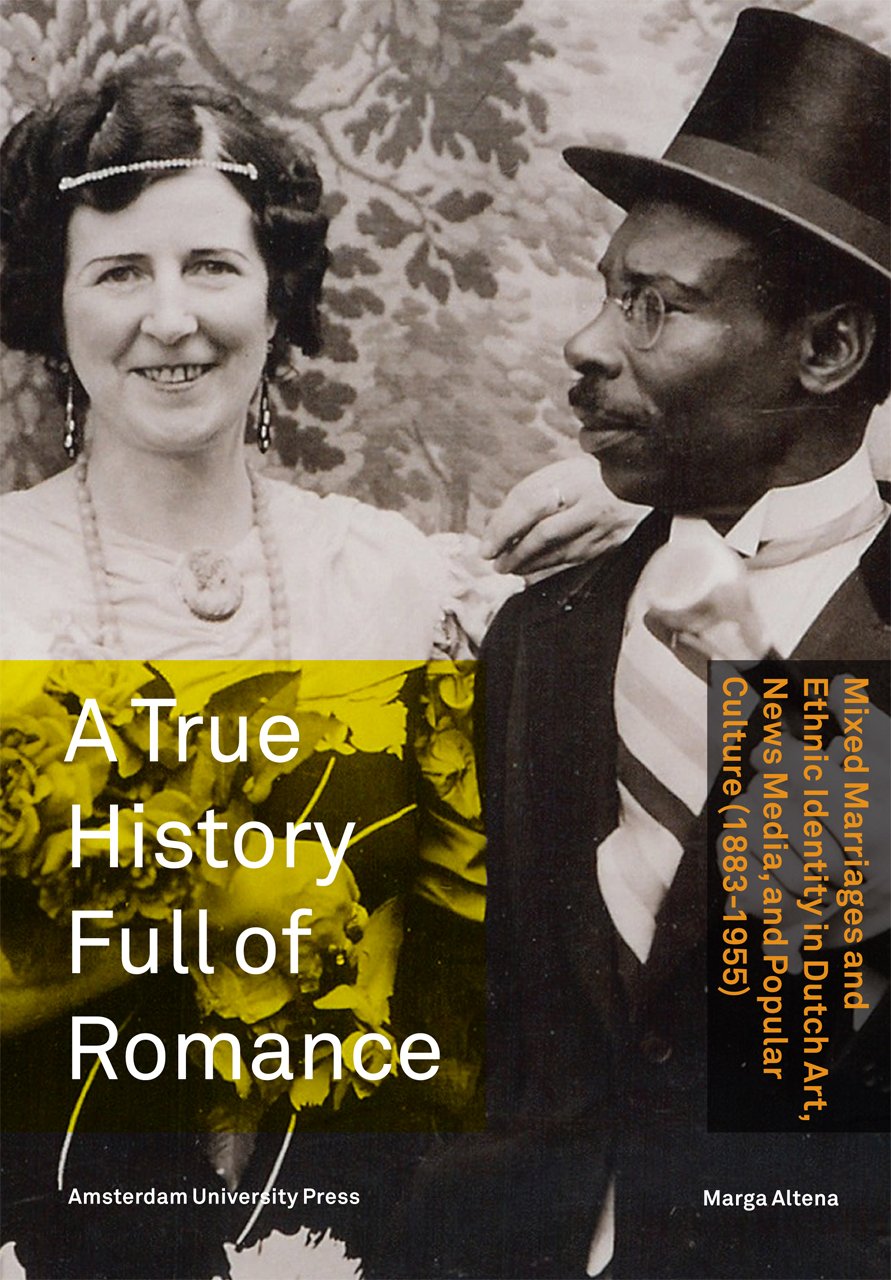
  • A True History Full of Romance: Mixed Marriages and Ethnic Identity in Dutch Art, News Media, and Popular Culture (1883-1955)

    Amsterdam University Press
    2012-04-02
    184 pages
    Soft Cover ISBN: 9789089644251

    Marga Altena, Historian of Visual Culture

    This important study about ethnically mixed marriages in the Netherlands of the 1883-1955 period offers a compelling overview on the nature and experience of ethnicity from a wide range of scholarly perspectives.

    Drawing from exhaustive research in the Netherlands, Europe and the Americas, Altena offers illuminating new insights into mixed-marriage families as they were depicted in the arts and in news media; and how the families themselves in turn reacted to, and influenced those images. The author focuses on well-documented individuals and shows how they gained a coherent voice in Dutch culture. Altena attributes to them conscious agency in their own self-presentation, rather than just viewing them as victims of racial prejudice.

    A timely contribution to the debate surrounding ethnicity and integration in Dutch society, this work demonstrates how that process was mediated by the various agencies, while placing special emphasis on the marginal groups within central news media as crucial in the opinion making.