• The Mismeasure of Man

    W. W. Norton & Company
    June 1996 (Originally published in 1981)
    448 pages
    5.5 × 8.3 in
    Paperback ISBN: 978-0-393-31425-0

    Stephen Jay Gould (1941-2002), Alexander Agassiz Professor of Zoology and Professor of Geology
    Harvard University

    The definitive refutation to the argument of The Bell Curve.

    When published in 1981, The Mismeasure of Man was immediately hailed as a masterwork, the ringing answer to those who would classify people, rank them according to their supposed genetic gifts and limits.

     Yet the idea of biology as destiny dies hard, as witness the attention devoted to The Bell Curve, whose arguments are here so effectively anticipated and thoroughly undermined. In this edition, Stephen Jay Gould has written a substantial new introduction telling how and why he wrote the book and tracing the subsequent history of the controversy on innateness right through The Bell Curve. Further, he has added five essays on questions of The Bell Curve in particular and on race, racism, and biological determinism in general. These additions strengthen the book’s claim to be, as Leo J. Kamin of Princeton University has said, “a major contribution toward deflating pseudo-biological ‘explanations’ of our present social woes.”
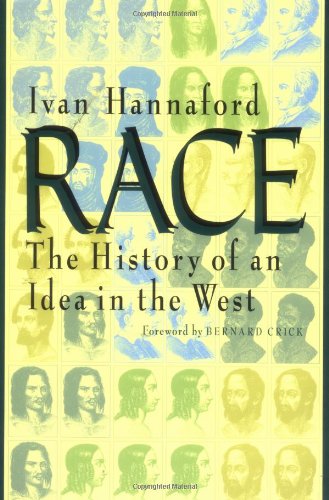
  • Race: The History of an Idea in the West

    Johns Hopkins University Press
    May 1996
    464 pages
    Paperback (on-demand) ISBN: 9780801852237

    Ivan Hannaford

    In Race: The History of an Idea in the West Ivan Hannaford guides readers through a dangerous engagement with an idea that so permeates Western thinking that we expect to find it, active or dormant, as an organizing principle in all societies. But, Hannaford shows, race is not a universal idea—not even in the West. It is an idea with a definite pedigree, and Hannaford traces that confused pedigree from Hesiod to the Holocaust and beyond.

    Hannaford begins by examining the ideas of race supposedly held in the ancient world, contrasting them with the complex social, philosophical, political, and scientific ideas actually held at the time. Through the medieval, Renaissance, and early modern periods he critically examines precursors in history, science, and philosophy. Hannaford distinguishes those cultures’ ideas of social inclusion, rank, and role from modern ones based on race. But he also finds the first traces of the modern ideas of race in the proto-sciences of late medieval cabalism and hermeticism. Following that trail forward, he describes the establishment of the modern scientific and philosophical notions of race in the nineteenth and twentieth centuries and shows how those notions became popular and pervasive, even among those who claim to be nonracist.

    At the same time, Hannaford sets out an alternative to a race-based notion of humanity. In his examination of ancient Greece, he finds in what was then a dazzling new idea, politics, a theory of how to bring a purposeful oneness to a society composed of diverse families, tribes, and interests. This idea of politics has a history, too, and its presence has waxed and waned through the ages.

    At a time when new controversies have again raised the question of whether race and social destiny are ineluctably joined as partners, Race: The History of an Idea in the West reveals that one of the partners is a phantom—medieval astrology and physiognomy disguised by pseudoscientific thought. And Race raises a difficult practical question: What price do we place on our political traditions, institutions, and civic arrangements? This ambitious volume reexamines old questions in new ways that will stimulate a wide readership.

  • SNAPSHOT: “a true story of love interrupted by invasion”

    Greenway Court Theatre
    544. N. Fairfax Avenue
    Los Angeles, California
    2013-04-04 through 2013-04-21

    Mitzi Sinnott

    A daughter’s journey through a landscape of years, memories and realities, initiated by her questioning, “what do I know about war?”  The answers are lying in an album of faded photos of her absent father, who left for the Vietnam War before she was born.  Fusing words, dance, music and film this story chronicles the quest of a mixed-race daughter from Southern Appalachia who eventually finds her homeless Veteran father suffering in Hawaii.

    Her growing insights reveal how the forces of history, race and war affected herself and her family, and the torn fragments of her life begin to re-connect. SNAPSHOT honors her father and other Vietnam Veterans who have been lost under the avalanche of history. This play is a daring look at the truth of our past and an inspiring example of the need for us to reconcile our history—one life at time.

    For more information, click here.

  • Racial Theories in Context (Second Edition)

    Cognella
    2013
    224 pages
    Paperback ISBN: 978-1-60927-056-8

    Edited by:

    Jared Sexton, Associate Professor of African American Studies and Film & Media Studies
    University of California, Irvine

    This book presents a critical framework for understanding how and why race matters — past, present, and future. The readings trace the historical emergence of modern racial thinking in Western society by examining religious, moral, aesthetic, and scientific writing; legal statutes and legislation; political debates and public policy; and popular culture. Readers will follow the shifting ideological bases upon which modern racial theories have rested, from religion to science to culture, and the links between race, class, gender, and sexuality, and between notions of race and the nation-state.

    The authors of Racial Theories in Context discuss the relationship of racial theories to material contexts of racial oppression and to democratic struggles for freedom and equality:

    • First and foremost in this discussion is the vast system of racial slavery instituted throughout the Atlantic world and the international movement that sought its abolition.
    • Continuing campaigns to redress racial divisions in health, wealth, housing, employment, and education are also examined.
    • There is a focus on the specificity of racial formation in the United States and the centrality of anti-black racism.
    • The book also looks comparatively at other regions of racial inequality and the construction of a global racial hierarchy since the 15th century CE.

    Contents

    • Introduction / Jared Sexton
    • A Long History of Affirmative Action—For Whites / Larry Adelman
    • The Cost of Slavery / Dalton Conley
    • Statement on Gender Violence and the Prison-Industrial Complex / INCITE! Women of Color Against Violence and Critical Resistance
    • Introduction To Racism: A Short History / George M. Fredrickson
    • Rape and the Inner Lives of Black Women in the Middle West / Darlene Clark Hine
    • Understanding the Problematic of Race Through the Problem of Race-Mixture / Thomas C. Holt
    • The Sexualization of Reconstruction Politics / Martha Hodes
    • The Original Housing Crisis / Derek S. Hoff
    • The American Dream, or a Nightmare for Black America? / Joshua Holland
    • The Hidden Cost of Being African American / Michael Hout
    • Slavery and Proto-Racism in Greco-Roman Antiquity / Benjamin Isaac
    • Colorblind Racism / Sally Lehrman
    • The Wealth Gap Gets Wider / Meizhu Lui
    • Sub-Prime as a Black Catastrophe / Melvin L. Oliver and Thomas M. Shapiro
    • Unshackling Black Motherhood / Dorothy E. Roberts
    • Is Race -Based Medicine Good for Us? / Dorothy E. Roberts
    • Understanding Reproductive Justice / Loretta J. Ross
    • The History of the Idea of Race / Audrey Smedley
    • The Liberal Retreat From Race / Stephen Steinberg
    • “Race Relations” / Stephen Steinberg
  • What’s Black and White and Black Or White?: The Effects of Category Assignment on the Evaluation of and Memory for Multi-raced Faces

    University of Colorado
    2007
    85 pages
    ISBN: 9780549508632

    Eve C. Willadsen-Jensen

    A thesis submitted to the Faculty of the Graduate School of the University of Colorado in partial fulfillment of the requirement for the degree of Doctor of Philosophy Department of Psychology

    This paper examines the effect of social categorization, from the initial category assignment to perceiver evaluations and memory, on a racially ambiguous target. In a series of 3 studies, racial categorization at the initial stage of person perception was manipulated by providing a race cue prior to viewing racially-ambiguous faces. The studies demonstrated that categorization of an ambiguous target lead to differences in the initial processing of the face as well as evaluation and memory. Racially ambiguous faces were evaluated in a manner consistent with the race cue. In Studies 1 and 2, racially ambiguous faces cued with the word “Black” primed more biased responses than racially ambiguous faces cued with the word “White”. This difference was reflected in participants’ event-related potentials (Study 2) with larger initial attention to faces primed by “Black” followed by a shift in attention to faces primed by “White”. This pattern was for both ambiguous and unambiguous faces. The pattern continued into memory effects (Study 3) with better memory for “White” than “Black” cued faces. These results demonstrate how initial category assignment during early face processing affects the entire person perception process.

    Purchase the dissertation here.

  • Race and Ethnic Relations in the Twenty-First Century: History, Theory, Institutions, and Policy

    Cognella
    2011
    436 pages
    Paperback ISBN: 978-1-93555-160-7

    Edited by:

    Rashawn Ray, Assistant Professor of Sociology
    University of Maryland, College Park

    This book examines the major theoretical and empirical approaches regarding race/ethnicity. Its goal is to continue to place race and ethnic relations in a contemporary, intersectional, and cross-comparative context and progress the discipline to include groups past the Black/White dichotomy. Using various sociological theories, social psychological theories, and subcultural approaches, this book gives students a sociohistorical, theoretical, and institutional frame with which to view race and ethnic relations in the twenty-first century.

    Table of Contents

    • Race and Ethnic Relations in the Twenty-First Century / Rashawn Ray
    • The Embedded Nature of ‘Race’ Requires a Focused Effort to Remove the Obstacles to a Unified America / Dr. James M. Jones
    • PART 1 THE SOCIOHISTORICAL CONTEXT OF RACE
      • The Science, Social Construction, and Exploitation of Race / Rashawn Ray
      • Science of Race
        • The Evolution of Racial Classification / Tukufu Zuberi
      • Social Construction of Race
        • Racist America: Racist Ideology as a Social Force / Joe R. Feagin
      • Exploitation of Race
        • White Racism and the Black Experience / St. Clair Drake
    • PART 2 THEORETICAL AND CONCEPTUAL PERSPECTIVES
      • Racial Attitudes Research: Debates, Major Advances, and Future Directions / Rashawn Ray
      • Individual and Structural Racism
        • Racial Formation: Understanding Race and Racism in the Post-Civil Rights Era / Michael Omi and Howard Winant
        • From Bi-racial to Tri-racial: Towards a New System of Racial Stratification in the U.S.A. / Eduardo Bonilla-Silva
      • The Social Psychology of Prejudice and Perceived Discrimination
        • Race Prejudice as a Sense of Group Position / Herbert Blumer
        • Reactions Toward the New Minorities of Western Europe / Thomas F. Pettigrew
      • Racial Attitudes and Public Discourses
        • Racial Attitudes and Relations at the Close of the Twentieth Century / Lawrence D. Bobo
      • Race, Gender, and Sexuality
        • Getting Off and Getting Intimate: How Normative Institutional Arrangements Structure Black and White Fraternity Men’s Approaches Toward Women / Rashawn Ray and Jason A. Rosow
      • Colorism, Lookism, and Tokenism
        • “One-Drop” to Rule them All? Colorism and the Spectrum of Racial Stratifi cation in the Twenty-First Century / Victor Ray
      • Assimilation Perspectives: Group Threat Theory, Contact Theory, and Ethnic Conflict
        • The Ties that Bind and Those that Don’t: Toward Reconciling Group Threat and Contact Theories of Prejudice / Jeffrey C. Dixon
      • Citizenship, Nationalism, and Human Rights
        • Citizenship, Nationalism, and Human Rights / Shiri Noy
    • PART 3 THE CUMULATIVE PIPELINE OF PERSISTENT INSTITUTIONAL RACISM
      • The Cumulative Pipeline of Persistent Institutional Racism / Rashawn Ray
      • Individual and Structural Racism
        • A Different Menu: Racial Residential Segregation and the Persistence of Racial Inequality / Abigail A. Sewell
      • Education
        • Cracking the Educational Achievement Gap(s) / R. L’Heureux Lewis and Evangeleen Pattison
      • The Labor Market, Socioeconomic Status, and Wealth
        • Are Emily and Greg More Employable than Lakisha and Jamal? A Field Experiment on Labor Market Discrimination / Marianne Bertrand and Sendhil Mullainathan
        • Black Wealth/White Wealth: Wealth Inequality Trends / Melvin L. Oliver and Thomas M. Shapiro
        • The Mark of a Criminal Record / Devah Pager
      • The Criminal Justice System
        • Toward a Theory of Race, Crime, and Urban Inequality / Robert J. Sampson and William Julius Wilson
      • The Health Care System
        • Root and Structural Causes of Minority Health and Health Disparities / Keon L. Gilbert and Chikarlo R. Leak
    • PART 4 CONFRONTING THE PIPELINE: SOCIAL POLICY ISSUES
      • Engaging Social Change by Embracing Diversity / Rashawn Ray
      • When Is Affirmative Action Fair? On Grievous Harms and Public Remedies / Ira Katznelson
      • Engaging Future Leaders: Peer Education at Work in Colleges and Universities / Alta Mauro and Jason Robertson
      • What Do We Think About Race? / Lawrence D. Bobo
  • Belonging nowhere and everywhere: multiracial identity development.

    Bulletin of the Menninger Clinic
    Volume 61, Number 3 (Summer 1997)
    pages 368-384

    K. A. Deters

    Few therapists are trained to work with multiracial individuals. Most have little knowledge of the process of identity development in this ever-increasing population. In this article, an examination of how the social construction of race impacts identity development is followed by a review of current theories regarding multiracial identity development. Interviews of clinicians illustrate how therapists understand their work with multiracial clients as well as the issues they have personally confronted. The challenges faced by therapists working with this population center on understanding how oppression affects identity development, supporting racial ambiguity as a part of normal identity development, working from a nonoppressive theoretical perspective, and examining their own internalized rules about racial and ethnic stereotypes. This preliminary examination indicates the need for further research. A controlled study in this area would be of benefit to the field.

  • Japanese American Student Alliance: Ha-fu: Exploring Half Asian Identity

    George Washington University
    Marvin Center, Amphitheater (view map)
    800 21st Street, NW
    Washington, D.C. 20052
    2013-04-28, 12:00-16:00 EDT (Local Time)

    Learn more about GW’s multiracial experience as a student panel discusses their perspectives and shares their stories.

    The George Washington University Presents:
    2013 Asian Pacific Islander Celebration
    Many Voices, One Song

    Sponsored by the George Washington University Student Association, Asian Student Alliance, Chinese American Student Association, Hawaii Club, Japanese American Student Alliance, Korean Cultural Organization, Kappa Phi Lambda, Inc., Philippine Cultural Society, Pi Delta Psi, Inc., Sigma Psi Zeta, Inc., Vietnamese Student Association.

    For more information, click here.

  • Ambiguity and the Timecourse of Racial Perception

    Bulletin of the Menninger Clinic
    Volume 24, Number 5 (October 2006)
    pages 580-606
    DOI: 10.1521/soco.2006.24.5.580

    Eve C. Willadsen-Jensen
    University of Colorado, Boulder

    Tiffany A. Ito, Professor of Psychology and Neuroscience
    University of Colorado, Boulder

    Two studies examined early perceptual processing and explicit racial categorization of racially ambiguous faces. Participants viewed racially ambiguous faces as well as faces of Whites, Asians, and Blacks while event-related brain potentials (ERPs) were recorded. Initial perceptual processes, indexed by ERP components occurring within 200 ms [milliseconds]  of stimulus onset, showed that racially ambiguous faces were differentiated from Asian and Black but not White faces. Later in processing, around 500 ms after stimulus onset, racially ambiguous faces were differentiated from White faces. However, the racially ambiguous faces were still perceived more similarly to Whites than to Asians or Blacks. Finally, explicit social categorization reflected the ambiguity of the faces. These results highlight the complex nature of racial perception, and the importance of understanding how the growing population of multiracial individuals is perceived.

    Read or purchase the article here.

  • Multiracial Identity Development

    Arlington County Public Schools
    Arlington County, Virginia
    Clarendon Education Center
    2011-11-30
    28 pages/ 55 slides

    Ms. Eleanor Lewis, M.A., CAGS, School Psychologist
    Arlington Public Schools

    Ms. Veronica Sanjines, M.A., CAG, School Psychologist
    Arlington Public Schools

    Dr. Ricia Weiner, Ph.D., School Psychologist
    Arlington Public Schools

    Special Education Parent Resource Center: Workshop Handouts

    View the entire presentation here.