• Mixing Up the Game: Social and Historical Contours of Black Mixed Heritage Players in British Football

    Mark Christian, Professor & Chair of African & African American Studies
    Lehman College, City University of New York

    pages 131-144

    in the volume Race, Ethnicity and Football: Persisting Debates and Emergent Issues
    Routledge
    2011-03-29
    288 pages
    Hardback ISBN: 978-0-415-88205-7

    Edited by:

    Daniel Burdsey, Senior Lecturer of Sociology
    Chelsea School of Sport
    University of Brighton

    INTRODUCTION

    As the world comes to terms with the reality that the most powerful man on earth, President Barack Obama, is of African-American (mixed heritage) background, it is evident that multiracial heritage has become a popular subject matter. Yet much of this interest stems from the fact that history has been made in terms of a person of colour holding court in the most powerful office in the world. That stated, the social world of mixed heritage persons continues to be one of mixed fortunes. In relation to football, however, there is little doubt that the emergence of players of mixed heritage is palpable in the English Premier League and England team set-up.

    This chapter primarily focuses on the socio-historical experiences of black mixed heritage’ footballers within the context of British society. What qualifies me to write on such a subject as black mixed heritage footballers in the UK context? In the world of social science, my social background and academic training would probably be deemed “organically connected” to the phenomena under scrutiny. Indeed having been raised in the city of Liverpool in the 1970s and 1980s, I am acutely aware of both British football and institutional racism. Moreover, my black British heritage and intellectual interests have intersected with my love for the beautiful game and the experience of black British players in general.

    Additionally, I played for over a decade in the amateur football scene in Liverpool during the 1980s in predominantly black mixed heritage teams based in Toxteth/Liverpool 8, winning league titles and cups on a regular basis. During the 1980s, both of the city’s professional clubs, Everton and Liverpool, had very successful teams, yet it was rare to see a black face on the pitch or on the terraces. Racialised relations were rather poor, and it was difficult for local blacks in the city to go beyond the boundaries of Toxteth/Liverpool 8, where the majority resided, without incurring physical threats to one’s life. Moreover, the city council also had an appalling record of discrimination in employment against its local black population (Gifford et al. 1989).

    Most importantly, beyond the structures of institutional racism in Liverpool, I know what it is like to be called a “black bastard” while playing a game of football. Indeed, racism was rife in amateur football on the pitch and in the professional game on the terraces. I recall John Barnes making his England debut in 1983, and later the chants of the England supporters: “there ain’t no black in the Union Jack, Johnnie Barnes, Johnnie Barnes”—a chant that would lead the academic Paul Gilroy (1987) to coin the phrase for his bestseller There Ain’t No Black in the Union Jack

    …HISTORICAL CONTEXT OF BRITISH MIXED-NESS

    Britain has a long history of amnesia in what could be deemed a “racialised mongrelisation” memory loss. After all, it is a state that has historically “mixed” with many cultural groups. To be sure, since the earliest times of British history, peoples with varied ethnic backgrounds, beliefs, languages and cultures have settled in Britain; from the Neolithic, Bronze and Iron Ages (5000 BC-100 BC) to the Roman Britain era (55 BC-410 AD). Briefly, the Picts, Celts, Romans, Saxons, Angles, Danes, Jutes, Vikings and Normans are key historical cultural groups that led to the “normative” white ethnic category now described homogenously as “white” and singular in authoritative government census surveys…

    Read the entire chapter (by permission of the author) here.
  • Afro-Germans and the Problems of Cultural Location

    Molefi Kete Asante, Professor of African American Studies
    Temple University

    The African German Experience: Critical Essays
    Greenwood Publishing
    1997

    edited by Carol Aisha Blackshire-Belay

    The leitmotif of the German society in regards to African people has a lot to do with the way Germans approach racial difference. Thus, the German society, in many ways, similar to that of other European nations views Africans as other and lesser. This is a particularly troubling problem for children of mixed heritage since in the German construction of social reality they cannot be German by blood and therefore are African, the other.

    It is claimed in this essay that the Afro-Germans, those born of African fathers and German mothers or German fathers and African mothers, a less frequent combination, have a peculiar problem of cultural location which is unlike the problems of other residents of Germany. There is a relatively sizable population of immigrants from Turkey, Greece, Italy, and the former Yugoslavia who reside In Germany. But while Turks, Italians, and Greeks may be defined as not-German they are still seen in the light of their own nationality, but to which nation is the Afro-German connected? This is at once an existential and a locational question for the Afro-German, encompassing being and physical place…

    Read the entire chapter here.

  • CNN’s Soledad O’Brien on Her Entrepreneurial TV Future

    Bloomberg Businessweek
    2013-03-07

    Soledad O’Brien as told to Diane Brady

    I never really hesitated about going to Starting Point [which premiered on Jan. 2, 2012]. I thought there was an opportunity to get beyond the platitudes of “Yes, Medicare! No, Medicare!” and actually look at the Congressional Budget Office report. When I left American Morning in 2007, I’d focused on doing documentaries. But I thought Starting Point was a great opportunity to be involved in the zeitgeist.

    The show was able to grow, but it takes time. I don’t know that an aggressive interview style was not good for our morning show, which is what some people said. It takes time to build an audience. When Jeff Zucker [CNN’s new president, above] started last month, he had a different vision. He was coming in to make changes across the board that, frankly, CNN really needs. Part of that vision was that I wouldn’t be on the morning show. Once I knew what he wanted, I focused on how I could do what I enjoy most.

    We struck an unusual deal. I’ll get to leave CNN with my catalog and documentaries. We were able to create a brand at CNN—Black in America—that I now own. I can take that brand and extend it in any way I want. You have Netflix and all these channels that are looking for interesting and different ways to tell stories. To have ownership of Black in America and Latino in America is hugely important…

    Read the entire article here.

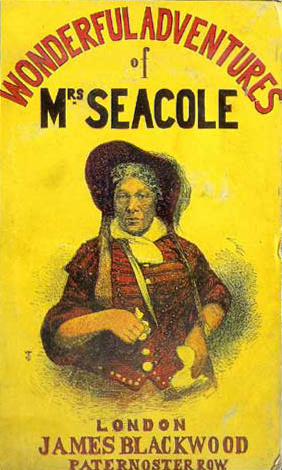
  • Wonderful Adventures of Mrs. Seacole in Many Lands

    James Blackwood Paternoster Row
    1857
    198 pages

    Mary Seacole (1805-1881)

    Mary Seacole was born a free black woman in Jamaica in the early nineteenth century. In her long and varied life, she travelled in Central America, Russia, and Europe; found work as an inn-keeper and as a ‘doctress’ during the Crimean War; and became a famed heroine, the author of her own biography, in Britain. As this work shows, Mary Seacole had a sharp instinct for hypocrisy as well as ripe taste for sarcasm. Frequently we see her joyfully rise to mock the limitations artificially imposed on her as a black woman. She emerges from her writings as an individual with a zest for travel, adventure, and independence, a stimulating and inspiring figure.

    Read the entire book here.

  • Forecast of Miscegenation

    Los Angeles Herald
    1906-07-24
    page 6, column 3
    Source: Library of Congress: Chronicling America: Historic American Newspapers

    In the course of a sermon delivered last Sunday before n local negro audience. Bishop Hamilton of the Methodist church said: “It might create a sensation if I should say a union of the races of this world Is possible. The papers would take it up In the morning if I should tell you the blacks and whites will eventually merge into one people. This I know: all discriminations must come to an end and it is not a question which nation shall reign in this world.”

    Bishop Hamilton has an unquestionable right to his views on the subject of miscegenation and likewise to the personal demonstration of them if he sees fit. It is not the purpose of The Herald to reopen an issue that was supposed to have been buried with the abolition party nearly half a century ago. Every one to his or her liking in regard to the old question whether a negro Is “a man and a brother,” and, inferentially, whether a negress is a woman and a sister.

    It is the effort of such preachment to a negro congregation as Bishop Hamilton is credited with that The Herald especially criticizes. The bishop practically tells hundreds of negroes to their faces, and through them he tells the whole negro race In the United States, that miscegenation is foreordained by the almighty. Note what the bishop says following the above quotation: “It won’t matter whether a man Is white or black, if he is a son of God, he shall become an individual part of that people which shall eventually own this earth.”

    The effect of such preaching to negroes cannot be otherwise than pernicious. Its tendency is to fill the negro mind with notions of social equality, going the full length to amalgamation of the white and black races. And with these notions well rooted, is it not logical to suppose that such present negro crimes as are reported almost daily, would be multiplied indefinitely?

    Not one white American in a thousand will indorse the miscegenation doctrine, substantially, which Bishop Hamilton is preaching to the negroes.

  • For Blacks in Cuba, the Revolution Hasn’t Begun

    The New York Times
    2013-03-23

    Roberto Zurbano, Editor and Publisher
    Casa de las Américas Publishing House

    Translated from Spanish by Kristina Cordero

    CHANGE is the latest news to come out of Cuba, though for Afro-Cubans like myself, this is more dream than reality. Over the last decade, scores of ridiculous prohibitions for Cubans living on the island have been eliminated, among them sleeping at a hotel, buying a cellphone, selling a house or car and traveling abroad. These gestures have been celebrated as signs of openness and reform, though they are really nothing more than efforts to make life more normal. And the reality is that in Cuba, your experience of these changes depends on your skin color.

    The private sector in Cuba now enjoys a certain degree of economic liberation, but blacks are not well positioned to take advantage of it. We inherited more than three centuries of slavery during the Spanish colonial era. Racial exclusion continued after Cuba became independent in 1902, and a half century of revolution since 1959 has been unable to overcome it…

    Raúl Castro has announced that he will step down from the presidency in 2018. It is my hope that by then, the antiracist movement in Cuba will have grown, both legally and logistically, so that it might bring about solutions that have for so long been promised, and awaited, by black Cubans.

    An important first step would be to finally get an accurate official count of Afro-Cubans. The black population in Cuba is far larger than the spurious numbers of the most recent censuses. The number of blacks on the street undermines, in the most obvious way, the numerical fraud that puts us at less than one-fifth of the population. Many people forget that in Cuba, a drop of white blood can — if only on paper — make a mestizo, or white person, out of someone who in social reality falls into neither of those categories. Here, the nuances governing skin color are a tragicomedy that hides longstanding racial conflicts

    Read the entire opinion piece here.

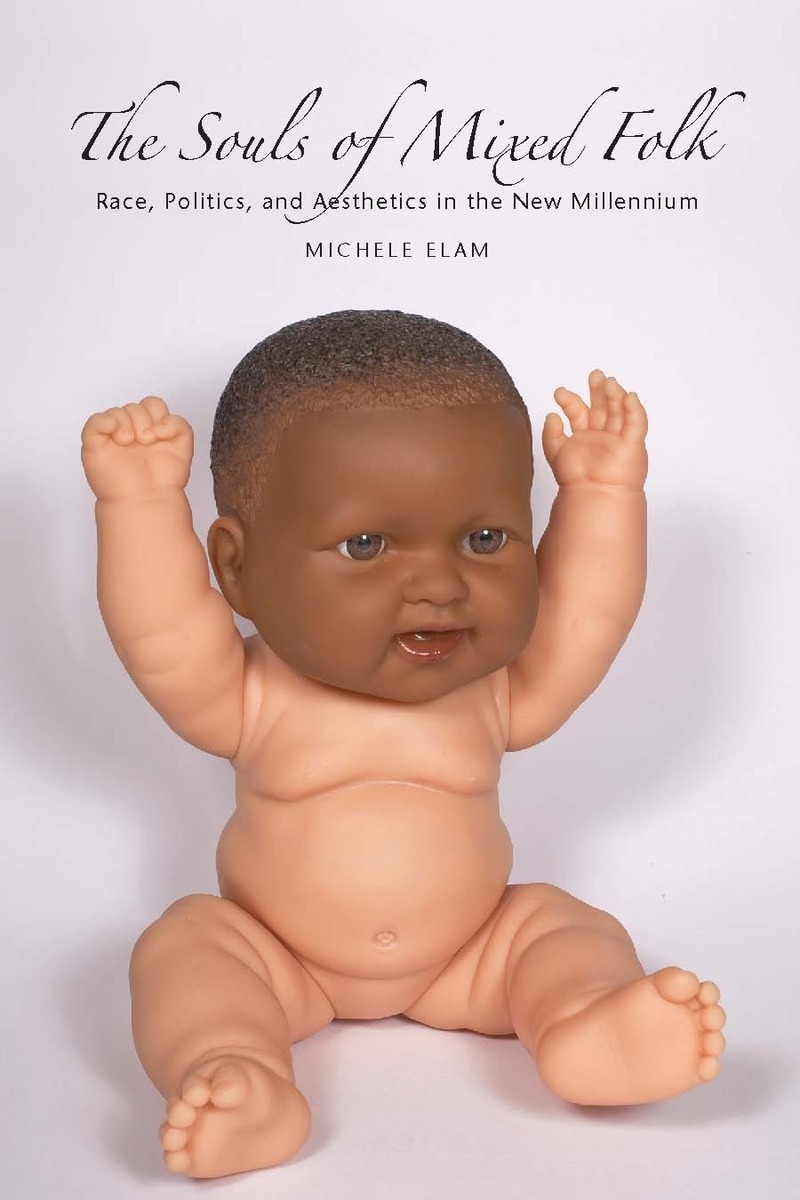
  • The Souls of Mixed Folk: Race, Politics, and Aesthetics in the New Millennium

    Stanford University Press
    February 2011
    312 pages
    23 illustrations
    Cloth ISBN-10: 0804756295; ISBN-13: 9780804756297
    Paper ISBN-10: 0804756309; ISBN-13: 9780804756303

    Michele Elam, Martin Luther King, Jr. Centennial Professor of English and Olivier Nomellini Family University Fellow in Undergraduate Education
    Stanford University, Stanford, California

    Cover Photo: “Baby Halfie Brown Head”, from artist Lezley Saar’s, Mulatto Nation (2003) art installation.

    The Souls of Mixed Folk examines representations of mixed race in literature and the arts that redefine new millennial aesthetics and politics. Focusing on black-white mixes, Elam analyzes expressive works—novels, drama, graphic narrative, late-night television, art installations—as artistic rejoinders to the perception that post-Civil Rights politics are bereft and post-Black art is apolitical. Reorienting attention to the cultural invention of mixed race from the social sciences to the humanities, Elam considers the creative work of Lezley Saar, Aaron McGruder, Nate Creekmore, Danzy Senna, Colson Whitehead, Emily Raboteau, Carl Hancock Rux, and Dave Chappelle. All these writers and artists address mixed race as both an aesthetic challenge and a social concern, and together, they gesture toward a poetics of social justice for the “mulatto millennium.”

    The Souls of Mixed Folk seeks a middle way between competing hagiographic and apocalyptic impulses in mixed race scholarship, between those who proselytize mixed race as the great hallelujah to the “race problem” and those who can only hear the alarmist bells of civil rights destruction. Both approaches can obscure some of the more critically astute engagements with new millennial iterations of mixed race by the multi-generic cohort of contemporary writers, artists, and performers discussed in this book. The Souls of Mixed Folk offers case studies of their creative work in an effort to expand the contemporary idiom about mixed race in the so-called post-race moment, asking how might new millennial expressive forms suggest an aesthetics of mixed race? And how might such an aesthetics productively reimagine the relations between race, art, and social equity in the twenty-first century?

    Read an excerpt of “Obama’s Mixed Race Politics” here.

  • Can the “one-drop rule” tell us anything about racial discrimination? New evidence from the multiple race question on the 2000 Census

    Labour Economics
    Volume 16, Issue 4 (August 2009)
    pages 451-460
    DOI: 10.1016/j.labeco.2009.01.003

    Robert W. Fairlie, Professor of Economics
    University of California, Santa Cruz

    The inclusion of multiple race information for the first time in the 2000 Census allows for a novel test for the presence of labor discrimination using the “one-drop rule.” Identifying discrimination is straightforward and essentially relies on the discontinuous nature of the one-drop rule, which treats biracial blacks similarly as monoracial blacks. If biracial blacks have levels of unmeasurable and measurable human capital that lie between the levels of monoracial blacks and whites then, absent discrimination, their wages should also lie between the wages of the two groups. Estimates from the Census indicate that biracial blacks have levels of education that lie almost perfectly between monoracial blacks and whites. In contrast, however, biracial blacks have wages that are roughly similar to monoracial blacks after controlling for education and potential work experience. Estimates from the 1980 Census also do not indicate that the parental characteristics and educational outcomes of biracial children differ from what would be expected by having both black and white parents. Several additional factors that potentially affect the human capital of biracial adults are explored. These findings provide some suggestive evidence on the “one drop rule” and the presence of discrimination in the labor market and provide new estimates of wages and educational levels of biracial blacks.

    Read the entire article here.

  • Turkish descendants of African slaves begin to discover their identity

    The National
    Abu Dhabi, United Arab Emirates
    2012-09-01

    Piotr Zalewski

    No one knows how many Afro-Turks there are but, in a country that’s beginning to acknowledge its great diversity, they’re beginning to unearth their forgotten history.

    In 1961, Ertekin Azerturk, a Turkish businessman from Istanbul, placed a long-distance call. The voice of the switchboard operator who answered—a woman’s voice, sweet and crisp, like a singer’s—must have made his head spin. Must have, because from that day on, Azerturk insisted on speaking to the same operator each time he picked up the phone. During one call he found the gumption to ask his mystery girl out on a date. Her reply was as surprising to him as his request was to her. “No way,” Tomris, the operator, told Azerturk. “You won’t like me,” she explained, “because I’m dark.”

    But Azerturk didn’t back down and Tomris eventually gave in. When they met, he was dumbstruck. He had understood Tomris was dark, but had never figured she would be black. (He had never previously met or even heard of a Turk who was.) Tomris was, like her voice, striking, and Azerturk was smitten. Over the Azerturk family’s objections, the pair married.

    …As a child, Muge could not fully grasp why her skin was the colour it was—or why it should matter. She finally learnt, and understood, the truth in her teens. She and her brother were descendants, three generations removed, of black slaves…

    Read the entire article here.

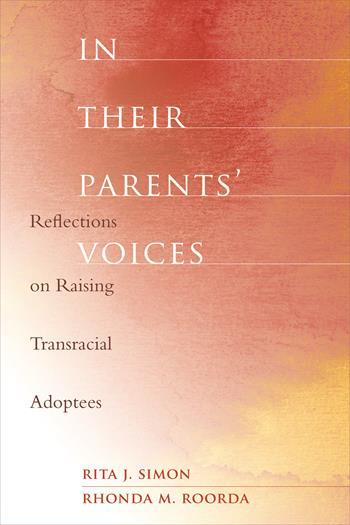
  • In Their Parents’ Voices: Reflections on Raising Transracial Adoptees

    Columbia University Press
    October 2007
    240 pages
    Cloth ISBN: 978-0-231-14136-9
    Paper ISBN: 978-0-231-14137-6

    Rita J. Simon, University Professor Emerita
    Department of Justice, Law and Society
    American University, Washington, D.C.

    Rhonda M. Roorda

    Rita J. Simon and Rhonda M. Roorda’s In Their Own Voices: Transracial Adoptees Tell Their Stories shared the experiences of twenty-four black and biracial children who had been adopted into white families in the late 1960s and 70s. The book has since become a standard resource for families and practitioners, and now, in this sequel, we hear from the parents of these remarkable families and learn what it was like for them to raise children across racial and cultural lines.

    These candid interviews shed light on the issues these parents encountered, what part race played during thirty plus years of parenting, what they learned about themselves, and whether they would recommend transracial adoption to others. Combining trenchant historical and political data with absorbing firsthand accounts, Simon and Roorda once more bring an academic and human dimension to the literature on transracial adoption.