• Book Review: Race in a Bottle

    GeneWatch
    Council for Responsible Genetics
    Volume 26 Issue 1, March 2013

    Lundy Braun, Royce Family Professor in Teaching Excellence and Professor of Medical Science and Africana Studies
    Brown University

    In Race in a Bottle, Jonathan Kahn tracks the contentious history of BiDil, the first drug targeted specifically to African Americans. Ironically, race-based drug treatment emerged in the wake of the sequencing of the human genome, a project that theoretically promised both to scientifically refute the notion of genetically distinct racial groups and to usher in an era of personalized medicine. Though hyped by researchers, the FDA, and the press as an important first step toward personalized medicine, BiDil is a drug administered to patients based on their membership in a group…

    …Critical to Kahn’s argument regarding evidence is the fact that the clinical trials on which the company based its patent application for BiDil were never designed to compare racial difference in response to the drug. Using “care of the data” as an organizing theme, Kahn highlights one of the many troubling aspects of this controversy: the extraordinarily loose, if not sloppy, construction of what passed as evidence in the patent application and FDA hearings. From the use of misleading statistics on mortality from heart failure in African Americans, to the failure to define the central variable of race, to the design of a clinical trial (A-HeFT) that included only African Americans (and therefore could not determine differential efficacy) to the lack of any mechanistic understanding for a differential effect, Kahn shows that attention to the data was consistently problematic when it came to matters of race. The chapter on the FDA hearings is particularly illuminating…

    Read the entire review here.
  • In Their Own Voices: Transracial Adoptees Tell Their Stories

    Columbia University Press
    April 2000
    480 pages
    Paper ISBN: 978-0-231-11829-3

    Rita J. Simon, University Professor Emerita
    Department of Justice, Law and Society
    American University, Washington, D.C.

    Rhonda M. Roorda


    Nearly forty years after researchers first sought to determine the effects, if any, on children adopted by families whose racial or ethnic background differed from their own, the debate over transracial adoption continues. In this collection of interviews conducted with black and biracial young adults who were adopted by white parents, the authors present the personal stories of two dozen individuals who hail from a wide range of religious, economic, political, and professional backgrounds. How does the experience affect their racial and social identities, their choice of friends and marital partners, and their lifestyles? In addition to interviews, the book includes overviews of both the history and current legal status of transracial adoption.

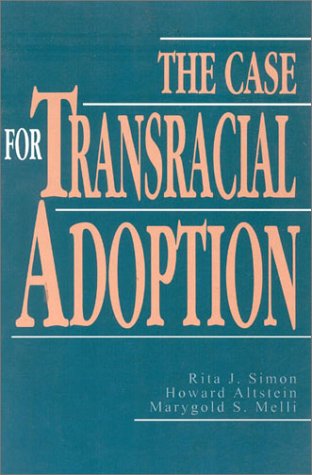
  • The Case for Transracial Adoption

    American University Press
    1994
    150 pages
    6 x 0.5 x 9 inches
    Paperback ISBN-10: 1879383209; ISBN-13: 978-1879383203

    Rita J. Simon, University Professor Emerita
    Department of Justice, Law and Society
    American University, Washington, D.C.

    Howard Altstein, Professor of Social Work
    University of Maryland, Baltimore

    Marygold S. Melli, Professor of Law Emerita
    University of Wisconsin Law School

    This timely study analyzes the issue of adoptions that cross racial and national lines, and assesses their success and appropriateness. The book’s centerpiece is a comprehensive long-term study of the transracial adoption conducted by Rita Simon and Howard Altstein, the result of twenty years of research and analysis. The authors discuss the case often made against transracial adoption and explain the laws that govern these adoptions.

  • Indigo: Shelly Jyoti and Laura Kina

    Curated by Greg Lunceford and Lanny Silverman
    2013-01-26 through 2013-04-27

    Opening Reception: Friday, 2013-01-25, 17:30-19:30 CST (Local Time)
    Chicago Cultural Center
    The Chicago Rooms
    78 E. Washington Street
    Chicago, Illinois 60638

    Shelly Jyoti, Visual Artist, Fashion Designer, Poet, Researcher and Independent Curator

    Laura Kina, Associate Professor Art, Media and Design
    DePaul University

    Employing fair trade artisans from women’s collectives in India and executing their works in indigo blue, Indian artist Shelly Jyoti and US artist Laura Kina’s works draw upon India’s history, narratives of immigration and transnational economic interchanges.

    Artist talk with Shelly Jyoti, Laura Kina, and Pushipika Frietas, President of MarketPlace: Handwork of India
    The Chicago Rooms
    Thursday, 2013-01-31 12:15 CST (Local Time)

    • View the exhibition catalog online.
    • Download a PDF of the brochure Indigo: Shelly Jyoti and Laura Kina Chicago Cultural Center.
    • Watch the 2010 video on youtube Indigo: New works by Shelly Jyoti and Laura Kina.
    • View opening night and installation photographs.
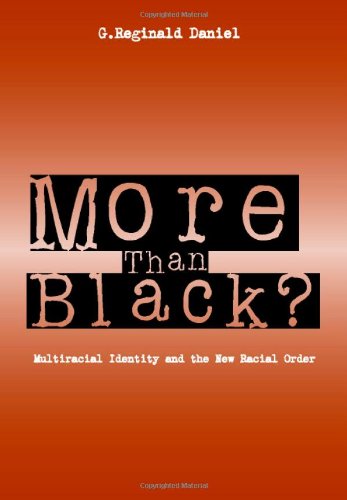
  • More Than Black? Multiracial Identity and the New Racial Order

    Temple University Press
    December 2001
    280 pages
    7×10; 1 figure
    Paperback: EAN: 978-1-56639-909-8, ISBN: 1-56639-909-2

    G. Reginald Daniel, Professor of Sociology
    University of California at Santa Barbara

    In the United States, anyone with even a trace of African American ancestry has been considered black. Even as the twenty-first century opens, a racial hierarchy still prevents people of color, including individuals of mixed race, from enjoying the same privileges as Euro-Americans. In this book, G. Reginald Daniel argues that we are at a cross-roads, with members of a new multiracial movement pointing the way toward equality.

    Tracing the centuries-long evolution of Eurocentrism, a concept geared to protecting white racial purity and social privilege, Daniel shows how race has been constructed and regulated in the United States.  The so-called one-drop rule (i.e., hypodescent) obligated individuals to identify as black or white, in effect erasing mixed-race individuals from the social landscape. For most of our history, many mixed-race individuals of African American descent have attempted to acquire the socioeconomic benefits of being white by forming separate enclaves or “passing.”  By the 1990s, however, interracial marriages became increasingly common, and multiracial individuals became increasingly political, demanding institutional changes that would recognize the reality of multiple racial backgrounds and challenging white racial privilege.

    More Than Black? regards the crumbling of the old racial order as an opportunity for substantially more than an improvement in U.S. race relations; it offers no less than a radical transformation of the nation’s racial consciousness and the practice of democracy.

    Read the introduction here.

    Table of Contents

    • Preface
    • Acknowledgments
    • Introduction
      • Part I: White Over Black
      • 1. Eurocentrism: The Origin of the Master Racial Project
      • 2. Either Black or White: The United State and the Binary Racial Project
    • Part II: Black No More
      • 3. White by Definition: Multiracial Identity and the Binary Racial Project
      • 4. Black by Law: Multiracial Identity and the Ternary Racial Project
    • Part III: More than Black
      • 5. The New Multiracial Identity: Both Black and White
      • 6. The New Multiracial Identity: Neither Black nor White
      • 7. Black by Popular Demand: Multiracial Identity and the Decennial Census
    • Part IV: Black No More or More than Black?
      • 8. The Illusion of Inclusion : From White Domination to White Hegemony
      • 9. The New Millennium: Toward a New Master Racial Project
    • Epilogue: Beyond Black or White: A New United States Racial Project
    • Notes
    • Index
  • In conclusion, based on a consecutive series of patients from an urban medical center in New York City we demonstrate that a spectrum of mixed ancestry is emerging in the largest US minority groups. While consistent with previous descriptive studies, when viewed from the clinical perspective this evidence invites a re-evaluation of the relevance of racial/ethnic labels. In combination with evidence of locus heterogeneity within and between populations, this picture of extensive gene flow lends credence to the argument that the transfer of historical population labels which reflect language and other social categories onto patient samples will in many cases be unwarranted.

    Tayo BO, Teil M, Tong L, Qin H, Khitrov G, et al., “Genetic Background of Patients from a University Medical Center in Manhattan: Implications for Personalized Medicine,” PLoS ONE, Volume 6, Number 5 (2011-05-04): 8-10. http://dx.doi.org/10.1371/journal.pone.0019166.

  • Genetic Background of Patients from a University Medical Center in Manhattan: Implications for Personalized Medicine

    PLoS ONE: A peer-reviewed, open access journal
    Volume 6, Number 5 (2011-05-04)
    11 pages
    DOI: 10.1371/journal.pone.0019166

    Bamidele O. Tayo
    Department of Preventive Medicine and Epidemiology
    Loyola University Chicago
    Stritch School of Medicine, Maywood, Illinois

    Marie Teil
    Charles R. Bronfman Institute for Personalized Medicine
    Mount Sinai School of Medicine, New York, New York

    Liping Tong
    Department of Preventive Medicine and Epidemiology
    Loyola University Chicago
    Stritch School of Medicine, Maywood, Illinois

    Huaizhen Qin
    Department of Biostatistics and Epidemiology
    Case Western University, Cleveland, Ohio

    Gregory Khitrov
    Charles R. Bronfman Institute for Personalized Medicine
    Mount Sinai School of Medicine, New York, New York

    Weijia Zhang
    Charles R. Bronfman Institute for Personalized Medicine
    Mount Sinai School of Medicine, New York, New York

    Quinbin Song
    Charles R. Bronfman Institute for Personalized Medicine
    Mount Sinai School of Medicine, New York, New York

    Omri Gottesman
    Charles R. Bronfman Institute for Personalized Medicine
    Mount Sinai School of Medicine, New York, New York

    Xiaofeng Zhu
    Department of Biostatistics and Epidemiology
    Case Western University, Cleveland, Ohio

    Alexandre C. Pereira
    University of Sao Paulo Medical School, Sao Paulo, Brazil

    Richard S. Cooper
    Department of Preventive Medicine and Epidemiology
    Loyola University Chicago
    Stritch School of Medicine, Maywood, Illinois

    Erwin P. Bottinger
    Charles R. Bronfman Institute for Personalized Medicine
    Mount Sinai School of Medicine, New York, New York

    Background

    The rapid progress currently being made in genomic science has created interest in potential clinical applications; however, formal translational research has been limited thus far. Studies of population genetics have demonstrated substantial variation in allele frequencies and haplotype structure at loci of medical relevance and the genetic background of patient cohorts may often be complex.

    Methods and Findings

    To describe the heterogeneity in an unselected clinical sample we used the Affymetrix 6.0 gene array chip to genotype self-identified European Americans (N = 326), African Americans (N = 324) and Hispanics (N = 327) from the medical practice of Mount Sinai Medical Center in Manhattan, NY. Additional data from US minority groups and Brazil were used for external comparison. Substantial variation in ancestral origin was observed for both African Americans and Hispanics; data from the latter group overlapped with both Mexican Americans and Brazilians in the external data sets. A pooled analysis of the African Americans and Hispanics from NY demonstrated a broad continuum of ancestral origin making classification by race/ethnicity uninformative. Selected loci harboring variants associated with medical traits and drug response confirmed substantial within- and between-group heterogeneity.

    Conclusion

    As a consequence of these complementary levels of heterogeneity group labels offered no guidance at the individual level. These findings demonstrate the complexity involved in clinical translation of the results from genome-wide association studies and suggest that in the genomic era conventional racial/ethnic labels are of little value.

    Read the entire article here in HTML or PDF format.

  • Race in Contemporary Medicine

    Routledge
    2007
    208 pages
    Hardback ISBN: 978-0-415-41365-7

    Edited by:

    Sander L. Gilman

    With the first patent being granted to “BiDil,” a combined medication that is deemed to be most effective for a specific “race,” African-Americans for a specific form of heart failure, the on-going debate about the effect of the older category of race has been renewed. What role should “race” play in the discussion of genetic alleles and populations today? The new genetics has seemed to make “race” both a category that is seen useful if not necessary, as The New York Times noted recently: “Race-based prescribing makes sense only as a temporary measure.” (Editorial, “Toward the First Racial Medicine,” November 13, 2004) Should one think about “race” as a transitional category that is of some use while we continue to explore the actual genetic makeup and relationships in populations? Or is such a transitional solution poisoning the actual research and practice.

    Does “race” present both epidemiological and a historical problem for the society in which it is raised as well as for medical research and practice? Who defines “race”? The self-defined group, the government, the research funder, the researcher? What does one do with what are deemed “race” specific diseases such as “Jewish genetic diseases” that are so defined because they are often concentrated in a group but are also found beyond the group? Are we comfortable designating “Jews” or “African-Americans” as “races” given their genetic diversity? The book answers these questions from a bio-medical and social perspective.

    This book was previously published as a special issue of Patterns of Prejudice.

    Contents

    • Introduction: On Race and Medicine in Historical Perspective. Sander L. Gilman (Emory)
    • Reflections on Race and the Biologization of Difference. Katya Gibel Azoulay (Grinnell)
    • Against Racial Medicine. Joseph L. Graves, Jr. (North Carolina A&T State University) & Michael R. Rose (University of California, Irvine)
    • Blood and Stories: How Genomics is Rewriting Race, Medicine and Human History. Patricia Wald (Duke)
    • “Why are Genetic and Medical Researchers Accepting a Category Created by Slaveholders?” A Social History of the Reification of “Race” James Downs (Princeton)
    • Eugenics and the Racial Genome: Politics at the Molecular Level. Sharon Snyder and David Mitchell (University of Illinois – Chicago)
    • The Risky Gene: Epidemiology and the Evolution of Race. Philip Alcabes (Hunter College School of Health Sciences)
    • Folk Taxonomy, Prejudice and the Human Genome: Using Heritable Disease as a Jewish Ethnic Marker. Judith S. Neulander (Case Western Reserve University)
    • The price of science without moral constraints: German and American medicine before DNA and Today. Robert E. Pollack (Columbia)
    • Deadly Medicine Today: The Impossible Denials of Racial Medicine. C. Richard King (Washington State University)
    • Biobanks of a “Racial Kind”: Mining for Difference in the New Genetics. Sandra Soo-Jin Lee (Stanford)
  • The Privilege of Denial

    all things beautiful
    2012-09-19

    Alyssa Bacon-Liu

    I remember doing what’s called a Privilege Walk during my freshman year of college. There was a group of us and we stood in a line and we were given instructions. You had to take steps forward or steps back depending on how you answered certain questions. Are most people in power the same gender as you? Race as you? Are you the first in your family to go to college? Do most people on TV and the covers of magazines have the same skin tone as you? Stuff like that. And I’m sure you can see where this is going.

    I did this exercise several times with several different groups of people. At the end of the exercise, the white males were always in the front. Guess who was always in the back? Me. And the only other non-white person because I went to private Christian college and when you’re a minority at private Christian college you’re REALLY a minority…

    …,But you know who always complained about the exercise? The white males. Because even though I was the one who was in the back because people who look like me are not represented in politics, leadership, entertainment or even the college I was attending, somehow it was even more embarrassing for these young, white men to come to terms with their own privilege.

    And I get it. Being confronted with the realities of one’s privilege is a really difficult thing. I’ve had to go through the process of identifying and reconciling my own privilege. Because despite what the Privilege Walk would imply, I have privilege too. I am American. By simply being born in this country (which I had absolutely no control over) I am one of the most privileged people on the planet. Does that mean I feel guilty about being an American? No. Aware of my privilege? Yes. Aware of how that privilege affects others around the globe, whether or not I intentionally mean to affect them? Yes. Absolutely.

    One of my favorite bloggers, Dianna Anderson, is currently writing a series on her site about understanding privilege.

    “Privilege is an advantage I have but am not always aware of. It is something inherent to my self that has the ability to affect how easy or difficult my life is.”

    Based on this understanding, although it can be a challenging journey to understand your privilege, simply having privilege is not a bad thing. It’s not something you control. You can’t help it if you were born a certain way! But it’s still an important thing to acknowledge, as Dianna points out:

    “Understanding our implicit privileges and the ways they cloud our thinking is vital for a discussion in social justice to actually get anywhere.

    Understanding privilege is vital for a discussion on social justice, huh? Well then imagine my surprise in discovering that a supposed leader in the multiracial advocacy movement has not yet come to terms with her own privilege. The woman [Susan Graham] (who happens to be white) heading the organization Project RACE is mad that people keep tossing around the phrase “white privilege” and yesterday she wrote an entire post about it on the organization’s official blog, which is both peculiar and unprofessional. I’d like the share the highlights of said post, but you can read the entire thing here. The opening line of her post is the following statement:

    “I’m sick of hearing people infer that if you are white, you are somehow privileged. Mitt Romney is, but that’s just one guy…”

    I’m perplexed by her “argument.” It’s like she’s saying, “Just because Mitt Romney is privileged doesn’t mean every white person is!” White privilege is not synonymous for “extremely wealthy.” She is already missing the point and it’s only the first sentence of her post…

    She cannot claim to be the voice of racial minorities without acknowledging the ways she (as a white person) benefits from the system that makes multiracial advocacy necessary in the first place. As a biracial person, it is completely unacceptable to me that someone who claims to be an advocate for the multiracial community would openly proclaim that she not only doesn’t believe that white privilege even exists but that it is not a necessary part of the conversation in multiracial advocacy…

    Read the entire essay here.

  • DNA unlocks family secrets of the Chinese juggler, the enigmatic sea-captain and more

    The Globe and Mail
    Toronto, Canada
    2013-03-23

    Carolyn Abraham, Special to The Globe and Mail

    The birth of my first child made me see the past through a new lens: how it’s never lost, not completely; we carry it with us, in us, and we look for it in our parents and in our children, to give us our bearings and ground us in the continuity of life. And the past accommodates. It shows off in dazzling, unpredictable ways – a familiar gait, a gesture, the timbre of a voice, a blot of colour along the tailbone. The body has a long memory indeed.

    The mysteries of the past lure many to the maw of genealogy – hours, years and small fortunes devoured tracing the branches of family trees. I had never been one of those people, but now a tempting shortcut had appeared: genetic tests that promised to reveal histories never told or recorded anywhere else.

    Written in the quirky tongue of DNA and wound into the nucleus of nearly every human cell are biological mementos of the family who came before us.

    And science is finding ways to dig them out, rummaging through our genetic code as if it were a trunk in the attic.

    When questions of identity had been with me for so long; when my children might grow up with the same questions; and my parents, with everything they know and all the secrets hiding in their living cells, could vanish in a breath – why would I wait? I imagined the cool blade of science cutting to the truth of us, after more than a century of speculation and denial.

    I started asking questions about my family in the late 1970s, after people started asking them of me. I had just turned 7 and we had moved from the Toronto area to the Southern Ontario town of St. Catharines.

    Our tidy subdivision must have sprung up in the space age of the 1960s: There was a Star Circle and Venus and Saturn Courts, and in our roundabout of mostly German families, we were the aliens at 43 Neptune Dr. Before we moved in, the Pontellos had been the most exotic clan.

    The kids my age would pretend to be detectives investigating versions of crimes we’d seen on Charlie’s Angels. All the girls wanted to play the blond, bodacious Farrah Fawcett character, and when arguments broke out over whether my dark looks should exclude me from eligibility, an interrogation usually followed.

    “So where you from, anyway?” one of the kids would ask.

    Mississauga,” I’d say.

    “No, really, where are you from?”

    “Well, I was born in England – ”

    “No, I mean, like, what are you?”

    Kids can be mean, but my friends weren’t. Most of them were just curious about a brown girl with a Jewish last name who went to the Catholic school. I was curious too. I wanted to say Italian, like the Pontellos. I wanted freckles and hair that swung like Dorothy Hamill’s. But more than that, I wanted an answer.

    “Just tell them you’re English,” Mum would say. “You were born in England.”

    “But I don’t look English.”

    “Tell them you’re Eurasian,” my father would offer.

    “Where’s Eurasia?”…

    Read the entire article here.