• AFR 108: What Passes for Freedom?: Mixed-Race Figures in U.S. Culture

    Williams College, Williamstown, Massachusetts
    Spring 2013
    Cross Listed as AMST107, ENGL108

    Vincent J. Schleitwiler, Assistant Professor of English

    The idea of a distinct category of individuals identified as “biracial,” “multiracial,” or “mixed-race” has become increasingly prominent over the past few decades, despite the inescapable fact that the existence of children of interracial couples is by no means new. Indeed, historically speaking, notions of “racial purity” are a relatively recent invention—what might now be called “race-mixing” is older than the concept of “race” itself. Why, then, has the figure of the mixed-race person been receiving so much attention? Why is this figure imagined as somehow novel or unprecedented? Is there something different about the contemporary social experience of children of interracial couples? Why do people who do not share this experience take so much interest in it? Our pursuit of these questions will take us back to earlier periods in U.S. history, and to different figures appearing at the borders of established racial categories, such as the “tragic mulatta” or the “passing” figure. Most of our readings will be drawn from African American literature and works by other writers of color, but you should also expect a substantial amount of scholarly writing on theories and histories of race. These readings will lead to some highly charged discussions—which will not always end comfortably, or with everyone in agreement. Because this course is writing-intensive, we’ll spend significant time developing writing skills, with an emphasis on collaborative learning.

  • Pike County, Ohio – As Black as We Wish to Be

    Public Radio Exchange
    State of the Re:Union

    2012-09-28
    Length: 00:53:53

    Al Letson, Producer/Host

    Lu Olkowski, Reporter

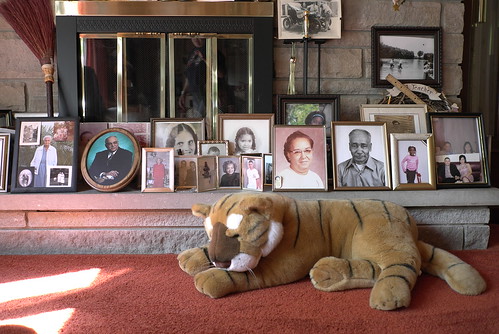
    In this episode Al Letson and guest producer Lu Olkowski visit a tiny town [East Jackson/Waverly] in the Appalachian foothills of Ohio where, for a century, residents have shared the common bond of identifying as African-American despite the fact that they look white. Racial lines have been blurred to invisibility, and people inside the same family can vehemently disagree about whether they are black or white. It can be tense and confusing. As a result, everyone’s choosing: Am I black? Am I mixed race? Or, am I white? Adding to the confusion, there’s a movement afoot to recognize their Native-American heritage.


    Family portraits on the mantle in Judy Tanner’s living room. Photo Credit: Lu Olkowski

    Listen to the episode here. For more information, click here. View photographs from Pike County, Ohio here.

  • Life Stories, Local Places, and the Networks of Free Women of Color in Early North America

    127th Annual Meeting of the American Historical Association
    New Orleans, Louisiana
    2013-01-03 through 2013-01-06

    AHA Session 72
    Friday, 2013-01-04: 08:30-10:00 CST (Local Time)
    Preservation Hall, Studio 7 (New Orleans Marriott)

    Chair: Daina Ramey Berry, University of Texas, Austin

    Papers:

    Comment: Anthony S. Parent, Wake Forest University

    The three papers included in this panel share several themes significant to new directions in the history of women of color in North America and the Caribbean.

    First, all three papers are concerned with the importance of networks, and the relationship between networks and localities.  In these papers, networks sustain women’s claims to freedom, and networks are closely associated with places.  Terri Snyder finds, for example, that Jane Webb and her daughter Elisha strengthened their positions in 18th century courtrooms–rarely hospitable to women of color–by drawing on local knowledge to support their claims to justice.  For Elisha, her mother’s networks in Virginia eventually intervened to secure her freedom in New Hampshire.  Elizabeth Neidenbach’s research in the wills of refugees from St. Domingue uncovers women’s networks expressed in the streets and neighborhoods of New Orleans–networks that reach back to the island home left behind.  Not only did these networks help refugee women survive, they played a significant role in shaping the culture of the city.  Finally, Sharon Wood’s research underscores the importance of African American-controlled space to the emergence of a black public sphere.  Property in Illinois owned by Priscilla, a former slave, became the meeting place when leading white men of St. Louis sought to suppress African American organizing by shutting off their access to space.  

    Finally, all three papers are concerned with methodologies of doing history and biography at the intersections of race and gender in early North America. Focusing on relatively ordinary women of color, each paper aims to recover the lives of particular women and integrate them into history. Until very recently, it has been a truism that the life stories of unlettered, enslaved, and free women of color of the 17th, 18th, and early 19th centuries must remain unwritten because the sources to uncover their lives did not exist. Yet each of these papers, by imaginative use of primary sources and diligent linking of records across national, colonial, and state borders, challenges that claim, giving voice and flesh to women whose lives would otherwise remain fragmented among scattered documents.

    This session addresses audiences interested in the histories of women, slavery and freedom, and geographical and biographical approaches to history.

  • Josephine Baker: A Chanteuse and a Fighter

    The Journal of Transnational American Studies
    Volume 2, Number 1 (2010)
    18 pages

    Konomi Ara
    Tokyo University of Foreign Studies

    This excerpt is from her newly-published biography of Josephine Baker, “A Fighting Diva.” It tells the intriguing story of Baker’s travels to Japan, her close friendship with the Japanese humanitarian Miki Sawada, and her adoption of a pair of Japanese orphans. Even after she achieved celebrity in France, Baker’s experience as a Black American led her to develop an antiracist philosophy at a worldwide level, and she combined political militancy in the public sphere with a personal commitment through the formation of an international multiracial household of children, the “Rainbow Tribe.”

    Introduction: The Adoption of an Occupation Baby

    Over half a century ago, in 1954, an African-American known as ‘The Amber Queen’ visited Japan. She was Josephine Baker (1906–1975), the dancer and singer who had
    leaped to fame in Paris in the 1920s. The newspaper Asahi Shinbun described the feverish welcome she received on her first visit to the country:

    “The amber-skinned singer Josephine Baker arrived from Paris on an Air France flight into Tokyo Haneda Airport at 9.40pm on the 13th. She has come to give fundraising performances for the abandoned mixed-race children of the Elizabeth Sanders Home in Oiso in Kanagawa Prefecture. The airport was thronged with many fans, including young women and black American soldiers, who had flocked in spite of the fine rain. Dressed in a black suit and a blue overcoat, Mrs Baker was greeted in the lobby by the director of the Sanders Home, Mrs Miki Sawada, the First Secretary of the French Embassy Monsieur Travis and the Daiei Studio actress Noboru Kiritachi among others. When two children from the Sanders Home, seven-year-olds Toshikazu Sato and Misao Kageyama, presented her with a bouquet, she gave the half-black boy and girl affectionate kisses on the cheeks. When she greeted all who had gathered, her voice was unexpectedly youthful for a 47 year old: ‘This is my first visit to Japan. Nothing could make me happier.’ She then headed for the Imperial Hotel with her pianist Milos Bartek and two others.” (14th April 1954)

    As the article states, the purpose of Josephine’s visit to Japan was to give charity performances in support of abandoned mixed-race children. She had been invited by her friend Miki Sawada, the director of the Sanders Home, who was caring for the children known as ‘Occupation Babies’. The proceeds from Josephine’s performances around Japan would fund the construction of a boys’ dormitory at the Elizabeth Sanders Home, Baker Hall, and it still stands today although its use has changed. Josephine’s name and her words are carved at the bottom of a pillar on one of the corners of the building.

    However, Josephine had a more important personal reason for her visit: she was going to adopt a child from the Home. Indeed, upon her arrival at the airport she asked Miki: “Where is my child?” and she was keen to meet the boy whom it was already agreed she would adopt. So Miki changed their plan, which was for Josephine to meet the child, Akio Yamamoto, three days later at the Elizabeth Sanders Home in Oiso, and instead took him to the Imperial Hotel the very next day. In the evening edition of Asahi Shinbun on the 14th, there is a photograph of a smiling Josephine holding Akio alongside an article headlined: “The First Meeting with Little Akio”.

    Josephine subsequently visited the Elizabeth Sanders Home and adopted one more boy on the spur of the moment. Thus, the first two of Josephine’s 12 adopted children from different parts of the world and different cultural, religious and racial backgrounds, who would become known as The Rainbow Tribe, were from Japan. The youngsters would spend their childhoods at Josephine’s chateau, Les Milandes, in the Dordogne region of southwest France…

    …This home for infants was founded in February 1948. The institution, which became well known as a home for mixed-race children, was a major project started by Miki Sawada. This eldest daughter of the Iwasaki family of the former Mitsubishi conglomerate, who had a privileged upbringing and who married the diplomat Renzo Sawada to become Miki Sawada, was moved by the problem of mixed‐race children in the wake of the War and decided to provide for such abandoned youngsters herself.

    At its inception, Miki could not have imagined that the Home would turn into such a large-scale project with such longevity; but well over 1000 children subsequently arrived at and left this nest. Even today, the Home, a little altered, at any one time is home to almost 100 children whose birth parents have not been able to take care of them. Although the Home is no longer caring for ‘Occupation Babies’, the humanitarian spirit that forms the basis of its nurturing philosophy has not changed. One of the most powerful connections Miki formed was with the internationally famous African American performer Josephine Baker. Baker, who visited Japan for the first time in 1954, adopted two boys, Akio Yamamoto and Teruya Kimura, from among the mixed-race children known as ‘Occupation Babies’…

    Read the entire article here.
  • One of the more tragic aspects of the racial worldview has been the seeming dilemma of people whose parents are identifiably of different “races.” Historically, “race” was grounded in the myth of biologically separate, exclusive, and distinct populations. No social ingredient in our race ideology allowed for an identity of “mixed-races.” Indeed over the past century and a half, the American public was conditioned to the belief that “mixed-race” people (especially of black and white ancestry) were abnormal products of the unnatural mating of two species, besides being socially unacceptable in the normal scheme of things. The tragedy for “mixed” people is that powerful social lie, the assumption at the heart of “race,” that a presumed biological essence is the basis of one’s true identity. Identity is biology, racial ideology tells us, and it is permanent and immutable. The emphasis on and significance given to “race” precludes any possibility for establishing our premier identities on the basis of other characteristics. In this sense it may be argued that the myth of ”race” has been a barrier to true human identities.

    Audrey Smedley, “‘Race’ and the Construction of Human Identity,” American Anthropologist, Volume 100, Issue 3 (September 1998): 690-702. http://dx.doi.org/10.1525/aa.1998.100.3.690.

  • Uneven Encounters: Making Race and Nation in Brazil and the United States

    Duke University Press
    2009
    408 pages
    19 photographs
    Paperback ISBN: 978-0-8223-4440-7
    Hardback ISBN: 978-0-8223-4426-1

    Micol Seigel, Associate Professor of African-American and African Diaspora Studies
    Indiana University

    In Uneven Encounters, Micol Seigel chronicles the exchange of popular culture between Brazil and the United States in the years between the World Wars, and demonstrates how that exchange affected ideas of race and nation in both countries. From Americans interpreting advertisements for Brazilian coffee or dancing the Brazilian maxixe, to Rio musicians embracing the “foreign” qualities of jazz, Seigel traces a lively, cultural back and forth. Along the way, she shows how race and nation for both elites and non-elites are constructed together, and driven by global cultural and intellectual currents as well as local, regional, and national ones.

    Seigel explores the circulation of images of Brazilian coffee and of maxixe in the United States during the period just after the imperial expansions of the early twentieth century. Exoticist interpretations structured North Americans’ paradoxical sense of themselves as productive “consumer citizens.” Some people, however, could not simply assume the privileges of citizenship. In their struggles against racism, Afro-descended citizens living in Rio de Janeiro, São Paulo, New York, and Chicago encountered images and notions of each other, and found them useful. Seigel introduces readers to cosmopolitan Afro-Brazilians and African Americans who rarely traveled far from home but who nonetheless absorbed ideas from abroad. She suggests that studies comparing U.S. and Brazilian racial identities as two distinct constructions are misconceived. Racial formation transcends national borders; attempts to understand it must do the same.

    Table of Contents

    • Illustrations
    • Preface
    • Note on Language
    • Acknowledgments
    • Introduction
    • 1. Producing Consumption: Coffee and Consumer Citizenship
    • 2. Maxixe’s Travels: Cultural Exchange and Erasure
    • 3. Playing Politics: Making the Meanings of Jazz in Rio de Janeiro
    • 4. Nation Drag: Uses of the Exotic
    • 5. Another “Global Vision”: (Trans)Nationalism in the Sao Paulo Black Press
    • 6. Black Mothers, Citizen Sons
    • Conclusion
    • Abbreviations
    • Notes
    • Discography
    • Bibliography
    • Index
  • American Voters Are Getting All Mixed Up

    Dog Park: Media Unleased
    2012-11-20

    Leighton Woodhouse, Founding Partner

    As anybody with a TV, radio or newspaper subscription can affirm, the big story coming out of the 2012 election is the long feared/eagerly awaited arrival of the Latino Vote as a national political force capable of deciding a presidential contest. Latinos accounted for a record ten percent of the electorate this year, and something north of 70 percent of them cast their ballots for Obama. Meanwhile, fewer Latinos than ever before voted for the Republican candidate. With the Latino segment of the electorate poised to continue expanding for many election cycles to come, leaders of both parties are tripping over each other to position themselves on immigration reform, and even in blood red states like Texas, GOP strategists are warning of imminent doom for their party if Republicans fail to break their cycle of addiction to racism, xenophobia and pandering to border-guarding lunatics.
     
    The story is both accurate to a point and incomplete, as conventional wisdom is wont to be. Tavis Smiley, for instance, has highlighted the grating irony of black voters being left out of the punditocracy’s post-election anointing of the “new governing coalition,” following the second presidential election in a row in which African-Americans broke records turning out to support Barack Obama. And when it comes to speculating about long-term electoral prospects, there’s another demographic category of Americans that’s getting glossed over in this mechanical extrapolation of the present into the future. Interestingly, it’s the one that Obama himself belongs to: multiracial Americans.
     
    That’s not to say that mixed-race voters were a big electoral force in this election or any other national election in history. Nor is “mixed race” really much of a coherent ethnic identity in the first place (then again, neither arguably is “Latino” or “Asian”). As a demographic category, however, it’s going to be a significant factor for both parties to grapple with in future elections. It’s simply inevitable: About fifteen percent of new marriages nationally in 2010 were interracial, according to a Pew study published earlier this year. That’s more than double the proportion of the 1980s. Those couples are having kids, and those kids are growing up to become voters. Moreover, according to the study, quaint taboos against interracial coupling are pretty close to completely breaking down, with nearly two-thirds of Americans fine with the idea, so we can expect the phenomenon to continue and accelerate going forward: more interracial couples, more mixed race kids. And in politics, as they say, demography is destiny…

    Read the entire article here.

  • Nation Drag: Uses of the Exotic

    The Journal of Transnational American Studies
    ISSN 1940-0764
    Volume 1, Issue 1 (2009)

    Micol Seigel, Associate Professor of African-American and African Diaspora Studies
    Indiana University

    In Uneven Encounters, the forthcoming book from which this article is excerpted, Micol Seigel chronicles the exchange of popular culture between Brazil and the United States in the years between the World Wars, and she demonstrates how that exchange affected ideas of race and nation in both countries. From Americans interpreting advertisements for Brazilian coffee or dancing the Brazilian maxixe, to Rio musicians embracing the “foreign” qualities of jazz, Seigel traces a lively, cultural back-and-forth. Along the way, she shows how race and nation are constructed together, by both non-elites and elites, and gleaned from global cultural and intellectual currents as well as local, regional, and national ones. Seigel explores the circulation of images of Brazilian coffee and of maxixe in the United States during the period just after the imperial expansions of the early twentieth century. Exoticist interpretations structured North Americans’ paradoxical sense of self as productive “consumer citizens.” Some people, however, could not simply assume the privileges of citizenship. In their struggles against racism, Afro-descended citizens living in the cities of Rio de Janeiro, São Paulo, New York, and Chicago encountered images and notions of each other, and found them useful. Seigel introduces readers to cosmopolitan Afro-Brazilians and African Americans who rarely traveled far but who absorbed ideas from abroad nonetheless. African American vaudeville artists saw the utility of pretending to “be” Brazilian to cross the color line on stage. Putting on “nation drag,” they passed not from one race to another but out of familiar racial categories entirely. Afro-Brazilian journalists reported intensively on foreign, particularly North American, news and eventually entered into conversation with the U.S. black press in a collaborative but still conflictual dialogue. Seigel suggests that projects comparing U.S. and Brazilian racial identities as two distinct constructions are misconceived. Racial formations transcend national borders; attempts to understand them must do the same.

    Read the entire article here.

  • Family Stories, Local Practices, and the Struggle for Social Improvement in Eighteenth- and Nineteenth-Century Latin America

    127th Annual Meeting of the American Historical Association
    New Orleans, Louisiana
    2013-01-03 through 2013-01-06

    AHA Session 25: Conference on Latin American History 3
    Thursday, 2012-01-03: 13:00-15:00 CST (Local Time)
    Conti Room (Roosevelt New Orleans)

    Chair: Matt D. O’Hara, University of California, Santa Cruz

    Papers:

    Comment: Elizabeth A. Kuznesof, University of Kansas

    Over the last three decades, scholars of colonial and early national Latin America have worked to organize archives and compile quantitative data relative to the demographic composition and patterns of social interaction that marked those societies. Thanks to their efforts, we now have a better understanding of the impact Iberian, African and Indigenous peoples had on the formation of a colonial population; what the dominant patterns of family formation and population growth were; how the social and economic behavior of colonial elites supported the social reproduction of white privilege; how the social and economic behavior of Blacks and Indios challenged or at least complicated the existing social and racial hierarchies. These efforts, moreover, have now resulted in rich datasets that allow historians to follow individuals and their families over time to understand better the impact family formation and their various social and economic behaviors have had on the experiences of different ethnic and racial groups, as well as the history of particular localities, in this formative period of Latin American societies. The papers in this panel employ the study of families in a generational perspective as a new methodological approach to explore further issues of social mobility among persons of non-Iberian of mixed descent and their relevance to the development of a colonial or early national social order in Latin America. Through their focus on specific families and their local connections, moreover, the papers help to elucidate questions about the long term impact of individual social improvement on, and the importance of local practices and circumstances to, the social standing of families whose members transcended the social boundaries between free and slave, black/indio and white. Together these papers advance the current scholarship on race relations and social mobility in colonial and early national Latin America in two fundamental ways. First, they integrate historical narratives of black, white, and indigenous social experiences—which still tend to be developed separately—and demonstrate that certain social practices and behaviors that shaped social orders in the past resulted sometimes from the coordinated (and not oppositional) actions and efforts of members of mixed-race family and social units. Second, they highlight how socio-economic practices and behaviors that influenced local realities first, and broader regional, national, or imperial realities second, were born out of strategies individual families pursued generation after generation to ensure the well-being of their members.

  • Boundaries, Subjectivity, and Knowledge Production in Colonial Río de la Plata

    127th Annual Meeting of the American Historical Association
    New Orleans, Louisiana
    2013-01-03 through 2013-01-06

    Conference on Latin American History 65
    Saturday, 2013-01-05: 14:30-16:30 CST (Local Time)
    Ursuline Salon (Hotel Monteleone)

    Chair: Shawn Michael Austin, University of New Mexico

    Papers:

    Comment: Heidi Scott, University of Massachusetts, Amherst

    In comparison to other regions of Latin America, colonization efforts in the Río de la Plata had a slow and difficult start. Indeed, it was not until the mid-sixteenth century that colonials began to establish themselves in permanent ways, seeking an exportable commodity—found in yerba mate—and by exploiting native labor. By around the turn of the seventeenth century, Franciscan and Jesuit priests stepped up their missionizing efforts, bringing to the region a greater interest in harvesting native souls. These missionaries competed with Portuguese bandeirantes, who entered into the area in search of indigenous labor. Nonetheless, the absence of mineral wealth and sedentary native populations made the region a colonial backwater for the next hundred years. But by the mid-eighteenth century, with the proliferation of cattle and other exportable goods, the region became a centerpiece for competing Spanish and Portuguese imperial projects and a hotbed for interethnic conflict.

    The papers in this panel will examine topics embedded in this unusual historical trajectory. They will explain how native peoples dealt with and defined colonial institutions in the face of  Iberian ways of knowing and governing and will examine how knowledge production was at the crux of interethnic relations. The panelists will combine revisionism, novel methodologies, and unused sources to provide insight into the political, cultural, economic, and social lives in the region. Shawn Austin will propose that to understand the shape and functionality of the Spanish encomienda we must understand that native sexuality and notions of affinity are at the heart of that institution. Austin’s paper will reveal the stories and lives of Guaraní, African, and mixed-race individuals in a narrative style culled from litigation records. While Austin will focus on civil society, Kristin Huffine will explore the construction of Guaraní-Christian subject formation in the Jesuit missions through her analysis of visual cultures. Both Huffine and Austin will argue that cultural and social life in the region can only be elucidated through an understanding of native social and cultural contributions. Huffine will build upon existing scholarship on mission art by moving beyond simply recognizing Guaraní artisan labor to understanding how the Guaraní’s hands also shaped their identities, literally through their own artistic expressions. Jeffrey Erbig’s presentation will explore the production of imperial geographic knowledge by examining two eighteenth century Luso-Hispanic mapping expeditions. Erbig will show that as Iberian officials demarcated a linear divide between their South American kingdoms, they depended upon native peoples for both labor and knowledge. Nonetheless, these attempts to produce static territorial states ignored and conflicted with native land claims and territorialities. This panel brings together a variety of new approaches to the study of the Río de la Plata that promise to promote lively discussion and exchange.