Mixed Race Studies

Scholarly perspectives on the mixed race experience.

    • About This Site
    • Bibliography
    • Contact Information
    • Date and Time Formats
    • Forthcoming… (Updated 2021-09-01)
    • Likely Asked Questions
    • List of Book Publishers
    • List of Definitions and Terms
    • My Favorite Articles and Papers
    • My Favorite Posts
    • My Recent Activities
    • Praise for Mixed Race Studies
    • Tag Listing
      • Tag Listing (Ordered by Count)
    • US Census Race Categories, 1790-2010
    • 1661: The First ‘Mixed-Race’ Milestone
    • 2010 U.S. Census – Some Thoughts

recent posts

  • The Routledge International Handbook of Interracial and Intercultural Relationships and Mental Health
  • Loving Across Racial and Cultural Boundaries: Interracial and Intercultural Relationships and Mental Health Conference
  • Call for Proposals: 2026 Critical Mixed Race Studies Conference at UCLA
  • Participants Needed for a Paid Research Study: Up to $100
  • You were either Black or white. To claim whiteness as a mixed child was to deny and hide Blackness. Our families understood that the world we were growing into would seek to denigrate this part of us and we would need a community that was made up, always and already, of all shades of Blackness.

about

  • Twitter
  • Facebook
  • Instagram
  • Brit Bennett – Colorism & Racial Passing in “The Vanishing Half” | The Daily Social Distancing Show

    2020-12-14

    Brit Bennett – Colorism & Racial Passing in “The Vanishing Half” | The Daily Social Distancing Show

    The Daily Show with Trevor Noah
    2020-12-03

    Brit Bennett talks about exploring the effects of colorism in Black communities and the ability to pass as white in her new novel “The Vanishing Half.”

    Watch the interview here.

  • Relative Races: Genealogies of Interracial Kinship in Nineteenth-Century America

    2020-12-14

    Relative Races: Genealogies of Interracial Kinship in Nineteenth-Century America

    Duke University Press
    October 2020
    328 pages
    25 illustrations
    Paper ISBN: 978-1-4780-1115-6
    Cloth ISBN: 978-1-4780-1010-4

    Brigitte Fielder, Associate Professor, College of Letters & Science
    University of Wisconsin, Madison

    In Relative Races, Brigitte Fielder presents an alternative theory of how race is ascribed. Contrary to notions of genealogies by which race is transmitted from parents to children, the examples Fielder discusses from nineteenth-century literature, history, and popular culture show how race can follow other directions: Desdemona becomes less than fully white when she is smudged with Othello’s blackface, a white woman becomes Native American when she is adopted by a Seneca family, and a mixed-race baby casts doubt on the whiteness of his mother. Fielder shows that the genealogies of race are especially visible in the racialization of white women, whose whiteness often depends on their ability to reproduce white family and white supremacy. Using black feminist and queer theories, Fielder presents readings of personal narratives, novels, plays, stories, poems, and images to illustrate how interracial kinship follows non-heteronormative, non-biological, and non-patrilineal models of inheritance in nineteenth-century literary culture.

    Table of Contents

    • Acknowledgments ix
    • Introduction. Genealogies of Interracial Kinship 1
    • Part I. Romance. Sexual Kinship
      • 1. Blackface Desdemona, or, the White Woman “Begrimed” 29
      • 2. “Almost Eliza”: Reading and Racialization 55
    • Part II. Reproduction. Genealogies of (Re)racialization
      • 3. Mothers and Mammies: Racial Maternity and Matriliny 85
      • 4. Kinfullness: Mama’s Baby, Racial Futures 119
    • Part III. Residency Domestic. Racial Relations
      • 5. Mary Jemison’s Cabin: Domestic Spaces of Racialization 161
      • 6. Racial (Re)Construction: Interracial Kinship and the Interracial Nation 195
    • Conclusion. “Minus Bloodlines”: White Womanhood and Failures of Interracial Kinship 229
    • Notes 245
    • Bibliography 283
    • Index

  • The Afro-Latinx Experience Is Essential To Our International Reckoning On Race

    2020-12-12

    The Afro-Latinx Experience Is Essential To Our International Reckoning On Race

    National Public Radio
    ALT.LATINO
    2020-07-03

    Felix Contreras
    Anaïs Laurent
    Marisa Arbona-Ruiz
    Jasmine Garsd


    In Tijuana, raised fists show solidarity with the Black Lives Matter movement.
    Guillermo Arias/AFP via Getty Images

    Let’s pause the music for a bit and talk through some things.

    In three segments, we’re going to have a conversation about how Afro-Latinx folks often get left out of national discussions about Blackness and, in particular, the Black Lives Matter movement. Petra Rivera-Rideua, of Wellesley College, and Omaris Z. Zamora, of Rutgers, help us wade through layers of complexities. Our newest contributor to the Alt.Latino family, NPR publicist Anaïs Laurent, lends her considerable knowledge of Afro-Latinx culture and reggaeton to the conversation.

    “I don’t think that the media, on a national level, is doing the work to understand that Blackness is heterogeneous,” Zamora says.

    “There are Black Latinos, there are Afro Latinos who very much a part of Black Lives Matter and the experiences we’re talking about,” Laurent adds.

    Read the entire story here.

  • Raising Multiracial Children, Part 2: Anti-Blackness in Multiracial Families

    2020-12-11

    Raising Multiracial Children, Part 2: Anti-Blackness in Multiracial Families

    EmbraceRace
    2020-07-24

    Hosted By:

    Andrew Grant-Thomas, Co-Founder
    Melissa Giraud, Co-Founder

    Guest Speakers:

    Dr. Victoria K. Malaney Brown, Director of Academic Integrity
    Columbia University, New York, New York

    Dr. Marcella Runell Hall, Vice President for Student Life and Dean of Students
    Mount Holyoke College, South Hadley, Massachusetts

    Dr. Kelly Faye Jackson, Associate Professor of Social Work
    Arizona State University

    In Part 2 of this conversation about raising multiracial kids, our guests – Drs. Victoria Malaney Brown, Marcella Runell Hall and Kelly Faye Jackson – return to discuss anti-Blackness and how anti-Black messaging shows up in multiracial families (including non-Black families). Referencing recent examples from social media, our guests breakdown three common myths that perpetuate anti-Blackness within multiracial families, and describe how these myths negatively impact the identity development of multiracial Black children specifically. We also talk about concrete steps that parents and caregivers can take now to actively reject White supremacy and anti-Blackness and build resilience as a multiracial family.

    Be sure to check out the previous conversation in this pair, Raising Multiracial Children, Part 1: Examining Multiracial Identity.

    Watch the video and read the transcript here.

  • Raising Multiracial Children, Part 1: Examining Multiracial Identity

    2020-12-11

    Raising Multiracial Children, Part 1: Examining Multiracial Identity

    EmbraceRace
    2020-07-24

    Hosted By:

    Andrew Grant-Thomas, Co-Founder
    Melissa Giraud, Co-Founder

    Guest Speakers:

    Dr. Victoria K. Malaney Brown, Director of Academic Integrity
    Columbia University, New York, New York

    Dr. Marcella Runell Hall, Vice President for Student Life and Dean of Students
    Mount Holyoke College, South Hadley, Massachusetts

    Dr. Kelly Faye Jackson, Associate Professor of Social Work
    Arizona State University

    Roughly one in seven U.S. infants (14%) are multiracial or multiethnic (Pew, 2017), but what does it mean to be multiracial? It’s complicated!

    In Part 1 in this conversation about raising multiracial kids we speak with our guests – Drs. Victoria Malaney Brown, Marcella Runell Hall and Kelly Faye Jackson – about some of the complexities of identifying with more than one race, and about the pivotal role families play in shaping how multiracial children come to understand themselves and the world around them. This dynamic is especially complex in this historical moment as the United States comes to terms with its own White supremacist roots.

    Our guests describe the challenges and strengths of identifying with more than one racial group, highlighting examples from recent research, and draw from their own personal experiences as multiracial individuals and parents of multiracial children. As always we end with your questions and comments.

    Watch the video and read the transcript here.

  • Afro-Descendant Rights in the Americas: The Perspective of Transnational Activists in the U.S. and the Region

    2020-12-10

    Afro-Descendant Rights in the Americas: The Perspective of Transnational Activists in the U.S. and the Region

    WOLA: Advocacy for Human Rights in the Americas
    Washington Office on Latin America
    1666 Connecticut Ave NW, Suite 400
    Washington, D.C. 20009
    Friday, 2020-12-11, 14:00-15:30Z (09:00-10:30 EST)
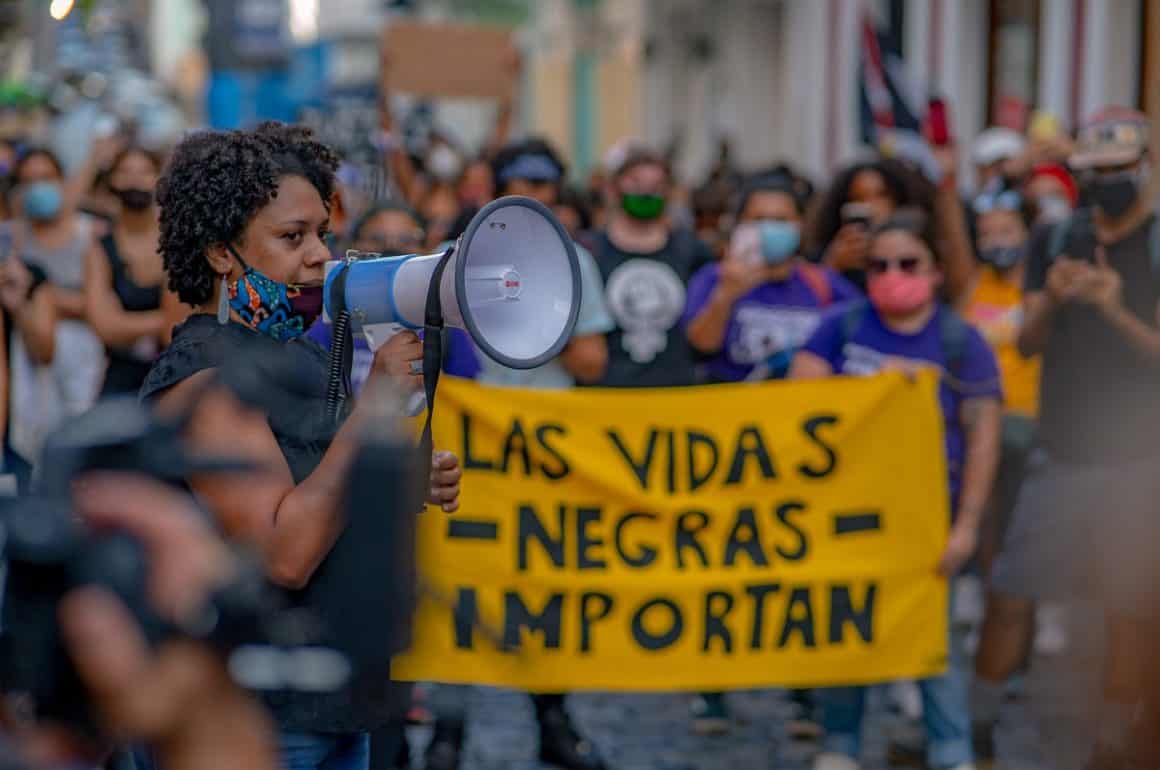

    (Image: Mikey Cordero / Defend Puerto Rico

    Featuring:

    James Early, Activist and Board Member
    Institute for Policy Studies, Washington, D.C., United States

    Zakiya Carr Johnson, Social Inclusion and Diversity Expert
    ODARA Solutions, LLC, Atlanta, Georgia, United States

    Carlos Quesada, Executive Director and Founder
    The International Institute on Race, Equality and Human Rights, Washington, D.C., United States

    Agripina Hurtado Caicedo, Coordinator for the Committee to Combat Racism, Xenophobia, and All Forms of Discrimination
    Public Services International (PSI), Cali, Colombia

    Deyni Terry Abreu, Attorney
    Racial Unity Alliance (Allianza Unidad Racial), Havana, Cuba

    Helmer Quiñones Mendoza, Afro-descendant philosopher
    Afro-Colombian Peace Council (Consejo de Paz Afro-Colombiano, CONPA), Bogotá, Colombia

    Ofunshi Oba Koso, Babalawo/Shaman and Human Rights Activist
    Yoruba Cuba Association, Minneapolis, Minnesota, United States

    Darryl Chappell, President and CEO
    The Darryl Chappell Foundation, Washington, D.C., United States

    In May 2020, the video of George Floyd’s unjust death at the hands of a police officer in Minneapolis, Minnesota was widely circulated, as the world confronted the unprecedented COVID-19 health crisis. Outrage over Floyd’s death and that of many other African Americans at the hands of the police fueled protests across the United States. The health crisis, its economic fallout, and the limited capacity of countries to fully respond revealed how structural inequities, racism, and the economic order can lead to serious consequences for Afro-descendants in the region.

    While such inequities are historic, the multiple crises led to conversations on racism, police brutality, and the state of human rights for Afro-descendants. Racism and abuses are long-standing in the Americas, yet do not receive the same level of global scrutiny. The U.S. Black Lives Matter movement and its antiracist efforts became the forefront of discussions on these matters. While globally less known, numerous resistance and civil rights movements in the Americas work to advance Afro-descendant rights, fight racism, and push for justice and equality. These transnational networks woven over the years provide mutual solidarity among peoples of the African diaspora in the region.

    In March 2019, WOLA organized a daylong conference to take stock of the rights of Afro-descendant communities from a regional perspective. During that engagement, activists and academics examined these issues within the framework of the UN International Decade on Afro-descendants. Join WOLA on December 11 at 9:00 a.m. EST, as we continue this conversation integrating the developments affecting the African diaspora in the U.S. and region in the past year. Darryl Chappell, President and CEO of the Darryl Chappell Foundation, will moderate this upcoming conversation with key activists that for decades have done transnational work on the rights of Afro-descendants in the United States and across the Americas.

    For more information and to register, click here.

  • Deconstructing Whiteness in “Incognegro”

    2020-12-06

    Deconstructing Whiteness in “Incognegro”

    Interminable Rambling
    2020-12-03

    Matthew Teutsch, Director of the Lillian E. Smith
    Piedmont College, Demorest, Georgia

    Every semester, I am amazed at the connective tissue that runs through the texts I place on the syllabus and the themes that arise. No matter the class, I construct my courses around themes, all teachers do. However, when a class ends poignantly on a recurring theme, I find it a really serendipitous occasion. This semester, in my Ethnic American Literature course, we explored the ways that we, as individuals, construct our identities based on ourselves and on the ways that others view us, specifically when they place their preconceived notions upon us. We looked at this from the beginning of the semester through the end. We explored it in the ways that Manar navigates her identity in a new land in Mohja Kahf’s “Manar of Hama” to the ways that Long Vanh navigates his Afro-Asian identity in the face of the community and his own family in Genaro Kỳ Lý Smith’s The Land South of the Clouds.

    We concluded the semester with Mat Johnson and Warren Pleece’s Incognegro, a graphic novel that breaks down constructs of race and highlights the ways that society, especially those who want to maintain power, constructs one’s identity. Today, I want to look at a couple of moments from Incognegro and discuss how these moments add to the class’s discussions we have had throughout the course of the semester…

    Read the entire article here.

  • The hidden story of African-Irish children

    2020-12-06

    The hidden story of African-Irish children

    BBC News
    2020-12-03

    Deirdre Finnerty

    In the middle of the last century, thousands of students from African countries were studying at Irish universities. Some had children outside marriage, who were then placed in one of Ireland’s notorious mother and baby homes. Today these children, now adults, are searching for their families.

    As a child, Conrad Bryan wondered if his father was a king. He was from Nigeria – or so he had been told – a place Conrad imagined was far more exciting than the orphanage outside Dublin where he lived.

    “When you want something and you can’t have it, your imagination takes over,” he says…

    Read the entire article here.

  • MGM/UA Television Acquires Rights To Rebecca Carroll Memoir ‘Surviving The White Gaze’

    2020-11-20

    MGM/UA Television Acquires Rights To Rebecca Carroll Memoir ‘Surviving The White Gaze’

    Deadline
    2020-11-17

    Dino-Ray Ramos, Associate Editor/Reporter


    Courtesy of MGM/UA

    EXCLUSIVE: MGM/UA Television has acquired the rights to Rebecca Carroll’s upcoming memoir Surviving the White Gaze in a competitive situation ahead of its release. Simon & Schuster is set to publish the book on February 2, 2021.

    Carroll is set to adapt her memoir as a limited series and serve as an executive producer on the project. The project was brought to MGM by Killer Films, and represents the first series to come out of the company’s first-look deal with the studio. Killer Films’ Christine Vachon and Pamela Koffler will also serve as executive producers.

    “The opportunity to work with both Killer Films and MGM is an absolute dream collaboration, and to be able to adapt my own deeply personal journey under such fiercely creative leadership is incredibly thrilling,” said Carroll…

    Read the entire article here.

  • Why We Shouldn’t Compare Transracial to Transgender Identity

    2020-11-20

    Why We Shouldn’t Compare Transracial to Transgender Identity

    Boston Review: A Political and Literary Forum
    2020-11-18

    Robin Dembroff, Assistant Professor of Philosophy
    Yale University

    Dee Payton, Ph.D. Candidate in Philosophy
    Rutgers, The State University of New Jersey

    From left: Jessica Krug, Nkechi Amare Diallo (née Rachel Dolezal), Caitlyn Jenner, Laverne Cox

    Editors’ Note: This essay is the first installment in a new series, Racial Identity & Racial Fraud.

    Unlike gender inequality, racial inequality primarily accumulates across generations. Transracial identification undermines collective reckoning with that injustice.

    “Call me Caitlyn.” With this phrase, emblazoned on Vanity Fair’s June 2015 cover, Caitlyn Jenner revealed her transgender identity to the world. But these words were not only a revelation; they also were a demand. Most obviously, they demanded that others call Jenner by a new name. But even more importantly, they demanded that others recognize Jenner as having a certain identity: woman.

    Reactions to this demand were predictable. Jenner was warmly embraced and lauded by many for her decision to—as Jenner put it—live as her “authentic self.” Transgender activist and writer Laverne Cox wrote that Jenner’s “courage to move past denial into her truth so publicly . . . [is] beyond beautiful to me.” President Barack Obama, retweeting Jenner’s announcement, praised her “courage to share [her] story.” Hundreds of thousands of others left encouraging comments on Jenner’s social media. Within these reactions, an idea repeatedly surfaced: Jenner’s demand for recognition as a woman is legitimate because Jenner is a woman…

    Read the entire article here.

Previous Page
1 … 94 95 96 97 98 … 1,428
Next Page

Designed with WordPress