• North Carolina Free People of Color, 1715-1885 with Warren Eugene Milteer Jr.

    Research at the National Archives and Beyond
    2020-06-25

    Bernice Bennett, Host

    Warren Eugene Milteer Jr. examines the lives of free persons categorized by their communities as negroes, mulattoes, mustees, Indians, mixed-bloods, or simply free people of color. From the colonial period through Reconstruction, lawmakers passed legislation that curbed the rights and privileges of these non-enslaved residents, from prohibiting their testimony against whites to barring them from the ballot box. While such laws suggest that most white North Carolinians desired to limit the freedoms and civil liberties enjoyed by free people of color, Milteer reveals that the two groups often interacted—praying together, working the same land, and occasionally sharing households and starting families. Some free people of color also rose to prominence in their communities, becoming successful businesspeople and winning the respect of their white neighbors.

    Warren Eugene Milteer Jr. is assistant professor of history at the University of North Carolina at Greensboro and is the author of North Carolina’s Free People of Color, 1715–1885.

    Listen to the episode (00:45:57) here. Download the episode here.
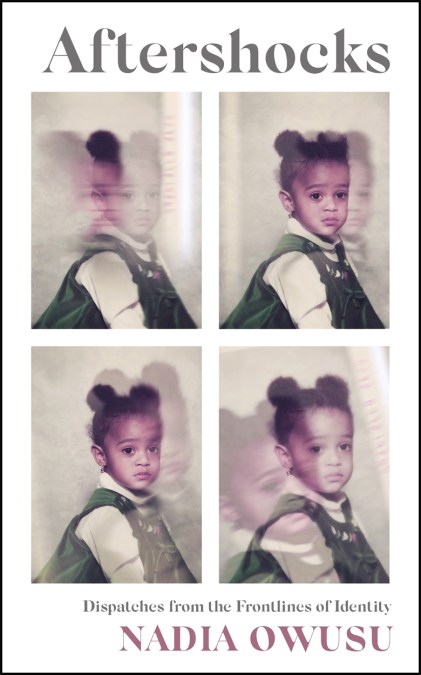
  • Aftershocks: Dispatches from the Frontlines of Identity

    Sceptre (an imprint of Hodder & Stoughton)
    2021-02-04
    320 pages
    Hardcover ISBN: 9781529342864
    eBook ISBN: 9781529342888

    Nadia Owusu

    I have lived in disaster and disaster has lived in me. Our shared languages are thunder and reverberation.

    When Nadia Owusu was two years old her mother abandoned her and her baby sister and fled from Tanzania back to the US. When she was thirteen her beloved Ghanaian father died of cancer. She and her sister were left alone, with a stepmother they didn’t like, adrift.

    Nadia Owusu is a woman of many languages, homelands and identities. She grew up in Rome, Dar-es-Salaam, Addis Ababa, Kumasi, Kampala and London. And for every new place there was a new language, a new identity and a new home. At times she has felt stateless, motherless and identity-less. At others, she has had multiple identities at war within her. It’s no wonder she started to feel fault lines in her sense of self. It’s no wonder that those fault lines eventually ruptured.

    Aftershocks is the account of how she hauled herself out of the wreckage. It is the intimate story behind the news of immigration and division dominating contemporary politics. Nadia Owusu’s astonishingly moving and incredibly timely memoir is a nuanced portrait of globalisation from the inside in a fractured world in crisis.

  • No Future in This Country: The Prophetic Pessimism of Bishop Henry McNeal Turner

    University Press of Mississippi
    November 2020
    208 pages
    Hardcover ISBN: 9781496830708
    Paperback ISBN: 9781496830692

    Andre E. Johnson, Associate Professor of Rhetoric and Media Studies
    University of Memphis, Memphis, Tennessee

    A critical study of the career of the nineteenth-century bishop

    No Future in This Country: The Prophetic Pessimism of Bishop Henry McNeal Turner is a history of the career of Bishop Henry McNeal Turner (1834–1915), specifically focusing on his work from 1896 to 1915. Drawing on the copious amount of material from Turner’s speeches, editorial, and open and private letters, Andre E. Johnson tells a story of how Turner provided rhetorical leadership during a period in which America defaulted on many of the rights and privileges gained for African Americans during Reconstruction. Unlike many of his contemporaries during this period, Turner did not opt to proclaim an optimistic view of race relations. Instead, Johnson argues that Turner adopted a prophetic persona of a pessimistic prophet who not only spoke truth to power but, in so doing, also challenged and pushed African Americans to believe in themselves.

    At this time in his life, Turner had no confidence in American institutions or that the American people would live up to the promises outlined in their sacred documents. While he argued that emigration was the only way for African Americans to retain their “personhood” status, he also would come to believe that African Americans would never emigrate to Africa. He argued that many African Americans were so oppressed and so stripped of agency because they were surrounded by continued negative assessments of their personhood that belief in emigration was not possible. Turner’s position limited his rhetorical options, but by adopting a pessimistic prophetic voice that bore witness to the atrocities African Americans faced, Turner found space for his oratory, which reflected itself within the lament tradition of prophecy.

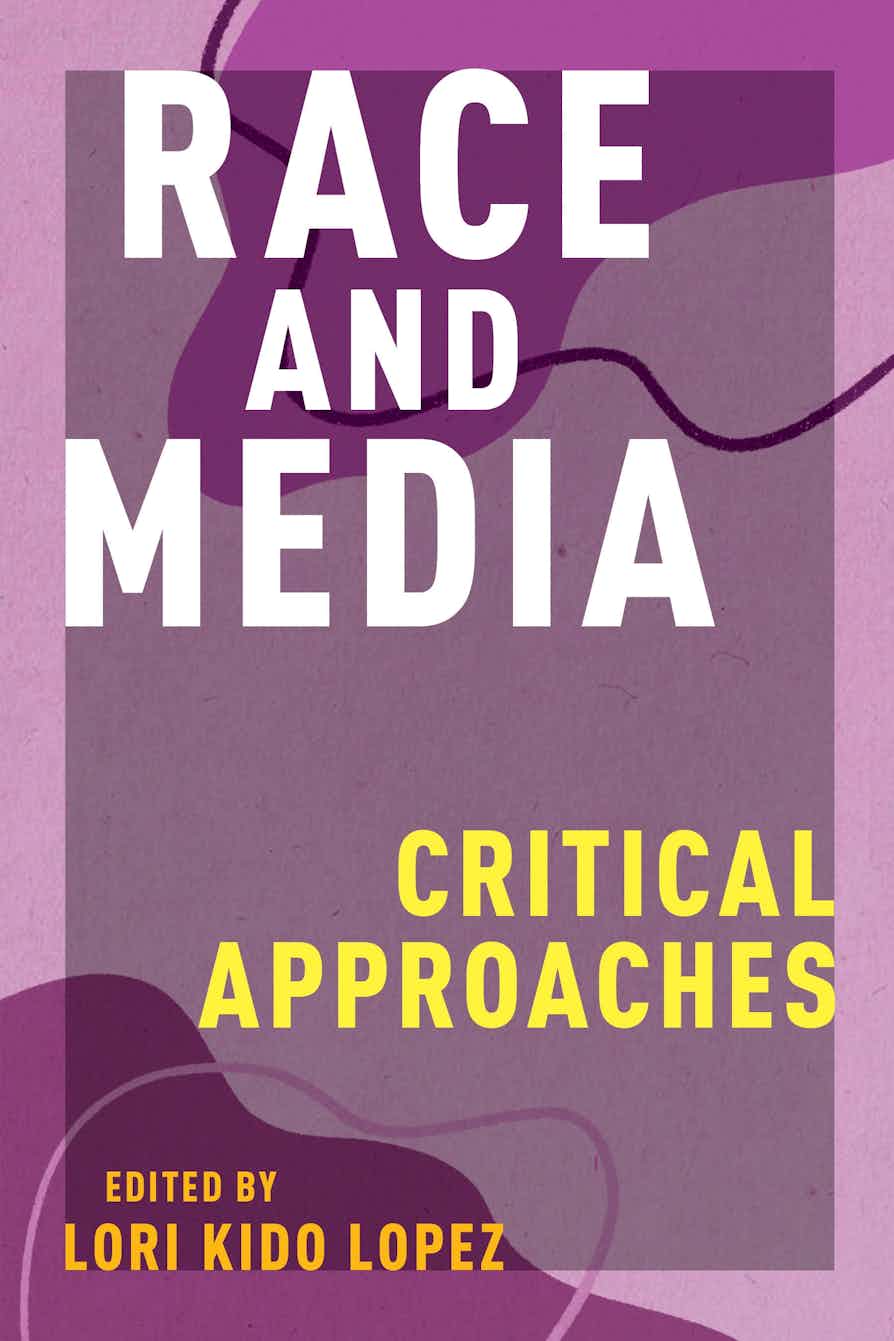
  • Race and Media: Critical Approaches

    New York University Press
    December 2020
    320 pages
    6.00 x 9.00 in
    11 b/w illustrations
    Hardcover ISBN: 9781479895779
    Paperback ISBN: 9781479889310

    Edited by:

    Lori Kido Lopez, Associate Professor in Media and Cultural Studies
    University of Wisconsin, Madison

    A foundational collection of essays that demonstrate how to study race and media

    From graphic footage of migrant children in cages to #BlackLivesMatter and #OscarsSoWhite, portrayals and discussions of race dominate the media landscape. Race and Media adopts a wide range of methods to make sense of specific occurrences, from the corporate portrayal of mixed-race identity by 23andMe to the cosmopolitan fetishization of Marie Kondo. As a whole, this collection demonstrates that all forms of media—from the sitcoms we stream to the Twitter feeds we follow—confirm racism and reinforce its ideological frameworks, while simultaneously giving space for new modes of resistance and understanding.

    In each chapter, a leading media scholar elucidates a set of foundational concepts in the study of race and media—such as the burden of representation, discourses of racialization, multiculturalism, hybridity, and the visuality of race. In doing so, they offer tools for media literacy that include rigorous analysis of texts, ideologies, institutions and structures, audiences and users, and technologies. The authors then apply these concepts to a wide range of media and the diverse communities that engage with them in order to uncover new theoretical frameworks and methodologies. From advertising and music to film festivals, video games, telenovelas, and social media, these essays engage and employ contemporary dialogues and struggles for social justice by racialized communities to push media forward.

    Contributors include: Mary Beltrán, Meshell Sturgis, Ralina L. Joseph, Dolores Inés Casillas, Jennifer Lynn Stoever, Jason Kido Lopez, Peter X Feng, Jacqueline Land, Mari Castañeda, Jun Okada, Amy Villarejo, Aymar Jean Christian, Sarah Florini, Raven Maragh-Lloyd, Sulafa Zidani, Lia Wolock, Meredith D. Clark, Jillian M. Báez, Miranda J. Brady, Kishonna L. Gray, and Susan Noh.

  • In Ireland, Lifting a Veil of Prejudice Against Mixed-Race Children

    The New York Times
    2021-01-15

    Caelainn Hogan


    Jess Kavanagh says she always knew that her mother, Liz, was adopted. “It was obvious,” she said. “My grandparents were white and my mam was Black.” Paulo Nunes dos Santos for The New York Times

    The singer Jess Kavanagh is working to raise awareness about the experiences of mixed-race Irish people, particularly those born in the country’s infamous mother and baby homes.

    While helping her mother work merchandise tables at some of Dublin’s most respected venues, Jess Kavanagh first got a taste for the music scene. When she started doing gigs herself — a petite singer with a belter of a voice — people would come up after to tell her she sounded “like a Black person,” the last words half whispered.

    They were assuming she was white.

    Ms. Kavanagh, a rising solo star in Ireland after years touring with acts like Hozier and the Waterboys, had to form what she calls a “linguistic arsenal” to express her experience as a mixed-race Irish woman. What drives her to speak out is a legacy of silence. As the daughter of a Black Irish woman who was born in one of Ireland’s infamous mother and baby homes, she is raising awareness about how those institutions hid away generations of mixed-race Irish children.

    More than five years ago, reports that children were interred in a sewage system at a mother and baby institution in Tuam, in western Ireland, compelled the Irish government to open an investigation into the institutions, where unmarried women and girls who became pregnant were sent. They were run by religious orders.

    The final report, published on Tuesday, confirmed that of the 57,000 children born in Ireland’s 18 homes over several decades starting in 1920, around 9,000 died…

    Read the entire article here.

  • The Cultural Coach: Being biracial should be a bridge, not a wall

    The Philadelphia Daily Sun
    Philadelphia, Pennsylvania
    2020-12-31

    Linda S. Wallace

    Dear Cultural Coach:

    I am one of four biracial children in my family. My grandfather and I were doing an essay on the state of Black youths in America. I brought the question to my grandfather, “Where do I fit in?” My grandfather’s reaction was, “What do you mean?” I explained that I am neither Black nor white. Then he asked me how I felt, and I said, “At school, for example, when I hang out with the Blacks, then the Black girls see me as a Black girl. But when I hang out with the white girls, some Black girls see me as a white girl.” In my family on my mom’s side, my grandfather does not claim me.”

    In between two worlds

    Dear In Between:

    You belong to the cultural communities of both your mother and your father.

    It is unfortunate that some of your relatives won’t claim you because you are biracial. Please don’t let their beliefs define you. Don’t ever give anyone the power to change the way you feel about yourself.

    Every so often in life, you will cross paths with individuals who are prejudiced or just mean. It is important to learn how to repel these statements so that you can hold on to self-confidence and pride…

    Read the entire article here.

  • Black for a Day: White Fantasies of Race and Empathy [Smith Review]

    The Black Scholar: Journal of Black Studies and Research
    Volume 50, (Winter 2020) – Issue 4: Black Girlhood
    pages 86-88
    DOI: 10.1080/00064246.2020.1811610

    Justin Smith, Ph.D. candidate in English and African American
    Pennsylvania State University

    Black for a Day: White Fantasies of Race and Empathy, by Alisha Gaines. Chapel Hill: University of North Carolina Press, 2017. $27.95, paperback. 230 pages.

    Black for a Day takes on “white-to-Black” racial passing through five readings of first-hand accounts. While it would be simple enough to bring up such examples of passing as nothing more than farces, Alisha Gaines offers a valuable genealogy of this phenomenon, seeking to view these incidents through the lens of (failed) empathy. Gaines introduces the book with a personal anecdote about how she was responsible for makeup in her majority-white school’s version of Finian’s Rainbow, and one of her jobs was to apply blackface to one of the white actors for a scene where the character magically transforms from white-to-Black. Initially, Gaines did not see a problem with doing this, but she came to see this event as revealing “profound, uncomfortable, and often contradictory assumptions about the bodies we inhabit” (3). Consequently, Gaines sets out to “(construct) a genealogy of temporary black individuals operating under the alibi of racial empathy” and borrows her definition of empathy from bell hooks’s definition of “eating the other,” which, “highlight|s| how empathy fails to bring about systemic or institutional racial change” (8).

    In the first chapter, “Good Niggerhood,” Gaines examines Ray Sprigle, a journalist who went “undercover” in 1948 in an effort to document an authentic Black experience. Sprigle finds it important to go to the South since he assumes the South is where the real racism is. Gaines spends a good portion of the chapter discussing “Dixie terror”: the assumption that the South—no particular place in the South, but just the imaginary of the generalized South—is where racism resides, and that “only violence and suffering render black bodies worthy of attention” (23). Gaines pushes back on these claims, arguing that racism is not restricted by geography, and that Black life is more than just violence and suffering. Gaines has two main critiques of Sprigle. The first is that he “never learned what it meant to be a black man, and instead, he only learned how to be a ‘good nigger’” (31). The second is that “he confuses black epistemology, experience, and narrative authority with making a few new black friends” (36). She argues that Sprigle does not have any sort of authentic Black experience due to his penchant for being obsequious when in disguise, but he also speaks…

    Read or purchase the review here.

  • Afro-Argentines: How Black People Were Systematically Whitewashed From Argentine History

    The Bubble
    2018-07-03

    Allie Pitchon


    Afroargentines playing candombe porteño near of a bonfire of Saint John (San Juan) in 1938. via africanarguments.org

    Argentina is perceived by many to be a primarily white, European country, with Buenos Aires often referred to as the “Paris of Latin America” in popular culture. This perception is rooted in a post-colonial process where Argentine leaders and intellectuals in the 19th century, especially during the Generation of 1837 and the Generation of 1880, actively made an effort to systematically erase Black Argentines from the country’s history, popular culture, and society in an effort to position the nation as a global power modeled after the US and Europe.

    By the second half of the 1700’s, roughly a third of the population of Buenos Aires was comprised of Afro-Argentines. While some were free, most were enslaved, brought in slave ships during the late 16th century in the hundreds of thousands to work as domestic servants and on plantations in the Rio de la Plata region. During the 18th and 19th centuries, people of African descent spread across Argentina. In some provinces, including Salta, Córdoba, Santiago del Estero, and Catamarca, Black Argentines accounted for roughly half the population. Meanwhile, General San Martín’s army was heavily comprised of Afro-Argentines. In the battle of Chacabuco, for instance, which was key in helping liberate Chile from Spanish rule, half of the soldiers were Afro-Argentines promised freedom from slavery in exchange for military service…

    Read the entire article here.

  • Ancient DNA Shows Humans Settled Caribbean in 2 Distinct Waves

    The New York Times
    2020-12-23

    Carl Zimmer


    Taíno ceramic vessels from eastern Dominican Republic, circa A.D. 1400. Menno Hoogland/Leiden University

    Millions of people living on the islands today inherited genes from the people who made them home before Europeans arrived.

    When Dr. Juan Aviles went to school in Puerto Rico, teachers taught him that the original people of the island, the Taino, vanished soon after Spain colonized it. Violence, disease and forced labor wiped them out, destroying their culture and language, the teachers said, and the colonizers repopulated the island with enslaved people, including Indigenous people from Central and South America and Africans.

    But at home, Dr. Aviles heard another story. His grandmother would tell him that they were descended from Taino ancestors and that some of the words they used also descended from the Taino language.

    “But, you know, my grandmother had to drop out of school at second grade, so I didn’t trust her initially,” said Dr. Aviles, now a physician in Goldsboro, N.C.

    Dr. Aviles, who studied genetics in graduate school, has become active in using it to help connect people in the Caribbean with their genealogical history. And recent research in the field has led him to recognize that his grandmother was onto something…

    Read the entire article here.

  • A genetic history of the pre-contact Caribbean

    Nature
    2020-12-23
    DOI: 10.1038/s41586-020-03053-2

    D.M. Fernandes

    K.A. Sirak

    H. Ringbauer, et al.

    Humans settled the Caribbean about 6,000 years ago, and ceramic use and intensified agriculture mark a shift from the Archaic to the Ceramic Age at around 2,500 years ago1,2,3. Here we report genome-wide data from 174 ancient individuals from The Bahamas, Haiti and the Dominican Republic (collectively, Hispaniola), Puerto Rico, Curaçao and Venezuela, which we co-analysed with 89 previously published ancient individuals. Stone-tool-using Caribbean people, who first entered the Caribbean during the Archaic Age, derive from a deeply divergent population that is closest to Central and northern South American individuals; contrary to previous work4, we find no support for ancestry contributed by a population related to North American individuals. Archaic-related lineages were >98% replaced by a genetically homogeneous ceramic-using population related to speakers of languages in the Arawak family from northeast South America; these people moved through the Lesser Antilles and into the Greater Antilles at least 1,700 years ago, introducing ancestry that is still present. Ancient Caribbean people avoided close kin unions despite limited mate pools that reflect small effective population sizes, which we estimate to be a minimum of 500–1,500 and a maximum of 1,530–8,150 individuals on the combined islands of Puerto Rico and Hispaniola in the dozens of generations before the individuals who we analysed lived. Census sizes are unlikely to be more than tenfold larger than effective population sizes, so previous pan-Caribbean estimates of hundreds of thousands of people are too large5,6. Confirming a small and interconnected Ceramic Age populatio7, we detect 19 pairs of cross-island cousins, close relatives buried around 75 km apart in Hispaniola and low genetic differentiation across islands. Genetic continuity across transitions in pottery styles reveals that cultural changes during the Ceramic Age were not driven by migration of genetically differentiated groups from the mainland, but instead reflected interactions within an interconnected Caribbean world1,8.

    Read or purchase the article here.